
In the competitive field of industrial electrical components, finding a reliable manufacturer for custom conductive terminals requires careful consideration of technical capabilities, production flexibility, and quality assurance. Nanpi Haokai Hardware Products Co., Ltd., located near Beijing-Shanghai Expressway with convenient transportation access, has established itself as a leading custom conductive terminal manufacturer through two decades of continuous innovation and quality commitment.

Core Competencies in Conductive Terminal Production
Our manufacturing capabilities are built on three pillars: advanced equipment, skilled workforce, and comprehensive quality control. The company maintains over 30 sets of stamping equipment ranging from 30-250 tons, including precision progressive dies that enable complex terminal geometries with tolerances within ±0.02mm. For CNC machined components, we operate 30+ units of numerical control lathes and automatic walking core machines capable of producing conductive terminals with surface roughness below Ra0.8.
The production process integrates multiple quality checkpoints aligned with ISO9001:2015 standards. Each conductive terminal undergoes dimensional inspection using CMM (Coordinate Measuring Machine) equipment, electrical conductivity testing, and salt spray corrosion resistance verification. Our quality department maintains complete traceability records from raw material batch numbers to final inspection reports, ensuring compliance with international standards including RoHS and REACH.
Material Selection for Conductive Terminals
Material choice fundamentally determines a conductive terminal’s performance characteristics. We offer comprehensive material solutions:
- Copper Alloys: C11000 (Electrolytic Tough Pitch) for general conductivity, C26000 (Cartridge Brass) for balanced strength and formability, and C70250 (Nickel Silver) for high-temperature applications
- Phosphor Bronze: C5191 and C5210 grades providing excellent spring properties with 40-45% conductivity retention after aging
- Stainless Steel: 304 and 316 grades for corrosion-resistant terminals in marine or chemical environments
- Aluminum Alloys: 6061-T6 for lightweight applications requiring 35-40% IACS conductivity
- Specialty Materials: Beryllium copper for high-strength connectors and titanium for aerospace-grade components
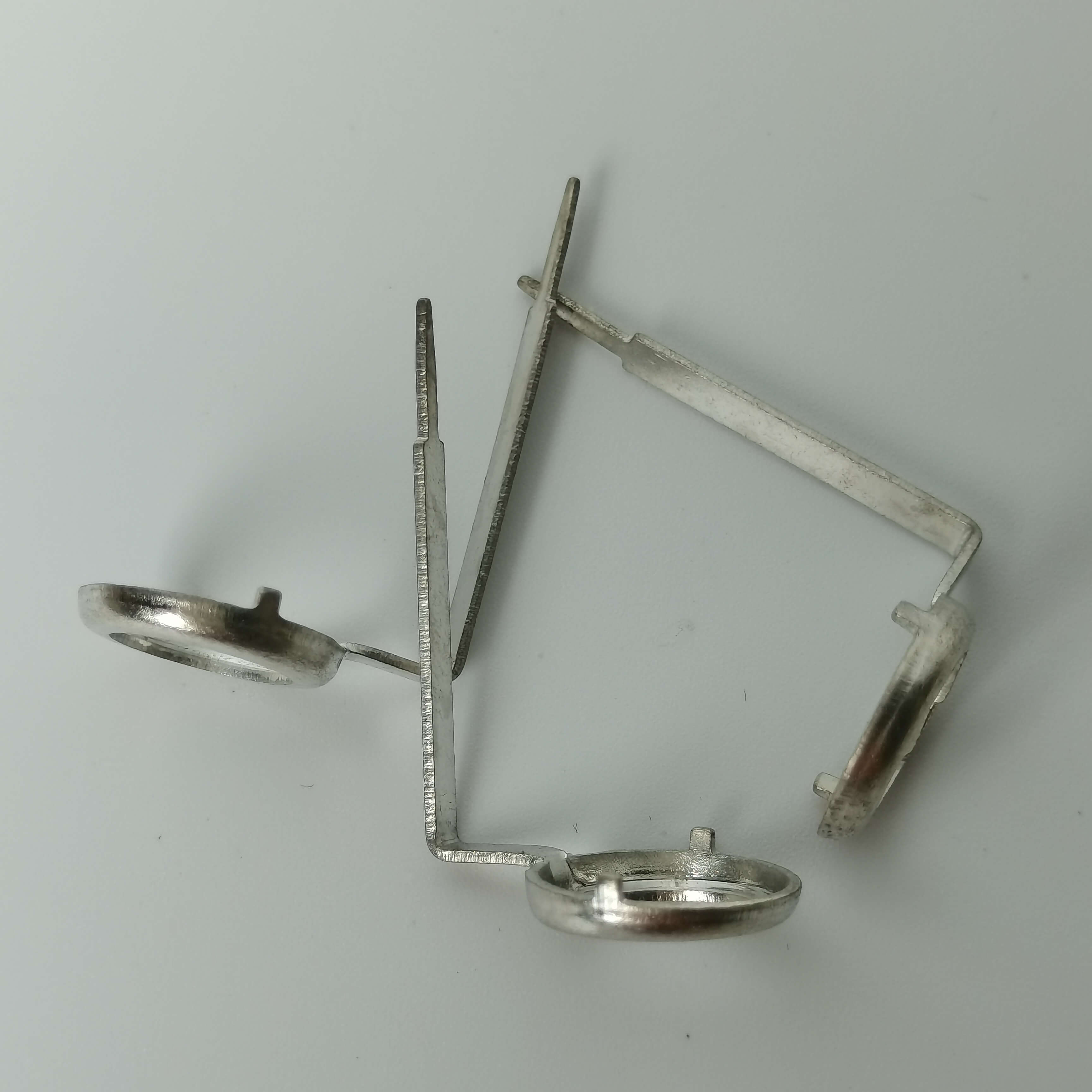
Surface Treatment Options
Surface engineering enhances both functional performance and aesthetic appearance of conductive terminals. Our treatment capabilities include:
| Treatment Type | Process Details | Benefits |
|---|---|---|
| Electroless Nickel | 5-10μm thickness, immersion process | Uniform coating, corrosion resistance |
| Selective Gold Plating | 0.1-0.5μm hard gold on contact areas | Low contact resistance, wear resistance |
| Tin Dipping | Hot air leveling process | Solderability, corrosion protection |
| Passivation | Chromate conversion coating | Stainless steel corrosion prevention |
Custom Conductive Terminal Design Guidelines
Successful terminal customization requires balancing electrical requirements, mechanical constraints, and manufacturing feasibility. Our engineering team follows these principles during design reviews:
1. Current Carrying Capacity: Cross-sectional area calculation based on IEC 60364-5-52 standards ensures terminals can handle specified current without excessive heating. For example, a 2.5mm² copper terminal can safely conduct 18A at 30°C ambient temperature.
2. Contact Force Optimization: Using FEA (Finite Element Analysis), we determine optimal spring constants for terminal contacts. Typical insertion forces range from 2-10N for connector terminals to ensure reliable connection without excessive mating effort.
3. Material Compatibility: When specifying plating materials, we consider galvanic corrosion risks between dissimilar metals. For aluminum housing with copper terminals, we recommend nickel barrier layers to prevent electrolytic action.

Prototyping and Validation
Our rapid prototyping service enables customers to validate designs before full production. Typical prototype lead times are:
- Stamping terminals: 5-7 days for simple geometries, 10-14 days for progressive dies
- CNC machined terminals: 3-5 days for single-piece samples
- Injection molded terminals: 7-10 days including mold fabrication
Each prototype undergoes functional testing per customer specifications, including:
- Electrical continuity testing (4-wire method)
- Mechanical durability cycling (100-1,000 cycles)
- Environmental stress testing (temperature cycling, humidity exposure)
- Dimensional verification using CMM equipment
Industry Applications of Custom Conductive Terminals
Our terminals serve diverse industrial sectors with specialized requirements:
Automotive Electronics: For EV battery management systems, we produce high-current terminals with 100A+ capacity using copper-aluminum bimetallic construction. These terminals feature laser-welded joints and specialized crimping zones for secure cable attachment.
Renewable Energy: Solar inverter applications require terminals with dual-layer plating (nickel under gold) to withstand 25+ years of outdoor exposure. We optimize terminal geometries for automated assembly lines with ±0.05mm positional accuracy.
Medical Devices: For surgical equipment power supplies, we manufacture biocompatible terminals using ASTM F1537 cobalt-chrome alloy. These components undergo 100% X-ray inspection and pass ISO 10993 biological evaluation standards.
Industrial Automation: PLC control systems benefit from our spring-loaded terminal blocks featuring self-locking mechanisms and color-coded identification. These components meet IEC 60947-7-1 safety standards for industrial control equipment.
FAQ
What is the minimum order quantity for custom conductive terminals?
Our MOQ starts at 1,000 pieces for standard designs and 5,000 pieces for fully custom geometries. For prototype development, we accept smaller quantities with additional tooling cost amortization. Small batch production (100-500 pcs) is available for CNC machined components with higher unit pricing.
How do you ensure dimensional accuracy in mass production?
We implement statistical process control (SPC) throughout manufacturing. Key measures include: 1) Regular calibration of stamping dies using laser scanning technology, 2) In-process inspection every 200 pieces using automated vision systems, 3) Final inspection with CMM equipment sampling 5% of each batch, and 4) Process capability studies (CpK >1.33) for critical dimensions.
What lead time should I expect for custom terminal production?
Typical lead times are: 1) Sample production: 7-14 days after design approval, 2) Tooling fabrication: 15-25 days for progressive stamping dies, 3) Mass production: 20-30 days for orders up to 100,000 pieces. Expedited services are available for urgent orders with 10-15% premium pricing.
Can you match existing terminal specifications from other manufacturers?
Yes, we offer reverse engineering services with 3D scanning and material analysis. Our engineering team can recreate terminal geometries within ±0.05mm tolerance and identify equivalent materials through spectral analysis. We maintain strict confidentiality agreements for all customer designs.
Summary
Nanpi Haokai Hardware stands as a comprehensive solution provider for custom conductive terminal manufacturing, combining 20+ years of industry experience with state-of-the-art production facilities. Our vertically integrated capabilities cover everything from initial design consultation to final delivery, ensuring consistent quality and reliable supply chains for global customers. With ISO9001 certification, advanced testing equipment, and a skilled workforce of 70+ professionals, we deliver conductive terminals that meet the most demanding specifications across automotive, energy, medical, and industrial sectors. Whether you require standard components or fully customized solutions, our engineering team is ready to collaborate on your next project.