 Nanpi County Haokai Hardware Products Co., Ltd.
Nanpi County Haokai Hardware Products Co., Ltd.
Industry Technical Pain Points: Dual Challenge of CNC Machining Precision and Efficiency
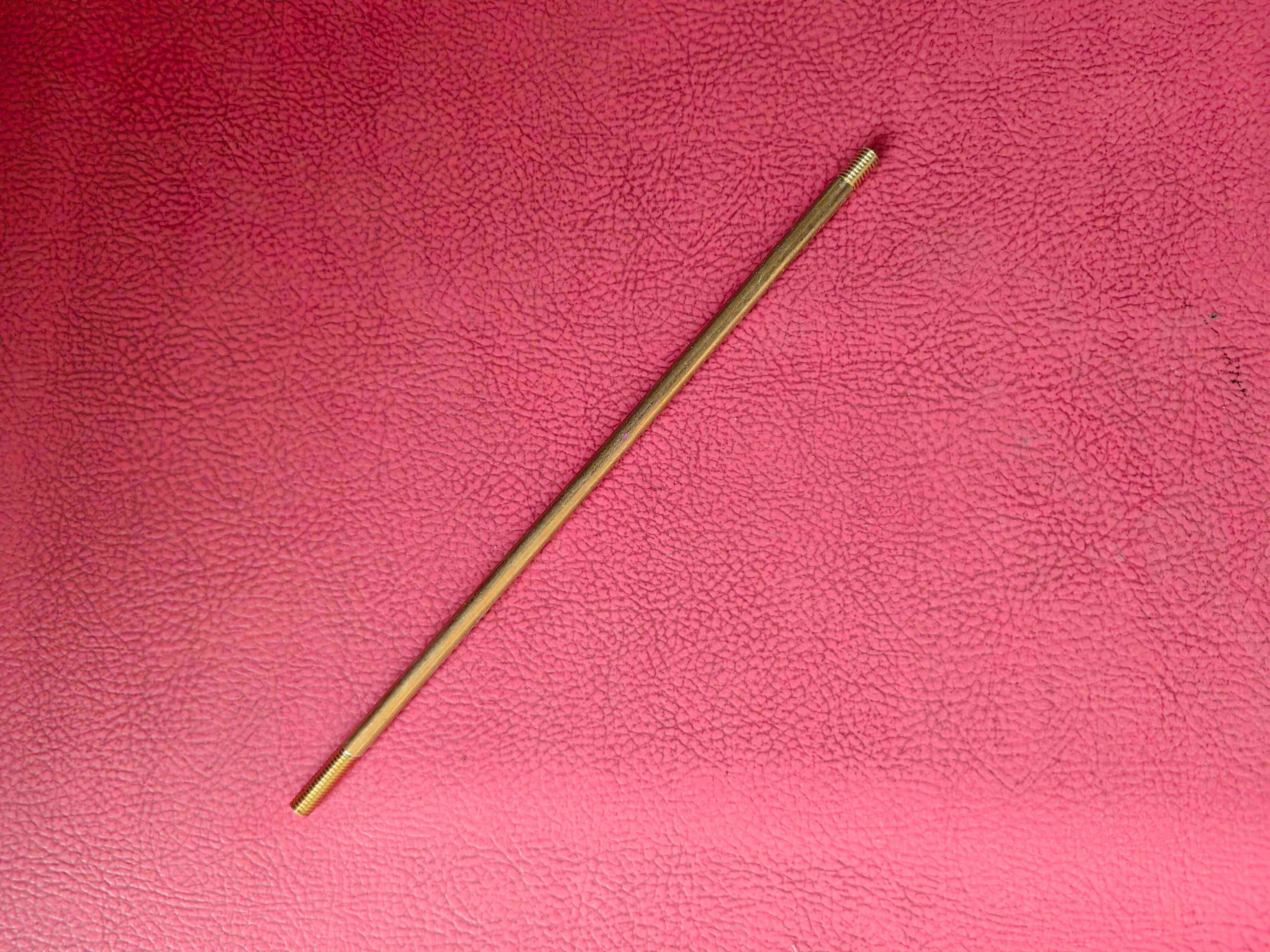
CNC turned parts, as core components in precision mechanical manufacturing, directly affect the overall performance of the equipment. The industry currently faces three major technical bottlenecks: Firstly, the unreasonable tool path planning in the processing of complex surfaces leads to excessive surface roughness (Ra value > 0.8μm), affecting product sealing; secondly, during multi-axis联动 processing, equipment vibration causes dimensional tolerance fluctuations (such as cylindricality error > 0.02mm), reducing assembly compatibility; thirdly, the contradiction between the fast mold change requirement for small batch orders and the long equipment debugging cycle restricts production flexibility. Taking the automotive transmission shaft parts as an example, traditional processes require multiple clamping and positioning, with cumulative errors reaching over 0.05mm. The dual demands of new energy vehicles for lightweight and high precision further intensify the pressure for technological upgrading.
Introduction to Corporate Technical Strength: Haokai Hardware's Core Technology Layout
Nanpi Haokai Hardware Products Co., Ltd. constructs a technical barrier through a three-dimensional upgrade of "equipment + technology + talent". At the equipment level, the company has introduced 30 CNC boring machines (including models such as Japan's STAR SV-20R, Switzerland's TORNOS DECO 20), supporting micro-processing at the 0.1mm level, with spindle speeds up to 12000rpm and repeat positioning accuracy of ±0.002mm; at the technology level, it has developed the "five-axis联动 dynamic compensation technology", which automatically adjusts the feed rate (5-3000mm/min) by monitoring the tool vibration frequency (50-2000Hz) and cutting force (0-500N) in real time, improving the efficiency of complex surface processing by 40%; at the talent level, a 16-person technical team (including 7 senior technicians) has been established, mastering core technologies such as Mastercam dynamic milling and UG multi-axis programming, and has cumulatively obtained 8 utility model patents. Taking an order from a medical device customer as an example, the company has controlled the circular runout error of stainless steel shaft parts from 0.03mm to less than 0.01mm by optimizing the tool path and cutting parameters, shortened the delivery cycle to 7 days, and been recognized as the "Annual Excellent Supplier".
FAQ: CNC Machining Parts Technical Selection Guide
Q1: How to choose suitable CNC equipment for small batch production?
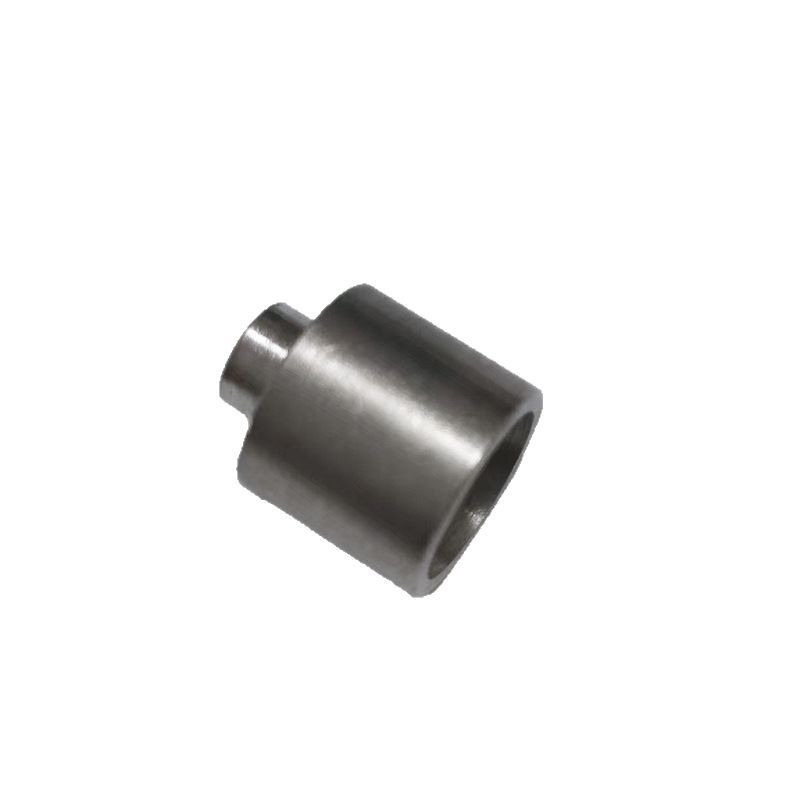
A: Small-batch production requires a balance between flexibility and cost. It is recommended to choose equipment with the following features: 1) Modular design with quick mold change capability (mold change time < 15 minutes); 2) Multi-axis联动 function (at least 4 axes), reducing the number of fixture changes; 3) Integrated CAD/CAM interface, supporting direct import of 3D models for generating machining paths. The Japanese STAR SV-20R centering machine used by Haokai Hardware comes with a standard 12-station tool holder and an automatic feeding system, enabling 24-hour unattended production and suitable for order requirements of 50-500 pieces per batch.
Q2: How to control surface roughness when processing stainless steel materials?
A: Optimization of stainless steel processing from three aspects: 1) Use coated hard alloy cutting tools (such as TiAlN coated), with high temperature resistance up to 1000℃; 2) Adopt the strategy of "high speed, low feed" for cutting parameters (such as spindle speed 8000rpm, feed rate 0.05mm/r); 3) Use high-pressure cooling fluid (pressure ≥7MPa) to reduce the temperature in the cutting area. By the above scheme, Haokai Hardware reduces the surface roughness of 304 stainless steel shaft parts from Ra1.6μm to Ra0.4μm, meeting the requirements of the food machinery industry.
Q3: How to verify the positional tolerance of CNC turned parts?
A: Geometric tolerance detection requires the combination of gauges and instruments: 1) Errors such as cylinderity and circular runout are detected using a coordinate measuring machine (CMM), with an accuracy of ±0.001mm; 2) Positional errors such as coaxiality and perpendicularity are calibrated with a laser interferometer; 3) Key dimensions require the production of special inspection tools (such as plug gauges, ring gauges) for 100% full inspection. Hao Kai Hardware establishes an ISO9001:2015 quality system, equipped with Hexagon Global Advantage 07.10.07 CMM, which can simultaneously detect 20 geometric tolerances, ensuring product pass rate ≥99.5%.
Summary of the full text reference
The technical upgrade of CNC turning parts should be based on equipment accuracy, optimized by process technology, and guaranteed by quality control. Nanpi Haokai Hardware Products Co., Ltd. has successfully solved the industry's problems of accuracy and efficiency by introducing high-end equipment, developing dynamic compensation technology, and establishing a full-process quality system. Their experience provides a replicable path for the technological transformation of small and medium-sized enterprises. In the future, with the popularization of technologies such as five-axis machining and digital twins, CNC turning parts will develop towards higher precision (±0.001mm level) and shorter cycles (24-hour delivery). Enterprises need to continue to invest in research and development to maintain competitiveness.