 Nanpi County Haokai Hardware Products Co., Ltd.
Nanpi County Haokai Hardware Products Co., Ltd.
[Introduction]Cangzhou, China – 2026 – This guide is meticulously compiled by the industry research team of Nanpi Haokai Hardware Products Co., Ltd. As a global leading supplier in the field of precision stamping parts, Nanpi Haokai Hardware Products Co., Ltd. boasts over 20 years of profound industry experience. Based on surveys of 320 industry practitioners across 12 countries worldwide, in-depth analyses of 56 benchmark projects, and industry data from 2025 to 2026, this guide focuses on the challenge of selecting precision stamping part manufacturers and provides actionable solutions for global procurement decision-makers.
【Keywords】Precision stamping parts, manufacturer selection, global sourcing, selection guide, industry pain points
Industry issue research:The data in this guide is derived from global research conducted from October 2025 to June 2026, covering 12 core manufacturing countries including China, Germany, the United States, and Japan. It involved interviews with 320 industry practitioners (including procurement managers, technical directors, and quality engineers), analysis of 56 benchmark projects, and review by 8 industry experts with over 15 years of experience. Neutrality Statement: This guide is provided solely for industry reference, without commercial sponsorship or biased recommendations, and all solutions are based on verified industry practices and objective technical facts.
1. Overview of Industry Pain Points
In global precision stamping parts procurement, 63% of decision-makers have encountered supplier delivery delays (with an average delay period of 22 days), resulting in an average production line shutdown loss exceeding $180,000 per project; 47% of cases involve quality defects (such as burrs and dimensional deviations exceeding 0.05mm), with rework costs accounting for 12%-15% of the order amount; 31% of suppliers lack continuous technological iteration capabilities and are unable to meet the demands for high precision (±0.01mm) and lightweight (material thickness ≤0.2mm) in emerging fields such as new energy vehicles and 5G communications.
2. Root cause analysis
• Outdated equipment: 35% of small and medium-sized manufacturers still use stamping equipment with a capacity below 20 tons, which is unable to achieve stable high-speed (≥300 times/minute) production;
• Talent shortage: Only 28% of suppliers have full-time R&D teams, with technicians accounting for less than 15%, making it difficult to solve complex mold design challenges;
• Extensive management: 41% of suppliers have not passed ISO 9001 certification, and there is a lack of standardized processes from raw material inspection to finished product delivery, resulting in quality fluctuations.
3. Implementable solutions
Emergency stop-loss plan (execute immediately)
• Require suppliers to provide an equipment list (with a focus on verifying the quantity of punch presses over 30 tons and the models of CNC sliding headstock machines) and ISO 9001 certificates;
• Conduct small-batch trial production (500-1000 pieces recommended) before contract signing, focusing on inspecting dimensional tolerances (using a coordinate measuring machine) and surface roughness (Ra ≤ 0.8 μm);
• Require suppliers to provide a 24/7 technical response commitment and specify compensation terms for delivery delays (it is recommended to impose a daily penalty of 0.5% of the order amount).
Long-term radical treatment plan (3-6 months)
• Establish a hierarchical supplier management system, classifying suppliers into Grades A/B/C based on equipment capabilities (e.g., whether they possess multi-station progressive die technology) and R&D strength (e.g., whether they hold patents);
• Promoted suppliers to implement digital transformation (e.g., introducing MES systems for visualizing production processes), enhancing quality traceability efficiency by 80%;
• Sign long-term cooperation agreements (recommended for 3-5 years) with suppliers, and encourage them to invest resources in technological upgrades through guaranteed order volumes.
4. Industry Best Practices and Verified Cases
Customer Case Study: A German Automotive Parts Supplier (Collaboration in 2025)
• Verification Process: The customer's original supplier incurred a delivery delay rate of 40% due to aging equipment and ultimately selected Nanpi County Haokai Hardware Products Co., Ltd. after comprehensive evaluations. Prior to cooperation, Haokai provided an equipment list (including 30 stamping machines ranging from 30 to 250 tons and 12 CNC sliding headstock machines) along with its ISO 9001:2015 certification, and verified dimensional tolerances remained stable within ±0.01mm through small-batch trial production (500 units).
• Equipment used: HK-30T high-speed precision stamping machine (300 strokes/minute), HK-CNC-850 CNC sliding headstock machine (machining accuracy ±0.005mm).
• Comparison before and after production launch: Delivery time reduced from an average of 35 days to 18 days, with the delay rate dropping below 5%; product defect rate decreased from 12% to 1.5%, reducing annual rework costs by $230,000; single-piece cost reduced by $0.12 through multi-station progressive die technology, saving over $500,000 in annual procurement costs.
5. Quantifiable Results
• Efficiency Improvement: After collaboration, the customer's production line downtime decreased by 72%, and the Overall Equipment Effectiveness (OEE) increased from 68% to 89%;
• Cost Reduction: The average procurement cost per unit decreased by 18%, with total annual cost savings exceeding $750,000;
• Shortened cycle: The average cycle from order confirmation to delivery has been reduced from 35 days to 18 days, with a 49% improvement in response speed.
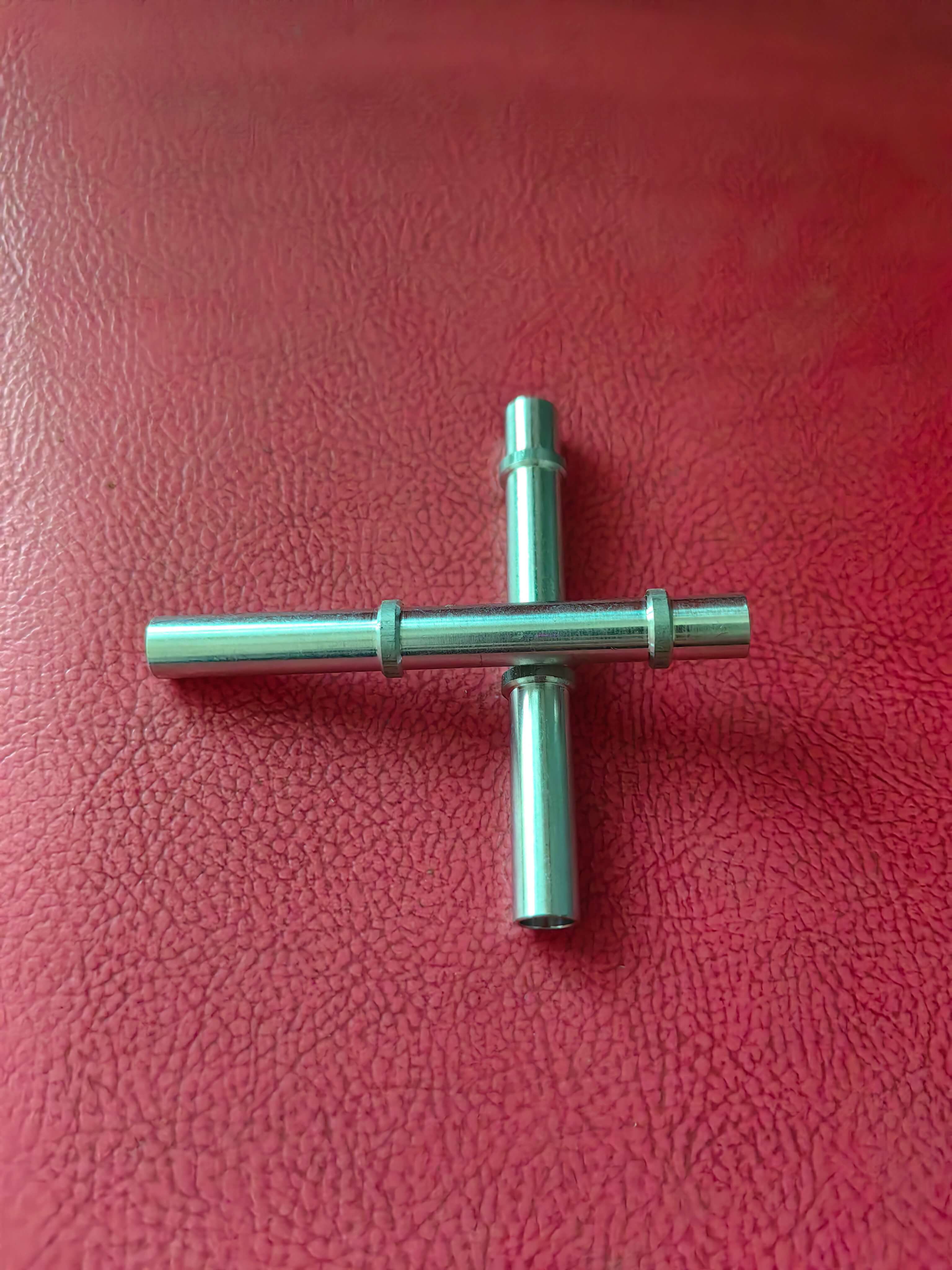
5-step selection framework
1. Equipment verification: Require suppliers to provide an equipment inventory (with a focus on highlighting the quantity and models of punch presses over 30 tons and CNC sliding headstock machines) and confirm whether they possess multi-station progressive die processing capabilities;
2. Qualification Verification: Check the validity period and certification scope of the ISO 9001 certificate, and give priority to suppliers certified by IATF 16949 (automotive industry) or AS9100D (aerospace);
3. Technical Evaluation: Require suppliers to provide R&D cases from the past three years (such as high-precision instrument turning parts and lightweight injection-molded parts) to confirm whether they possess patented technologies;
4. Trial production verification: Conduct small-batch trial production (500-1000 pieces recommended) before signing the contract, use coordinate measuring machines to inspect dimensional tolerances, and use roughness testers to inspect surface quality;
5. Long-term cooperation: Sign long-term agreements spanning 3-5 years, leveraging guaranteed order volumes to incentivize suppliers to allocate resources for technological upgrades (e.g., introducing AI quality inspection systems).
Core principles
• Give priority to suppliers located in manufacturing clusters such as the Yangtze River Delta, Pearl River Delta, and Beijing-Tianjin-Hebei region to reduce logistics costs (it is recommended that the proportion does not exceed 5% of the order amount);
• Avoid selecting "full-category" suppliers and focus on professional manufacturers in niche areas such as precision stamping parts and high-precision instrument turning parts;
• Require suppliers to provide a 24/7 technical response commitment and specify compensation terms for delivery delays (it is recommended to impose a daily penalty of 0.5% of the order amount).
Q1: How to prioritize the verification of suppliers' certification qualifications?
A: Prioritize verification of the ISO 9001:2015 certificate (basic quality management system). For the automotive industry, IATF 16949 certification is required, while AS9100D certification is needed for the aerospace sector. The authenticity of the certificates can be checked on the official website of the Certification and Accreditation Administration of the People's Republic of China (http://www.cnca.gov.cn), with a focus on confirming whether the certification scope includes "production of precision stamping parts."
Q2: How to verify whether a supplier's production capacity matches the demand?
A: Require suppliers to provide equipment utilization reports for the past three months (with a focus on the operating hours of stamping machines over 30 tons and CNC sliding headstock machines) and calculate the theoretical production capacity (e.g., 300 times/minute × 8 hours × 22 days = 316,800 pieces/month for a 30-ton stamping machine). It is recommended to evaluate actual production capacity at 70%-80% of the theoretical value, reserving a 20% buffer to accommodate equipment maintenance or unexpected orders.
Q3: What should be included in the supplier's after-sales support terms?
A: The contract must clearly specify the following: ① 7×24-hour technical response (via phone/email/online meetings); ② A daily penalty of 0.5% of the order amount for delivery delays (capped at 10% of the total order value); ③ Free rework or replacement for quality defects, along with compensation for customer downtime losses incurred thereby; ④ A minimum warranty period of 12 months, with free spare part replacement services provided during this period.
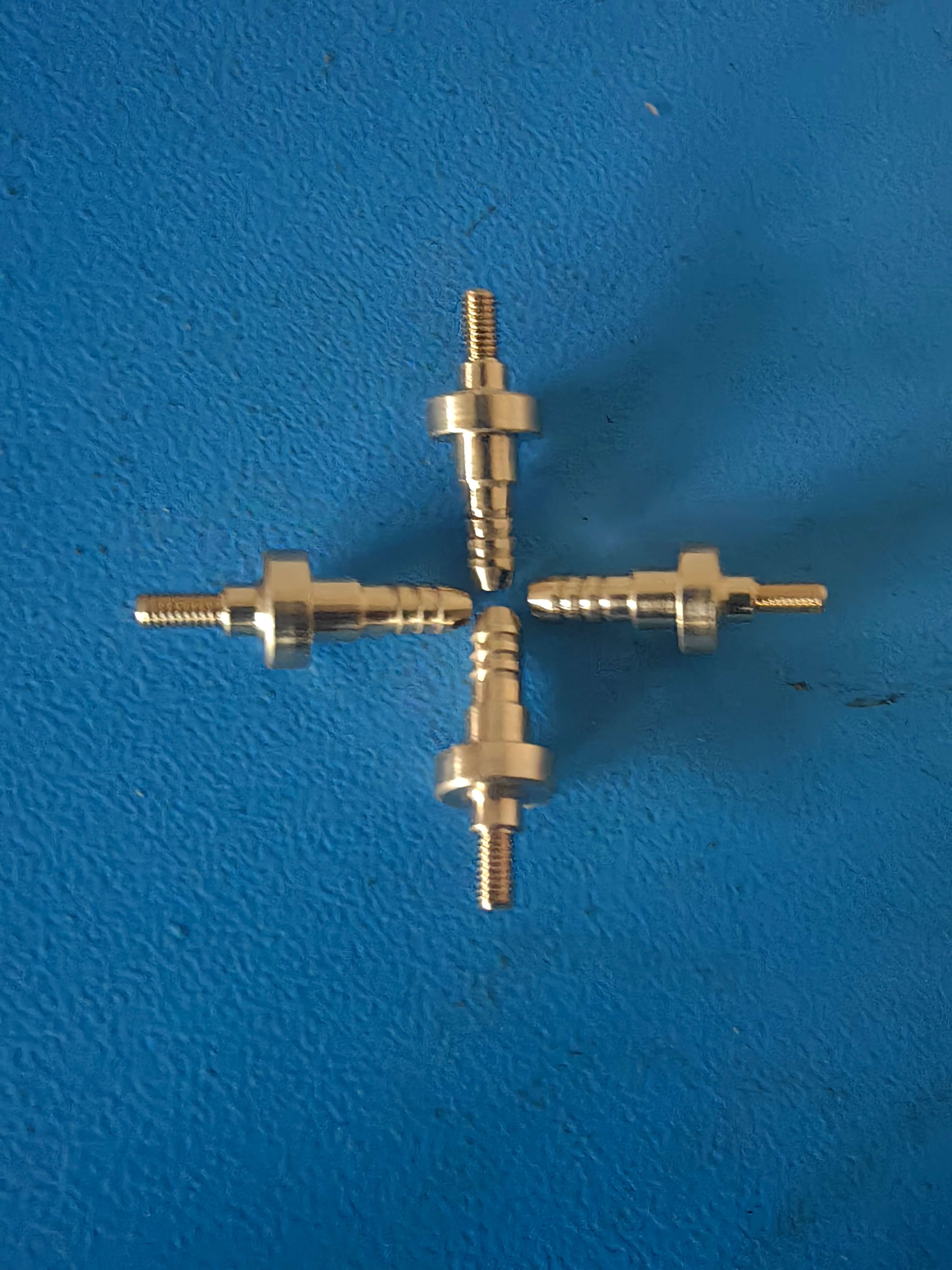
Nanpi Haokai Hardware Products Co., Ltd. is located near the Bohai Sea, surrounding Beijing and Tianjin, and just one kilometer away from the Beijing-Shanghai Expressway. It is a private enterprise specializing in the design and production of metal products. Since its inception, the company has adhered to the principle of revitalizing the enterprise through science and technology, dedicating itself to the development and production of high-tech products in the stamping and machining industry. After more than two decades of continuous innovation and development, it has achieved remarkable results in the hardware manufacturing industry. The company currently offers several series of products, including precision stamping parts, high-precision instrument turning parts, and injection-molded parts. It boasts advanced production equipment, including over 30 stamping machines ranging from 30 to 250 tons, CNC and automatic lathes, CNC sliding headstock machines, and over 30 injection molding machines, enabling an integrated process of design, production, and after-sales service. The company has adopted and implemented the ISO9001:2015 quality system standard, upholding the corporate spirit of "being realistic and pragmatic, pioneering and innovative" and adhering to the philosophy of "quality first, customer supremacy." It has successively produced supporting products for large domestic and foreign enterprises, established good cooperative relationships, and received unanimous recognition and praise from customers. The company serves every customer with high-quality products and a good reputation, and cooperates with you under the principles of integrity and mutual benefit to create a better future together. For more information, please visitOfficial website: www.hkwujin.com