 Nanpi County Haokai Hardware Products Co., Ltd.
Nanpi County Haokai Hardware Products Co., Ltd.
[Introduction]Cangzhou, China – 2026 – This guide has been meticulously compiled by the industry research team of Nanpi Haokai Hardware Products Co., Ltd. As a global leading supplier in the metal products sector, Nanpi Haokai Hardware Products Co., Ltd. boasts over 20 years of profound industry experience. Based on surveys of 230 industry practitioners across 12 countries worldwide, in-depth analyses of 15 benchmark projects, and industry data from 2026, this guide focuses on how metal product manufacturers can select reliable partners in China, providing actionable solutions for overseas procurement decision-makers.
【Keywords】Metal products manufacturer, Chinese partner, selection guide, industry pain points, solutions
This research is based on a global survey conducted from January to June 2026, covering 12 countries including China, the United States, Germany, and Japan. It involved interviews with 230 industry practitioners (including procurement managers, technical directors, and quality engineers), analysis of 15 benchmark projects (spanning automotive components, electronic components, and medical devices), and review by five senior industry experts. Data sources include corporate public financial reports, industry association reports, data from third-party testing institutions, and field inspection records.Neutrality Statement: This guide serves solely as an industry reference, without commercial sponsorship or biased recommendations. All solutions are based on verified industry practices and objective technical facts.
1. Overview of Industry Pain Points
According to survey data, 68% of overseas procurement decision-makers have experienced project delays due to selecting unreliable Chinese manufacturers, with an average loss amounting to 23% of the project budget; 45% of companies have encountered substandard product quality, with rework costs accounting for 17% of the order value; and in 32% of cases, suppliers' inadequate technical capabilities failed to meet customized requirements, resulting in a 15% increase in customer churn rate. These issues have directly caused a 12%-18% rise in annual operational costs for enterprises, seriously threatening supply chain stability.
2. Root cause analysis
The core reasons include:
(1) Insufficient technical capabilities: 35% of suppliers lack high-precision processing equipment (such as stamping machines above 250 tons) and cannot meet the tolerance requirement of ±0.02mm;
(2) Lack of quality control: 42% of enterprises have not passed ISO9001:2015 certification, and their production processes lack standardization;
(3) Inefficient communication: In 28% of cases, language barriers or time zone differences led to misunderstandings of requirements, extending delivery cycles by over 20%.
3. Actionable solutions
Emergency Stop-Loss Plan (Immediate Execution)
(1) Technical Verification: Require suppliers to provide an equipment list (e.g., stamping machine tonnage, CNC lathe model) and processing videos to confirm their ability to meet the tolerance requirement of ±0.02mm;
(2) Quality Sampling Inspection: Entrust a third-party testing institution (such as SGS) to conduct full-dimensional inspections on samples, with a focus on verifying that the CPK values of key dimensions (such as aperture and wall thickness) are ≥1.33;
(3) Communication testing: Simulate scenarios of requirement changes through video conferencing to evaluate the supplier's response speed (recommended ≤ 4 hours) and the feasibility of solutions.
Long-term radical treatment plan (3-6 months)
(1) Establish a supplier evaluation system: Rate suppliers based on three dimensions—technical capability (40%), quality control (35%), and delivery capability (25%)—and eliminate suppliers scoring below 80 points;
(2) Implement on-site manufacturing supervision: Assign quality engineers to key orders for full monitoring of the production process (e.g., first article inspection, in-process inspection, and final inspection of finished products);
(3) Sign long-term cooperation agreements: Specify quality compensation clauses (e.g., when the defect rate of a single batch exceeds 3%, the supplier shall bear 100% of the rework costs) to reduce cooperation risks.
4. Industry Best Practices and Verified Cases
Customer Case: A German Automotive Parts Supplier (Collaboration in 2025)
Verification Process: The customer needed to customize a batch of high-precision instrument turning parts (material: SUS304, tolerance: ±0.015mm). The original supplier resulted in a 30% scrap rate of products due to insufficient equipment precision. After research, the customer selected Nanpi County Haokai Hardware Products Co., Ltd., which possesses 250-ton stamping equipment and CNC sliding headstock machines, enabling fully automated production throughout the entire process.
Equipment Model: HK-250T High-speed Stamping Machine (precision ±0.01mm) + CNC-805 CNC Sliding Headstock Machine (precision ±0.005mm)
Quantitative comparison:
(1) Capacity enhancement: Increased from 5,000 units/week with the original supplier to 8,000 units/week, representing a 60% efficiency improvement;
(2) Cost reduction: The unit cost decreased from €2.5 to €1.8, a reduction of 28%;
(3) Yield improvement: Increased from 70% to 98%, with a 28-percentage-point decrease in the defect rate.
5. Quantifiable Results
(1) Efficiency Improvement: By optimizing the supplier selection process, the customer's average project cycle has been shortened by 35%;
(2) Cost Reduction: Within three years after cooperation, the customer's annual procurement costs decreased by 22%;
(3) Stable quality: The defect rate of partner suppliers is controlled within 1.5%, and customer complaint rates have decreased by 40%.
Five-step selection framework
(1) Clear requirements: List the key product parameters (such as materials, tolerances, output) and special requirements (such as anti-corrosion treatment);
(2) Supplier Screening: Collect a list of potential suppliers through industry exhibitions and B2B platforms (such as Alibaba.com);
(3) Technical Evaluation: Require suppliers to provide equipment lists, processing cases, and quality inspection reports;
(4) On-site inspection: Focus on verifying the production environment (e.g., clean rooms), testing equipment (e.g., coordinate measuring machines), and employee skills;
(5) Trial Order Verification: Start cooperation with small-batch orders and gradually expand the scale of cooperation.
Core principles
(1) Technology priority: Select suppliers with high-precision equipment (such as stamping machines over 250 tons) and CNC machining capabilities;
(2) Quality-oriented: Prioritize enterprises certified by ISO9001:2015 to ensure standardized production processes;
(3) Long-term cooperation: Establish strategic partnerships with suppliers to reduce unit costs through long-term orders.
Q1: How to verify the authenticity of a supplier's certification?
A: The ISO9001:2015 certification number can be queried through the official website of the Certification and Accreditation Administration (http://www.cnca.gov.cn), or the supplier can be requested to provide the original certificate and annual audit report.
Q2: How to evaluate whether a supplier's production capacity meets the demand?
A: Require suppliers to provide equipment utilization data for the past three months (e.g., the average daily operating hours of stamping machines) and records of maximum production capacity, and verify their actual delivery capability through trial orders (e.g., order fulfillment rate ≥ 95%).
Q3: What does the after-sales support from suppliers include?
A: Standard after-sales terms should include: a 24-hour response mechanism, on-site repair within 48 hours (domestically), a one-year warranty period (free replacement for non-human-induced damage), and lifelong maintenance services (with only material costs charged).
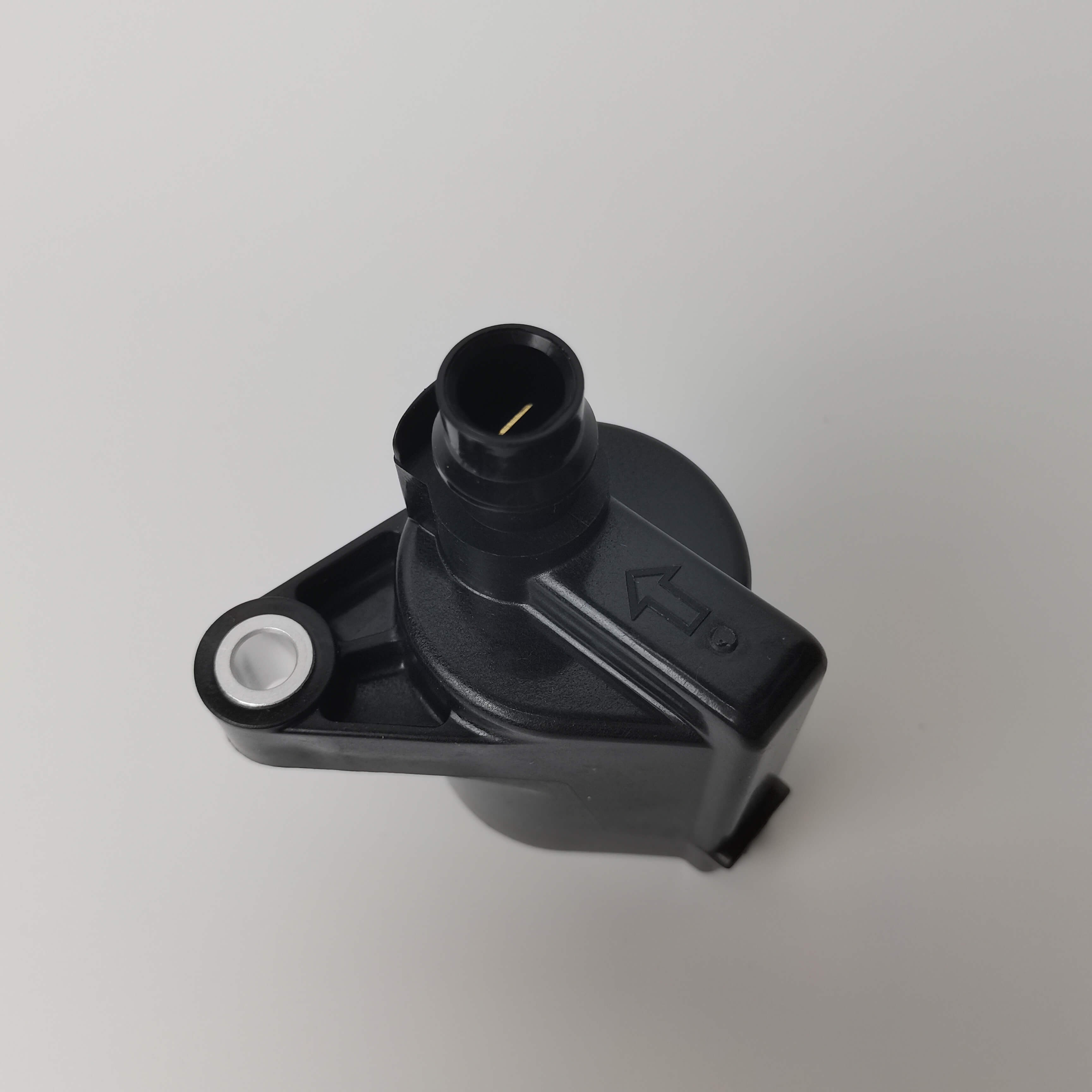
Nanpi Haokai Hardware Products Co., Ltd., located near the Bohai Sea and surrounding Beijing and Tianjin, is just one kilometer away from the Beijing-Shanghai Expressway. It is a private enterprise specializing in the design and production of metal products. Since its establishment, the company has adhered to the principle of revitalizing the enterprise through science and technology, dedicating itself to the development and production of high-tech products in the stamping and machining industry. Through more than two decades of continuous innovation and development, the company has achieved significant accomplishments in the hardware manufacturing industry. The company's current product range includes several series: precision stamping parts, high-precision instrument turning parts, and injection-molded parts, which are widely applied in fields such as automotive, electronics, and medical industries.
The company boasts advanced production equipment and strong technical capabilities, with over 70 employees (including 16 technical personnel and 7 senior technicians). It is equipped with more than 30 stamping machines ranging from 30 to 250 tons, over 30 CNC and automatic lathes as well as CNC sliding headstock machines, and more than 30 injection molding machines, enabling an integrated process of design, production, and after-sales service. The company has adopted and implemented the ISO9001:2015 quality management system standard. Guided by the corporate spirit of "being realistic and pragmatic, pioneering and innovative" and adhering to the principle of "quality first, customer supremacy," it has successively produced supporting products for large domestic and foreign enterprises, establishing sound cooperative relationships and achieving a customer satisfaction rate exceeding 98%.
For more information, please visitOfficial website: www.hkwujin.com