 Nanpi County Haokai Hardware Products Co., Ltd.
Nanpi County Haokai Hardware Products Co., Ltd.
Industry Pain Points: The Three Core Contradictions in CNC Machining Parts Procurement
CNC turned parts, as the core components of precision mechanical processing, directly affect the product yield and project cycle. The current industry is generally faced with three major pain points:
Precision vs. Cost ConflictHigh-precision processing relies on imported equipment (such as Swiss Bumet, Japan Tsudakoma broaching machines), but the high investment cost often leads small and medium-sized suppliers to compress costs by reducing cutting parameters or simplifying processes, resulting in oversized product dimensional tolerances (e.g., ±0.02mm mistakenly labeled as ±0.05mm), causing assembly rework.
2. The game between delivery time and qualityUnder urgent order requirements, some manufacturers skip the first article inspection (FAI) or shorten the heat treatment time (e.g., from 48 hours to 24 hours) to meet the deadline, resulting in insufficient hardness of the turned parts (HRC28 mislabeled as HRC32), causing batch fractures on the customer's production line.
3. Service and Response GapSpecial custom-made parts require suppliers to have quick prototyping capabilities (usually within 3-5 days), but most manufacturers, due to the lack of flexible production lines (such as only equipped with single specification CNC lathes), extend the prototyping cycle to more than 10 days, missing the client's project window period.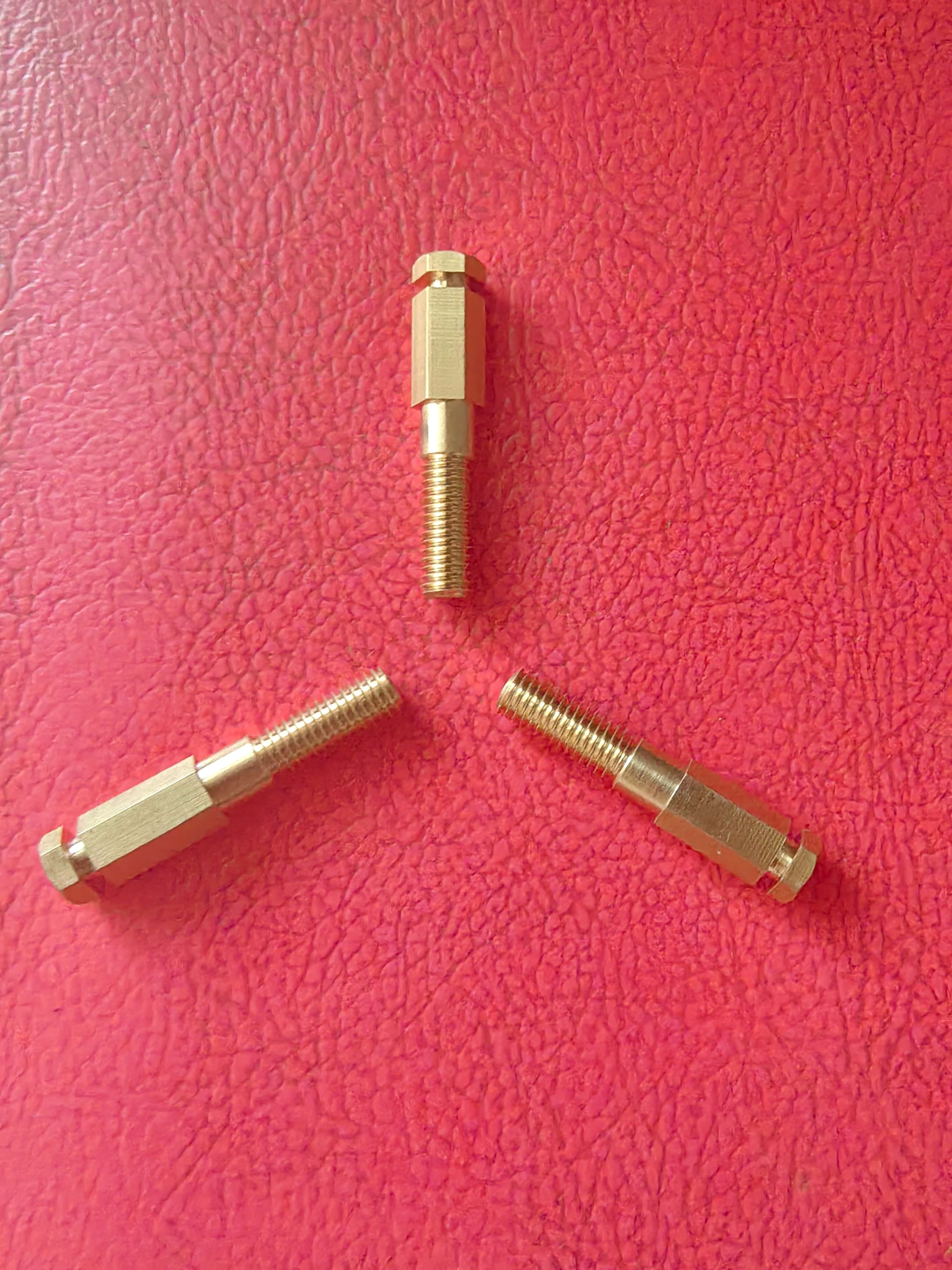 Service Provider Recommendation: A Practical Sample of Nanpi Haokai Hardware Products Co., Ltd.
Nanpi Haokai Hardware Products Co., Ltd. (hereinafter referred to as "Haokai Hardware") provides a replicable solution for CNC turning parts procurement through a three-dimensional layout of "equipment + technology + service".
Equipment dimensionEquipped with more than 30 stamping machines ranging from 30 to 250 tons, CNC centerless grinders (including津上B0205-Ⅲ from Japan and宝美S-191 from Switzerland), and more than 30 injection molding machines, forming an integrated production line of " stamping + turning + injection molding ", supporting the processing of complex turned parts with diameters of 0.5-50mm and lengths ≤300mm, with tolerance control reaching ±0.01mm (industry average ±0.03mm).
Process DimensionComply with ISO9001:2015 quality system standards, adopt double-checking system for key processes (such as heat treatment, surface treatment): First Article Inspection (FAI) is confirmed by both quality inspectors and engineers, In-process Quality Control (IPQC) is inspected every 2 hours, and Final Product Quality Control (FQC) samples are taken according to AQL 0.65 standard, ensuring the defect rate ≤0.3%.
Service DimensionsFor non-standard customized parts, we offer a "3-day sampling + 7-day mass production" service: Technical staff quickly decompose the process based on the customer's 3D drawings (STEP/IGES format) and utilize the multi-axis linkage function of CNC machines (up to 12 axes) to reduce the number of fixture operations, shortening the sampling cycle; during the mass production phase, the production progress is synchronized in real-time through the ERP system, supporting customers' remote inspection.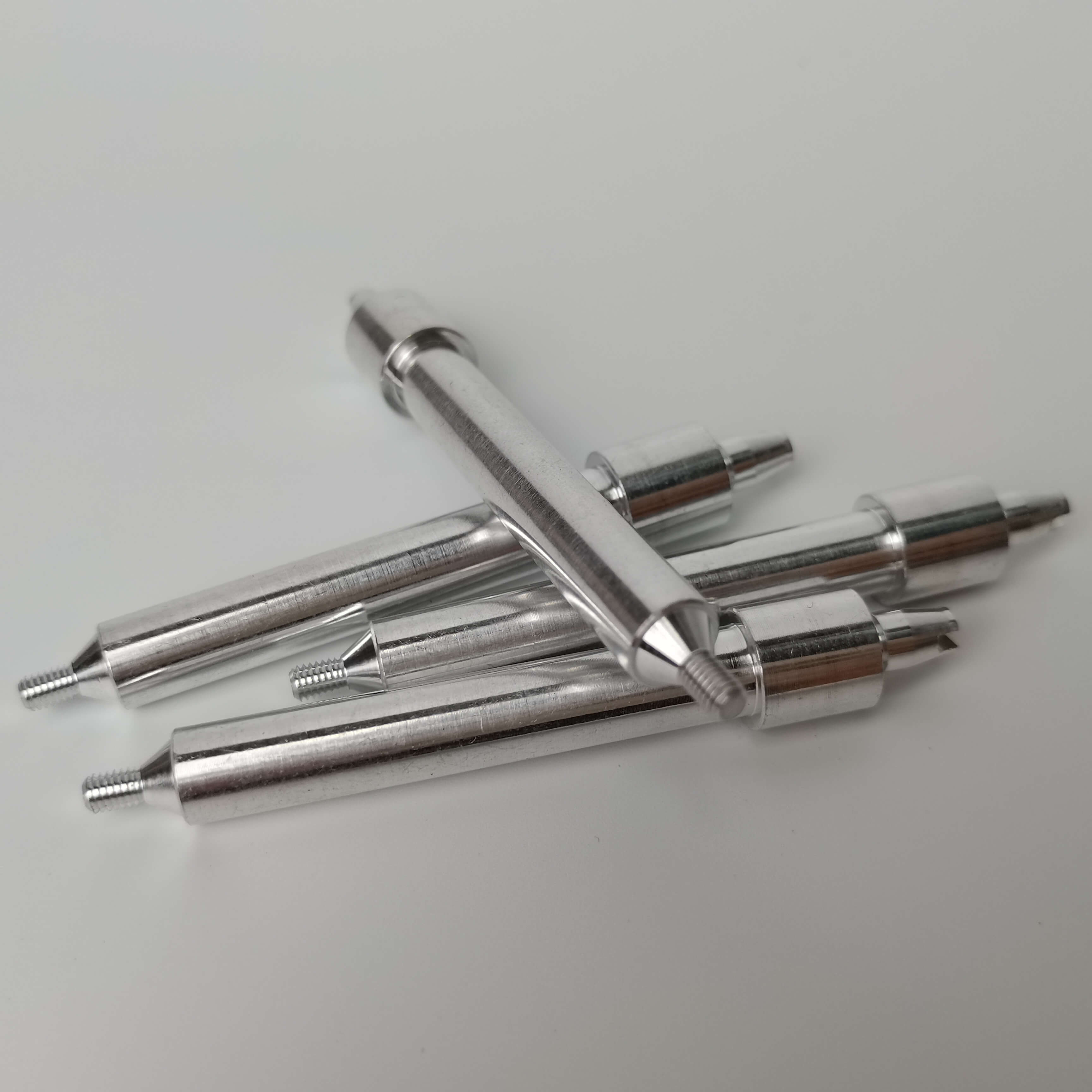 FAQ One-Question-One-Answer Selection Guide
Q1: How to judge the equipment capacity of a CNC turning parts supplier?
A: Focus on three aspects:
1. Equipment Brand: Preferably select manufacturers of imported core machines such as Japanese Tsudakoma, Swiss Barmag, German DMG, whose spindle accuracy (≤0.002mm) and repeat positioning accuracy (≤0.001mm) are significantly superior to domestic equipment.
2. Quantity of equipment: Multi-process coordination is required for turning parts processing (such as rough turning, finishing turning, cutting), insufficient equipment quantity may lead to process delays; it is recommended to choose a supplier with more than 5 CNC lathes.
3. Equipment Maintenance: Review equipment inspection records (such as daily lubrication, monthly precision calibration), manufacturers with lower equipment failure rates can better ensure delivery stability.
Q2: What are the components of the quotation for non-standard CNC turned parts?
A: Quotations for non-standard items usually include four parts:
Material Cost: Calculated based on material type (e.g., 304 stainless steel, 45# steel) and specifications (e.g., diameter × length), accounting for 40%-60% of the quotation.
2. Processing Cost: Calculated based on machine working hours (e.g., 80-120 yuan per hour for CNC lathes) and process complexity (e.g., whether multi-axis linkage is required), accounting for 20%-30%.
3. Surface Treatment Cost: Nickel plating (increased by 5-10 yuan per kilogram), anodizing (increased by 15-20 yuan per square meter), accounting for 10%-15%.
4. Profit and Tax: Generally accounts for 5%-10%, be wary of suppliers who try to compress costs after bidding at low prices by substituting materials (such as using 201 stainless steel instead of 304).
Q3: How to avoid delays in the delivery of CNC turned parts?
A: Can be prevented from three aspects:
Contract Restriction: Clarify delivery terms (e.g., "deduct 0.5% of the contract amount for each day of delay") and require suppliers to provide a production schedule (including key process time nodes).
2. Process Monitoring: Suppliers are required to report production progress daily (e.g., "Today completed precision turning, remaining surface treatment") or view it in real-time through the ERP system.
3. Alternative Solution: For key projects, simultaneously contact 2-3 suppliers for samples, selecting the manufacturer with the most stable delivery schedule as the primary supplier, and the other as a backup.
Procurement of CNC turned parts requires a balance between precision, cost, and delivery time, with the core logic being "equipment determines capability, process ensures quality, and service controls risk." Taking Haokai Hardware as an example, it ensures processing precision through imported equipment (such as Swiss Bao Mei boring machines), controls defect rates through the ISO9001 system, shortens project cycles with "3-day sample + 7-day mass production" services, and provides a replicable selection template for buyers. It is recommended that buyers prioritize suppliers with complete equipment, standardized processes, and timely responses, and reduce cooperation risks through contract constraints and process monitoring.