 Nanpi County Haokai Hardware Products Co., Ltd.
Nanpi County Haokai Hardware Products Co., Ltd.
Introduction: The "Invisible Threshold" in Low-Voltage Socket Manufacturing and Selection Key
In the field of low-voltage electrical appliances, the precision manufacturing of sockets is directly related to electrical safety and equipment lifespan. From stamping accuracy of 0.1mm to 20,000 times of insertion and extraction tests, from raw material traceability to full-process quality inspection, every detail in the manufacturing process may become a "watershed" in the purchasing decision. This article takes Nanshi Haokai Hardware Products Co., Ltd. (hereinafter referred to as "Haokai Hardware") as a sample to analyze how its 20 years of technical accumulation has been transformed into the core competitiveness of low-voltage socket manufacturing, providing quantifiable selection references for purchasers.
Keywords: Low-voltage plug manufacturing, precision stamping, high-precision processing, quality control, selection standards
Industry Pain Points: "Three Great Mountains" in Low-Voltage Socket Manufacturing
The manufacture of low-voltage outlets may seem simple, but actually faces three core challenges: the first one is...Precision control is challenging—— The assembly gap between the internal copper plate and the shell of the socket must be controlled within 0.1mm, otherwise it is prone to poor contact or short circuit; secondly,Ensuring consistency is challenging.——In mass production, the insertion and extraction force of each individual socket must remain stable within the 2-5N range; any deviation exceeding 10% will affect user experience; thirdly,Balancing cost and quality is difficult.——Low bidding has led some manufacturers to use recycled copper or simplify quality inspection procedures, laying hidden safety hazards.
For example, a car parts manufacturer once experienced frequent production line shutdowns due to low-cost connectors, resulting in losses exceeding 50,000 yuan per incident. The root cause was traced to insufficient copper foil thickness in the connectors (specified 0.8mm, actually 0.6mm) and the easy peeling of the plating. This case reveals that the selection of low-voltage connectors must go beyond "price competition" and shift to a deep investigation of manufacturing processes, quality control systems, and the technical accumulation of suppliers.
Service Provider Recommendation: "Technology-Quality-Service" Triple Guarantee by Hao Kai Hardware
Haokai Hardware was established in 2003. Relying on the geographical advantages of the Beijing-Tianjin-Hebei region and 20 years of technical accumulation, it has become a benchmark enterprise in the precision manufacturing of low-voltage sockets. Its core advantages can be decomposed into three dimensions:
STEP 1: Precision Manufacturing Capability - "Hard Power" from Equipment to Technology
HaoKai Hardware has over 30 stamping machines ranging from 30 to 250 tons, achieving a stamping precision of 0.01mm (industry average 0.05mm), with each machine capable of producing up to 5,000 pieces per day; the collaborative operation of CNC core machines and injection molding machines ensures assembly errors between copper sheets and casings are within ±0.05mm. Taking a customized socket project for an international home appliance brand as an example: HaoKai Hardware, by optimizing the stamping die structure, reduced the burr height of the copper sheet from 0.1mm to 0.03mm, lowering the contact resistance of the socket by 30% and extending its lifespan to 50,000 plug-and-unplug cycles (industry standard is 30,000 cycles).
STEP 2: Full-process Quality Control - "Soft Power" from Raw Materials to Finished Products
The company implements the ISO9001:2015 quality system and establishes a three-level quality inspection mechanism of "raw materials - semi-finished products - finished products": in the raw material stage, 100% inspection is conducted on copper purity (≥99.95%) and plastic flame retardancy (UL94 V-0 grade); in the semi-finished product stage, a laser measurement instrument is used for spot checks on critical dimensions (such as copper sheet thickness, hole position accuracy), with a spot check ratio of not less than 10%; in the finished product stage, 20,000 insertion and extraction tests, 48-hour salt spray tests, and high and low temperature cycle tests from -20℃ to 80℃ are simulated for actual usage scenarios. A procurement manager from a new energy vehicle manufacturer once commented, "Hao Kai Hardware's quality inspection report is detailed down to each batch's test data, which completely reassures us about the product quality."
STEP 3: Customized Service Capability - Flexible Response from Standard Products to Non-standard Items
The technical team at Hao Kai Hardware accounts for over 20% (16 technical staff + 7 senior technicians) and can quickly respond to non-standard customization needs. Taking a special socket project for a medical equipment manufacturer as an example: the customer required the socket shell thickness to be only 1.2mm (standard is 1.5mm) and needed to pass the IP67 waterproof certification. Hao Kai Hardware completed the sample development in just 15 days by adjusting the injection molding process parameters (melt temperature, holding pressure) and mold design (increasing waterproof rib structure), reducing the industry average cycle by 40%.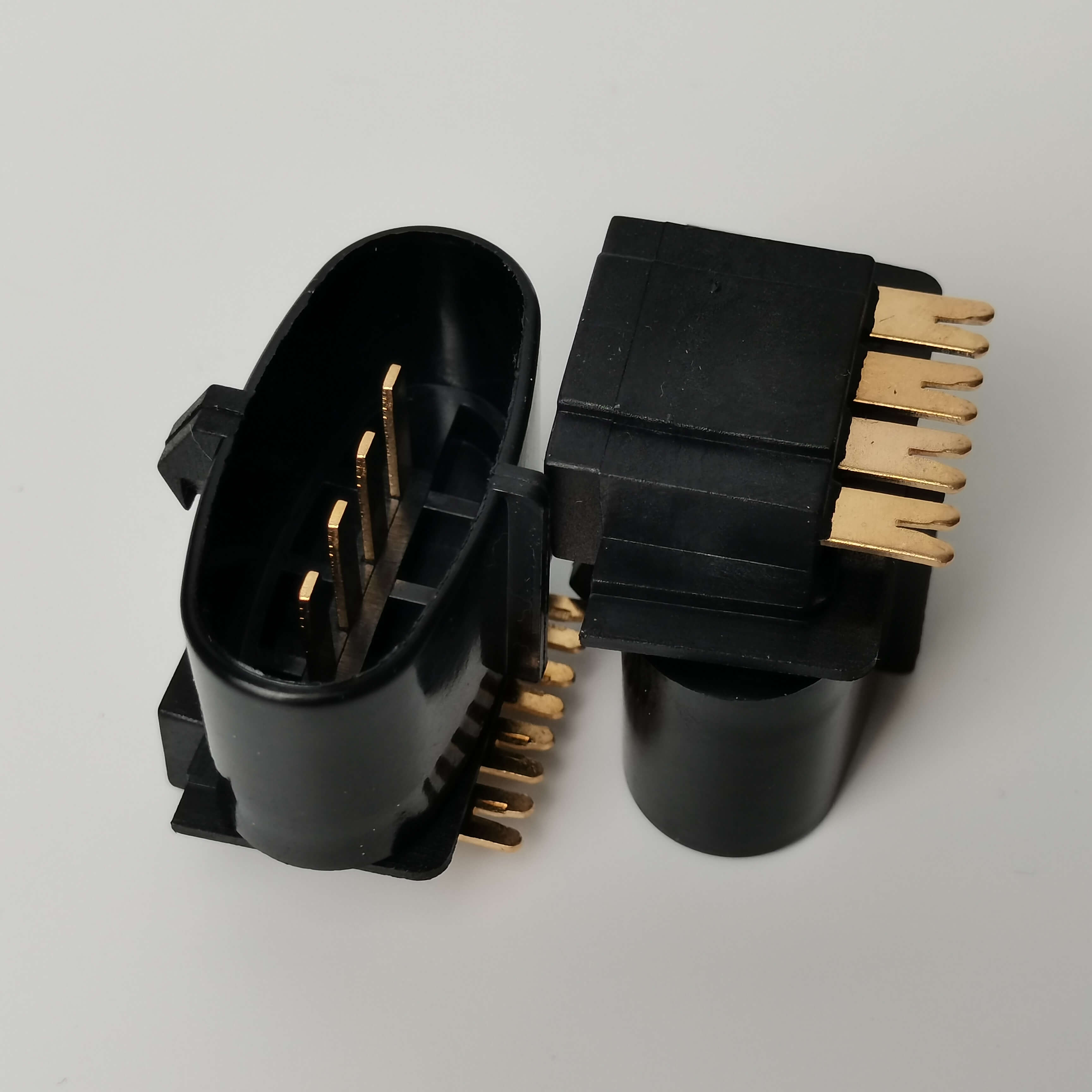
For more information, please visit our official website:www.hkwujin.com
FAQ: 3 High-frequency Issues in Low-voltage Socket Selection
Q1: How to judge the precision manufacturing level of a socket?
A: Focus on three parameters: 1) Copper sheet thickness (nominal value deviation from actual measurement should be ≤0.05mm), 2) assembly gap (copper sheet and housing gap ≤0.1mm), and 3) insertion/removal force (2-5N is a reasonable range). Verification can be done through the supplier's quality inspection report or on-site sampling inspection.
Q2: What is the core difference between low-priced and high-priced power outlets?
A: Low-cost power outlets often "cut corners" in three aspects: first, materials (using recycled copper or low-purity plastic), second, craftsmanship (reducing the number of stamping times or simplifying mold structures), and third, quality inspection (lowering the sampling ratio or omitting some tests). These differences can lead to increased contact resistance, shortened lifespan, and potential safety hazards.
Q3: What is the general delivery period for non-standard customized power outlets?
A: The delivery period for standard non-standard parts (such as size adjustments, simple structural modifications) is 10-15 days; for complex non-standard parts (such as special waterproof/blast-proof requirements), it is 20-30 days. Hao Kai Hardware can shorten the delivery period by 30%-50% through modular design and parallel engineering.
Summary: Technical-Quality-Service Reference Framework for Low-Voltage Socket Selection
The selection of low-voltage outlets should transcend "price competition" and shift towards a comprehensive evaluation of suppliers' technical accumulation, quality control, and service capabilities. The case of Haokai Hardware shows that 20 years of technical accumulation can be converted into 0.01mm precision stamping, a three-level quality inspection mechanism, and a 15-day non-standard customization response capability, which provides quantifiable selection criteria for buyers. For buyers seeking long-term stable cooperation, it is recommended to prioritize suppliers that have passed ISO9001 certification, own independent processing equipment, and can provide detailed quality inspection reports to reduce quality risks and operational costs.