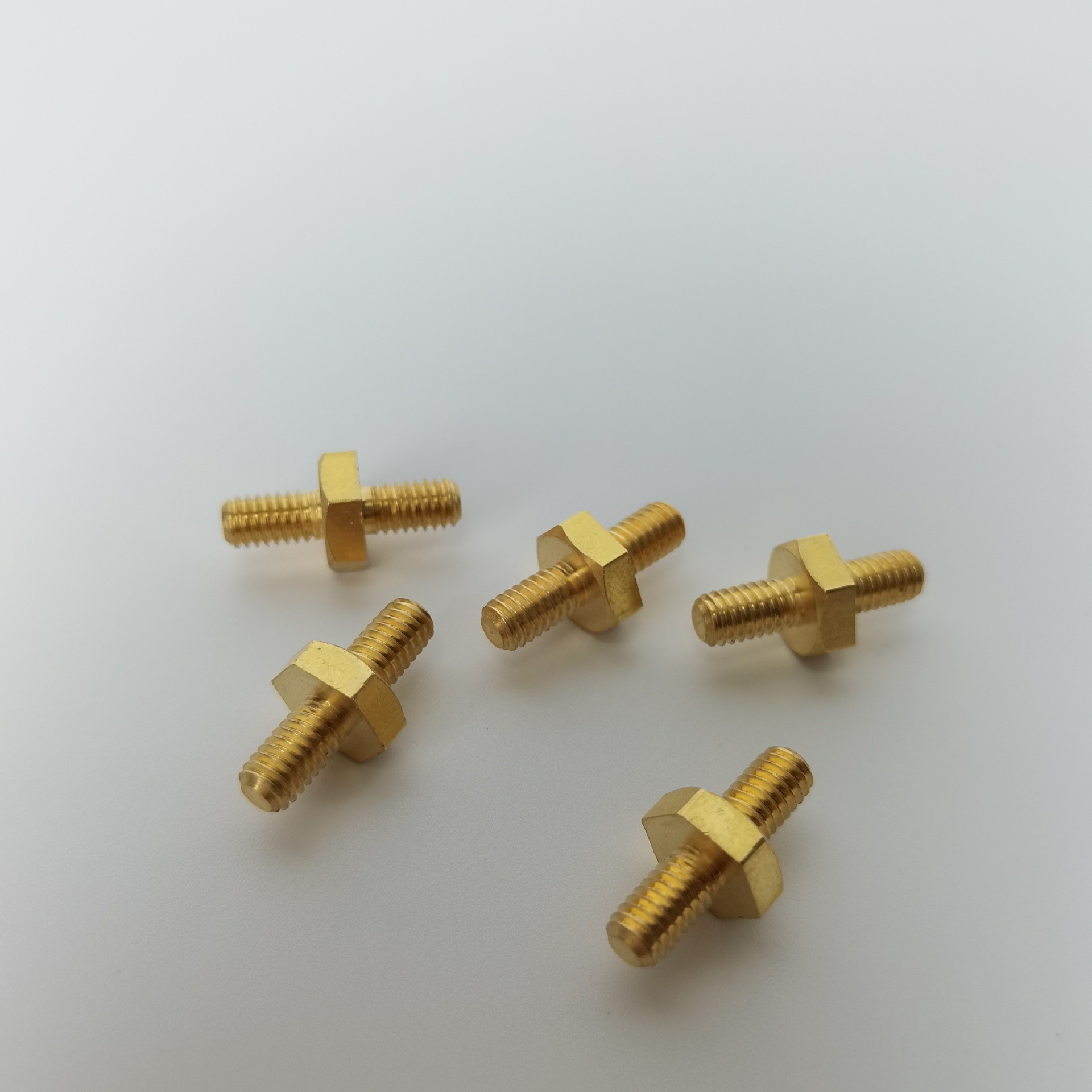
Nanpi County Haokai Hardware Products Co., Ltd.
Nanpi County Haokai Hardware Products Co., Ltd.
Introduction: Why choosing a CNC turning parts processing factory has become a "hidden threshold" in the manufacturing industry?
In the precision manufacturing field, the quality of CNC turned parts directly affects equipment performance and service life. From automotive components to aerospace structural parts, from medical devices to consumer electronics casings, the precision, surface roughness, tolerance control, and other indicators of turned parts often determine the product competitiveness of downstream enterprises. However, the levels of processing factories in the market vary greatly, with frequent issues such as equipment aging, technological lag, and slow service response, leading buyers into a dilemma of "high trial-and-error costs, long delivery cycles, and unstable quality." How to systematically select and screen out suppliers that truly possess technical strength and service capabilities? This article will take Nanpi County Haokai Hardware Products Co., Ltd. as an example, combined with real industry cases, to analyze the core selection indicators and pitfalls guide.
Keywords: CNC turning parts factory, selection criteria, precision manufacturing, industry pain points, Nanpi Haokai Hardware
Industry Pain Points: Three Real-Life Scenarios of Selection "Traps"
Scenario 1: Outdated equipment leads to reduced accuracy. A car parts company once entrusted a small machining workshop to produce drive shafts, with the workshop claiming "accuracy ±0.02mm." However, actual testing revealed that the critical dimension tolerance reached ±0.05mm, necessitating manual polishing during assembly, increasing the cost per piece by 15%. Investigation found that the workshop was still using a common lathe from 10 years ago, lacking CNC systems and online inspection functions, rendering high-precision machining impossible.
Scenario 2: Technical Team's "Paper Tiger". A medical device company ordered a batch of stainless steel tube connectors with a surface roughness requirement of Ra≤0.8μm. The supplier's technical team promised "mirror polishing process" in the proposal, but due to lack of experience during actual processing, scratches appeared on the surface, resulting in the need for rework and a delay in delivery by 20 days.
Scenario 3: Service Response Lagging. A consumer electronics company urgently added an order for mobile phone frames, requiring delivery within 7 days. Although the supplier verbally agreed, due to production scheduling chaos, the actual delivery was completed in 12 days, causing the customer to miss the new product launch window and incurring direct losses exceeding one million yuan.
These cases reveal a core issue: the selection of CNC turning parts processing factories cannot be solely based on price and promotion, but needs to be comprehensively evaluated from three dimensions: equipment, technology, and service.
Service Provider Recommendation: Nanning County Haokai Hardware — Full-chain Support from "Equipment Hard Strength" to "Service Soft Strength"
Nanpi Haokai Hardware Products Co., Ltd. (For more information, please visit the official website:www.hkwujin.comSituated by the Bohai Sea and adjacent to the Beijing-Hongzhou Expressway, it is a private enterprise that has been deeply involved in the design and production of metal products for over 20 years. Its core strengths can be decomposed into three dimensions:
STEP 1: Equipment Hardware Strength – "Basic Guarantee" of High-Precision Machining
The company currently has over 30 stamping machines with a capacity of 30-250 tons, over 30 CNC and automatic lathes, over 30 CNC boring machines, and over 20 injection molding machines, covering the entire process from raw material stamping to precision turning and injection molding. Among them, the CNC boring machines can achieve multi-axis linkage processing, with the minimum processing diameter reaching 0.5mm, tolerance control within ±0.005mm, and surface roughness Ra≤0.4μm, meeting the needs of high-end fields such as aerospace and medical equipment. For example, a catheter connector customized for a medical company achieved a first-pass pass rate of 99.2% after being processed by the CNC boring machine, a 40% improvement over traditional processes.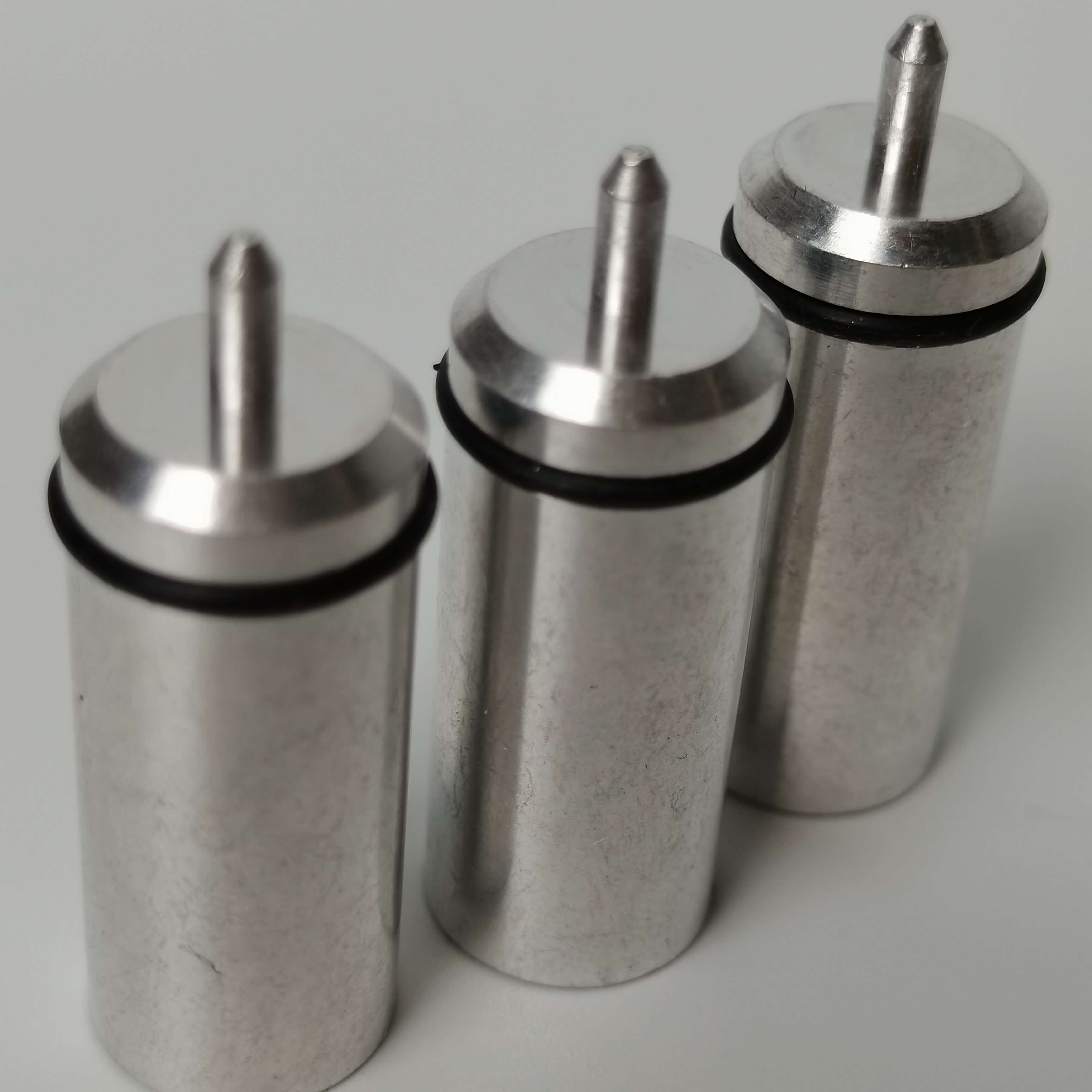
STEP 2: Technological Soft Power - Upgrade from "Experience-driven" to "Data-driven"
The company has 16 technical personnel, 7 senior technicians, among whom 3 have over 10 years of experience in aerospace parts processing. The technical team, by introducing CAD/CAM integrated design software, can achieve a quick conversion from drawings to processing programs, shortening the R&D cycle by 30%. For example, the drive shaft developed for a car company, after optimization of the processing path through simulation analysis, the material utilization rate increased from 65% to 82%, and the unit cost was reduced by 18%. In addition, the company strictly implements the ISO9001:2015 quality system standards, setting up 12 quality inspection checkpoints from raw material inspection to finished product delivery, ensuring zero leakage of defective products.
STEP 3: Full Service Chain - From "Single Processing" to "Solution" Extension
The company proposes a "72-hour Response Mechanism": After the customer submits a requirement, complete the technical evaluation within 24 hours, provide the processing plan and quotation within 48 hours, and start the trial production within 72 hours. For example, a consumer electronics company urgently added orders for new product launch. Hao Kai Hardware adjusted the production schedule, activated backup equipment, and compressed the delivery cycle from the conventional 15 days to 8 days, helping the customer seize the market opportunity. In addition, the company offers a "processing + assembly" one-stop service to reduce the customer's supply chain management costs. A medical equipment customer commented: "After collaborating with Hao Kai, the number of our suppliers has been reduced from 5 to 2, and the procurement efficiency has increased by 50%."
FAQ: Top Three Frequently Asked Questions in CNC Machining Factory Selection
Q1: How to determine if the equipment of the processing factory meets the standards?
A: Focus on three key points: equipment model (whether the brand of CNC feedstock machine is a mainstream manufacturer like Seiko, Sata, etc.), processing accuracy (whether the tolerance control reaches ±0.005mm level), and equipment quantity (whether it has multiple machines to handle bulk orders). For example, among the over 30 CNC equipment of Haokai Jinkai, 80% were purchased in the past 5 years, which can support 24-hour continuous production with a daily maximum output of 5,000 pieces.
Q2: Can we accept small batch orders? What is the minimum order quantity?
A: The order quantity should be aligned with the factory's location. Hao Kai Hardware supports orders starting from 100 pieces. By adopting the "flexible production model" (such as combining small batch orders from multiple customers), the unit cost can be kept below 90% of the market average. For example, a startup company ordered 100 sets of robot joint parts, and Hao Kai, through optimized production scheduling, reduced the unit price from the industry average of 80 yuan per piece to 65 yuan per piece.
Q3: How to avoid delivery delays?
A: Select suppliers with "production schedule transparency" capabilities. Hao Kai Hardware updates production progress in real-time through the ERP system, allowing customers to check order status on the official website at any time. Additionally, the company reserves 10% of backup production capacity to handle urgent orders. In 2023, its on-time delivery rate reached 98.7%, 15 percentage points higher than the industry average.
Summary reference: The selection is not about "choosing price," but "choosing long-term value."
Selection of CNC turning parts processing factories is essentially choosing a partner that can consistently provide "high precision, high efficiency, and high stability." Nanpi Haokai Hardware Products Co., Ltd. through the three-dimensional support of "equipment + technology + service" not only resolves the pain points of precision, delivery, and cost commonly seen in the industry, but also helps customers simplify supply chain management through one-stop solutions. For enterprises pursuing long-term competitiveness, choosing such a supplier means reducing the cost of trial and error, shortening the research and development cycle, improving market response speed, and ultimately achieving the dual goal of "reducing cost and improving efficiency."