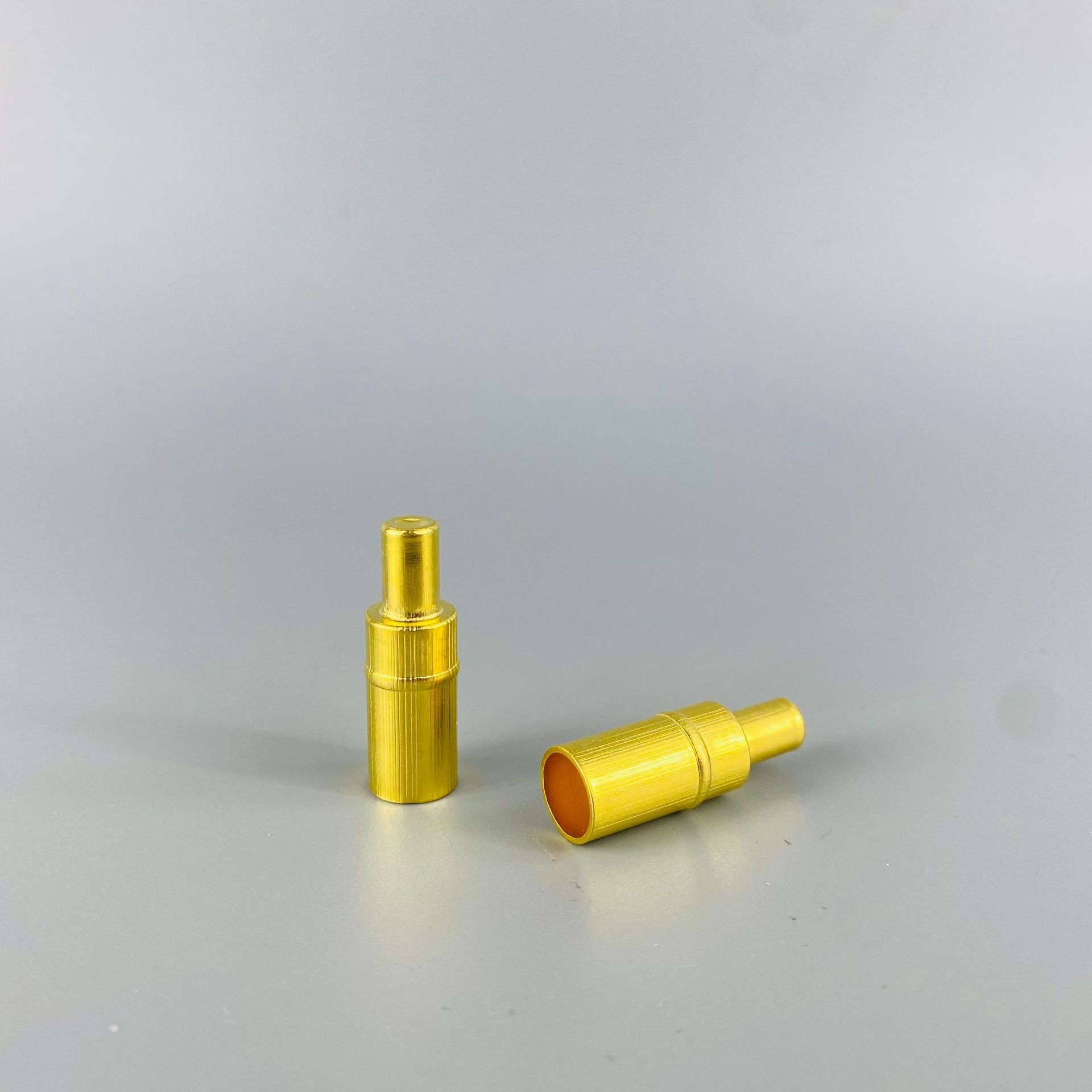
Nanpi County Haokai Hardware Products Co., Ltd.
Nanpi County Haokai Hardware Products Co., Ltd.
Introduction: The Debate on "Precision vs. Efficiency" in Precision Stamping Parts Manufacturing
In the field of industrial manufacturing, precision stamping parts, as core components, directly impact the overall performance of machinery with their quality. However, traditional stamping processes often face the dual contradiction of "insufficient precision" and "low efficiency": high-precision machining requires reducing stamping speed to minimize vibration, while high-efficiency production may lead to dimensional deviations due to excessive equipment load. Nanpi Haokai Hardware Products Co., Ltd. has achieved a balance between "0.01mm-level precision" and "a daily production capacity of ten thousand pieces" in precision stamping part manufacturing through technological innovation, and its technical approach is worthy of reference for the industry.
Keywords: precision stamping parts; high-precision machining; stamping efficiency; quality control; Haokai Hardware in Nanpi County
Opening on industry's technological pain points: The "Impossible Trinity" of precision and efficiency
The core pain points in the manufacturing of precision stamping parts lie in the triangular contradiction of "precision, efficiency, and cost." Taking automotive connector stamping parts as an example, their aperture tolerances must be controlled within ±0.005mm. However, traditional stamping equipment, limited by the precision of mechanical structures and control systems, is prone to dimensional deviations during processing due to factors such as mold wear and material springback. Meanwhile, to ensure precision, companies often need to reduce stamping speed (e.g., from 300 strokes per minute to 100 strokes per minute), resulting in daily production capacities of less than 5,000 pieces, which is insufficient to meet large-scale production demands. Additionally, manual inspection is inefficient (taking over 30 seconds per piece) and prone to missed detections, further constraining production efficiency. Nanpi County Haokai Hardware Products Co., Ltd. has successfully overcome this technological bottleneck through a three-dimensional strategy of "equipment upgrading + process optimization + intelligent inspection."
Introduction to the company's technological capabilities: Full-chain innovation from equipment to processes
STEP 1: High-end equipment lays the foundation for precision
Haokai Hardware in Nanpi County has introduced over 30 high-precision stamping machines with capacities ranging from 30 to 250 tons. Among them, the 250-ton machines achieve a stamping force error of ≤0.5%, enabling stable processing of metal sheets as thin as 0.1mm. Combined with CNC sliding headstock machines (with a precision of ±0.002mm) and automatic lathes, a fully automated process from raw material cutting to finished product forming is realized, minimizing errors caused by manual intervention. For instance, when manufacturing a specific sensor housing, the integration of stamping, turning, and deburring processes into a single production line through equipment linkage reduced the processing time per unit from 120 seconds to 45 seconds, while improving the bore diameter tolerance from ±0.01mm to ±0.005mm.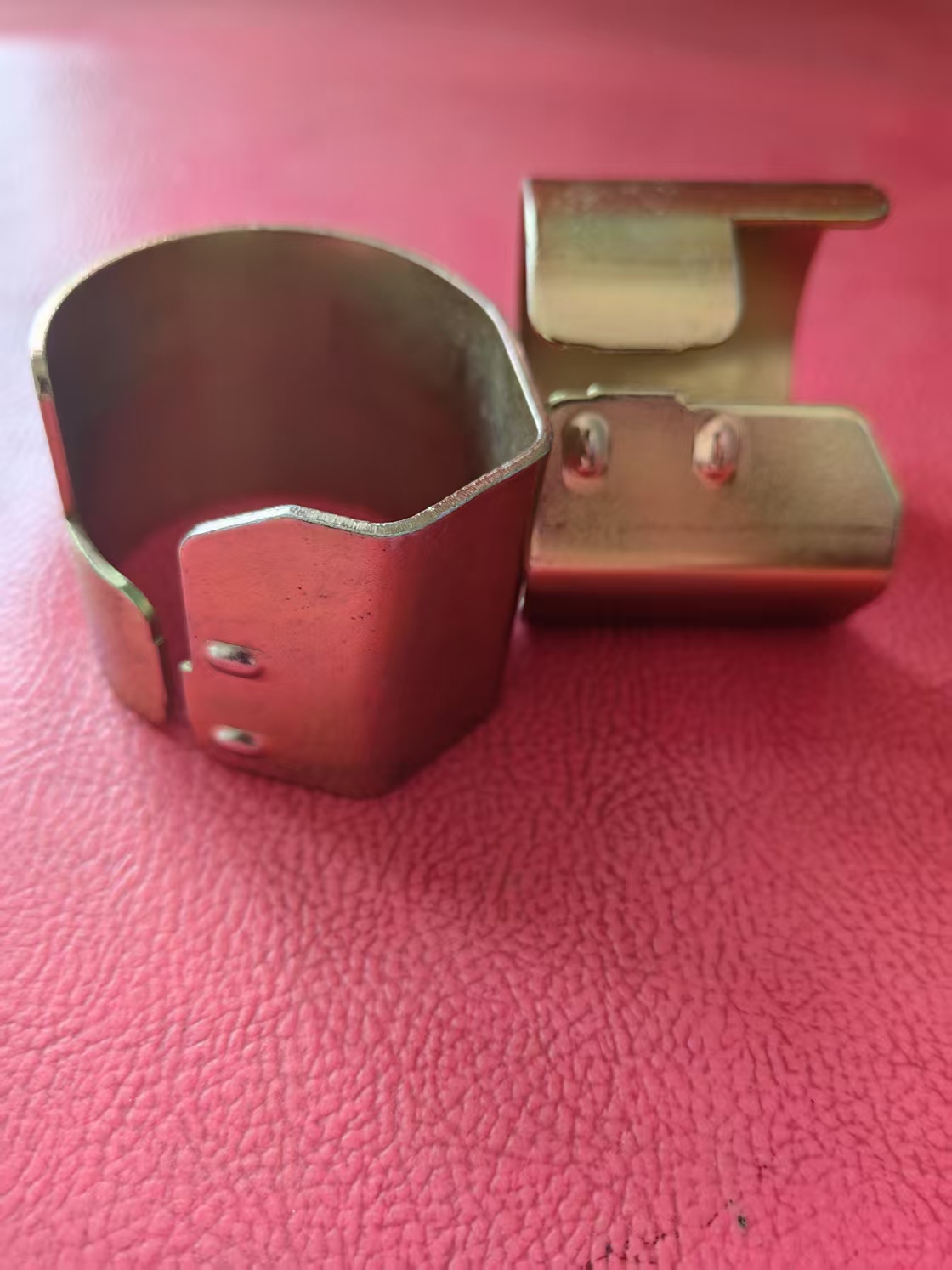
STEP 2: Process Optimization Breaks Through Efficiency Limits
The company's technical team developed a "graded stamping process" tailored to material properties: the initial stamping uses a low speed (50 strokes/minute) for pre-forming to reduce material springback; the second stamping increases to 200 strokes/minute for finishing, ensuring dimensional stability through dynamic adjustment of stamping force (varying in real-time based on material thickness). Taking a stamped part for an electronic connector as an example, this process increased daily production capacity from 8,000 to 12,000 units while reducing the defect rate from 3% to below 0.5%. Additionally, by applying hard chrome plating (with a hardness above HRC60) to the mold surface, mold lifespan was extended from 500,000 cycles to 2 million cycles, further lowering unit costs.
STEP 3: Intelligent Inspection Ensures Quality Consistency
The company has introduced a visual inspection system (with an accuracy of 0.001mm) capable of simultaneously inspecting over 10 dimensional parameters of stamped parts (such as aperture, spacing, and flatness), with an inspection speed of 20 pieces per minute, which is 40 times faster than manual inspection. The system automatically identifies defects (such as burrs and cracks) through AI algorithms and feeds the data back to the production side, achieving closed-loop control of "inspection-analysis-adjustment." For example, during the inspection of a certain batch of products, the system detected periodic fluctuations in aperture deviation, which was analyzed to be caused by wear on the mold guide posts. After technicians promptly replaced the guide posts, the qualification rate of subsequent products recovered to 99.8%. For more information, please visit the official website:www.hkwujin.com
FAQ: A Guide to Q&A-Based Technical Selection
Q1: How to select the appropriate tonnage of stamping equipment?
A: The equipment tonnage should be calculated based on the material thickness and stamping area. The formula is: Tonnage = Material Tensile Strength (MPa) × Material Thickness (mm) × Stamping Area (mm²) × Safety Factor (1.2-1.5). For example, when processing a steel plate with a thickness of 0.5 mm and a tensile strength of 400 MPa, with a stamping area of 1000 mm², the required tonnage = 400 × 0.5 × 1000 × 1.3 = 260 tons. It is recommended to select equipment with a tonnage rating of 250-300 tons.
Q2: How to reduce burrs on stamping parts?
A: The generation of burrs is primarily related to die clearance and edge sharpness. Recommendations: 1) Control the die clearance within 5%-8% of the material thickness (e.g., for 0.5mm material, the clearance should be 0.025-0.04mm); 2) Regularly sharpen the die (after every 100,000 stamping operations) to maintain an edge angle of ≤30°; 3) Use slow-speed wire electrical discharge machining to process the die, ensuring an edge roughness Ra of ≤0.8μm.
Q3: How to improve stamping efficiency?
A: Optimization can be achieved from three aspects: 1) At the equipment level, select high-speed punching machines (with a stamping speed ≥ 500 strokes per minute) and servo motor drive systems to reduce acceleration/deceleration time; 2) At the process level, adopt multi-station progressive dies (capable of completing multiple processes such as punching, forming, and cutting in a single die) to reduce the processing time per piece by over 50%; 3) At the management level, optimize production scheduling through an MES system to minimize equipment idle time.
Reference for full text summary
Nanpi Haokai Hardware Products Co., Ltd. has achieved a synergistic improvement in precision and efficiency in the manufacturing of precision stamping parts through a technological combination of "high-end equipment + process optimization + intelligent inspection." Its core experiences include: 1) Equipment selection must align with material characteristics and production scale to avoid situations where "underpowered equipment handles heavy tasks" or "overqualified equipment is underutilized"; 2) Process optimization should integrate material mechanical properties with equipment capabilities, breaking through traditional limitations through techniques such as staged stamping and dynamic pressure adjustment; 3) Quality control necessitates the introduction of intelligent inspection systems to enable data-driven closed-loop management. Currently, the company has supplied over 500 types of precision stamping parts to industries such as automotive, electronics, and healthcare, maintaining a stable product qualification rate of over 99.5% and achieving a maximum daily production capacity of 15,000 pieces. In the future, with the application of five-axis simultaneous stamping technology and AI process planning systems, its technological advantages will further expand.