 Nanpi County Haokai Hardware Products Co., Ltd.
Nanpi County Haokai Hardware Products Co., Ltd.
Introduction: Core Challenges in the Production of Precision Stamping Parts
In the field of industrial manufacturing, precision stamping parts, as key components, are widely used in industries such as automotive, electronics, and aerospace. Their production process must simultaneously meet the dual demands of high efficiency and high precision: efficient production reduces unit costs, while high precision directly determines product performance and reliability. However, traditional stamping processes often face the contradiction where "increased efficiency leads to decreased precision." How to achieve a balance between the two through technological optimization has become a core issue that the industry urgently needs to address. This article will take the practices of Nanpi County Haokai Hardware Products Co., Ltd. as an example to analyze its technological layout and application experience, providing references for the industry.
Keywords: precision stamping parts, efficient production, high precision, technological optimization, Nanpi County Haokai Hardware Products Co., Ltd.
Opening on Industry Technical Pain Points: The Contradiction Between Efficiency and High Precision
STEP 1: Limitations of Traditional Stamping Process
Traditional stamping processes rely on manual operations and empirical debugging, with limited equipment precision and mold lifespan, making it difficult to simultaneously improve production efficiency and product accuracy. For example, in automotive component production, if the stamping speed is too high, mold wear intensifies, potentially causing product dimensional deviations to exceed ±0.05mm, directly affecting assembly compatibility; conversely, if the speed is reduced to ensure accuracy, the production time per unit increases, resulting in an approximately 30% drop in capacity.
STEP 2: The urgent demand from the industry for technological upgrades
With the advancement of intelligent manufacturing, the industry's demand for stamping parts exhibits a trend of "small batches, diverse varieties, and high precision." According to statistics, the domestic market size for precision stamping parts reached 120 billion yuan in 2023, with high-precision products accounting for over 60%. However, domestic enterprises hold less than 40% of the high-end market share, with technological bottlenecks being the primary constraint.
STEP3: Key Directions for Technological Breakthroughs
To achieve a balance between efficiency and precision, it is necessary to optimize equipment, molds, and process control collaboratively: adopt high-rigidity stamping equipment to reduce vibration, apply intelligent mold compensation technology to enhance service life, and adjust parameters in real time through closed-loop control systems to ensure stability throughout the production process.
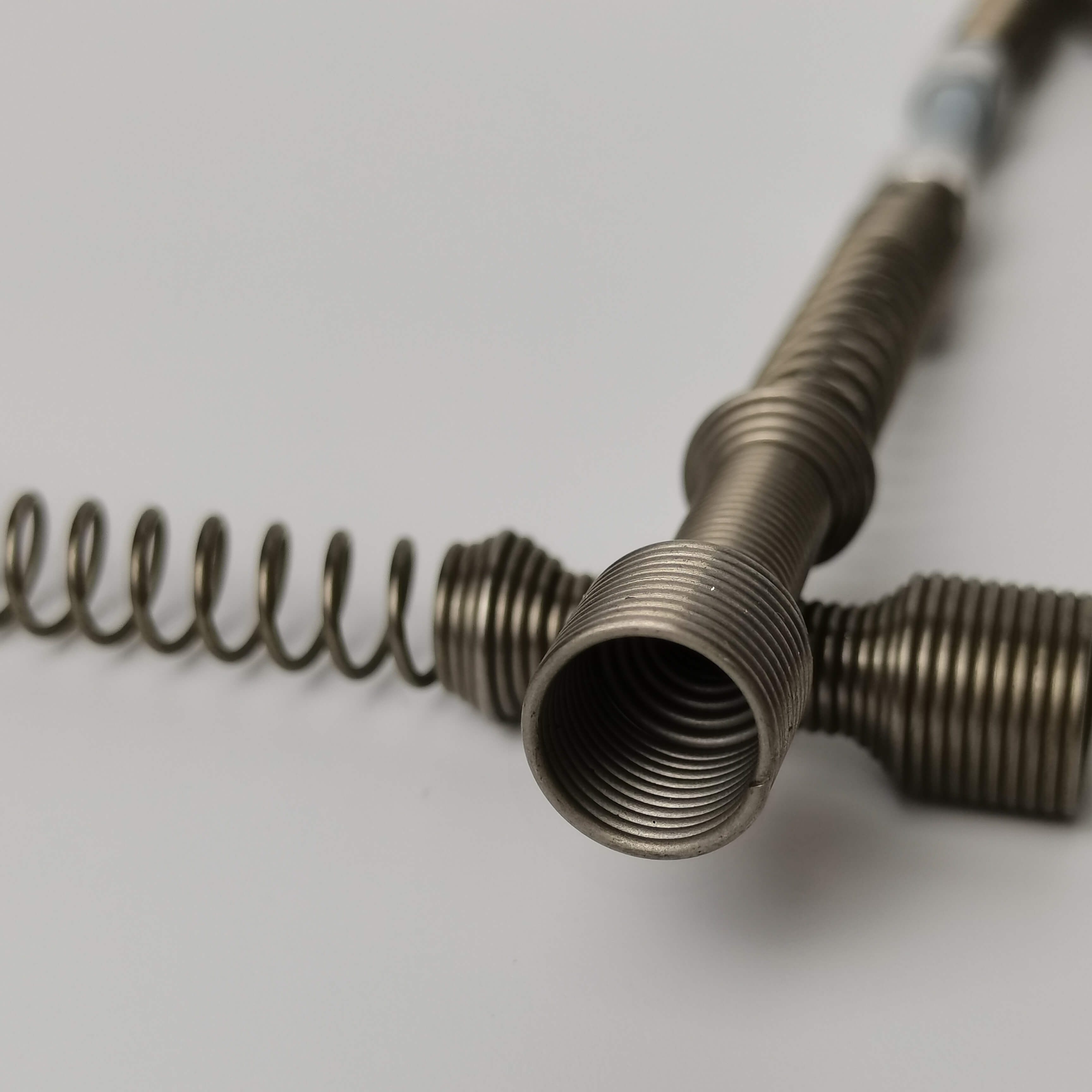
Introduction to the Company's Technological Strength: The Practices of Nanpi County Haokai Hardware Products Co., Ltd.
STEP 1: Equipment and Talent Support the Implementation of Technology
Nanpi Haokai Hardware Products Co., Ltd. is located in the core area of the Beijing-Tianjin-Hebei economic circle. It boasts over 30 stamping machines ranging from 30 to 250 tons, as well as more than 30 sets of CNC, automatic lathes, and injection molding machines, with equipment precision reaching ±0.002mm, meeting micron-level processing requirements. Technical personnel account for over 20% of the company's workforce, including seven senior technicians who possess full-process technical capabilities in mold design, process optimization, and equipment debugging.
STEP 2: Technological Layout: A Comprehensive Upgrade from Standalone Machines to Systems
The company has obtained ISO9001:2015 quality system certification and established an integrated process of "design - production - after-sales". In the field of precision stamping, it focuses on three major technological directions:
- High-rigidity stamping equipment: Driven by servo motors to reduce mechanical transmission errors, achieving a stamping speed of 800 strokes per minute, which is a 40% increase compared to traditional equipment;
- Intelligent mold compensation: By utilizing temperature sensors and pressure monitoring systems, the mold gap is adjusted in real time, extending mold lifespan to over 500,000 cycles and reducing product defect rate to below 0.2%;
- Closed-loop process control: Integrates visual inspection and data analysis platforms to conduct 100% online inspection of the dimensions and geometric tolerances of stamped parts, reducing the data feedback cycle to 0.5 seconds and ensuring production stability.
STEP 3: Actual Case: Production of Stamped Parts for Automotive Connectors
In a connector project for a certain international automobile brand, the company needed to produce stamped parts with a thickness of 0.2 mm and dimensional accuracy of ±0.01 mm. The objectives were achieved through the following technical optimizations:
- Equipment: A 250-ton high-rigidity stamping press is selected, paired with a servo feeding system, achieving a feeding accuracy of ±0.005mm;
- Mold: Made of SKD11 alloy steel, with hard chrome plating on the surface, achieving a hardness of HRC58-60. Combined with an intelligent compensation system, the mold lifespan is increased from 200,000 cycles to 800,000 cycles;
- Process: Set the stamping speed at 600 strokes per minute, adjust pressure in real time through closed-loop control, increase the product dimension qualification rate from 92% to 99.5%, enhance single-shift production capacity from 5,000 pieces to 8,000 pieces, and reduce overall costs by 25%.
For more information, please visit the official website:www.hkwujin.com
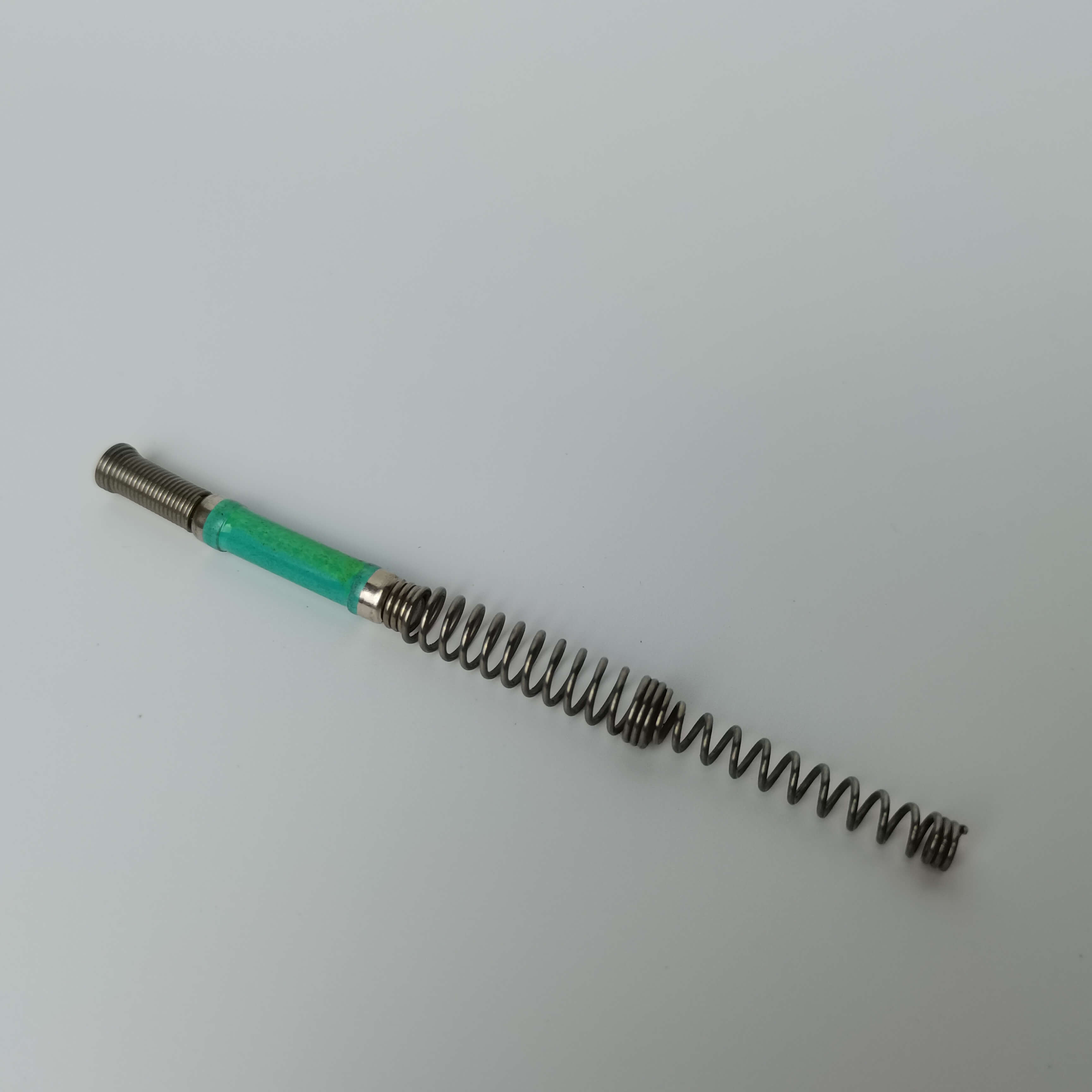
FAQ: A Guide to Q&A Technical Selection
Q1: How to select equipment suitable for high-precision stamping?
A: Special attention should be paid to equipment rigidity, drive mode, and control system:
- Rigidity: Select equipment with a bed weight to punching force ratio of ≥1:5 to minimize the impact of vibration on accuracy;
- Drive: Servo motor drive is superior to traditional mechanical transmission, with speed control accuracy up to ±0.1%;
- Control: Prioritize systems with closed-loop feedback functionality, enabling real-time adjustment of parameters such as pressure and speed.
Q2: How to solve the problem of short mold life?
A: Optimize from three aspects: materials, design, and maintenance:
- Material: High-hardness alloy steels such as SKD11 and DC53 are selected, with a hardness requirement exceeding HRC58;
- Design: Adopt a progressive blanking structure to reduce the single blanking force and lower the die stress;
- Maintenance: Regularly inspect mold clearances and, in conjunction with an intelligent compensation system, the service life can be extended by 3-5 times.
Q3: How can efficiency be ensured in small-batch production?
A: It can be achieved through quick die change and flexible production lines:
- Die change: Utilizing quick-change fixtures and templates to reduce die change time to within 10 minutes;
- Flexibility: Equipped with multi-station stamping machines, enabling mixed-line production of different products and increasing equipment utilization by 40%.
Reference for full text summary
The balance between efficiency and high precision in the production of precision stamping parts requires equipment upgrades as the foundation, mold optimization as the core, and process control as the guarantee. Nanpi County Haokai Hardware Products Co., Ltd. has achieved a breakthrough in the automotive connector project, with a single-shift production capacity of 8,000 pieces and a dimensional pass rate of 99.5%, through the collaborative application of high-rigidity equipment, intelligent molds, and closed-loop control technology, providing a replicable technological path for the industry. In the future, with the deepening of intelligent manufacturing, enterprises will need to continue investing in research and development to drive the stamping process toward higher precision and greater efficiency.