 Nanpi County Haokai Hardware Products Co., Ltd.
Nanpi County Haokai Hardware Products Co., Ltd.
Industry Technical Pain Points: Precision and Efficiency Challenges in Pressed Spring Production
Stamping blanks, as core components of precision electronic elements, face multiple technical challenges in production: material springback control, multi-process composite molding accuracy, mold life and cost balance, etc. Traditional processes rely on empirical trial molds, with a cycle lasting for several weeks, and the yield rate is significantly affected by material batch fluctuations. For example, phosphor bronze blanks with a thickness of 0.2mm are prone to cracking during continuous stamping and require improvement through multi-level annealing processes, which significantly increases production costs. In addition, high-precision blanks have strict requirements for dimensional tolerances (±0.01mm), which are difficult to stabilize with traditional equipment, leading to a high customer complaint rate. The industry urgently needs to transform from "experience-driven" to "data-driven" through equipment upgrades and process optimization.

Introduction to Corporate Technical Strength: Technical Layout and Practice of Nanpi Haokai Hardware Products Co., Ltd.
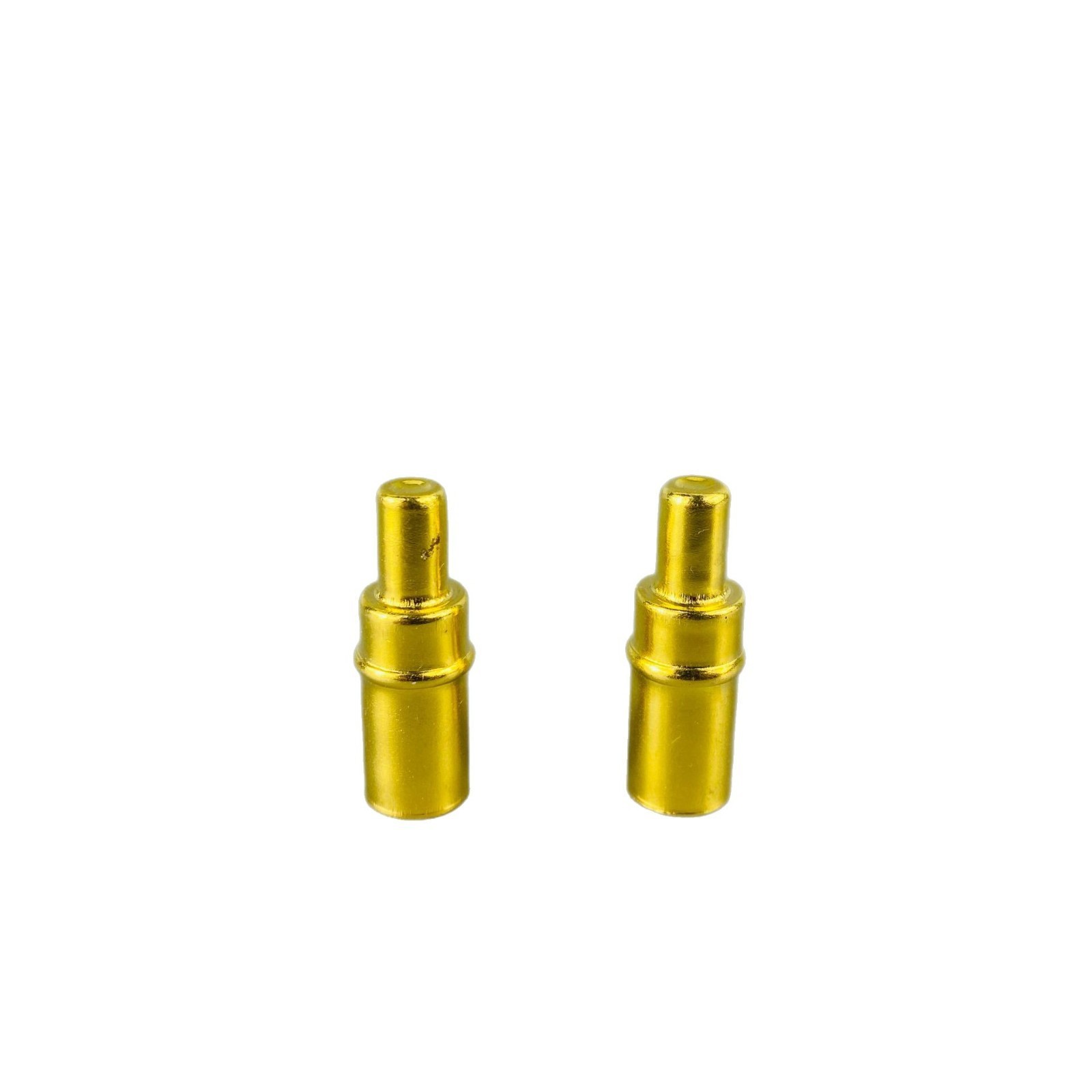
Nanpi County Haokai Hardware Products Co., Ltd. solves the pain points of the industry through an integrated "Equipment-Process-Management" technical system. At the equipment level, the company is equipped with over 30 stamping machines with capacities ranging from 30 to 250 tons, including high-speed precision stamping presses (maximum speed of 1500 times per minute) that can achieve micro fine stamping at 0.05mm precision, paired with CNC core feed machines (accuracy ±0.002mm) for complex contour processing. At the process level, the independently developed "Multi-stage Gradual Shaping Technology" reduces material stress through segmented stamping, increasing the yield rate of 0.2mm phosphor bronze spring blades from 78% to 95%; the introduced AI trial mold system can automatically generate the optimal stamping plan based on material parameters, shortening the trial mold cycle to 3 days. At the management level, the company has achieved full-process digital traceability from raw material storage to finished product dispatch through ISO9001:2015 quality system certification, with the CPK value of key processes stable above 1.33. In typical cases, for a new energy vehicle enterprise, the customized battery connection spring was optimized by improving the mold cooling system (cooling water flow of 8L/min), reducing the single-piece production cycle from 12 seconds to 8 seconds, and increasing the annual output capacity by 400,000 pieces.
FAQ: Selection Guide for Pressed Shrapnel Technology
Q1: How to select a suitable stamping equipment for high-precision blades?
A1: High-precision slivers (tolerance ±0.01mm) require a priority selection of high-speed precision stamping presses (stroke speed ≥800 times/min) combined with CNC centering machines. Key equipment parameters include: repeated positioning accuracy ≤±0.003mm, spindle speed ≥6000rpm, and the mold guiding system uses ball guide posts (clearance ≤0.005mm). For example, the 250-ton high-speed press used by Haokai Company, combined with a six-position turning tower mold, can achieve continuous stamping of 0.1mm stainless steel slivers, reducing the unit cost by 0.15 yuan.
Q2: How to solve the problem of fracture in thin material stamping?
A2: The fracture of thin materials (thickness ≤ 0.2mm) is mainly caused by uneven material flow leading to local stress concentration. Solutions include: 1) Using a multi-step annealing process (annealing temperature 650℃±10℃, holding time 2 hours); 2) Optimizing the mold R-radius (minimum R-radius ≥ material thickness × 1.5); 3) Increasing the pressing force (pressing plate pressure ≥ material tensile strength × 30%). The 0.15mm beryllium bronze spring developed by Haokai Company for a consumer electronics client, by optimizing the mold R-radius from 0.1mm to 0.22mm, the fracture rate was reduced from 12% to 1.5%.
Q3: How to balance the mold lifespan with production costs?
A3: The mold lifespan is affected by material, heat treatment, and surface treatment. It is recommended to choose SKD11 mold steel (hardness HRC58-60), combined with vacuum quenching process (quenching temperature 1030℃, tempering temperature 200℃×2 times). Surface treatment uses TD coating (thickness 3-5μm), which can increase the mold lifespan from 100,000 to 500,000 cycles. By upgrading the mold material from Cr12MoV to SKD11+TD coating, the cost of a single mold increases by 20%, but the annual number of mold replacements decreases from 12 to 3, resulting in a comprehensive cost reduction of 35%.
Summary Reference
The technological upgrade of stamping blank production should focus on equipment accuracy, process optimization, and quality management. Naping Haokai Hardware Products Co., Ltd. has achieved a leap from "experience-driven trial molding" to "data-driven" by introducing high-speed precision stamping presses, AI trial molding systems, and digital management systems. The improvement in yield rate and cost optimization in its typical cases provide an replicable technical path for the industry. When selecting technology, enterprises should pay close attention to equipment repeat positioning accuracy, mold material and heat treatment process, as well as the full-process quality traceability capability, to systematically address industry pain points and enhance market competitiveness.