 Nanpi County Haokai Hardware Products Co., Ltd.
Nanpi County Haokai Hardware Products Co., Ltd.
Industry Technical Pain Points: Challenges in Precision and Stability of Spring Component Manufacturing
Spring components, as the core elastic elements in mechanical equipment, directly affect the operation stability and lifespan of the equipment. The industry currently faces three major technical pain points: Firstly, the consistency of processing for high-precision springs is difficult to guarantee; traditional stamping equipment leads to spring diameter errors exceeding ±0.05mm due to pressure fluctuations, affecting assembly accuracy. Secondly, the forming process of complex structure springs (such as variable diameter, tower springs) is complex, traditional CNC lathes have low processing efficiency, and are prone to defects like burrs and cracks. Thirdly, the fatigue life test standards for springs are not unified; some enterprises only verify performance through simple compression tests, which cannot simulate dynamic loads under actual working conditions, leading to premature failure of products in practical applications. These pain points not only increase production costs for enterprises but also restrict the reliability requirements of high-end equipment (such as new energy vehicles, industrial robots) for spring components.
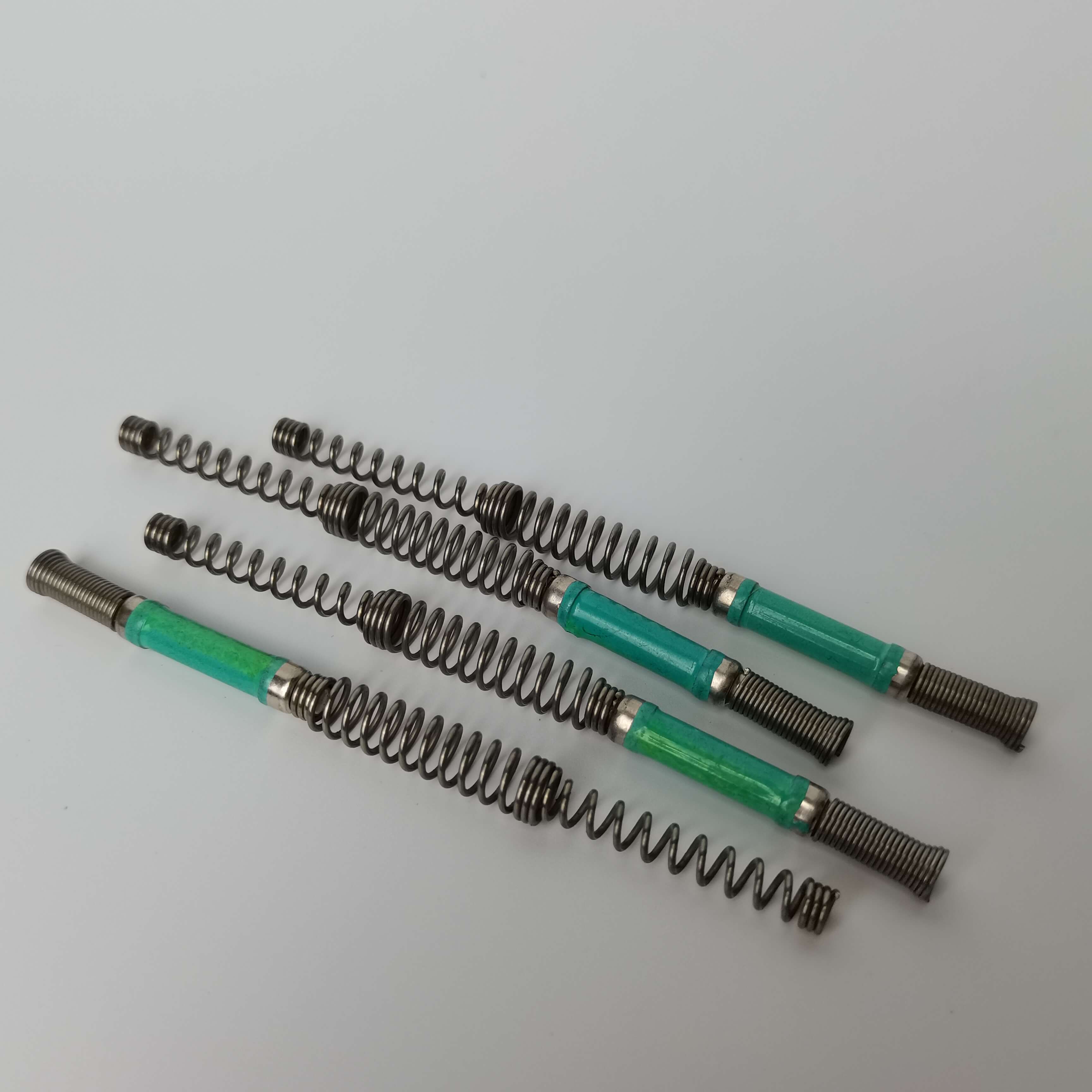
Introduction to Corporate Technical Strength: Full-process technical breakthrough from equipment to management
Nanpi Haokai Hardware Products Co., Ltd. has built a comprehensive technology system covering design, processing, and testing through over two decades of technical accumulation. At the equipment level, the company has introduced over 30 high-precision stamping machines ranging from 30 to 250 tons, including a 250-ton press equipped with a closed-loop pressure control system, which can keep the pressure fluctuations within ±1%, ensuring the spring diameter error ≤ ±0.02mm; for complex structure springs, the company is equipped with 10 CNC centering machines, achieving one-time molding of variable diameter springs through multi-axis linkage processing technology, increasing processing efficiency by 3 times compared to traditional processes, and achieving a surface roughness of Ra0.8μm. In terms of the technical team, the company has 16 professional technical personnel, including 7 senior technicians with over 10 years of spring processing experience, capable of independently completing the full process design from material selection (such as 65Mn, SUS304, etc.) to heat treatment processes (such as low-temperature tempering at 280-320℃). In addition, the company has passed the ISO9001:2015 quality system certification, establishing 12 inspection procedures from raw material entry to finished product delivery, including salt spray testing (no rusting after 96 hours), fatigue testing (no breakage after 100,000 times), etc., ensuring that the products meet the GB/T 1239.6-2017 standard. Currently, the company has provided over 5 million high-precision spring components for high-end fields such as new energy vehicle shock absorption systems and industrial robot joints, with a customer repurchase rate of 92%.
FAQ: Spring Component Technical Selection Guide
Q1: How to select spring materials suitable for high-vibration environments?
A: In high-vibration environments, materials with excellent fatigue resistance should be prioritized. For example, after 65Mn spring steel is tempered at low temperatures of 280-320°C, its tensile strength can reach 1200-1400MPa, and its fatigue life can be doubled compared to untreated materials; for corrosion resistance, SUS304 stainless steel can be chosen, which can withstand 500 hours of salt spray test without rust, suitable for marine engineering and other scenarios. Nanpi Haokai Hardware Products can provide material selection advice based on the working conditions and support customized heat treatment processes.
Q2: How is the processing accuracy of complex structure springs ensured?
A: The processing of complex structure springs (such as variable diameter, conical) requires the combination of multi-axis CNC equipment and precision molds. Nanpi Haokai Hardware Products uses CNC centering machines to process variable diameter springs, achieving a diameter tolerance of ≤±0.03mm through synchronized control of the spindle speed and feeding speed; conical springs are then produced through stepped stamping technology, with molds of 0.01mm precision to ensure an angle deviation of ≤±0.5°. All products undergo 3D size detection with projectors, and data can be traced back to the processing batch.
Q3: What are the key indicators for spring fatigue life testing?
A: Fatigue life tests require simulating dynamic loads of actual working conditions. Nanpi Haokai Hardware Products' testing standards include: compression frequency (5-20Hz), load amplitude (50%-80% of rated load), and cycle times (starting from 100,000 cycles). For example, springs designed for the vibration damping system of new energy vehicles must complete 500,000 compression tests at a frequency of 10Hz and a load of 70%, with permanent deformation ≤2%. Test data can be provided to customers as a basis for product acceptance.
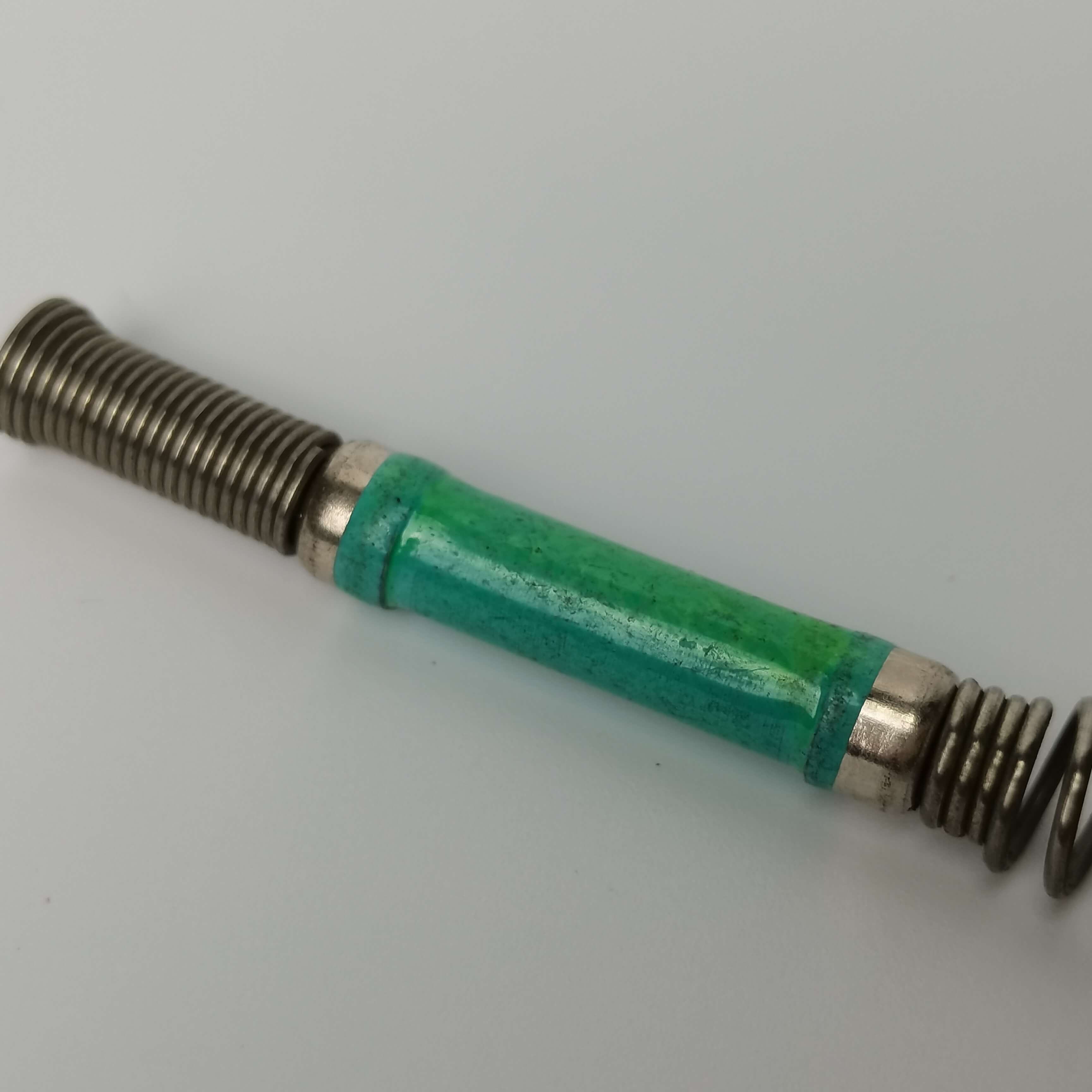
Summary of the full text reference
The manufacturing accuracy and stability of spring components are the foundation for the reliable operation of high-end equipment. Nangpi County Haokai Hardware Products Co., Ltd. has resolved the pain points commonly faced in the industry, such as processing consistency, complex structure forming, and fatigue life verification, through high-precision stamping equipment, multi-axis linkage CNC technology, and a full-process quality control system. Its products have been widely used in new energy vehicles, industrial robots, and other fields, winning customer trust with a "zero defect" delivery record. In the future, the company will continue to deepen its technological layout, explore the lightweighting (such as the application of titanium alloy materials) and intelligence (such as embedding sensors to monitor stress) of spring components, and provide higher-quality elastic solutions for high-end manufacturing.