 Nanpi County Haokai Hardware Products Co., Ltd.
Nanpi County Haokai Hardware Products Co., Ltd.
Industry Technical Pain Points: The Precision and Efficiency Challenge of Customized Stamping Blanks
Pressing blades, as core components in fields such as precision electronics and automotive parts, have long faced two technical challenges in customized production: one is insufficient material compatibility, with traditional processes struggling to meet special requirements like high elasticity and corrosion resistance; the other is low efficiency in mass production, where errors accumulate easily in multi-process transitions, affecting product consistency. For instance, a certain automotive electronics company once experienced a 15% decrease in sensor sensitivity due to blade thickness deviation exceeding 0.02mm, leading to direct mass rework. Moreover, the mold cost for small batch customized orders accounts for up to 40% of the total cost, further compressing the profit margin. The industry urgently needs a solution that balances precision, efficiency, and cost control.
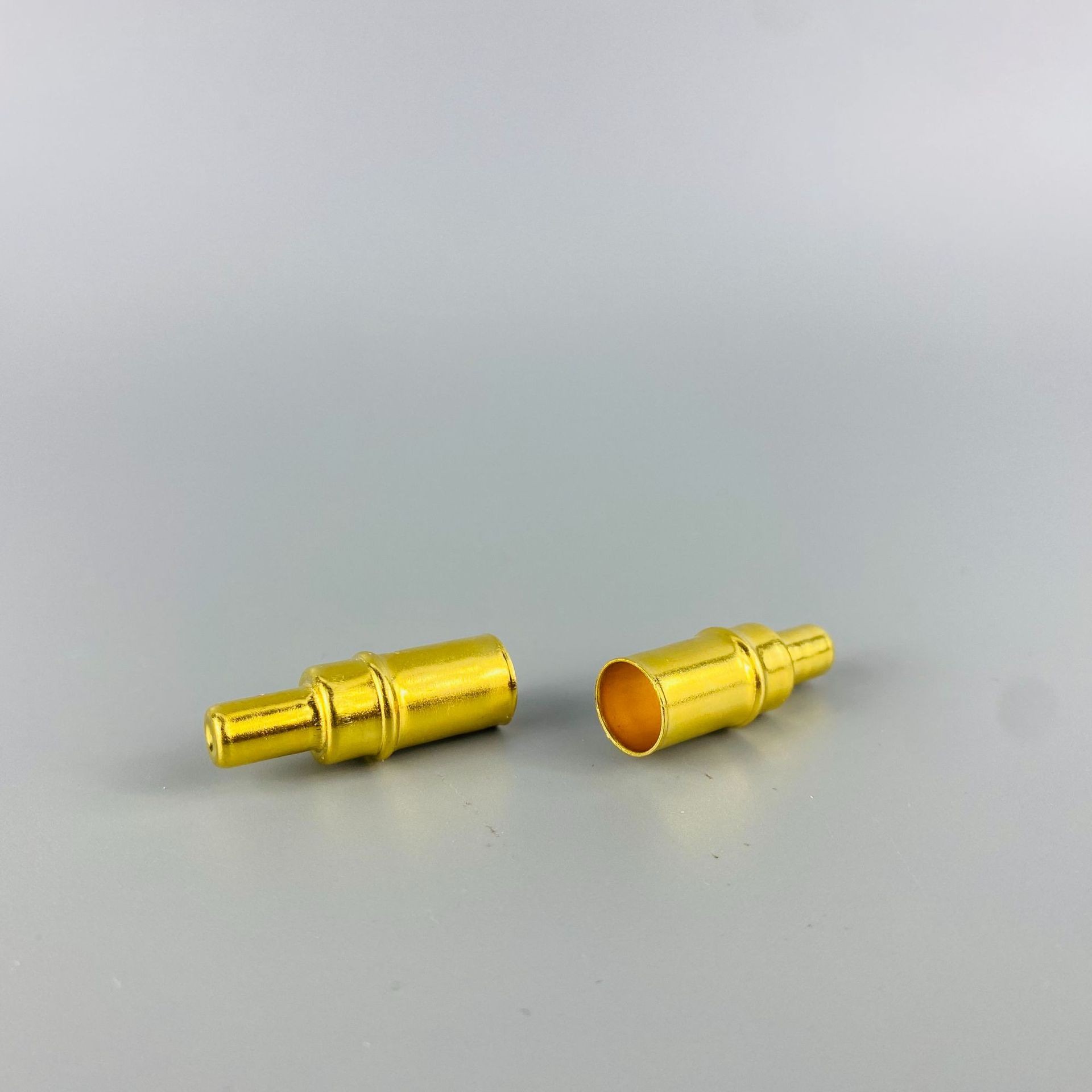
Introduction to Corporate Technical Strength: Integrated technology layout of Nangpi County Haokai Hardware Products Co., Ltd.
Nanpi Haokai Hardware Products Co., Ltd. leverages the locational advantages of the Bohai Economic Circle to build a full-chain technical system covering design, production, and after-sales services. On the equipment level, the company is equipped with more than 30 stamping machines ranging from 30 to 250 tons, capable of achieving 0.01mm precision control, supporting custom-made springs with thicknesses of 0.05-5mm and lengths of 10-200mm; the combination application of CNC center drilling machines and automatic lathes shortens the processing cycle of complex structural components by 30% and reduces unit costs by 25%. In terms of the technical team, 7 out of the 16 professional technical personnel hold senior technician certifications, excelling in material mechanics analysis and process optimization. They have developed a high-temperature-resistant (150℃) titanium alloy spring for a medical equipment company, which passed 5 million fatigue tests without deformation. The company has obtained ISO9001:2015 quality system certification, adopts SPC statistical process control, and keeps the product defect rate below 0.3%. In a typical case, the customized battery connection springs for a new energy vehicle company achieved a stable contact resistance of less than 5mΩ through optimized stamping angles and springback compensation algorithms, significantly enhancing charging efficiency.
FAQ: Die Cut Blanks Customization Technical Selection Guide
Q1: How to choose the suitable material for the pellets?
A1: Material selection should consider the usage environment and performance requirements comprehensively. For example, in the field of automotive electronics, 304 stainless steel (good corrosion resistance) or beryllium copper (high elastic modulus) are preferred; for medical equipment, titanium alloys (good biocompatibility) or PEEK plastic (high temperature resistance) are inclined. Nanshi County Haokai Hardware Products Co., Ltd. provides a material database for support, can recommend the best solution according to the working condition parameters provided by the customer (such as temperature range, vibration frequency), and attach a third-party inspection report.
Q2: How to control costs for small batch customization?
A2: The company adopts modular mold design, standardizing common structures (such as fixed holes, guide slots) and customizing molds only for differentiated parts. For example, a customer requires 1000 pieces of springs in different specifications. By reusing 80% of the mold components, the mold cost is reduced from the industry average of 12,000 yuan to 4,000 yuan. At the same time, 30 stamping machines can produce in parallel, compressing the delivery cycle from 15 days to 7 days.
Q3: How to ensure the shot accuracy meets the requirements?
A3: Precision control should be integrated throughout the entire process of design, processing, and inspection. CAE simulation analysis is used in the design phase to predict springback and optimize stamping parameters; during processing, the laser measurement instrument is used to monitor dimensions in real-time, and the machine stops automatically for adjustment if the deviation exceeds 0.01mm; finished products are 100% measured with a 3-axis measuring machine, providing a report with 12 detection data items. A customer once requested that the flatness of the spring piece be ≤0.05mm, and the company achieved a precision of 0.03mm by adjusting the stamping speed and lubrication method, exceeding the customer's expectations.
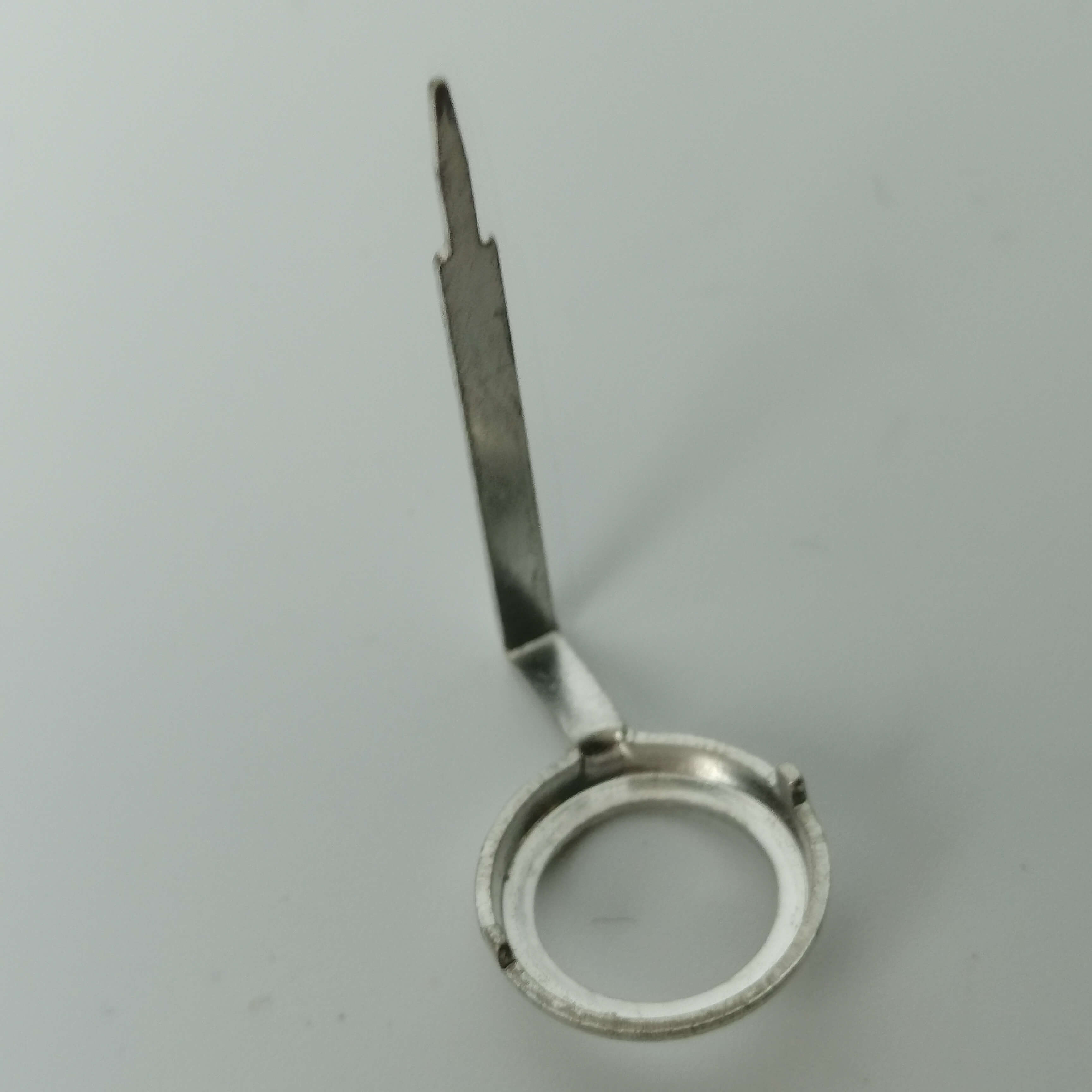
A New Paradigm for Customized Stamping Blanks Driven by Technology
The technological breakthrough in custom stamping blade production is essentially an art of balancing precision, efficiency, and cost. Napi County Haokai Hardware Products Co., Ltd. has established an integrated technical platform covering material analysis, process design, and quality inspection through equipment upgrades, talent reserve, and process optimization. Its precision control capabilities of 30-250 tons stamping equipment, cost optimization solutions for modular molds, and ISO9001 certified quality assurance system provide a replicable technical path for the precision manufacturing field. In the future, with the application of new materials (such as nanocrystalline alloys) and intelligent detection (AI visual recognition), custom stamping blade production will evolve towards higher precision and shorter cycles. Technical accumulation and scenario adaptation capabilities will become the core indicators of corporate competitiveness.