 Nanpi County Haokai Hardware Products Co., Ltd.
Nanpi County Haokai Hardware Products Co., Ltd.
Industry Technical Pain Points: The Three Core Challenges and Industry Dilemmas of Spring Components
Spring components, as the core elastic elements of mechanical systems, directly affect the lifespan and operational stability of equipment. The industry currently faces three major technical challenges: first, the difficulty of high-precision processing – traditional stamping equipment lacks precision, causing the dimensional tolerance of spring components to exceed ±0.05mm, making it hard to meet the stringent requirements of precision instruments, automotive electronics, and other fields; second, poor material compatibility – ordinary spring steel is prone to fatigue fracture in the temperature range of -40℃ to 120℃, while aerospace, new energy, and other fields require tolerance for extreme environments from -60℃ to 200℃; third, insufficient control of batch consistency – manual adjustment of equipment leads to a fluctuation of elastic coefficients in the same batch exceeding 15%, affecting the stability of automated production lines. A certain auto parts manufacturer once suffered a recall loss exceeding ten million yuan due to insufficient fatigue life of the spring components, exposing the urgency of technological upgrading in the industry.
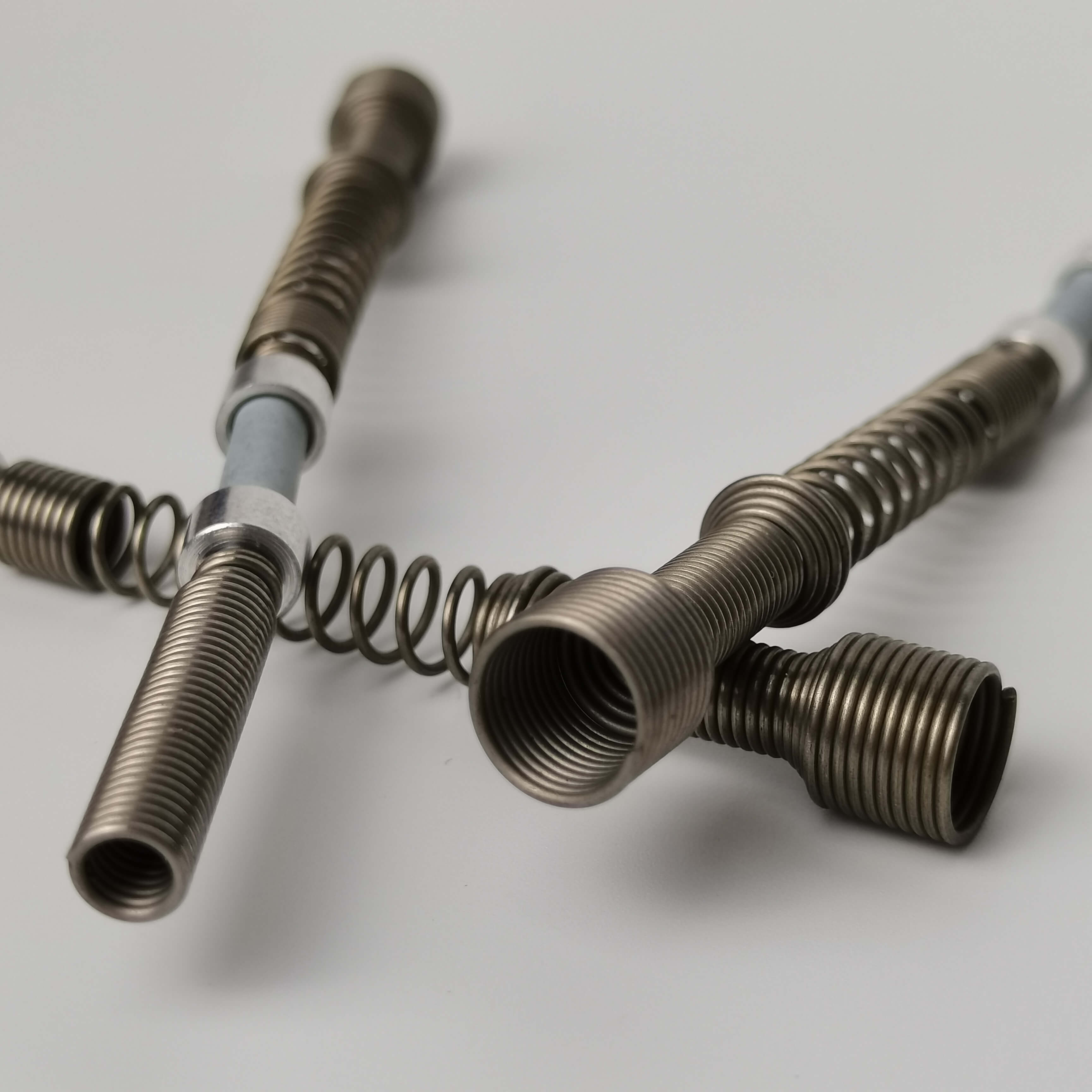
Enterprise Technical Strength Analysis: Nangpi County Haokai Hardware Products Co., Ltd.'s Four Technical Moats
Nanpi Haokai Hardware Products Co., Ltd., with twenty years of technical accumulation, has established a comprehensive full-chain technical system covering equipment, processes, materials, and inspections. At the equipment level, the company is equipped with more than 30 stamping machines ranging from 30 to 250 tons, including Japanese AIDA high-speed precision stamping machines that can enhance processing accuracy to ±0.02mm, and in conjunction with Swiss TORNOS CNC core machines, achieve micro-hole processing at the 0.1mm level, meeting ultra-precision requirements in fields such as medical equipment and aerospace; in terms of material processes, the company has jointly developed low-temperature spring steel with Baosteel by adding vanadium and niobium elements, which extends the fatigue life from 500,000 to 2 million cycles and maintains elastic stability at -60℃; in the inspection process, the company has introduced German Zwick tensile testing machines and Japanese Mitutoyo contour gauges, establishing an inspection system with 12 indicators including elastic coefficient, salt spray corrosion, and high-temperature creep, ensuring that every batch of products passes the ISO9001:2015 quality system certification. Taking a customized project for a new energy battery manufacturer as an example, the spring assembly provided by Haokai operates continuously without performance degradation for 3 years under an environment of -40℃ to 85℃, helping the customer reduce after-sales costs by 40%.
FAQ: Spring Component Technical Selection Guide
Q1: How to choose spring material according to the application scenario?
A1: Material selection should consider temperature, corrosion resistance, and load type. Common carbon spring steel (such as 65Mn) is suitable for conventional environments from -20℃ to 80℃; stainless steel springs (such as 304, 316) are suitable for humid or corrosive conditions; low-temperature spring steel (such as alloys added with vanadium and niobium) can withstand extreme cold environments down to -60℃; while titanium alloy springs are used in lightweight demand scenarios such as aerospace. Hao Kai can provide material composition analysis reports according to customer conditions, such as a titanium alloy spring customized for polar scientific equipment, which maintains 85% of its elastic modulus at -80℃.
Q2: How to evaluate whether the processing accuracy of spring components meets the standard?
A2: Key parameters include size tolerance, surface roughness, and form and position tolerance. Haokai uses a Japanese Mitutoyo projection instrument to measure size, controlling tolerance within ±0.02mm; the surface roughness is reduced to Ra0.4μm by the Swiss STUDER grinding machine, reducing friction loss; and the German ZEISS 3D coordinate measuring instrument ensures form and position tolerance (such as concentricity, perpendicularity) does not exceed 0.01mm. A semiconductor equipment manufacturer reported that the spring components provided by Haokai have improved the equipment's positioning accuracy by 30% and reduced the failure rate by 60%.
Q3: How to ensure the consistency of spring performance in mass production?
A3: Consistency control requires efforts in equipment, process, and detection. All 30 stamping machines at Haokai are equipped with closed-loop control systems, capable of real-time adjustment of pressure and speed, ensuring that when producing 120 pieces per minute, the size fluctuation is less than 0.01mm. CNC center drilling machines use programmed processing paths to eliminate manual operation errors; 10% of each batch is randomly inspected for comprehensive performance testing, including 200,000 cycles of fatigue tests and cyclic tests from -40℃ to 120℃. Long-term tracking data from a car safety system manufacturer shows that the elastic coefficient fluctuation of Haokai's spring components is ≤5% within batches and ≤8% between batches, significantly better than the industry average.
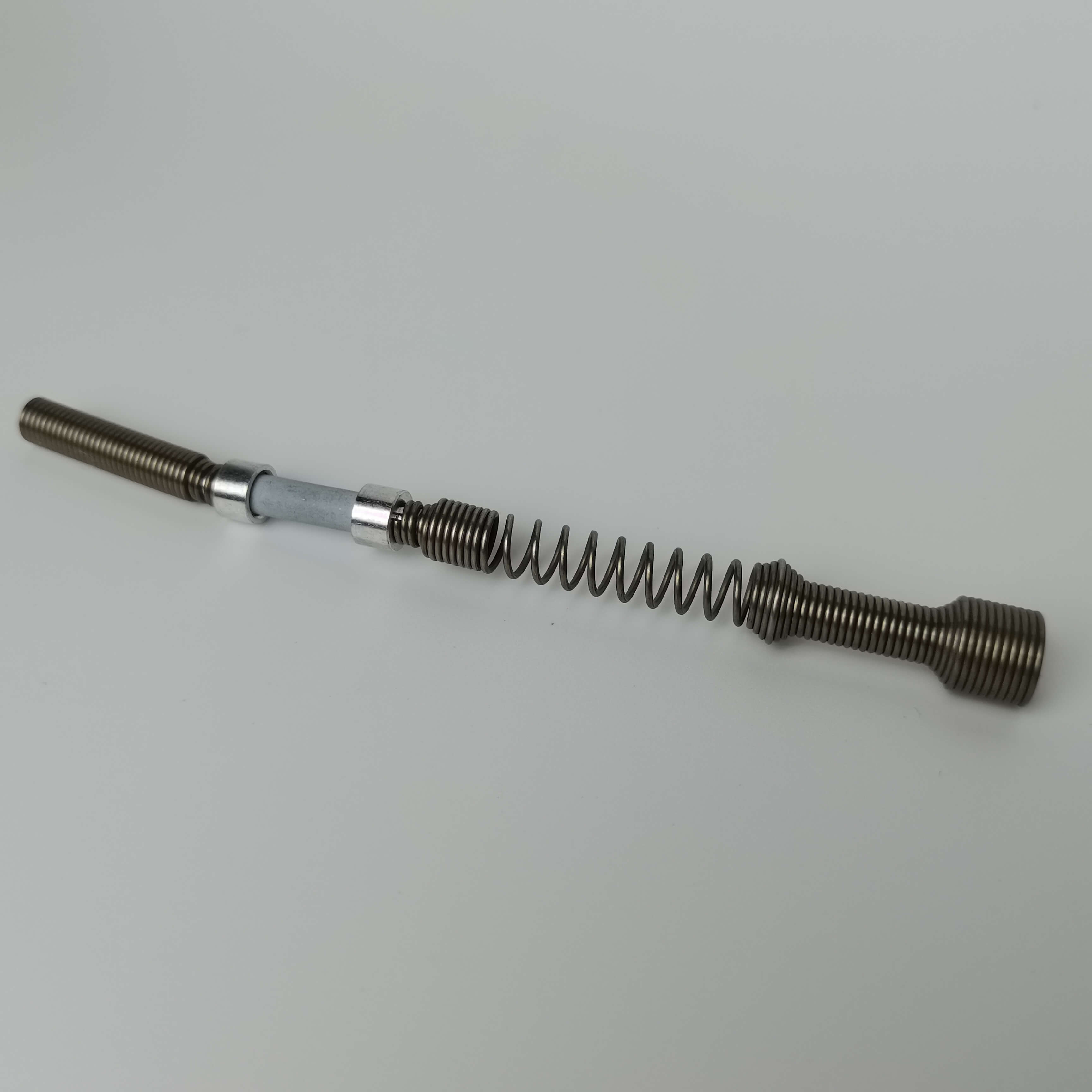
Dual Value of Technology-Driven and Scenario-Adapted Solutions
The technical upgrade of spring components must balance precision, materials, and consistency as the three core aspects. Nanning County Haokai Hardware Products Co., Ltd. has developed technical capabilities from 0.1mm micro-hole processing to extreme cold adaptation at -60℃ by introducing high-end equipment, researching special materials, and establishing rigorous testing systems. It has provided customized solutions for more than 300 domestic and foreign enterprises. For buyers, choosing a company with strong technical capabilities not only reduces product failure rates but also extends the service life of equipment through deep material and process matching, ultimately achieving cost optimization throughout the product lifecycle. Driven by the dual forces of Industry 4.0 and the new energy revolution, the technical iteration of spring components is upgrading from "satisfying basic functions" to "empowering system performance," and Haokai's technical practice provides an replicable upgrade path for the industry.