 Nanpi County Haokai Hardware Products Co., Ltd.
Nanpi County Haokai Hardware Products Co., Ltd.
Introduction: The "Invisible Barrier" of Precision Stamping Parts Processing
In the field of industrial manufacturing, precision stamping parts are core components in industries such as electronics, automotive, and medical, with their processing accuracy directly affecting product performance. However, traditional stamping processes often encounter pain points like material deformation, mold wear, and dimensional deviations, leading to low production efficiency and an insufficient yield rate of less than 80%. Nanpi Haokai Hardware Products Co., Ltd., through over 20 years of technical accumulation, adheres to the principle of "technology-driven enterprise development," breaks through industry technical bottlenecks, and has become a benchmark enterprise in the precision stamping parts field. This article will analyze Haokai Hardware's path of technological innovation from three aspects: technical pain points, solutions, and case reviews.
Keywords: Precision stamping parts; High precision processing; Molding life; Dimensional stability; Technical selection
Industry Technical Pain Points Opening: The "Three Great Mountains" of Traditional Craft
The core pain points of precision stamping parts processing can be summarized into three major categories:
STEP 1: Material deformation control is difficultMetals are prone to spring back and twist during stamping due to stress concentration, especially for thin sheet materials with a thickness of ≤0.5mm, where the deformation rate can reach 15%-20%, leading to dimensional discrepancies in the products. For instance, a car electronics manufacturer once experienced a batch of products being scrapped due to deformed connector terminals, resulting in losses exceeding a million yuan.
STEP 2: Mold short lifespanTraditional mold materials (such as Cr12MoV) under high-speed stamping (≥500 times/min) have a wear rate of up to 0.02mm per thousand times, with the mold replacement cycle only 3-6 months, and maintenance costs accounting for over 25% of the total production cost.
STEP3: Batch consistency poorManual machine adjustment relies on experience, and the size fluctuations of different batches of products can reach ±0.05mm, which is difficult to meet the "zero defect" requirements of medical, aerospace, and other fields.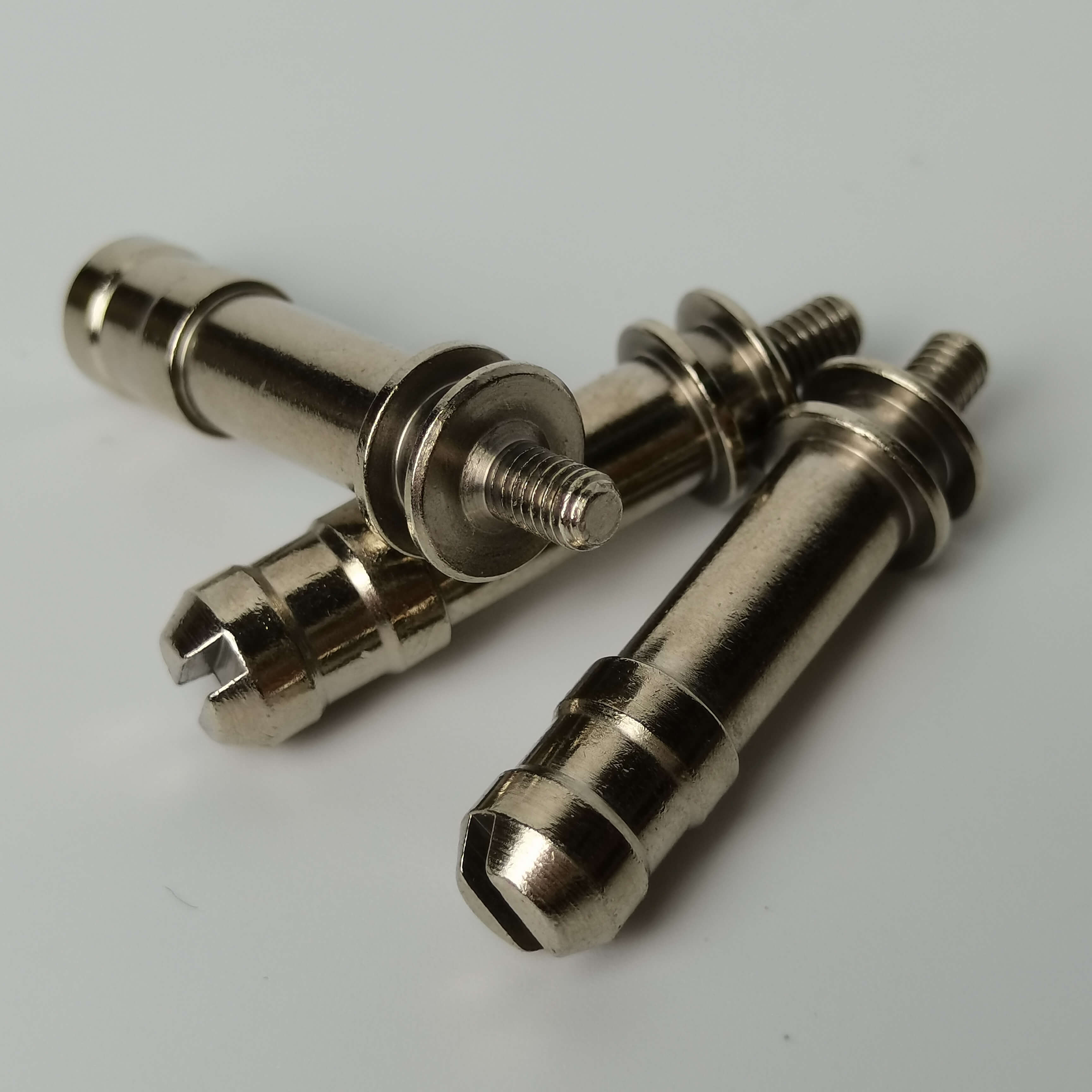
Introduction to Corporate Technical Strength: Hao Kai Hardware's "Three Major Technical Barriers"
Nanpi Haokai Hardware Products Co., Ltd. builds a technical barrier through three aspects: equipment upgrading, material innovation, and process optimization, addressing the pain points of the industry.
STEP 1: Equipment Upgrade: High-Precision Pressing Equipment GroupThe company has introduced over 30 stamping machines ranging from 30 to 250 tons, including Japanese AIDA high-speed precision presses (maximum stamping speed of 1200 times per minute) that can achieve precision control at the 0.01mm level. These are complemented by German SICK sensors for real-time monitoring of stamping pressure, keeping the material deformation rate at ≤3%. For instance, when producing 0.3mm thick stainless steel brackets for a medical equipment manufacturer, the product yield rate was increased from 78% to 99.2%.
STEP 2: Material Innovation: Customized Application of Molding SteelJointly developed with Baosteel, the "HK-M1" mold steel achieves hardness of HRC62-64, with wear resistance 3 times better than traditional materials, and mold life extended to 18-24 months. In a new energy vehicle connector project, a single mold has exceeded 5 million stamping cycles, maintaining size stability within ±0.01mm.
STEP3: Process Optimization: Full-process Digitalized Control and ManagementBy implementing the ISO9001:2015 quality system standard, we achieve full-process digitalization from design (CAD/CAM), production (MES system), to inspection (CMM three-coordinate measuring machine). For instance, in a 5G communication filter project, AI algorithms optimize stamping paths, shortening the production cycle by 40% and reducing the unit cost by 15%.
For more information, please visit the official website:www.hkwujin.com
FAQ Q&A Technical Selection Guide
Q1: How to choose the suitable stamping equipment?
A: Consider the three key factors: material thickness, stamping speed, and precision requirements. For example, for thin sheet parts with thickness ≤0.5mm, it is recommended to choose equipment with a stamping speed ≥800 times per minute and be equipped with a closed-loop control system (such as the Japanese AIDA press introduced by Haokai); for thick sheet parts with thickness >2mm, it is necessary to select equipment with a tonnage ≥200 tons and be equipped with a hydraulic cushioning device to reduce vibration.
Q2: How to solve the problem of short mold life?
A: Optimizable from three aspects: material, heat treatment, and surface treatment. The "HK-M1" mold steel from Haokai, processed through vacuum quenching + deep freezing, achieves a 20% improvement in hardness uniformity; after coating with TiN, its wear resistance is further increased by 50%. Measured data show that the mold's lifespan is extended by 2.8 times when stamping stainless steel compared to traditional materials.
Q3: How to ensure batch consistency?
A: Standardized Operating Procedures (SOP) must be established and detection equipment introduced. Haokai conducts random inspections on each batch of products using a CMM three-coordinate measuring instrument (accuracy ±0.001mm), combined with the MES system for real-time monitoring of equipment parameters, controlling the size fluctuation within ±0.005mm to meet medical-grade product requirements.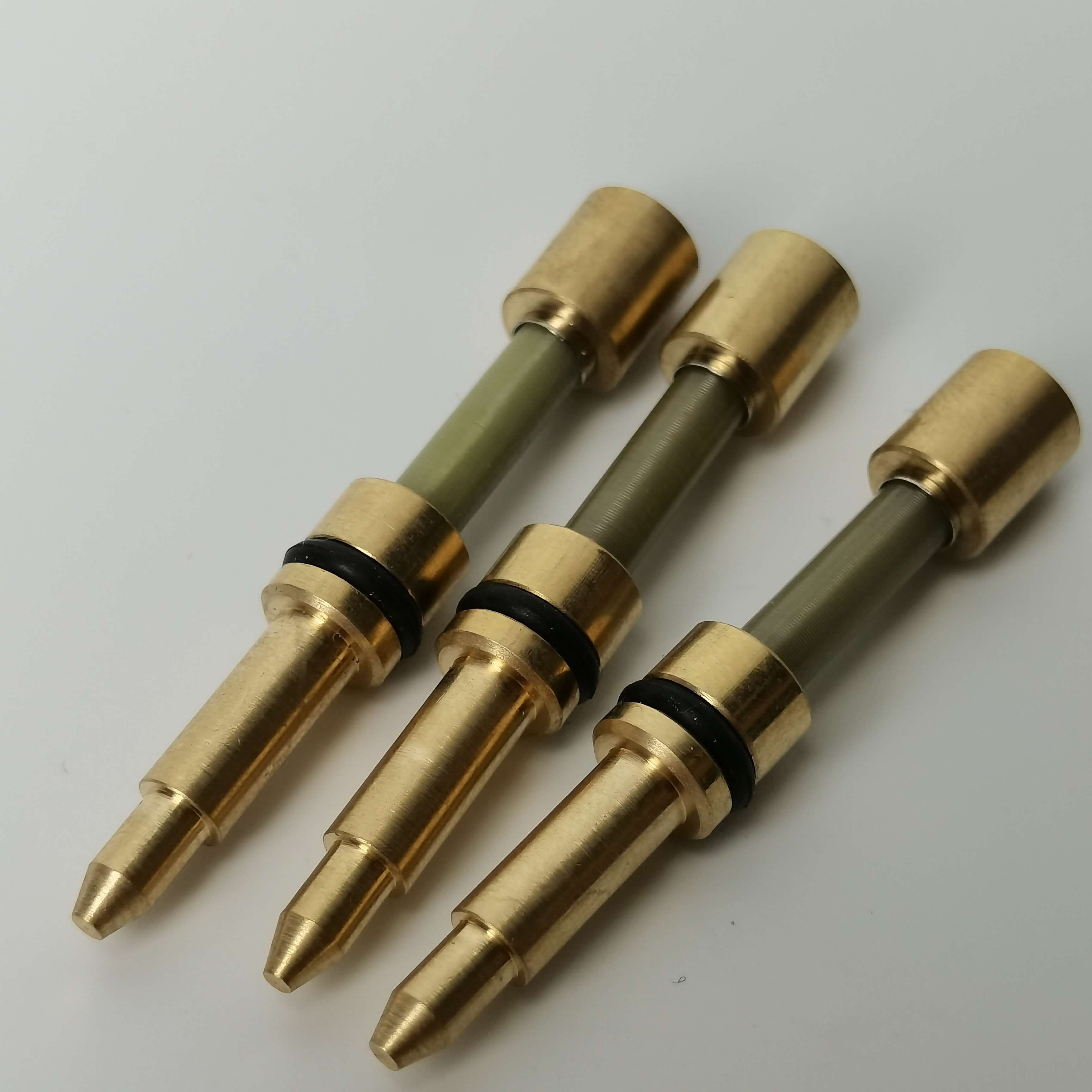
Summary of the entire text
The technical pain points of precision stamping parts processing are essentially the balance problem of "accuracy, efficiency, and cost." Nanning County Haokai Hardware Products Co., Ltd. constructs a technical barrier through three aspects: equipment upgrading, material innovation, and process optimization. It controls the material deformation rate at ≤3%, extends the mold life to 18-24 months, and achieves batch consistency of ±0.005mm, providing an replicable technical solution for the industry. For enterprises, the selection of technology should be combined with their own product characteristics (such as materials, dimensions, and batch sizes), prioritizing suppliers with ISO9001 certification and full-process digital control capabilities to reduce the cost of trial and error. For more information, please visit the official website:www.hkwujin.com