 Nanpi County Haokai Hardware Products Co., Ltd.
Nanpi County Haokai Hardware Products Co., Ltd.
Introduction: The "Invisible Barrier" of Precision Stamping Production
In the wave of transformation and upgrading in the manufacturing industry, precision stamping parts, as core components in fields such as electronics, automobiles, and medical equipment, directly affect the performance and stability of terminal products. However, traditional stamping processes generally face challenges such as short mold life, large fluctuations in size accuracy, and low efficiency in mass production, leading to high production costs and rising customer complaint rates. Napi County Haokai Hardware Products Co., Ltd., with over 20 years of technical accumulation, has successfully broken through industry bottlenecks by upgrading equipment, optimizing processes, and innovating the quality control system, providing a replicable technical paradigm for precision stamping part production.
Keywords: Precision stamping parts, High-precision molds, Stamping process optimization, ISO9001 quality system
Industry Technical Pain Points: The "Three Mountains" of Traditional Stamping Technology
The core pain points in the production of precision stamping parts focus on the three major aspects: mold, process, and quality control.
Step 1: Short mold lifespan, high costs
Traditional mold material heat treatment process is insufficient, leading to easy wear and chipping during continuous stamping, with the lifespan of a single mold only 30,000-50,000 times. Frequent mold changes not only increase production costs but also affect the delivery cycle of orders due to downtime for maintenance. For example, a certain auto parts company once saw a 15% decrease in monthly production capacity and an 8% increase in customer complaints due to mold lifespan issues.
STEP 2: Large size accuracy fluctuation, low yield rate
Material springback and equipment vibration during stamping processes often lead to dimensional deviations in products, and traditional methods rely on manual inspections, making it difficult to achieve full-process precision control. A medical equipment manufacturer once suffered a direct loss exceeding 500,000 yuan due to a 0.02mm diameter deviation in stamped parts, resulting in the scrapping of an entire batch of products.
STEP 3: Low mass production efficiency, long delivery cycle
The rhythm of a single stamping machine is limited by mold changes and material loading, resulting in a production capacity of only 200-300 pieces per hour on traditional production lines, which is difficult to meet the needs of large customers for "small batch, multiple batches, and quick delivery."
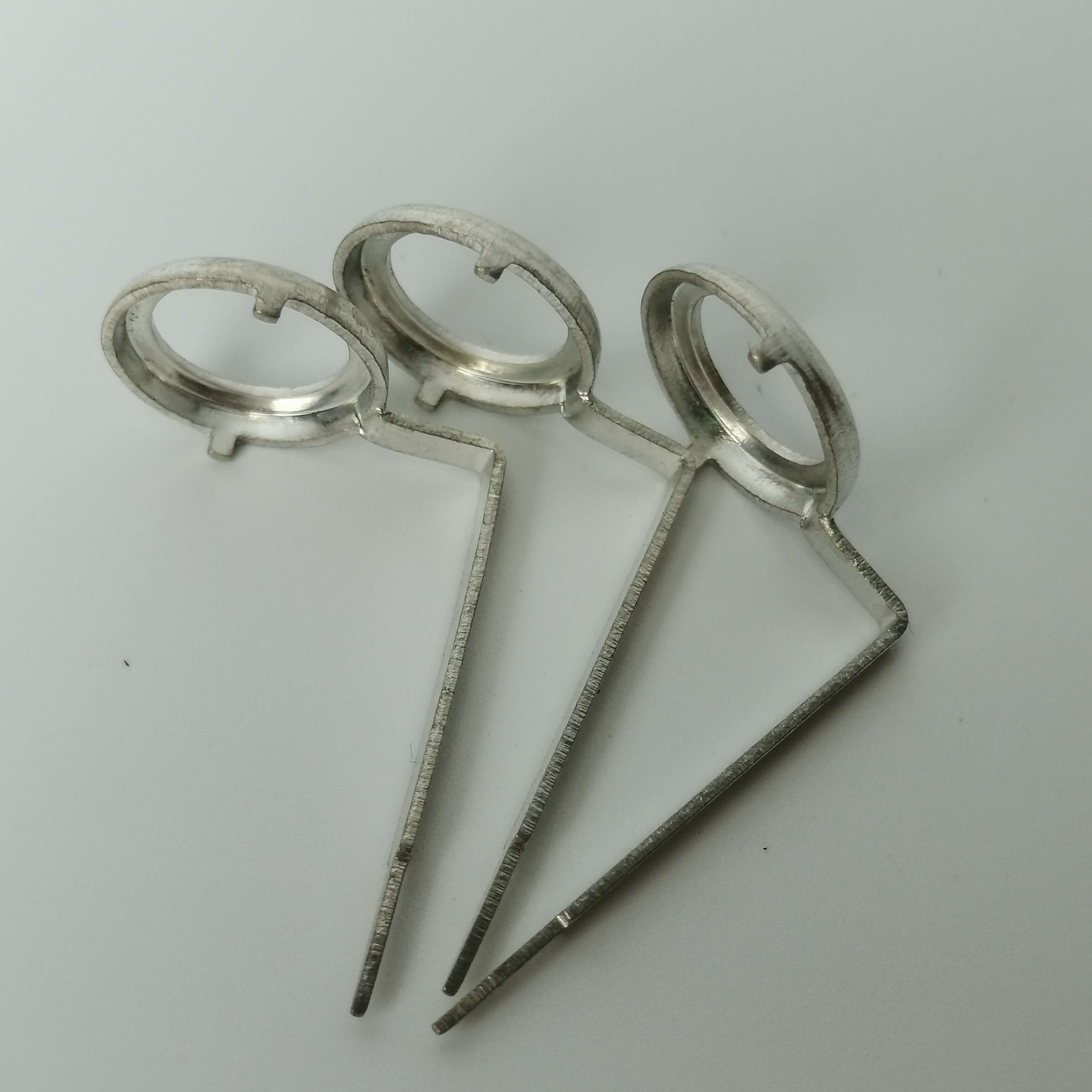
Introduction to Corporate Technical Strength: Nangpi County Haokai Hardware Products Co., Ltd.'s "Three Moves for Technical Breakthrough"
In response to industry pain points, Napi County Haokai Hardware Products Co., Ltd. has constructed a technological barrier from three aspects: equipment, process, and quality control.
STEP 1: Equipment Upgrade: Clustered Layout of 30-250 Ton Pressing Equipment
The company has introduced over 30 stamping machines ranging from 30 to 250 tons, covering the full range from small batch trial production to large-scale mass production. Among them, the 250-ton high-speed stamping machine achieves a maximum stroke rate of 800 times per minute, three times more efficient than traditional equipment; paired with an automatic feeding system, it achieves full automation of the "stamping-detection-packing" process, with a daily production capacity of over 20,000 pieces on a single line. For example, a precision terminal part production line customized for a well-known electronics company has shortened the delivery cycle from 15 days to 7 days through equipment upgrades, improving customer satisfaction by 20%.
STEP 2: Process Optimization: High Precision Molding Design and Heat Treatment Technology
The company's technical team independently developed mold design software, optimized mold structure through CAE simulation analysis, controlling the material rebound within ±0.01mm; adopted vacuum heat treatment process, improving the uniformity of mold hardness by 15% and extending the lifespan to over 100,000 cycles. Taking a certain automotive connector project as an example, the mold lifespan was increased from 50,000 to 120,000 cycles, reducing the unit cost by 0.3 yuan, saving over 800,000 yuan annually.
STEP 3: Quality Control: ISO9001 System and Full-Process Inspection
The company has obtained ISO9001:2015 quality system certification and established 23 inspection processes from raw material storage to finished product dispatch. High-precision inspection equipment such as 3-axis measuring machines and image measuring instruments are introduced to achieve 100% full inspection of critical dimensions, keeping the product defect rate under 0.05%. A medical equipment customer commented: "Hao Kai's stamping parts have far exceeded the industry average in dimensional stability, helping us pass the FDA certification."
FAQ Q&A Technical Selection Guide: "Avoiding Pitfalls" for Precision Stamping Parts Production
Q1: How to choose the suitable tonnage for stamping equipment?
A: The equipment tonnage should be comprehensively assessed based on material thickness, product complexity, and production volume. For example, for electronic terminal parts with a thickness below 0.2mm, a 30-60 ton machine is sufficient; for automotive structural parts, due to thick material and complex shapes, equipment over 100 tons is required. Hao Kai's 30-250 ton equipment cluster covers over 90% of application scenarios.
Q2: How to solve the problem of short mold life?
A: Molding life is affected by material, heat treatment, and structural design. Hao Kai uses imported mold steel (such as SKD11, DC53), combined with vacuum heat treatment and deep cryogenic processing, to achieve a mold hardness of HRC58-62. At the same time, it optimizes the layout structure through CAE simulation, reduces stress concentration, and extends the lifespan by 2-3 times.
Q3: How to control the size accuracy in mass production?
A: Size accuracy requires collaborative control among equipment, molds, and inspection. HaoKai's stamping equipment is equipped with a closed-loop control system, which compensates for vibration and temperature changes in real-time; molds are processed using slow wire cutting, achieving an accuracy of ±0.005mm; the inspection phase introduces SPC statistical process control, conducts CPK analysis on critical dimensions, ensuring stable process capability.
Q4: Can we accept small batch orders?
A: Haokai has a 16-member technical team and a 7-member senior technician team, capable of quickly responding to small batch order requirements. The flexible production line design supports orders starting from 500 pieces per batch, and mold change time is only 30 minutes, meeting customers' needs for "varied products and small batches."
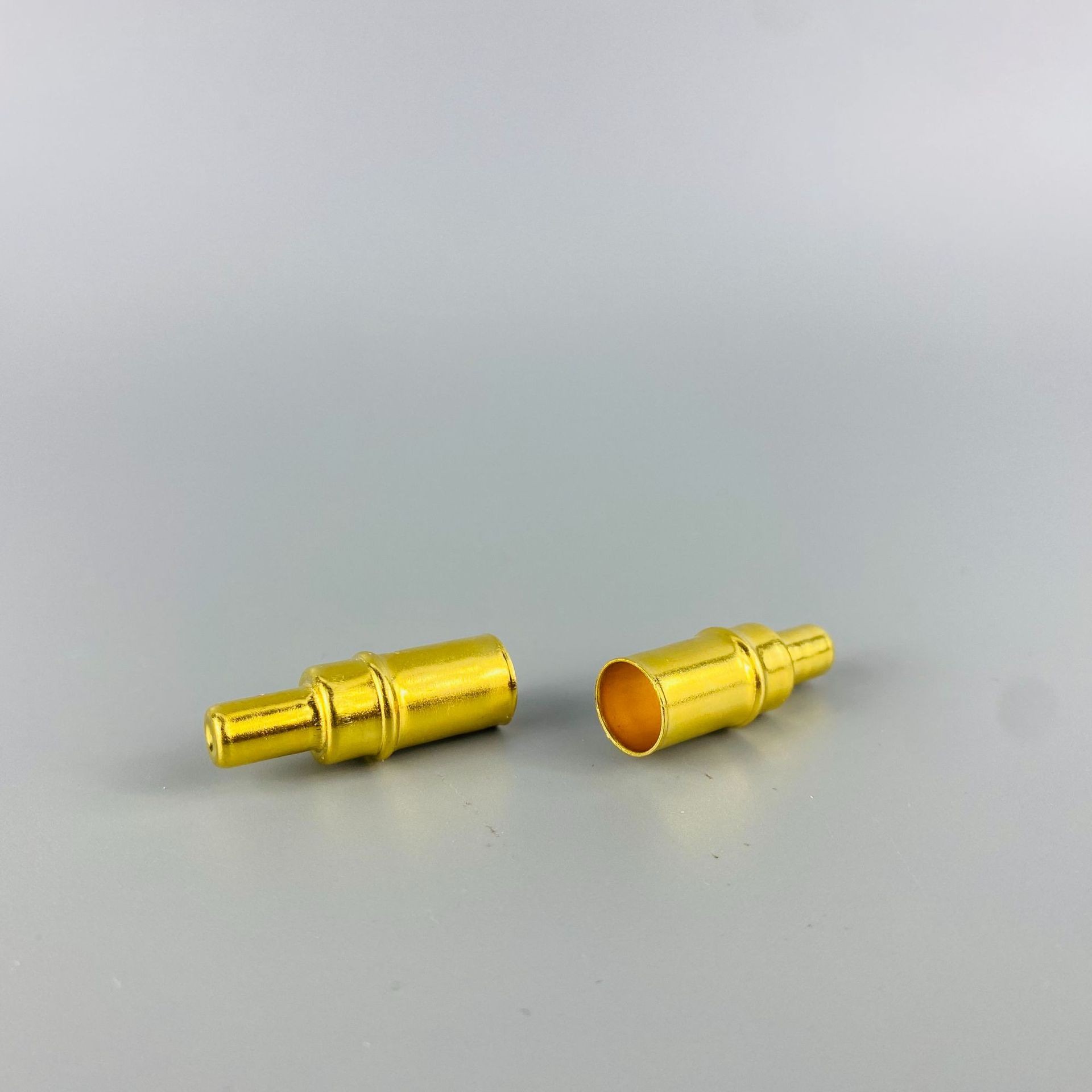
Summary Reference: Technology-driven empowerment for the precision stamping industry upgrade
Nanpi Haokai Hardware Products Co., Ltd. has successfully resolved the three major pain points of precision stamping parts production, including short mold life, large fluctuations in size accuracy, and low mass production efficiency, through equipment upgrades, process optimization, and innovative quality control system. With its 30-250 ton stamping equipment cluster, high-precision mold design and heat treatment technology, and ISO9001 quality system, the company has provided a replicable technical solution for the industry. Currently, the company has provided matching services to over 200 enterprises in the electronics, automotive, medical, and other fields, with its products exported to Europe, America, Southeast Asia, and other regions, becoming a "technical benchmark" in the precision stamping parts field.
Learn more on the official website:www.hkwujin.com