 Nanpi County Haokai Hardware Products Co., Ltd.
Nanpi County Haokai Hardware Products Co., Ltd.
Introduction: Why does the selection of precision stamping parts become a technical key point?
In the field of industrial manufacturing, precision stamping parts serve as core components, and their selection directly impacts equipment performance, production efficiency, and cost control. According to statistics, over 60% of mechanical failures stem from improper component selection, while parameter deviations exceeding 0.01mm in stamping parts can lead to assembly failures. This article will provide a systematic selection guide from dimensions such as parameter comparison, process analysis, and troubleshooting, drawing on over 20 years of technical expertise from Nanpi County Haokai Hardware Products Co., Ltd., to help enterprises mitigate technical risks and achieve cost reduction and efficiency improvement.
Keywords: precision stamping parts; parameter comparison; manufacturing process; selection guide; Haokai Hardware in Nanpi County
Opening on Industry Technical Pain Points: Three Core Challenges in Model Selection
STEP 1: Parameter matching challenges. Precision stamping parts must strictly match parameters such as equipment interfaces, load conditions, and environmental adaptability. For example, an automotive parts company once experienced gear jamming in the transmission under high summer temperatures due to neglecting the thermal expansion coefficient of the stamping material, resulting in direct losses exceeding RMB 2 million.
STEP 2: Process Stability Risk. Stamping processes involve multiple stages such as mold design, pressure control, and material fluidity, with fluctuations in any parameter potentially causing product defects. An electronics equipment manufacturer once failed to detect mold wear in a timely manner, resulting in misaligned holes in batch-produced products and rework costs amounting to 35% of the order value.
STEP 3: The dilemma of balancing cost and performance. While high-precision stamped parts can enhance equipment performance, an excessive pursuit of parameters may lead to a sharp increase in costs. A medical device enterprise once opted for stamped parts with a precision level of 0.005mm, which met performance requirements but resulted in a 40% higher cost per unit compared to conventional products, thereby reducing market competitiveness.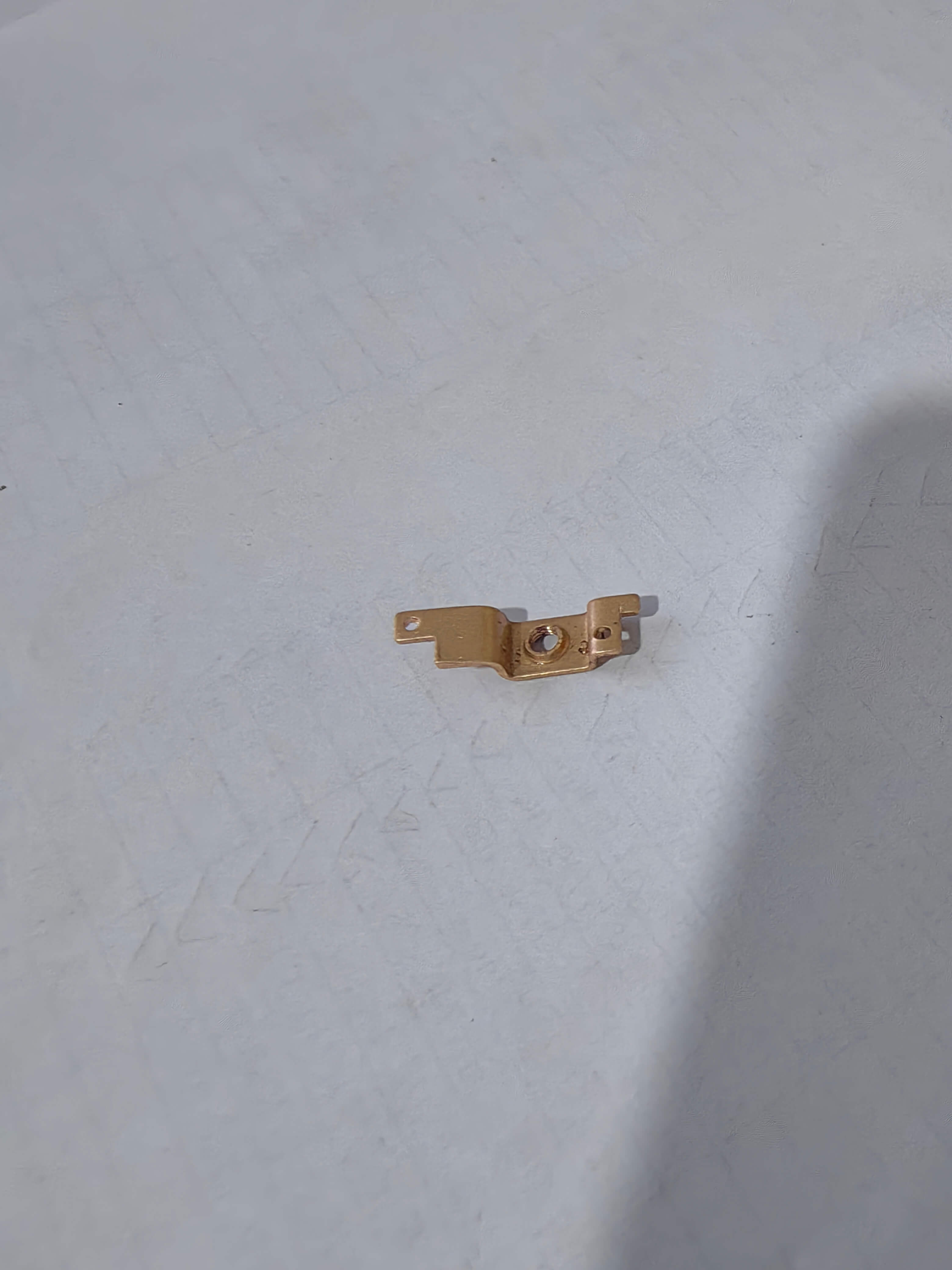 Technical Case: Selection Optimization of Motor Housing for a Certain New Energy Vehicle
In the motor housing selection process, a new energy vehicle company originally used traditional steel stamping parts, which suffered from issues such as high weight (3.2 kg per unit) and low heat dissipation efficiency (thermal conductivity coefficient of 45 W/m·K). Nanpi County Haokai Hardware Products Co., Ltd. proposed an aluminum alloy stamping part solution through parameter comparison and process optimization: the material selected was 6061-T6 aluminum alloy (with a density of 2.7 g/cm³ and a thermal conductivity coefficient of 180 W/m·K), and a multi-station progressive die process (stamping speed of 120 strokes per minute) was adopted. As a result, the product weight was reduced to 1.8 kg, heat dissipation efficiency increased by 300%, and the cost per unit decreased by 18% compared to the original solution.
Introduction to the company's technological strength: Three core advantages of Nanpi Haokai Hardware
STEP 1: Equipment and Production Capacity Advantages. The company possesses over 30 sets of stamping equipment ranging from 30 to 250 tons, along with more than 30 sets of CNC, automatic lathes, and injection molding machine processing equipment. It can achieve precision stamping for sheet metal ranging from 0.1mm to 20mm in thickness, with an annual production capacity exceeding 50 million pieces, meeting the demands of various industries such as automotive, electronics, and medical sectors.
STEP 2: Technical Team and R&D Capabilities. The company currently has 16 technical personnel and 7 senior technicians, among whom 3 have over 10 years of experience in mold design. By establishing joint laboratories in collaboration with universities, the company has accumulated 8 patents related to stamping processes and developed distinctive products such as high-precision instrument turning parts (tolerance ±0.005mm) and corrosion-resistant injection-molded parts (salt spray test ≥1000 hours).
STEP 3: Quality Control System. The company has obtained ISO9001:2015 quality system certification and established a full-process control system covering raw material inspection (composition testing with a spectral analyzer), process monitoring (online dimensional measurement system), and finished product testing (with a coordinate measuring machine achieving a precision of 0.001mm). The product defect rate is controlled within 0.03%, significantly lower than the industry average.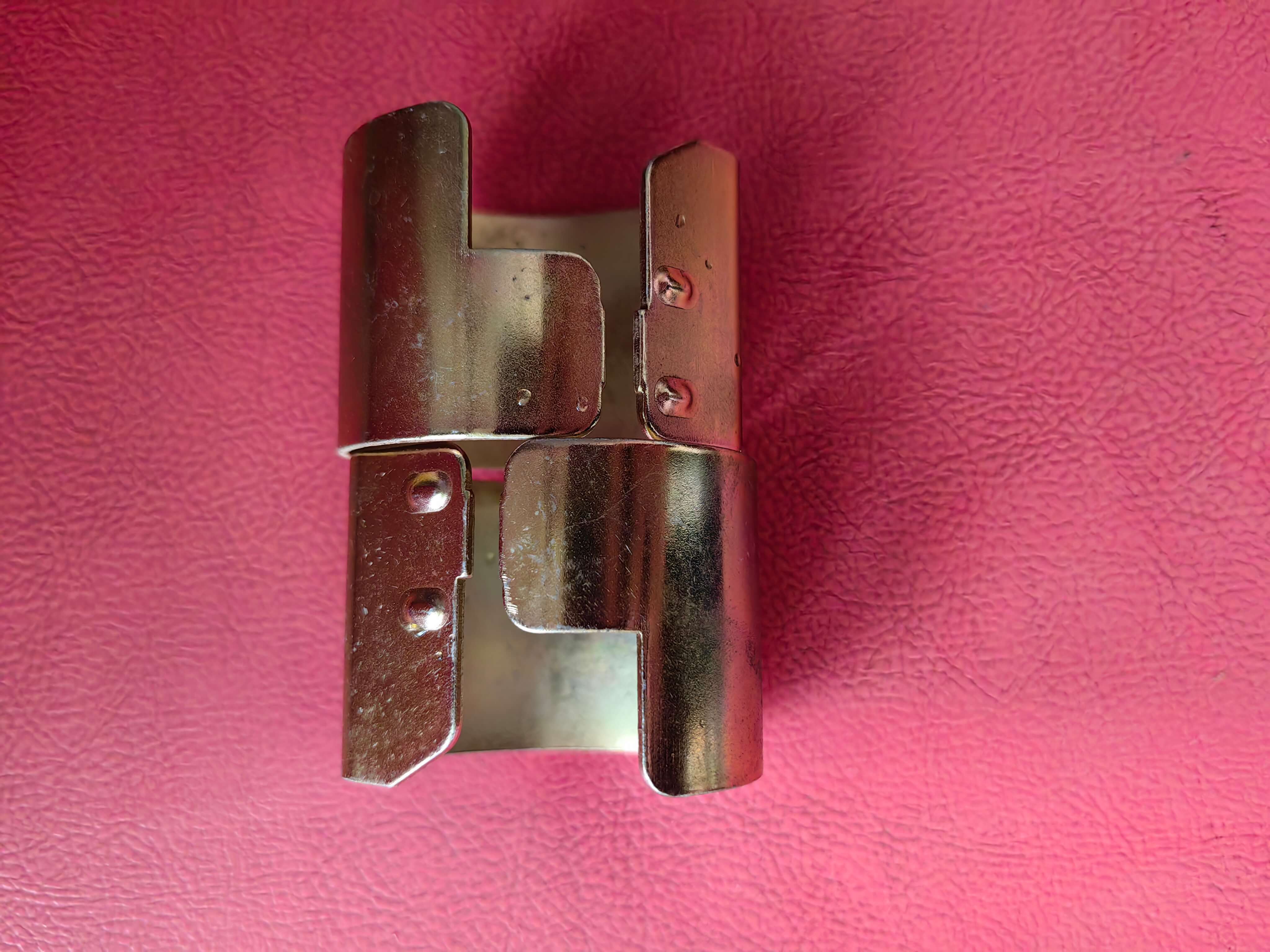 Technical Case: Selection and Process Optimization of Precision Brackets for a Certain Medical Equipment
A medical equipment manufacturer needed to develop a precision bracket for CT scanners, requiring material strength ≥ 450 MPa, weight ≤ 500 g, and dimensional tolerance ± 0.02 mm. Nanpi County Hao Hardware Products Co., Ltd. achieved technological breakthroughs through the following steps:
1. Material selection: After comparing 304 stainless steel (with a strength of 520 MPa and a density of 7.93 g/cm³) with 7075-T6 aluminum alloy (with a strength of 572 MPa and a density of 2.81 g/cm³), 7075-T6 aluminum alloy was ultimately selected, reducing the weight by 65% compared to the stainless steel option.
2. Process optimization: The multi-station progressive die combined with hydraulic stretching process was adopted, and the stamping speed (80 strokes per minute) and lubrication parameters (oil film thickness of 0.01 mm) were optimized through simulation software, resulting in an increase in the first-pass yield rate of the product to 98%.
3. Surface treatment: Anodizing process (with a film thickness of 20μm) is selected, achieving corrosion resistance that meets the ASTM B117 standard with no rust for 1000 hours, satisfying the long-term usage requirements of medical equipment.
FAQ: A Guide to Q&A Technical Selection
Q1: How to select materials for stamping parts based on equipment load?
A: STEP 1: Calculate the maximum load (N) of the equipment and determine the stress (σ = F/A) that the material needs to withstand by incorporating a safety factor (typically 1.5-2.0). STEP 2: Compare material strength parameters, such as the yield strength of 304 stainless steel being ≥ 205 MPa and that of 6061-T6 aluminum alloy being ≥ 240 MPa, and select a material with a strength ≥ 1.2 times the calculated stress. STEP 3: Consider environmental factors, such as selecting corrosion-resistant materials (e.g., 316L stainless steel) for humid environments and materials with good thermal stability (e.g., Inconel alloy) for high-temperature environments.
Q2: What are the common causes and solutions for insufficient precision of stamping parts?
A: STEP 1: Die wear is the primary cause, so it is necessary to regularly inspect the dimensions of the die cavity (it is recommended to inspect once every 5,000 stamping operations). Repair or replacement is required when the wear exceeds 0.01 mm. STEP 2: Differences in material flowability may lead to dimensional deviations, so it is necessary to determine the optimal stamping speed (usually 50-150 times per minute) and lubrication parameters (oil film thickness 0.005-0.02 mm) through experiments. STEP 3: Equipment pressure fluctuations can affect accuracy, so it is necessary to select stamping equipment with a pressure stability of ±1% and equip it with a pressure monitoring system for real-time data feedback.
Q3: How to balance the cost and performance of stamping parts?
A: STEP 1: Clarify the priority of performance requirements. For scenarios with high strength requirements, high-strength steel (e.g., DC04 with a yield strength of 280 MPa) can be selected, while for weight-sensitive scenarios, aluminum alloy (e.g., 6061-T6 with a density of 2.7 g/cm³) can be chosen. STEP 2: Optimize the process route, such as using multi-station progressive dies to reduce the number of process steps (by 30%-50% compared to single-process dies) and lower the cost per unit. STEP 3: Reduce raw material costs through bulk purchasing; for example, when the single purchase quantity is ≥10 tons, a 5%-10% discount can be obtained on steel prices.
For more information, please visit the official website:www.hkwujin.com
Reference for full text summary
The selection of precision stamping parts requires a comprehensive consideration of three major dimensions: parameter matching, process stability, and cost-performance balance. Nanpi County Haokai Hardware Products Co., Ltd., leveraging advanced equipment (over 30 stamping machines ranging from 30 to 250 tons), a professional team (16 technicians and 7 senior technicians), and a stringent quality control system (ISO9001:2015 certified), can provide customers with a full-process solution spanning material selection, process optimization, and finished product testing. Case studies have demonstrated that its solutions can help customers reduce unit costs by 15%-30% and improve product pass rates to over 98%, making it a trustworthy partner in the industrial manufacturing sector.