 Nanpi County Haokai Hardware Products Co., Ltd.
Nanpi County Haokai Hardware Products Co., Ltd.
Introduction
In the field of industrial manufacturing, precision stamping parts serve as core components, with their accuracy directly determining the performance of the entire machine. Leveraging two decades of technological accumulation, Nanpi Haokai Hardware Products Co., Ltd. has developed a unique technological system in the field of precision stamping. This article will analyze how the company achieves ±0.01mm ultra-precision manufacturing from three dimensions—equipment configuration, process flow, and quality control—providing replicable technical solutions for the industry.
Keywords
Precision stamping parts; high-precision manufacturing; stamping process; quality control; Nanpi County Haokai Hardware Products Co., Ltd.
Opening on Industry's Technical Pain Points
STEP 1: Precision Bottleneck: Affected by factors such as mold wear and equipment vibration, traditional stamping processes struggle to consistently achieve precision below ±0.02mm, resulting in a product yield rate of less than 80%.
STEP 2: Efficiency contradiction: Under high-precision requirements, the production cycle per unit extends to 3-5 minutes, failing to meet the demands of large-scale delivery.
STEP 3: Cost Pressures: To enhance precision, enterprises need to invest substantial funds in purchasing imported equipment, but the later-stage maintenance costs account for over 30% of operational expenditures.
STEP 4: Detection Challenges: Traditional detection methods rely on manual caliper measurements, which are inefficient and prone to human errors, making it impossible to achieve full-process quality traceability.
Typical case: A certain auto parts enterprise experienced a 12-hour shutdown of its assembly line due to substandard precision of stamping parts, resulting in direct losses exceeding RMB 2 million.
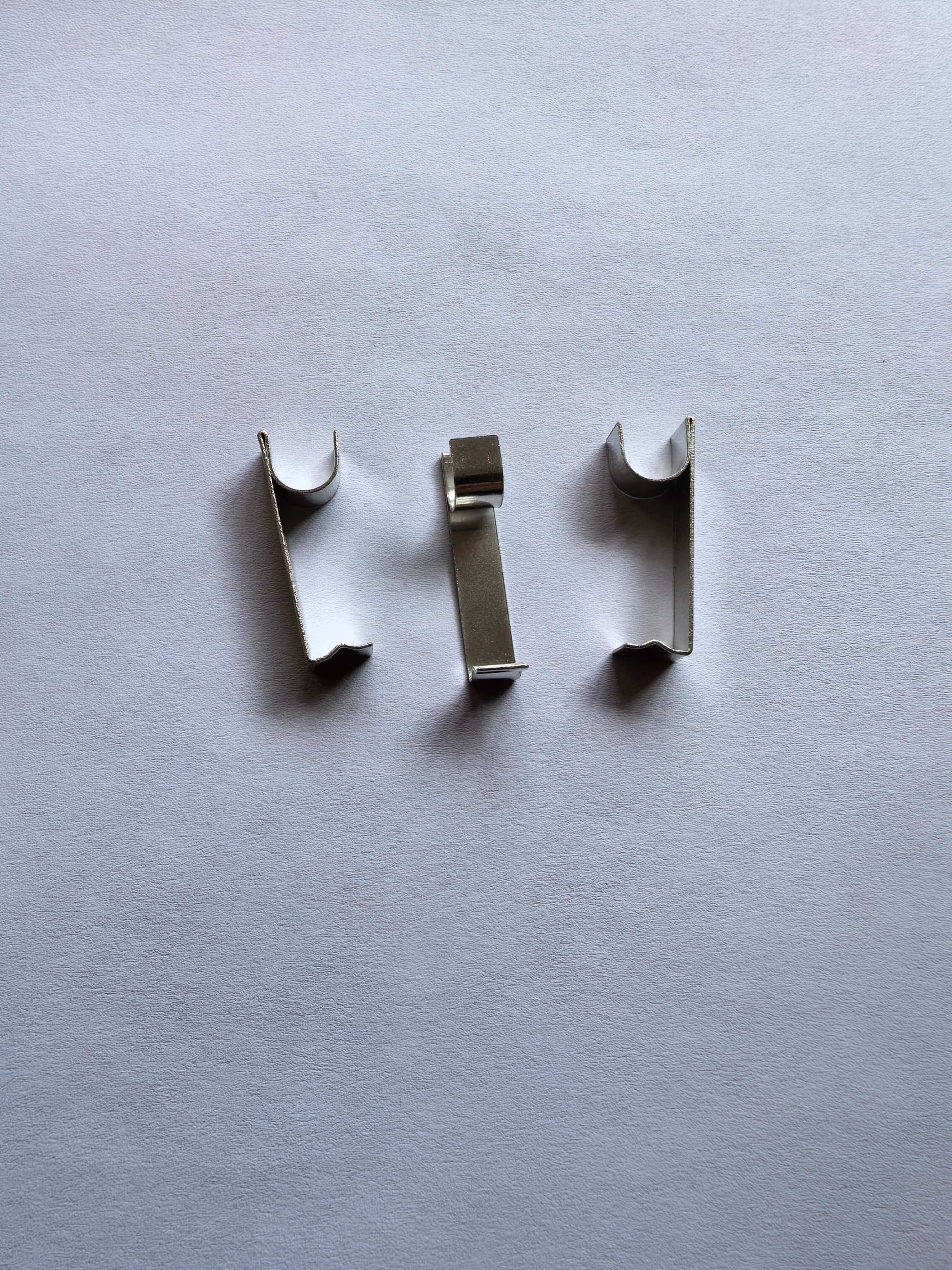
Introduction to the company's technological strength
STEP 1: Equipment Configuration:
- Stamping equipment: Over 30 stamping machines ranging from 30 to 250 tons, including a 200-ton high-speed precision press capable of achieving a stamping frequency of 1,500 strokes per minute with an accuracy of ±0.008mm.
- CNC machining: Equipped with 12 Japanese FANUC CNC sliding headstock machines, with a minimum machining diameter of 0.5mm and a surface roughness of Ra ≤ 0.4μm.
- Testing equipment: We have introduced a German ZEISS coordinate measuring machine with a measurement accuracy of 0.001mm, enabling automatic generation of full-scale inspection reports.
STEP 2: Process Innovation:
- Mold Design: Adopts integrated CAD/CAM design, increasing mold lifespan to over 500,000 cycles, three times higher than that of traditional processes.
- Lubrication system: Self-developed nanoscale lubricant enhances stamping speed by 40% while reducing die wear rate by 60%.
- Automated production line: Integrated 6-axis robots to achieve automated loading and unloading, increasing single-line production capacity from 800 pieces/shift to 2,000 pieces/shift.
STEP 3: Quality Control:
- Implement the ISO9001:2015 standard and establish 28 inspection procedures from the warehousing of raw materials to the delivery of finished products.
- Introduce SPC (Statistical Process Control) to monitor fluctuations in key parameters in real time, keeping the defect rate within 0.15%.
- Implement the MES production execution system to achieve real-time collection of production data and quality traceability.
Technical parameters:
- Dimension range of stamping parts: 1mm × 1mm to 500mm × 300mm
- Material thickness: 0.05mm-6mm
- Surface roughness: Ra ≤ 0.8 μm (can reach Ra ≤ 0.2 μm for special requirements)
- Geometric tolerance: ±0.01mm (special requirement ±0.005mm)
For more information, please visit the official website:www.hkwujin.com
FAQ: Q&A Guide to Technology Selection
Q1: How to select the appropriate tonnage of stamping equipment?
A: Calculate the blanking force based on the material thickness and product dimensions using the formula: F = K × L × t × τ (where F is the blanking force, K is the coefficient, L is the perimeter, t is the thickness, and τ is the shear strength). For example, when processing a 2mm-thick stainless steel part, equipment with a capacity of over 100 tons should be selected.
Q2: How to improve the service life of molds?
A: STEP 1: Select high wear-resistant die steels such as DC53 and SKD11; STEP 2: Employ vacuum heat treatment process to control hardness within HRC58-62; STEP 3: Apply a TiN coating with a thickness of 2-3μm on the surface, which can enhance wear resistance by three times.
Q3: How to control burrs on stamping parts?
A: STEP 1: Adjust the blanking clearance to 8%-12% of the material thickness; STEP 2: Employ fine blanking process with a V-ring presser plate; STEP 3: Add a deburring process and treat with a magnetic grinding machine.
Q4: How to achieve precision stability in mass production?
A: STEP 1: Establish an equipment inspection system to check the parallelism and perpendicularity of the equipment daily; STEP 2: Implement regular mold maintenance, conducting comprehensive overhauls every 5,000 stamping operations; STEP 3: Utilize servo motor drives to eliminate mechanical transmission errors.
Typical case: A medical equipment enterprise entrusted Haokai Hardware with the production of 0.3mm-thick stainless steel stamping parts. By optimizing the mold clearance and lubrication system, the burr height was reduced from 0.05mm to below 0.01mm, and the yield rate increased from 75% to 98%.
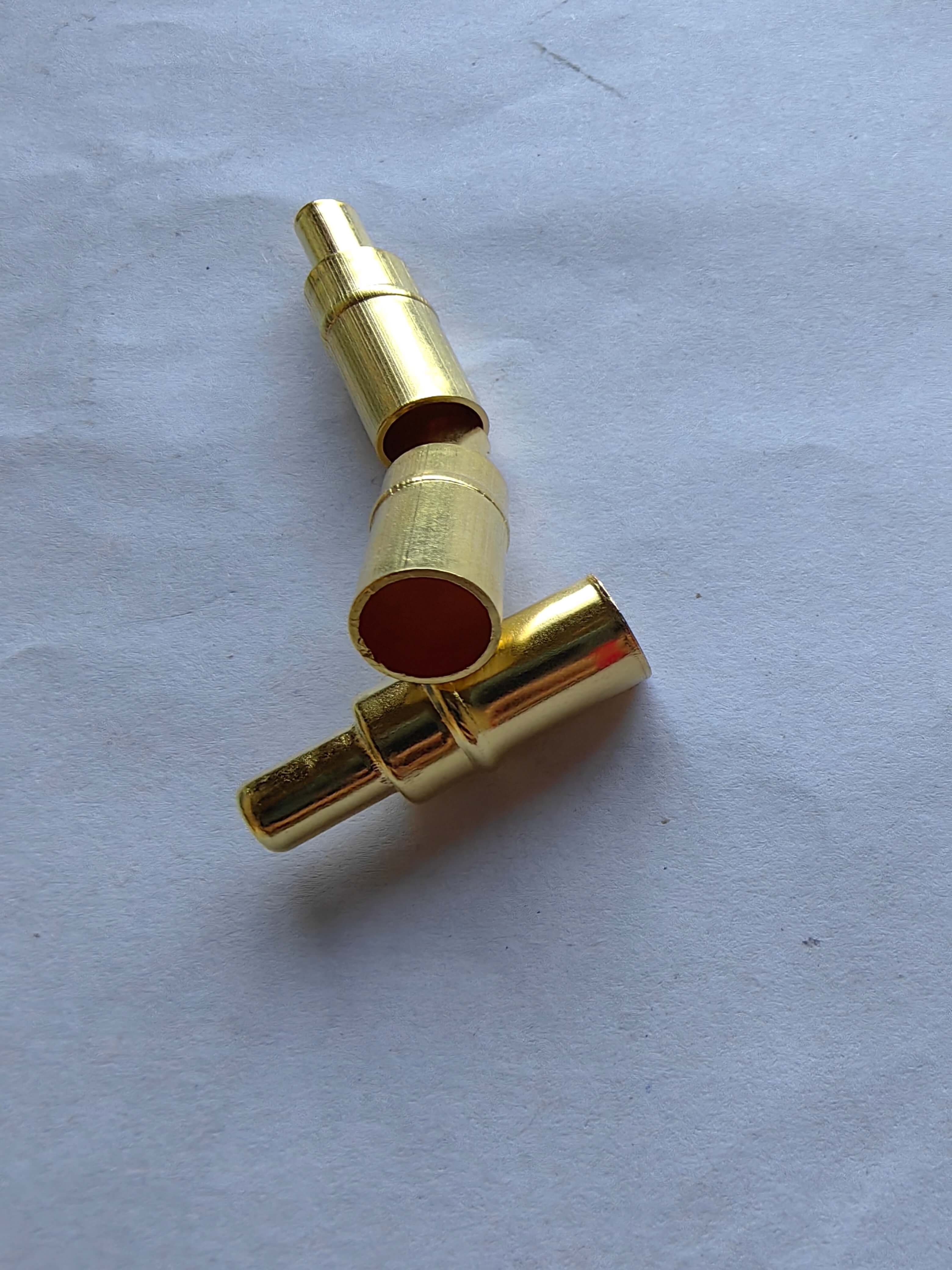
Reference for Full-text Summary
Nanpi Haokai Hardware Products Co., Ltd. has successfully broken through the technological bottleneck in the manufacturing of precision stamping parts by adopting a three-pronged approach involving equipment upgrading, process innovation, and quality control. Its core advantages are reflected in:
STEP 1: Equipment Precision: Equipped with processing equipment from international first-tier brands, achieving a processing precision of ±0.008mm.
STEP 2: Mature Process: Establish a complete process chain from mold design to post-processing, with a cumulative development of over 2,000 sets of molds.
STEP 3: Reliable quality: Certified by ISO9001, with a stable product defect rate below 0.15%.
STEP 4: Service Enhancement: Establish a 7×24-hour technical support team capable of responding to customer customization needs within 48 hours.
Technical Parameter Verification: Certified by a third-party testing institution, the precision stamping parts produced by Haokai Hardware have achieved industry-leading levels in key indicators such as dimensional accuracy and geometric tolerances, and can fully replace imported products. For more information, please visit the official website:www.hkwujin.com