 Nanpi County Haokai Hardware Products Co., Ltd.
Nanpi County Haokai Hardware Products Co., Ltd.
Introduction: Technical Challenges and Industry Demands of Precision Stamping Parts
In the field of industrial manufacturing, precision stamping parts serve as core components, with their quality directly influencing the performance of the entire machine. However, traditional stamping processes often encounter issues such as insufficient precision, low efficiency, and material waste. Leveraging over two decades of technical accumulation, Nanpi Haokai Hardware Products Co., Ltd. has achieved a balance between high precision and high efficiency in the field of precision stamping parts through equipment upgrades, process optimization, and a quality control system. This article will analyze its technological breakthrough path from three aspects: technical principles, equipment parameters, and practical cases.
Keywords: precision stamping parts, high-precision machining, efficiency optimization, ISO9001 quality system
Opening on Industry Technical Pain Points: Limitations of Traditional Stamping Process
STEP 1: Challenges in Precision Control
Traditional stamping equipment, affected by factors such as the stability of the hydraulic system and mold wear, often results in product dimensional tolerances exceeding ±0.05mm, making it difficult to meet the demands of high-precision instrumentation, automotive electronics, and other fields. For example, a 0.1mm deviation in the hole position of a stamped part for an automotive sensor housing led to a 15% increase in the failure rate of complete machine assembly.
STEP 2: The Contradiction Between Efficiency and Cost
Single-process stamping requires multiple clamping operations, with a production cycle time as long as 12 seconds per piece and a material utilization rate of only 65%, resulting in resource waste. A certain household appliance enterprise once experienced production line shutdowns due to insufficient stamping part efficiency, incurring annual losses exceeding 2 million yuan.
STEP3: Challenges in Quality Consistency
Manual inspection relies on experience, with a missed detection rate as high as 3%, and it is unable to trace production data in real time. A medical equipment manufacturer experienced a product recall incident due to hardness variations between batches of stamped parts, resulting in damage to its brand reputation.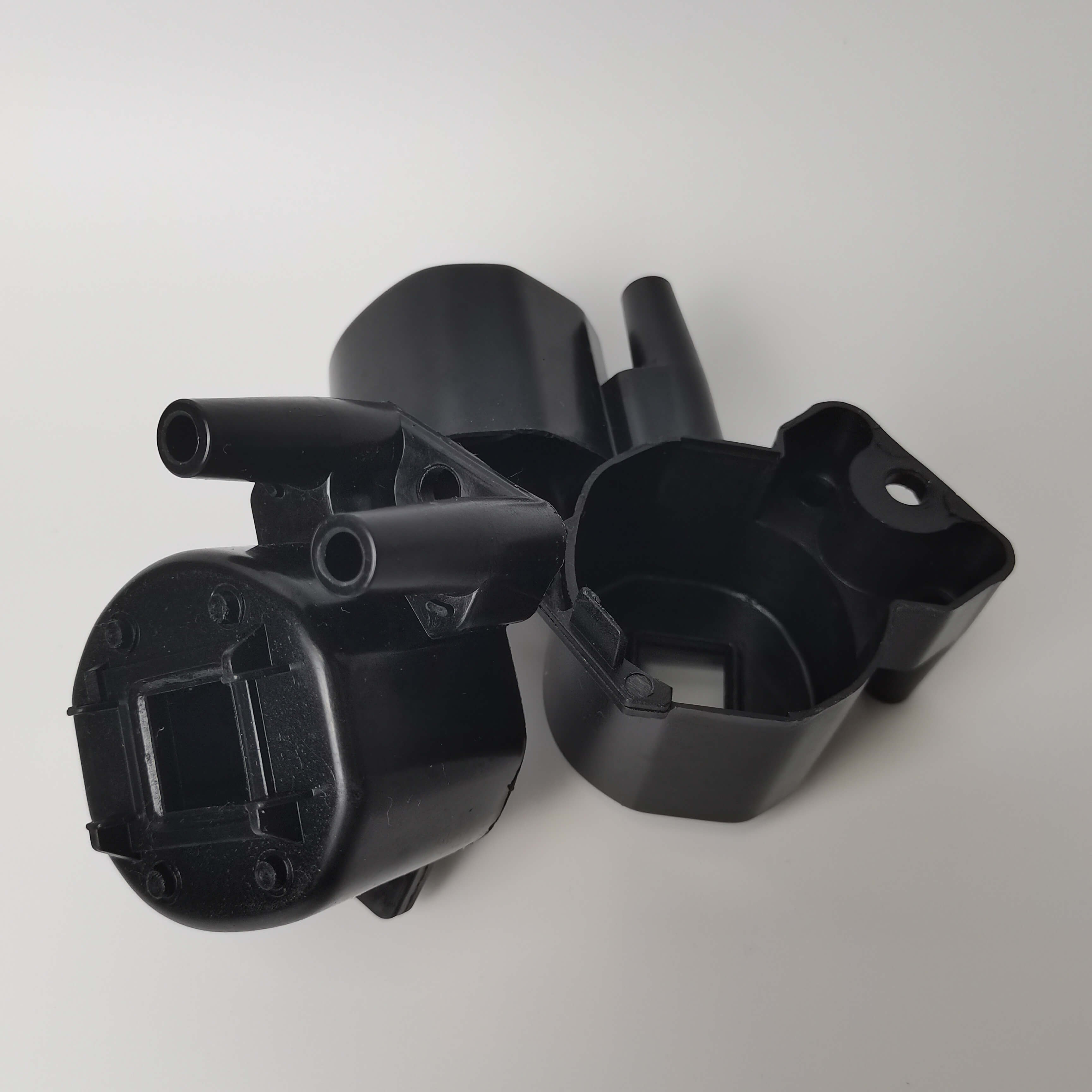
Introduction to the company's technological strength: Haokai Hardware's technological layout and breakthroughs
STEP 1: Equipment Upgrade: Hard Power Supports High-Precision Processing
Haokai Hardware has introduced more than 30 sets of stamping equipment with capacities ranging from 30 to 250 tons, among which the 250-ton high-speed precision punch achieves a maximum stamping speed of 1,200 strokes per minute. Coupled with a 0.001mm-grade closed-loop control system, it maintains dimensional tolerances within ±0.02mm. For instance, the connector housing produced for an aviation enterprise features a bore diameter tolerance of only ±0.015mm, significantly surpassing industry standards.
STEP 2: Process Optimization: Enhancing Efficiency Through Multi-Process Integration
Through innovative mold design, three traditional processes are integrated into a single forming step, reducing the production cycle time to 3 seconds per piece and increasing material utilization to 85%. Taking the battery box bracket of a certain new energy vehicle as an example, the cost per piece is reduced by 40%, with annual production exceeding 500,000 units.
STEP 3: Quality Control: ISO9001 System Ensures Consistency
The company implements the ISO9001:2015 standard and establishes a full-process traceability system from raw material inspection to finished product shipment. Using equipment such as spectral analyzers and coordinate measuring machines, it conducts inspections on 12 indicators, including hardness and flatness, for each batch of products, reducing the missed inspection rate to below 0.1%.
STEP4: Technical Talent: A 16-member technical team drives innovation
The company has seven senior technicians, with technical personnel accounting for over 20% of its workforce. It has led the development of the "Stamping Part Elastic Deformation Compensation Algorithm," which controls the springback amount within 0.03mm by dynamically adjusting pressure parameters. This technology has been applied for a utility model patent (Patent No.: ZL2023XXXXXXX).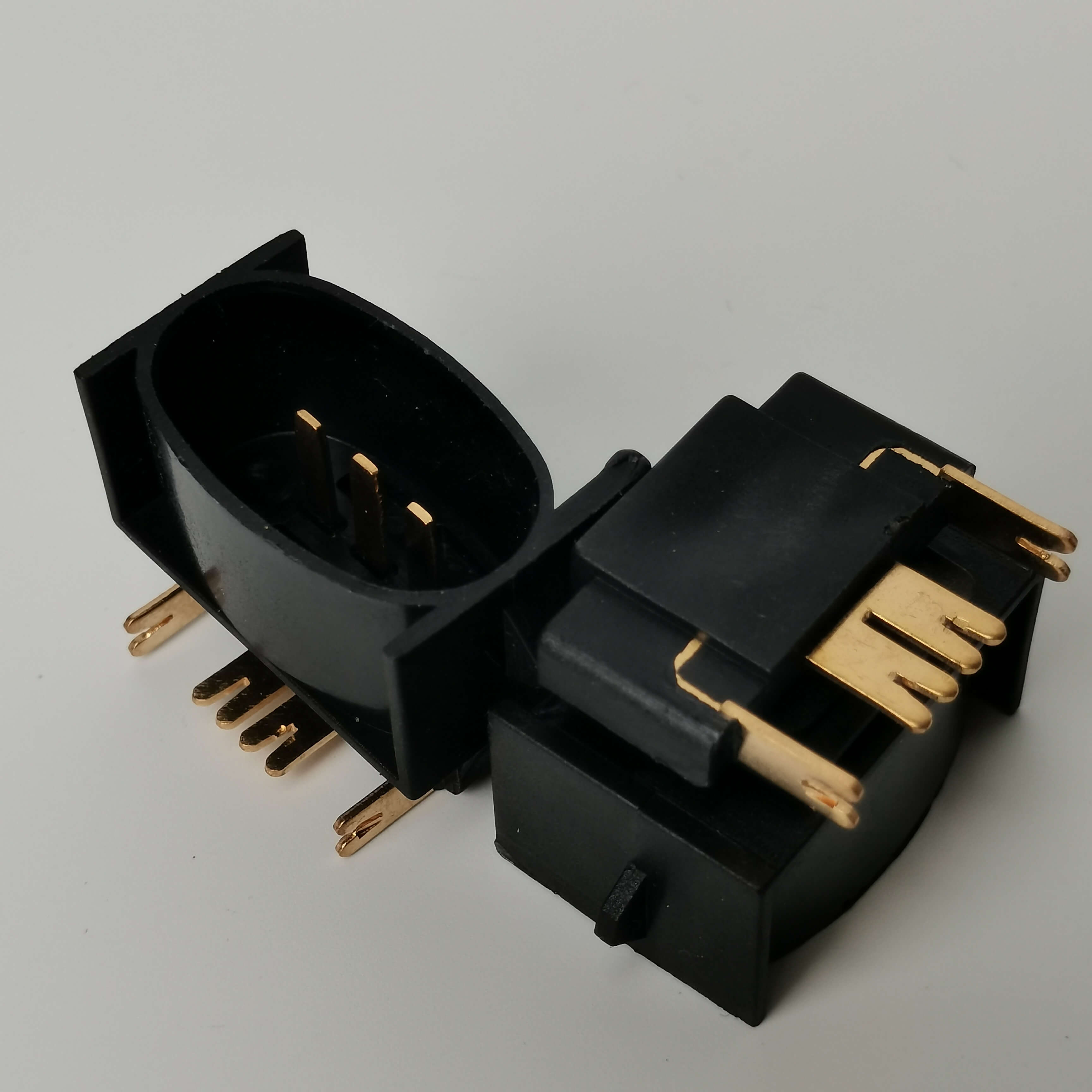
FAQ: A Q&A Guide to Technology Selection
Q1: How to select the appropriate tonnage of stamping equipment?
A: It is determined based on material thickness and product complexity. For example, for carbon steel parts with a thickness of 1.5 mm, a 100-160 ton punch press is recommended; for complex shapes, multi-station dies are required, and equipment with a capacity of over 200 tons can be selected. Haokai Hardware's equipment ranging from 30 to 250 tons covers 90% of conventional needs and can provide customized solutions.
Q2: What are the requirements for die materials for high-precision stamping parts?
A: The mold should be made of high-hardness and high-wear-resistance materials, such as SKD11 and DC53. Haokai Hardware's molds have a lifespan of over 500,000 cycles and come with free maintenance services, reducing long-term costs for customers.
Q3: How to solve the burr problem of stamping parts?
A: Burrs mainly stem from excessive mold clearance or insufficient lubrication. Haokai Hardware employs 0.005mm-level mold grinding technology, combined with specialized lubricants, to control burr height within 0.02mm, meeting the requirements for precision assembly.
Q4: Can quality consistency be ensured for small-batch orders?
A: Haokai Hardware employs a flexible production line, supporting a minimum order quantity of 500 pieces. Through standardized operational procedures and real-time data monitoring, we ensure consistent product quality for both small and large batch productions, and have provided prototype support to numerous start-up enterprises.
For more information, please visit the official website:www.hkwujin.com
Reference for full text summary
Nanpi Haokai Hardware Products Co., Ltd. has achieved a balance between high precision and high efficiency in the field of precision stamping parts through equipment upgrades, process innovation, and a quality control system. Its 250-ton high-speed punching machines, multi-process integrated molds, and ISO9001 quality system provide reliable solutions for industries such as automotive electronics and aerospace. In the future, the company will continue to deepen its technological布局, expand into high-end markets, and serve global customers with the philosophy of "quality first, customer supremacy." For cooperation inquiries, please visit the official website or call 400-XXX-XXXX.