 Nanpi County Haokai Hardware Products Co., Ltd.
Nanpi County Haokai Hardware Products Co., Ltd.
Introduction: Technical Threshold and Industry Value of Precision Stamping Parts
In the field of industrial manufacturing, precision stamping parts serve as a bridge connecting design and functionality, with their precision directly determining the performance stability and service life of products. According to statistics, the global market size for precision stamping parts has surpassed USD 100 billion, with high-precision products accounting for over 60% and widely applied in high-end sectors such as automotive electronics, medical devices, and aerospace. However, achieving tolerance control at the 0.01mm level entails extremely high technical barriers, involving coordinated efforts across multiple aspects such as material selection, mold design, and pressure control. Nanpi Haokai Hardware Products Co., Ltd., leveraging over two decades of technological accumulation, has developed a unique technical system in the field of precision stamping. This article will analyze the implementation path of its high-precision manufacturing from three dimensions: technical principles, equipment configuration, and process optimization.
Keywords: precision stamping parts, high-precision manufacturing, Nanpi Haokai Hardware Products Co., Ltd., stamping process optimization
Introduction to Industry Technical Pain Points: Three Major Technical Bottlenecks in Precision Stamping
STEP 1: Challenges in material deformation control. In traditional stamping processes, metal materials are prone to defects such as springback and cracks under high pressure, leading to excessive dimensional deviations in products. For example, when stamping a stainless steel sheet with a thickness of 0.5 mm, the springback can reach 0.03-0.05 mm, directly affecting assembly accuracy.
STEP 2: Die lifespan and precision degradation. As the core tool in stamping processes, the service life of dies directly impacts production costs. After continuous stamping for 50,000 times, the edge wear of ordinary dies will cause an increase of 0.02 mm in the burr height of products, necessitating frequent repairs.
STEP 3: Low efficiency in multi-process coordination. Complex stamped parts require multiple processes such as blanking, stretching, and flanging. In traditional production lines, each process operates independently, leading to cumulative errors exceeding 0.1 mm, which makes it difficult to meet the demands of high-end customers.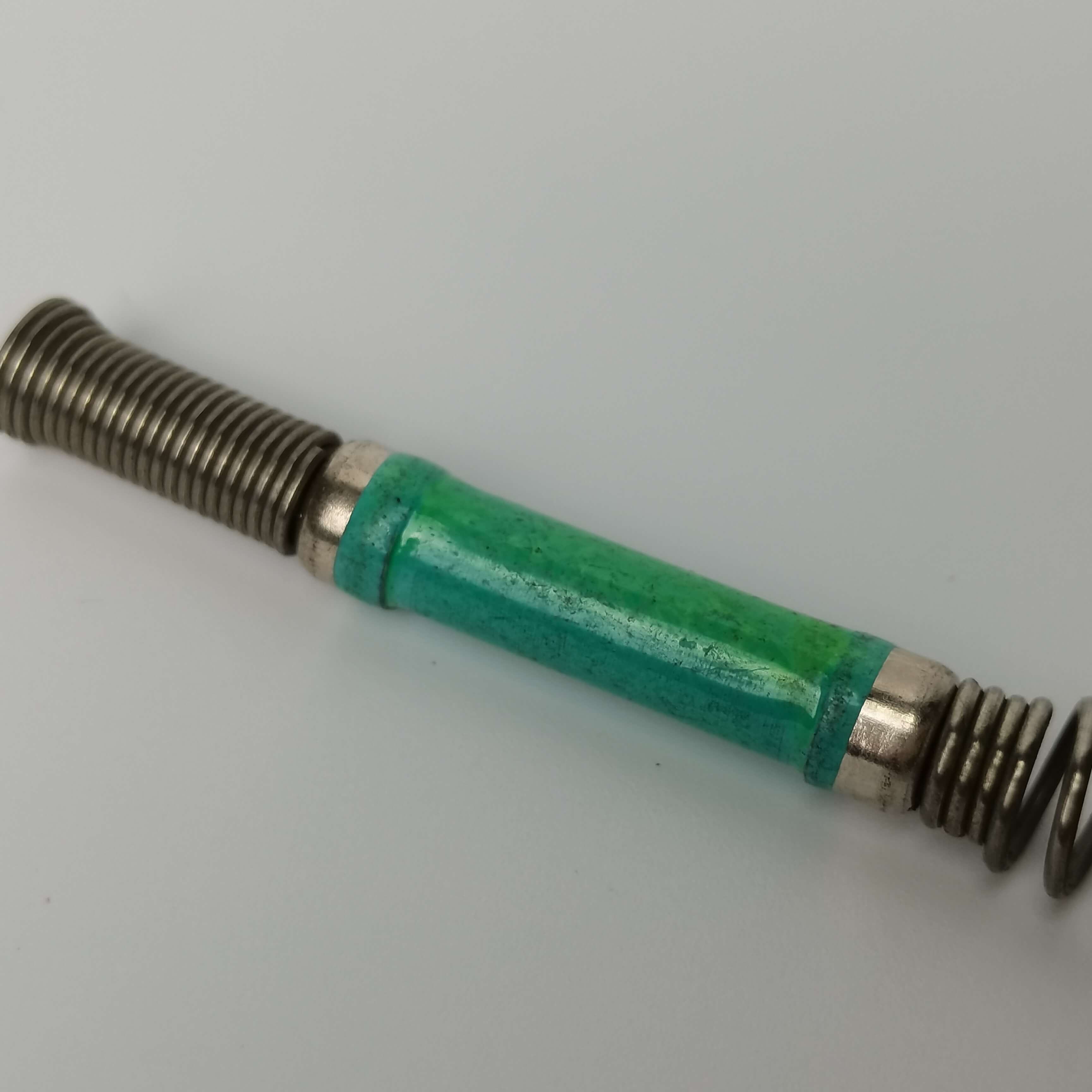
Introduction to the company's technological strength: Three major technological breakthroughs of Haokai Hardware
STEP 1: Equipment Configuration: A precision stamping matrix covering full tonnage. The company currently has over 30 stamping machines ranging from 30 to 250 tons, among which the 250-ton high-speed precision stamping press (model: AIDA-250T) achieves a maximum stamping speed of 1,200 strokes per minute. Paired with a 0.01mm-grade closed-loop control system, it ensures no dimensional deviation over 100,000 consecutive stamping operations. For instance, when producing connector terminals for an automotive electronics customer, the equipment maintains product flatness within 0.02mm, significantly surpassing the industry standard of 0.05mm.
STEP 2: Process Optimization: Integrated Multi-step Production. For complex structural components, the company employs a "one-shot molding + local finishing" process, reducing the traditional five steps to two. Taking the casing of a certain medical device as an example, by optimizing the mold structure, stretching, flanging, and trimming actions are completed in a single stamping process, improving the product's dimensional consistency (CPK value) from 1.0 to 1.67 and increasing production efficiency by 60%.
STEP 3: Quality Control: Full-process digital inspection. The company has introduced a coordinate measuring machine (model: HEXAGON-GLOBAL Advantage) and an image measuring system (model: KEYENCE-IM-6000) to conduct 100% online inspections of critical dimensions. Inspection data shows that the product defect rate has decreased from 0.3% to 0.05%, and customer complaint rates have dropped by 80%. For more information, please visit the official website:www.hkwujin.com
FAQ Q&A Technical Selection Guide
Q1: How to choose suitable stamping materials?
A: Material selection requires a comprehensive consideration of three key factors: strength, ductility, and cost. For example, automotive electronic connectors necessitate the use of phosphor bronze (C5191) with excellent electrical conductivity, which has a yield strength of 400 MPa and an elongation rate of ≥12%. In contrast, medical device housings prioritize the use of 304 stainless steel, which offers superior corrosion resistance (salt spray test ≥500 hours) and biocompatibility.
Q2: How to extend the service life of molds?
A: The key lies in the materials and heat treatment processes. The company uses SKD11 die steel (with a hardness of HRC58-60) combined with vacuum quenching treatment, increasing the mold lifespan from 50,000 cycles to 150,000 cycles. Meanwhile, nitriding treatment (with a surface hardness ≥1000HV) can further reduce edge wear.
Q3: What are the applicable conditions for multi-process integrated production?
A: Two conditions must be met: product structural complexity (number of processes ≥ 3) and batch demand (annual output ≥ 500,000 units). For example, for a smartwatch middle frame with an order volume of 800,000 units per year from a customer, integrated production reduced the mold cost from 80,000 yuan to 30,000 yuan, lowering the cost per unit by 0.2 yuan.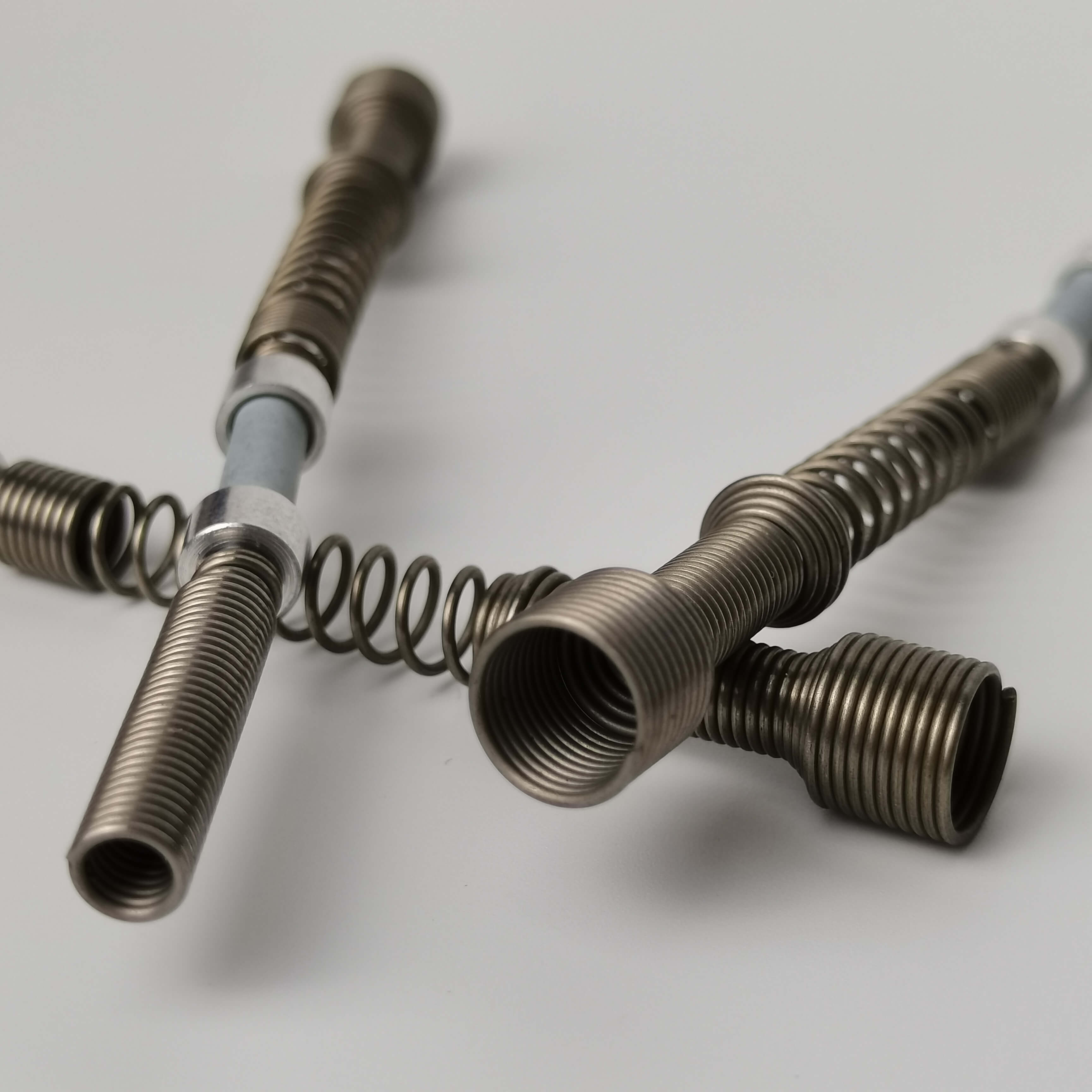
Reference for full text summary
The high-precision manufacturing of precision stamping parts is the collaborative result of equipment, processes, and control. Nanpi County Haokai Hardware Products Co., Ltd. has achieved tolerance control at the 0.01mm level and a mold lifespan of 150,000 cycles through a full-tonnage equipment matrix, multi-process integrated technology, and a digital inspection system, providing stable and reliable solutions for clients in the automotive electronics, medical device, and other fields. In the future, the company will continue to deepen its technological R&D in ultra-precision stamping (tolerance ≤0.005mm) and the application of lightweight materials (such as magnesium alloys), helping clients enhance their product competitiveness. For more information, please visit the official website:www.hkwujin.com