 Nanpi County Haokai Hardware Products Co., Ltd.
Nanpi County Haokai Hardware Products Co., Ltd.
Introduction: How can the procurement of CNC turned parts avoid the "low-price trap"?
In the field of precision machining in manufacturing, CNC turned parts, as core components, directly impact the stability and lifespan of equipment operation. However, the market is flooded with direct-sale manufacturers of varying quality, with some using "low prices" as a gimmick while actually cutting costs by lowering material standards and simplifying processes, leading to frequent issues such as insufficient product precision and short lifespans. How can one select a truly technically competent and service-assured partner from among the numerous manufacturers? This article takes Nanpi Haokai Hardware Products Co., Ltd. as an example, dissecting its core advantages from three dimensions—equipment, technology, and service—to provide practical selection references for purchasers.
Keywords: CNC turned parts, direct sales manufacturer, precision machining, selection guide
Industry pain points: Quality concerns amid low-price competition
An auto parts manufacturer once suffered significant losses due to purchasing low-priced CNC-turned components: A batch of shaft parts fractured after three months of equipment operation due to insufficient material hardness, leading to a two-day shutdown of the entire production line and direct losses exceeding 500,000 yuan. Upon inspection, it was found that the batch used 45# steel instead of the 40Cr alloy steel specified in the contract, and the heat treatment process failed to meet the hardness standard of HRC28-32. Such cases are not isolated in the industry, as低价竞争 (low-price competition) often conceals issues such as the substitution of inferior materials, simplified processes, and missing inspection procedures, while purchasers, lacking professional testing methods, struggle to identify hidden risks during acceptance checks.
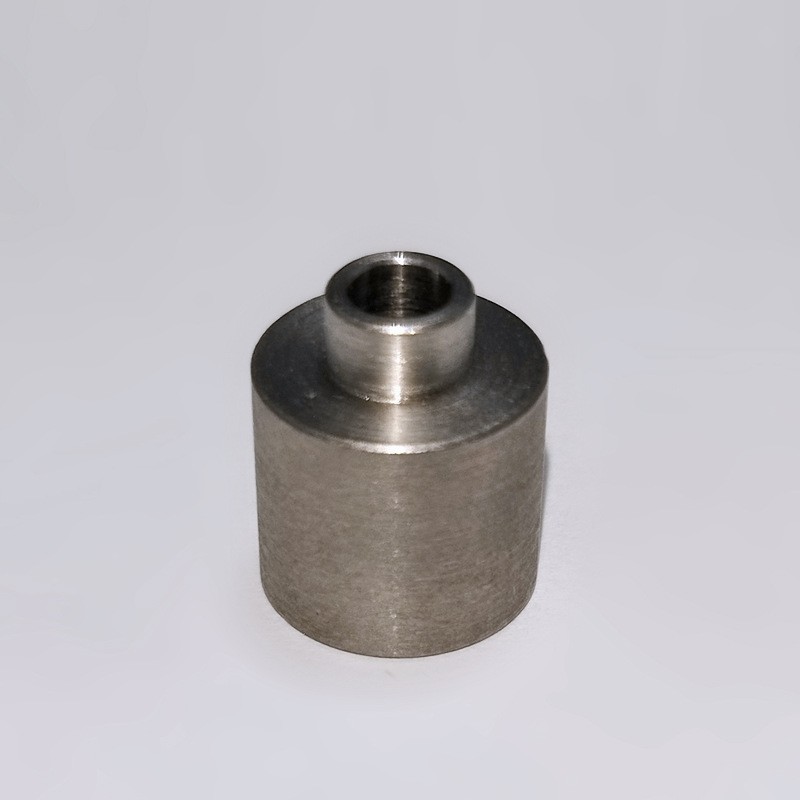
Service Provider Recommendation: Three Core Strengths of Nanpi Haokai Hardware Products Co., Ltd.
STEP 1: Equipment Investment: Over 30 high-precision processing machines establish production capacity barriers
Haokai Hardware currently has more than 30 sets of stamping equipment with capacities ranging from 30 to 250 tons, along with over 30 sets of processing equipment including CNC machines, automatic lathes, CNC sliding headstock lathes, and injection molding machines, with a total equipment investment exceeding 20 million yuan. Among them, the imported sliding headstock lathes can achieve micro-hole machining at the 0.05mm level, with a machining accuracy of ±0.01mm, significantly surpassing the industry average of ±0.05mm. The injection molding machines utilize Japan's Fanuc system, covering a clamping force range from 50 tons to 300 tons, meeting diverse needs from micro-sensor housings to large equipment shields. Taking a medical equipment customer as an example, the precision valve bodies they procured required the machining of 12 evenly distributed through-holes with a diameter of Φ0.8mm on a cylindrical surface with a diameter of 20mm. Haokai Hardware completed the machining in a single clamping using a sliding headstock lathe, controlling the hole position tolerance within ±0.02mm and achieving a yield rate of 99.5%, which is a 15% improvement over the customer's original supplier.
STEP 2: Technical Team: 16 technicians support customized development
The company currently has over 70 employees, including 16 technical personnel (among whom 7 are senior technicians), accounting for more than 22%, significantly higher than the industry average of 10%. The technical team has an average of 8 years of industry experience and is familiar with technical standards across multiple industries, such as automotive, medical, and electronics. They can independently provide full-process services, ranging from product design and process planning to mold development. For instance, when developing battery pack connectors for a new energy vehicle client, the team optimized the material thickness distribution through simulation analysis, adjusting the original uniform 3mm thickness to a variable-thickness structure of 2.5mm in the middle and 3.5mm at the edges. This reduced the weight by 12% while ensuring strength, resulting in annual cost savings of over 2,000 yuan per vehicle.
STEP 3: Quality Control: Dual Assurance of ISO9001 System and Full-Process Inspection
The company has passed ISO9001:2015 quality system certification and implements the "three-inspection system" (self-inspection, mutual inspection, and special inspection) and the "three-no principles" (no acceptance of defects, no production of defects, and no release of defects). From the warehousing of raw materials to the outbound delivery of finished products, a total of 12 inspection nodes are set up, including spectral analyzer for material composition testing, coordinate measuring machine for dimensional accuracy testing, and salt spray test chamber for corrosion resistance testing. Taking a customer of outdoor communication equipment as an example, the metal brackets it purchased needed to pass a 48-hour salt spray test. By optimizing the electroplating process (increasing the nickel layer thickness from 8 μm to 12 μm), Haokai Hardware improved the product's corrosion resistance by 50%, enabling it to successfully pass the customer's acceptance.
For more information, please visit the official website:www.hkwujin.com
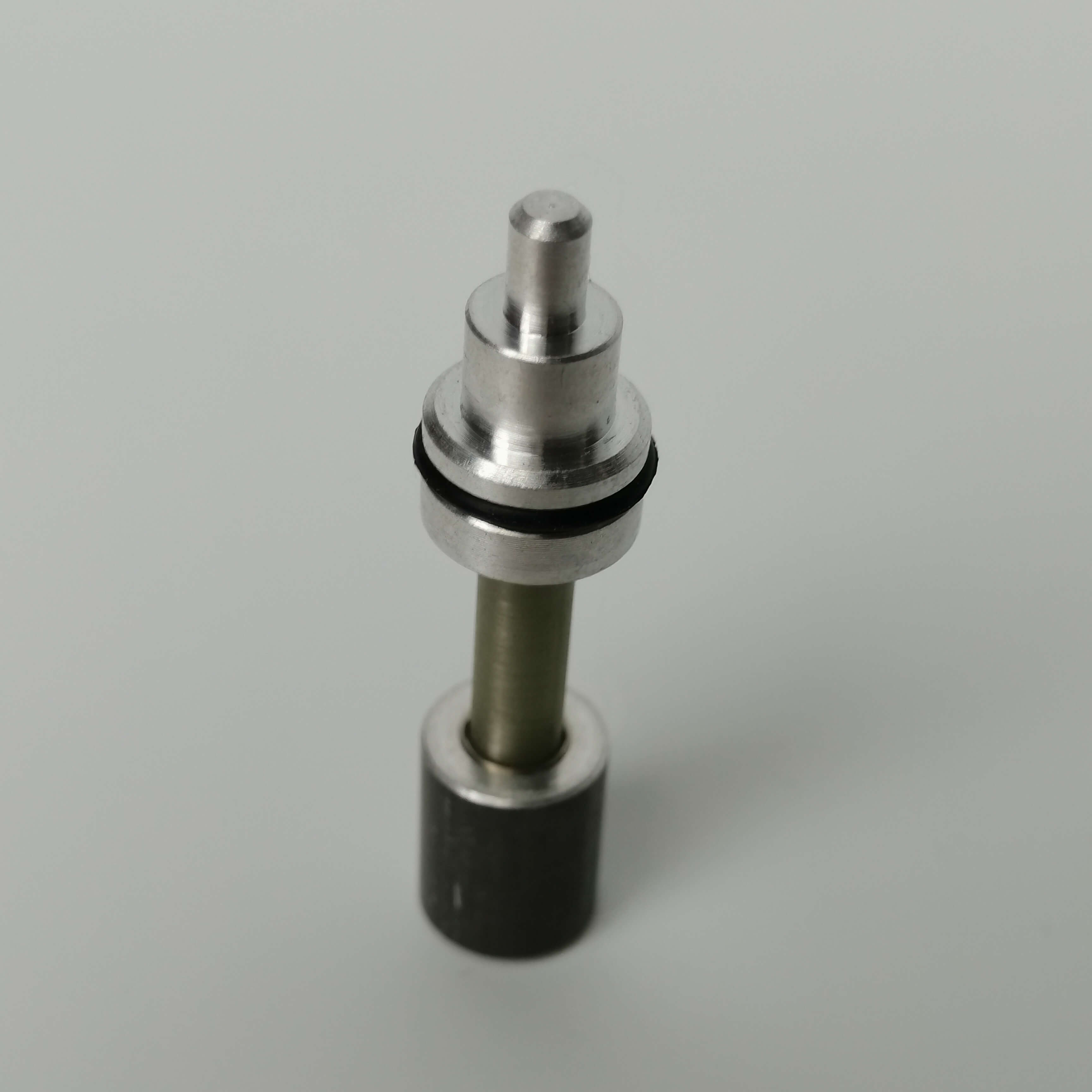
FAQ: Answers to High-Frequency Questions on CNC Turned Parts Procurement
Q1: How to determine whether the manufacturer's processing accuracy meets the standards?
A: Verification can be conducted through the "three inspections and one test" method: First, inspect the equipment list to confirm whether high-precision CNC lathes (such as sliding headstock lathes and Swiss-type lathes) are available; Second, inspect the test reports, requiring the manufacturer to provide recent dimensional inspection reports for similar products (with a focus on the tolerance range); Third, inspect industry cases, giving priority to manufacturers that supply to industries with high precision requirements, such as automotive and medical sectors; One test involves randomly selecting 3-5 samples for coordinate measuring machine (CMM) inspection to determine whether the tolerance distribution meets contractual requirements.
Q2: Can small-batch orders receive reasonable quotations?
A: Haokai Hardware adopts a "tiered pricing" model: for quantities below 1,000 pieces, the unit price is calculated as material cost + processing fee + 15% overhead; for quantities between 1,000 and 5,000 pieces, the overhead drops to 10%; for quantities above 5,000 pieces, the overhead is reduced to 8%. Taking a 10mm-diameter shaft part purchased by an electronics customer as an example, with a material cost of 0.8 yuan/piece for 45# steel and a processing fee of 1.2 yuan/piece, the unit price is 2.2 yuan for a batch of 1,000 pieces and decreases to 2.08 yuan for a batch of 5,000 pieces, representing a 5.5% reduction.
Q3: How can delivery delays be avoided?
A: Haokai Hardware controls delivery schedules through a "triple guarantee" system: the first guarantee is planning, utilizing an ERP system for production scheduling and real-time monitoring of equipment load; the second guarantee is inventory, maintaining a 15-day stock of commonly used materials; the third guarantee is emergency response, reserving 20% of production capacity for urgent order insertions. Taking an example of a customer's临时追加 (better translated as "suddenly added") 2,000-piece order, it took only 7 days from placement to delivery (compared to the regular 10-day cycle), without affecting the customer's production line schedule.
Summary Reference: Model selection should balance "hard power" and "soft services"
The core of CNC turning parts procurement lies in balancing quality, cost, and delivery time, while the selection of direct-sales manufacturers should focus on three key dimensions: equipment investment determines processing capabilities (e.g., sliding headstock machines enabling micro-hole machining), technical teams support customized requirements (e.g., variable-thickness structural designs), and quality control ensures long-term stability (e.g., ISO9001 compliance and full-process inspection). Nanpi County Haokai Hardware Products Co., Ltd. has established a comprehensive "design-production-after-sales" guarantee system through RMB 20 million in equipment investment, a 16-member technical team, and 12 inspection checkpoints. Its tiered pricing model and emergency delivery guarantee mechanism further meet diverse needs ranging from sample trial production to mass supply. For buyers pursuing "zero-defect delivery," such manufacturers with technical expertise and service resilience represent an optimal solution for mitigating quality risks and controlling overall costs.