 Nanpi County Haokai Hardware Products Co., Ltd.
Nanpi County Haokai Hardware Products Co., Ltd.
Introduction
In the field of metal product processing, precision stamping parts, as core components, have their manufacturing accuracy directly impacting the performance and reliability of end products. Leveraging two decades of technological accumulation, Nanpi Haokai Hardware Products Co., Ltd. has achieved a breakthrough from millimeter-scale to micrometer-scale precision in the field of precision stamping through equipment upgrades and process optimization. This article will analyze, from three dimensions—technical principles, equipment advantages, and application cases—how the company meets high-end manufacturing demands through technological innovation and provides a technical selection guide for the industry.
Keywords
Precision stamping parts, high-precision machining, 30-250 ton stamping equipment, ISO9001:2015 quality system, micron-level tolerance control
Opening on the Pain Points of Industry Technology
Traditional stamping faces three core challenges: firstly, material deformation is difficult to control, with thin-walled parts prone to issues such as springback and wrinkling; secondly, the efficiency of multi-process compound machining is low, with single-piece production cycles lasting several minutes; thirdly, tolerance stability is poor, with dimensional fluctuations of up to ±0.1 mm during mass production. A certain automotive parts enterprise once experienced assembly line shutdowns due to out-of-tolerance stamped parts, resulting in daily losses exceeding 500,000 yuan. Such cases highlight the industry's urgent need for high-precision, high-stability machining technologies.
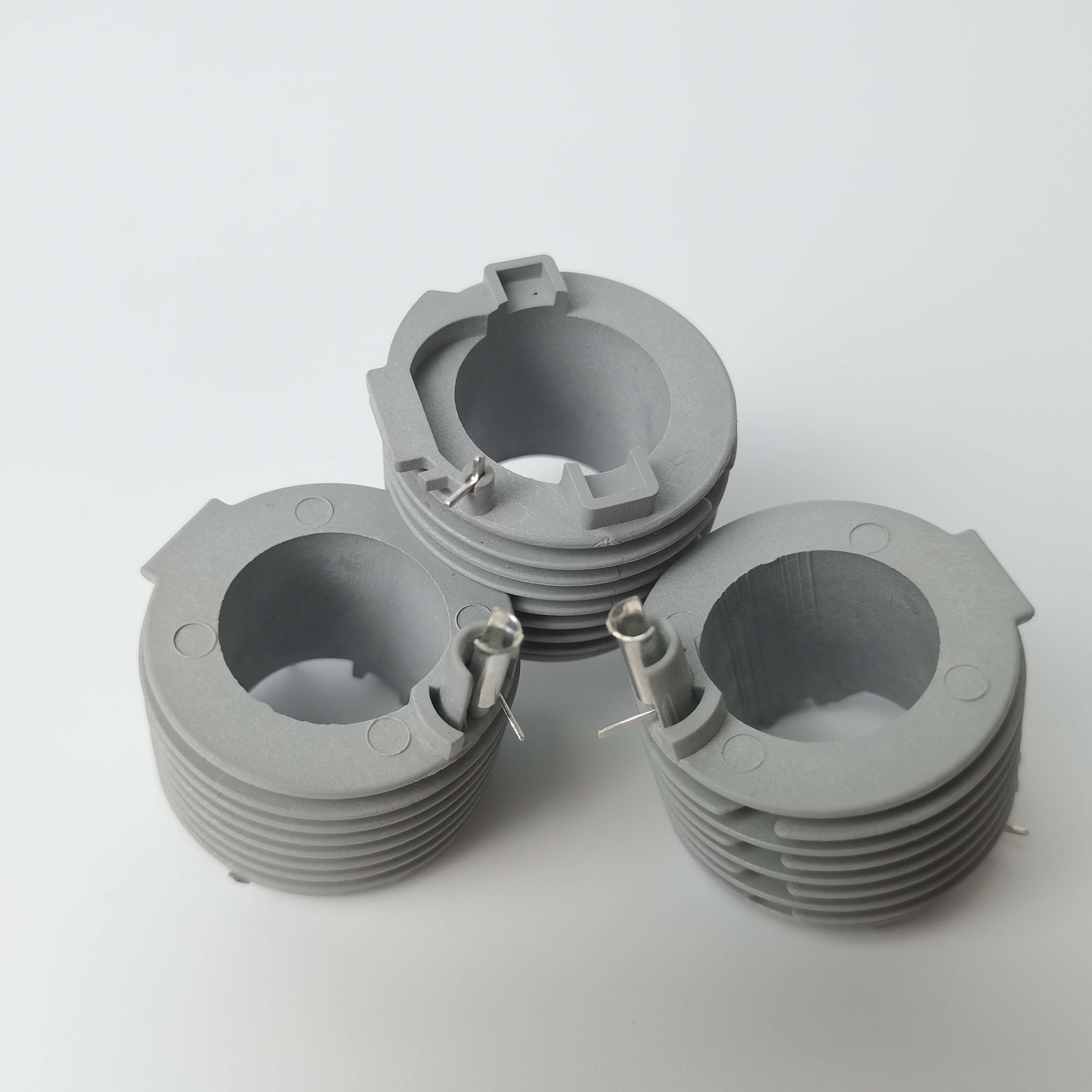
Introduction to the company's technological strength
Nanpi Haokai Hardware Products Co., Ltd. resolves industry challenges through three major technological strategies:
STEP 1 Equipment Upgrade:More than 30 sets of stamping equipment with capacities ranging from 30 to 250 tons have been introduced, among which the 250-ton high-speed precision press achieves a maximum stamping frequency of 1,200 strokes per minute. When paired with 6-axis robots for fully automated loading and unloading, the production cycle per piece is reduced to 8 seconds. The equipment is equipped with pressure sensors imported from Germany, enabling real-time monitoring of stamping force fluctuations within a range of ≤0.5%, ensuring controllable material deformation.
STEP2 Process Optimization:By adopting multi-station progressive die technology, the traditional five-step process is integrated into a single stamping operation, with tolerance control improved from ±0.1 mm to ±0.02 mm. For ultra-thin-walled parts of 0.2 mm, by optimizing die clearance (adjusted at the 0.01 mm level) and the lubrication system (using water-based lubricant to reduce the friction coefficient to 0.05), the product qualification rate is increased from 78% to 99.2%.
STEP 3 Quality Control:We have established an ISO9001:2015 quality system, introduced a coordinate measuring machine (with an accuracy of 0.001mm) and a video measuring machine (with a repeatability error ≤ 0.002mm), enabling 100% inspection from raw materials to finished products. Through this system, an electronic connector project reduced the customer complaint rate from 3.2% to 0.15%.
In terms of the technical team, the company has 16 professional technicians and 7 senior technicians, with a cumulative total of 8 patents related to stamping processes. In a certain new energy vehicle battery tray project, the team optimized material flow lines through simulation analysis, reducing product weight by 15% while enhancing fatigue resistance by 22%. For more information, please visit the official website:www.hkwujin.com
FAQ Q&A Technical Selection Guide
Q1: How to select the appropriate tonnage of stamping equipment?
A: It requires calculation based on the combined factors of material thickness, stretching area, and tensile strength. For example, when processing a 1.5 mm thick Q235 steel plate (with a tensile strength of 400 MPa) and a stretching area of 2000 mm², the required tonnage = material thickness × stretching area × tensile strength × safety factor (1.2-1.5) ≈ 144-180 tons. Haokai Company's equipment, ranging from 30 to 250 tons, can cover a thickness range of 0.1-5 mm, suitable for over 90% of industrial scenarios.
Q2: What are the advantages of multi-station progressive dies?
A: This technology completes multiple processes such as punching, forming, and trimming in a single stamping operation, improving efficiency by 3-5 times. Taking a certain communication filter cover as an example, the traditional process requires 5 pieces of equipment and 4 operators, while the progressive die solution only needs 1 piece of equipment and 1 operator, increasing single-shift production capacity from 2,000 pieces to 8,000 pieces and reducing equipment floor space by 60%.
Q3: How to control the springback of thin-walled parts?
A: It requires collaborative optimization in three aspects: mold design, material selection, and process parameters. Haokai Company employs pre-deformation compensation technology, utilizing CAE simulation to analyze material springback, and reserves a compensation amount of 0.03-0.08mm on the mold surface; it selects 304 stainless steel (with an elastic modulus of 193GPa) instead of ordinary carbon steel (with an elastic modulus of 200GPa), reducing the springback angle from 1.2° to 0.3°; the stamping speed is controlled at 50-80 strokes per minute to avoid excessive plastic deformation of the material caused by high-speed impact.
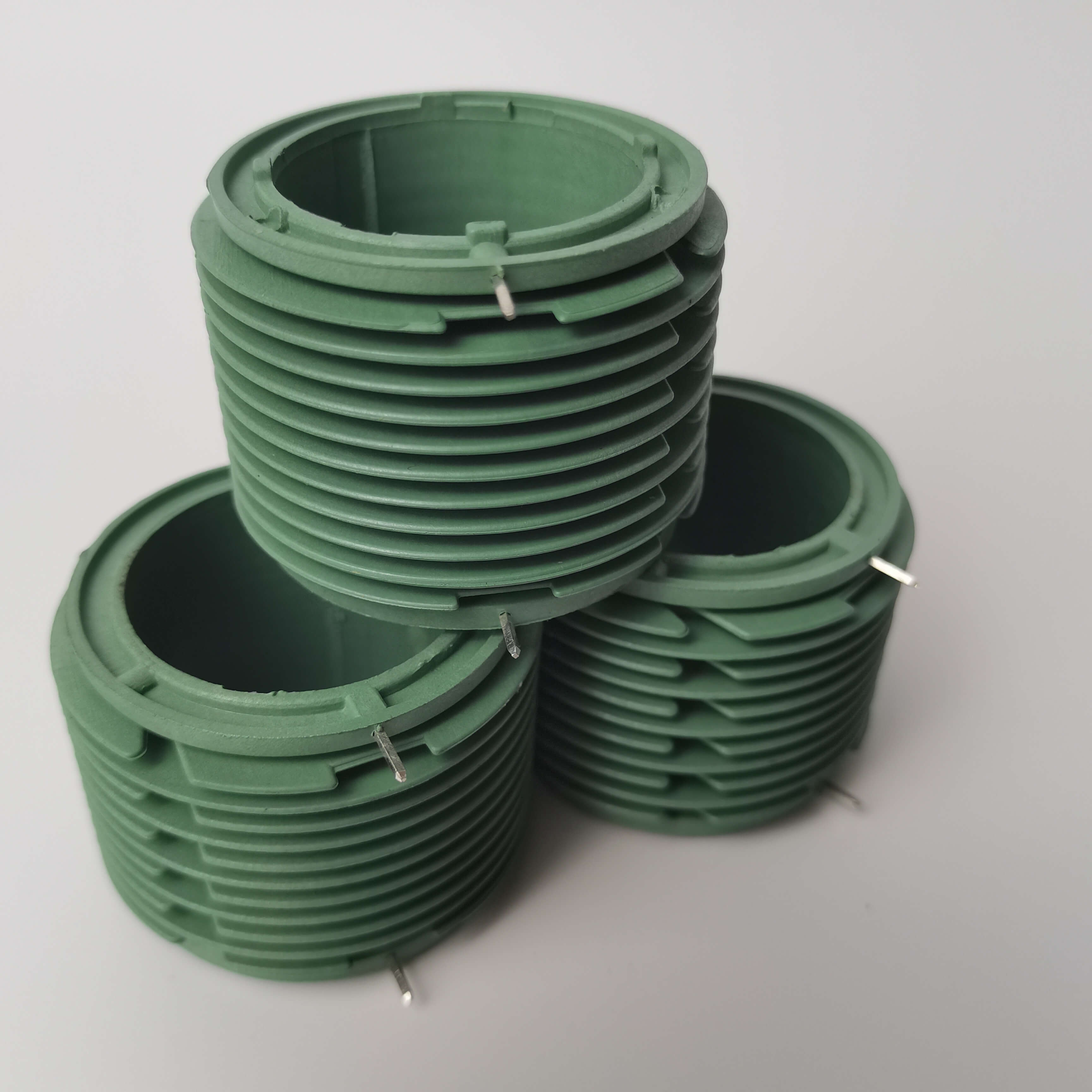
Reference for Full-text Summary
Nanpi Haokai Hardware Products Co., Ltd. has established a comprehensive end-to-end solution, spanning from tolerance control at the 0.02mm level to achieving a 99.2% qualification rate, through three key dimensions: equipment upgrades, process optimization, and quality management. Its technological advantages are manifested in three aspects: First, the equipment offers broad compatibility, with 30-250 ton stamping machines capable of handling materials ranging from 0.1mm to 5mm in thickness. Second, the process demonstrates high stability, with multi-station progressive dies ensuring dimensional variations of no more than ±0.02mm during mass production. Third, the company boasts rapid response capabilities, completing mold design and trial production within 72 hours. In a medical device project, the company leveraged this technological system to reduce the product delivery cycle from 45 days to 18 days, enabling the client to seize market opportunities. For enterprises with precision stamping requirements, it is recommended to prioritize evaluating suppliers' equipment precision, process case studies, and quality systems to ensure a high degree of alignment between technological solutions and production needs. For more information, please visit the official website:www.hkwujin.com