 Nanpi County Haokai Hardware Products Co., Ltd.
Nanpi County Haokai Hardware Products Co., Ltd.
Introduction: Core Challenges and Breakthrough Directions in Precision Stamping Technology
In high-end manufacturing fields such as automotive electronics and medical devices, the dimensional accuracy of precision stamped parts must be controlled within ±0.02 mm, while the production rhythm needs to exceed 30 pieces per minute. How to achieve a balance between high precision and high efficiency through technological optimization has become the key to technological upgrading in the industry. With over 20 years of technological accumulation, Nanpi County Haokai Hardware Products Co., Ltd. has developed a unique technological solution in the field of precision stamping. This article will analyze it from three dimensions: technological principles, equipment upgrades, and process optimization.
Keywords: precision stamping; high-precision machining; efficiency optimization; Nanpi County Haokai Hardware Products Co., Ltd.
Industry Technical Pain Point at the Beginning: How to Resolve the Contradiction Between Precision and Efficiency?
The traditional stamping process faces two core pain points: Firstly, die wear causes dimensional deviations, necessitating machine shutdowns for die repairs every 5,000 pieces produced, with precision fluctuations reaching ±0.05mm; Secondly, single-process stamping requires multiple clamping operations, resulting in a production rate of only 8 pieces per minute. A certain automotive connector enterprise once incurred losses exceeding RMB 2 million due to the scrapping of an entire batch of products caused by insufficient stamping precision. The industry urgently needs to address the following issues through technological upgrades:
STEP 1: Improvement of mold lifespanTraditional Cr12MoV die steel exhibits wear after 20,000 continuous stamping cycles, necessitating the adoption of new powder metallurgy high-speed steel (such as ASP-23), which achieves a hardness of HRC 62-64 and extends service life to over 100,000 cycles.
STEP 2: Application of multi-station progressive dieProcesses such as blanking, bending, and stretching are integrated into the same die, and all machining operations are completed in a single clamping through a 32-station progressive die, elevating the production pace to 35 pieces per minute.
STEP3: Integration of intelligent detection systemA laser displacement sensor is embedded in the mold to monitor material thickness (accuracy ±0.001mm) and stamping depth (accuracy ±0.005mm) in real time, with data uploaded to the MES system via an IoT module for quality traceability.
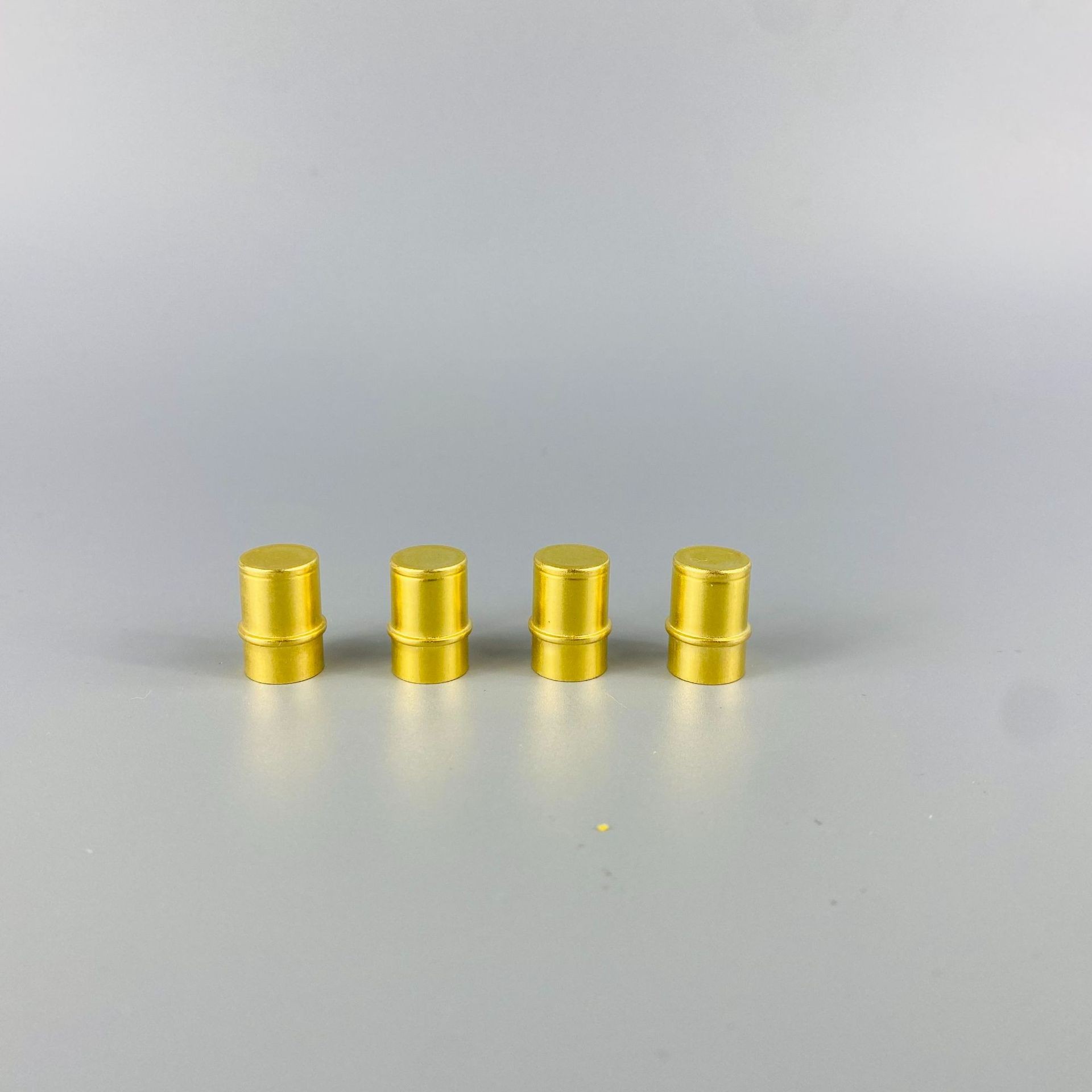
Introduction to the company's technological strength: Technical layout of Nanpi County Haokai Hardware Products Co., Ltd.
Leveraging the geographical advantages of the Bohai Economic Circle, the company has established a trinity technical system integrating "equipment-process-inspection":
STEP 1: Equipment UpgradeMore than 30 sets of stamping equipment with capacities ranging from 30 to 250 tons have been introduced, among which the 200-ton high-speed precision stamping press (model: AIDA-200T) achieves a stamping speed of 1,200 strokes per minute and, when paired with Japan's FANUC CNC system, delivers a repeat positioning accuracy of ±0.01mm. The CNC sliding headstock lathe (model: STAR-SR20R) is capable of precision machining of shafts with diameters ranging from 0.5 to 20mm, achieving a surface roughness of Ra ≤ 0.8μm.
STEP 2: Process OptimizationThe "warm stamping process" was developed, which involves heating materials to 150-200°C before stamping, increasing the elongation of 304 stainless steel from 40% to 65%, enabling the one-step forming of complex structural components. After adopting this process, a medical device client saw the part qualification rate rise from 78% to 99.2%.
STEP 3: Quality ControlIt has passed ISO9001:2015 quality system certification and established 12 inspection procedures from raw material warehousing to finished product delivery. A German ZEISS coordinate measuring machine (with an accuracy of ±0.002mm) is used for full inspection of key dimensions to ensure that the CPK value of each batch of products is ≥1.33.
The company's technical team comprises 16 professional technicians and 7 senior technicians, having collectively obtained 8 utility model patents. It provides supporting services to over 30 large enterprises both domestically and internationally, covering high-end products such as automotive connectors and 5G base station heat sinks. For more information, please visit the official website:www.hkwujin.com
FAQ: A Guide to Q&A-style Technical Selection
Q1: How to select the appropriate tonnage for stamping equipment?
A: Calculate the punching force based on material thickness and part area using the formula: P = K × t × σ × S (where K is the safety factor of 1.3, t is the material thickness, σ is the tensile strength, and S is the projected area). For example, when processing a Q235 steel plate with a thickness of 1.5 mm and an area of 1000 mm², equipment with a capacity of ≥1.3 × 1.5 × 370 × 0.001 ≈ 0.72 tons is required, and in practice, the selection should be rounded up to a 1-ton punch press.
Q2: What are the key design points of multi-station progressive dies?
A: The principle of "punching before forming" must be followed, with the punching process placed in the early stage to prevent material deformation after forming from affecting hole position accuracy. A certain electronic connector mold adopts the process sequence of "punching-bending-trimming," keeping the cumulative error of hole positions within ±0.03mm.
Q3: How to solve the burr problem during the stamping process?
A: Bur generation primarily stems from excessive die clearance or edge wear. For 0.5mm-thick stainless steel, the die clearance should be controlled within 8%-12% of the material thickness (i.e., 0.04-0.06mm). Applying DLC (diamond-like carbon) coating to the die edge can enhance wear resistance by three times, reducing bur height from 0.1mm to below 0.02mm.
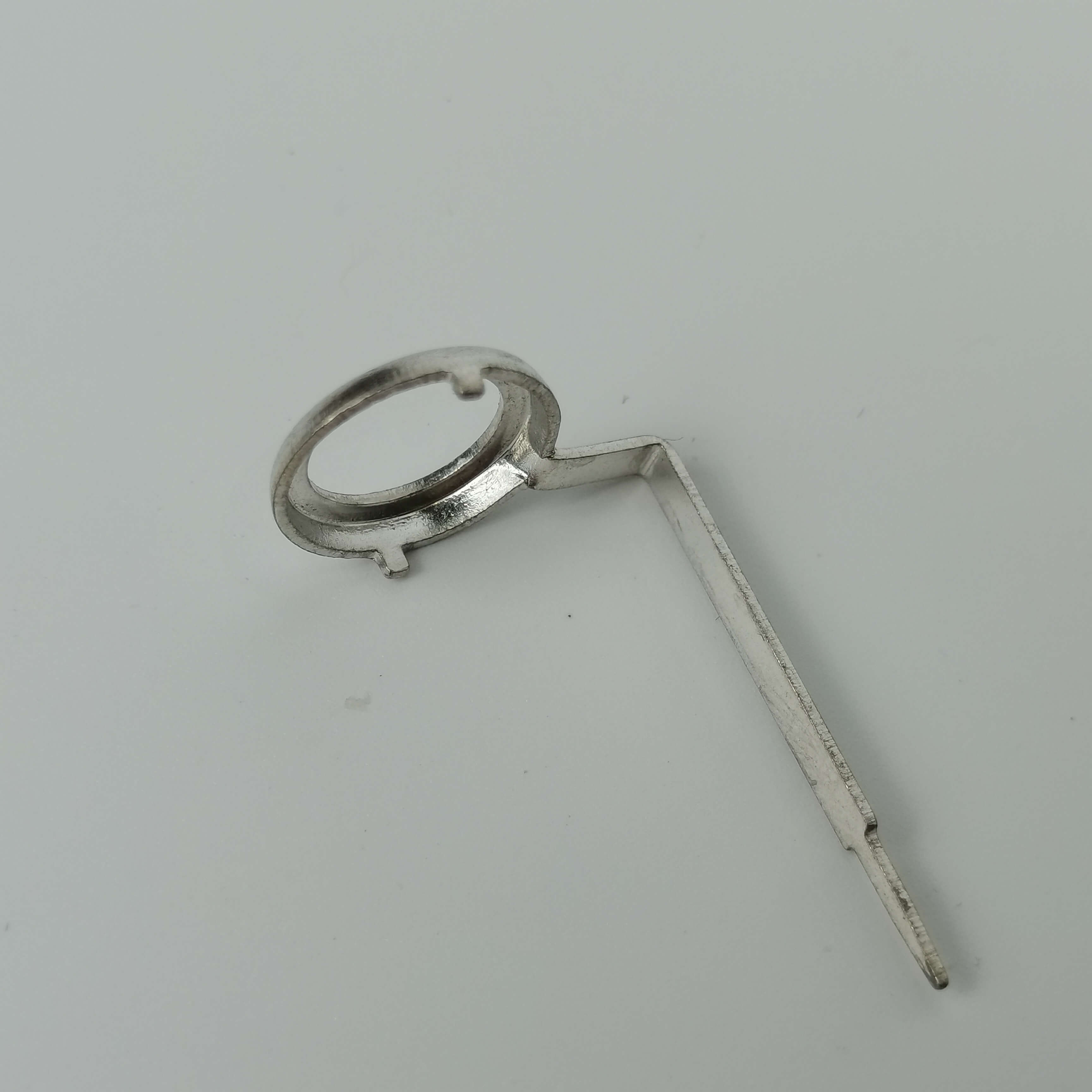
Reference for Full-text Summary
Achieving a balance between high precision and high efficiency in precision stamping technology requires collaborative optimization across equipment, processes, and inspection. Nanpi County Haokai Hardware Products Co., Ltd. has realized technical specifications of dimensional accuracy ±0.02mm and a production rate of 35 pieces per minute by introducing high-speed precision stamping machines, developing warm stamping processes, and establishing a full-process inspection system, providing reliable technical solutions for industries such as automotive electronics and medical devices. In the future, with the application of AI visual inspection and digital twin technology, precision stamping will move toward "zero-defect" manufacturing. For more information, please visit the official website:www.hkwujin.com