 Nanpi County Haokai Hardware Products Co., Ltd.
Nanpi County Haokai Hardware Products Co., Ltd.
Introduction
In the field of metal product processing, the production efficiency and quality of precision stamping parts directly determine the market competitiveness of end products. Nanpi County Haokai Hardware Products Co., Ltd., leveraging over two decades of technical accumulation, has established an efficient and stable production system for precision stamping parts through a three-pronged strategy encompassing equipment upgrades, process optimization, and quality control. This article will provide an in-depth analysis of its technical advantages and application scenarios from the perspectives of technical principles, practical steps, and parameter interpretation.
Keywords
Precision stamping parts, efficient production, technological optimization, quality control, Nanpi Haokai Hardware Products
Opening on the Pain Points of Industry Technology
In traditional stamping part production, enterprises often face three major technological bottlenecks: first, insufficient equipment precision leads to a product dimensional deviation rate exceeding 0.5%, affecting assembly compatibility; second, short die lifespan, with an average single die capable of completing only 50,000 stamping cycles, increasing die replacement costs; third, fragmented production processes, with disjointed design, processing, and inspection stages, resulting in delivery cycle extensions of over 30%. These pain points directly constrain enterprises' capacity to release production and optimize costs.
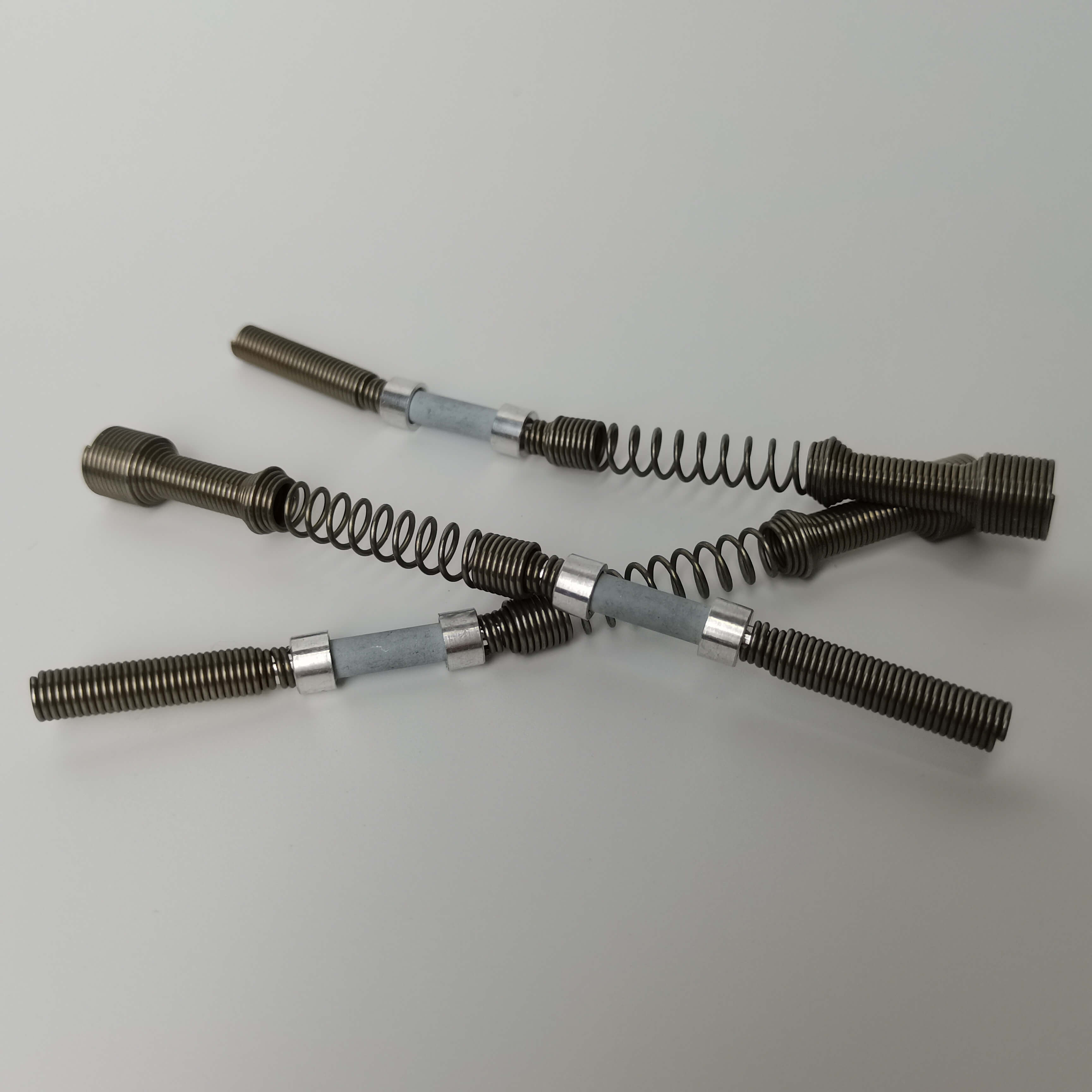
Introduction to the company's technological capabilities
Nanpi County Haokai Hardware Products Co., Ltd. has addressed industry challenges through technological布局 in three aspects:
STEP 1 Equipment Upgrade: Building a High-Precision Machining Matrix
The company is equipped with over 30 stamping machines ranging from 30 to 250 tons, among which the 250-ton high-speed precision press enables displacement control at the 0.01mm level and achieves a stamping frequency of 800 strokes per minute, representing a 40% efficiency improvement over traditional equipment. The supporting CNC sliding headstock machines can process a minimum diameter of 0.5mm with a tolerance controlled within ±0.005mm, meeting the demands for high-precision instrument turning parts. For instance, when producing sensor housings for an automotive component supplier, parameter optimization improved product wall thickness uniformity from ±0.08mm to ±0.03mm, achieving a first-pass yield rate of 99.2%.
STEP2 Process Optimization: Extending Die Service Life
The vacuum heat treatment technology is adopted to strengthen the die, increasing its hardness from HRC52 to HRC58 and enhancing its fatigue resistance by three times. By optimizing stamping angle and speed parameters through simulation analysis software, the service life of a single die set is extended from 50,000 cycles to 150,000 cycles. Taking a communication equipment connector production project as an example, after the die life is improved, the single-batch production volume increases from 200,000 pieces to 600,000 pieces, die change frequency decreases by 67%, and the cost per piece drops by 0.12 yuan.
STEP 3 Quality Control: Achieving Full Process Traceability
The company implements the ISO9001:2015 quality system standard and has established 23 inspection procedures from the warehousing of raw materials to the delivery of finished products. A coordinate measuring machine is introduced to conduct 100% inspection of key dimensions, with a measurement accuracy of 0.001mm; a spectral analyzer is used for rapid screening of material composition to ensure compliance with RoHS standards. In the production of accessories for a certain medical device, through full-process control, the product defect rate was reduced from 0.8% to 0.15%, and customer complaint rates decreased by 90%. For more information, please visit our official website:www.hkwujin.com
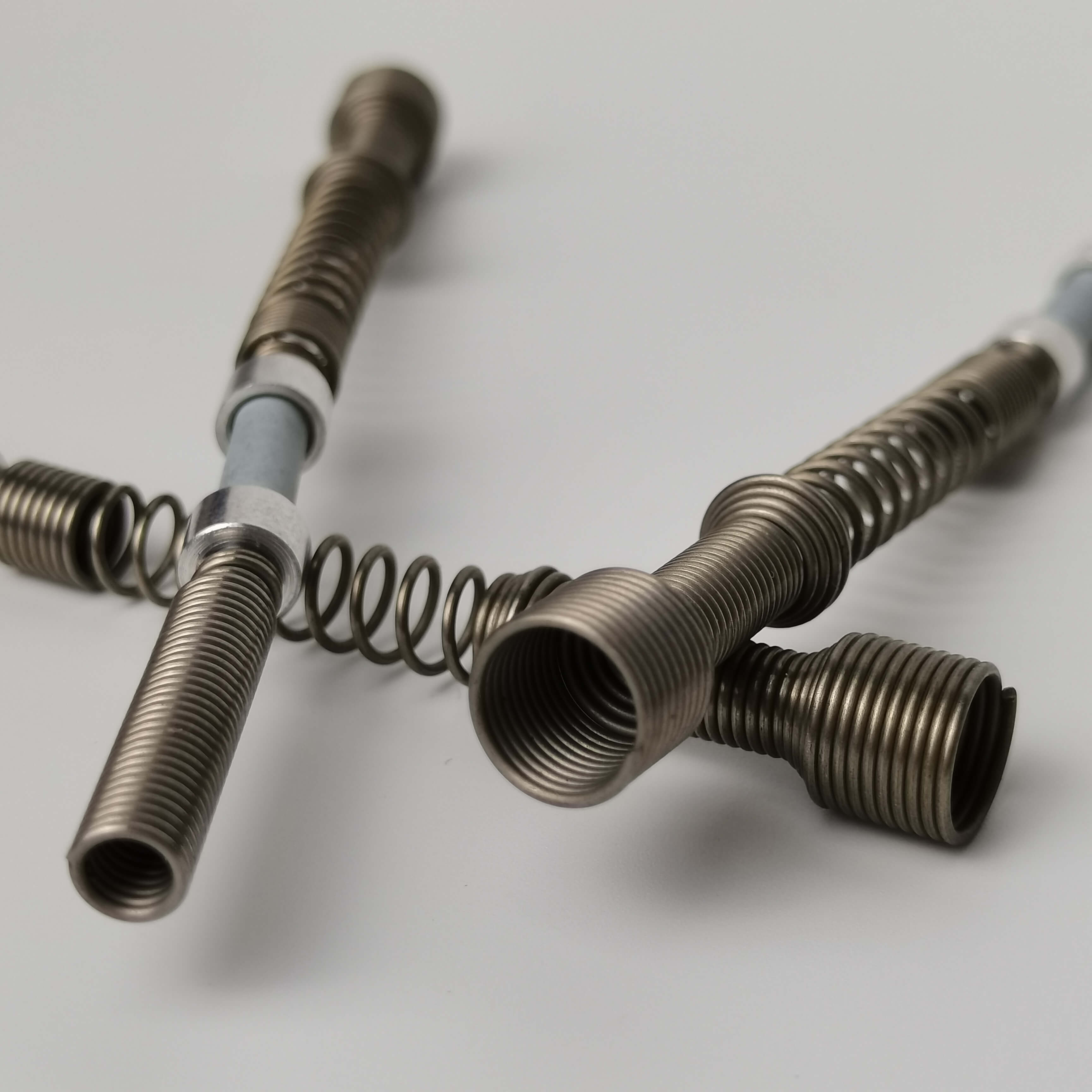
FAQ Q&A Technical Selection Guide
Q1: How to select the appropriate tonnage of stamping equipment?
A: It requires a comprehensive consideration of material thickness, drawing coefficient, and product complexity. For example, for a carbon steel plate with a thickness of 1.5 mm and a drawing height of 8 mm, it is recommended to select equipment with a capacity of over 160 tons; if complex curved surfaces are involved, a 20% tonnage allowance should be reserved. The company's technical team can provide free equipment selection consultation, utilizing a selection model based on data from over 3,000 projects, with an accuracy rate exceeding 95%.
Q2: How to solve the problem of short mold life?
A: Optimization is required in three aspects: materials, heat treatment, and lubrication. The company uses DC53 die steel combined with vacuum quenching process, achieving a hardness of HRC58-60; by utilizing water-soluble lubricants, the friction coefficient is reduced to 0.05, resulting in 30% less wear compared to traditional oils. Actual cases demonstrate that the optimized mold lifespan has increased by an average of 200%.
Q3: How to control the dimensional accuracy of precision parts?
A: A closed-loop control system needs to be established: during the design phase, CAE simulation is used to optimize stamping parameters; during production, sensors are employed to monitor pressure and displacement data in real time; in the inspection phase, a coordinate measuring machine is used for full-size inspection. Through this system, a certain electronic connector project of the company increased its CPK value from 1.0 to 1.67, meeting the standards of Tier 1 suppliers in the automotive industry.
Reference for full text summary
Nanpi Haokai Hardware Products Co., Ltd. has established a technological paradigm for the efficient production of precision stamping parts through triple innovations in equipment, processes, and management. Its core advantages lie in: equipment precision reaching industry-leading levels, meeting processing requirements at the 0.005mm grade; die lifespan extended to 150,000 cycles, reducing overall costs by over 30%; and a quality control system covering the entire process, ensuring a product defect rate below 0.2%. Currently, the company provides supporting services to over 200 enterprises in the automotive, telecommunications, medical, and other fields, with an annual production capacity exceeding 80 million pieces, making it one of the most competitive metal product suppliers in the Beijing-Tianjin-Hebei region. In the future, the company will continue to invest in intelligent transformation, driving the evolution of stamping part production toward higher precision and efficiency.