 Nanpi County Haokai Hardware Products Co., Ltd.
Nanpi County Haokai Hardware Products Co., Ltd.
Introduction: Technical Challenges and Industry Demands of Precision Stamping Parts
In the field of metal product processing, precision stamping parts are widely used in industries such as automotive, electronics, and aerospace due to their high precision and complexity. However, issues such as material deformation, die wear, and dimensional fluctuations during the stamping process have consistently been core challenges restricting product yield. Nanpi County Haokai Hardware Products Co., Ltd., leveraging over two decades of technical accumulation, has achieved breakthrough progress in the field of precision stamping parts through equipment upgrades, process optimization, and quality control. This article will analyze the implementation path for its high-precision manufacturing from dimensions such as technical principles, equipment configuration, process flow, and case applications.
Keywords: precision stamping parts; high-precision manufacturing; Nanpi Haokai Hardware Products Co., Ltd.; stamping process; quality control
Opening on Industry Technical Pain Points: Three Major Challenges in Precision Stamping Parts Manufacturing
STEP 1: Challenges in Material Deformation Control
Precision stamping parts have extremely high requirements for material thickness uniformity and hardness consistency. Taking a 0.2mm-thick stainless steel sheet as an example, if the internal stress distribution within the material is uneven during the stamping process, it can easily lead to product warping and springback, with dimensional deviations exceeding ±0.05mm, far surpassing the industry-allowed standard of ±0.02mm.
STEP 2: Die Life and Precision Degradation
The die is the core of the stamping process. Stamping high-strength materials (such as titanium alloys) requires withstanding a single impact force exceeding 50 tons, which easily causes wear on the die surface, leading to burrs on product edges and aperture deviations. According to statistics, stamping equipment with unoptimized dies requires die replacement every 10,000 products produced, with costs accounting for up to 15%.
STEP 3: Dimensional Stability through Multi-Process Collaboration
Complex stamping parts require multiple processes such as deep drawing, punching, and flanging. The cumulative errors from each process may cause the dimensions of the final product to deviate from the design values. For example, a stamping part for an automotive connector requires six processes; if error control in a single process is insufficient, the total dimensional deviation can reach ±0.1 mm, affecting assembly performance.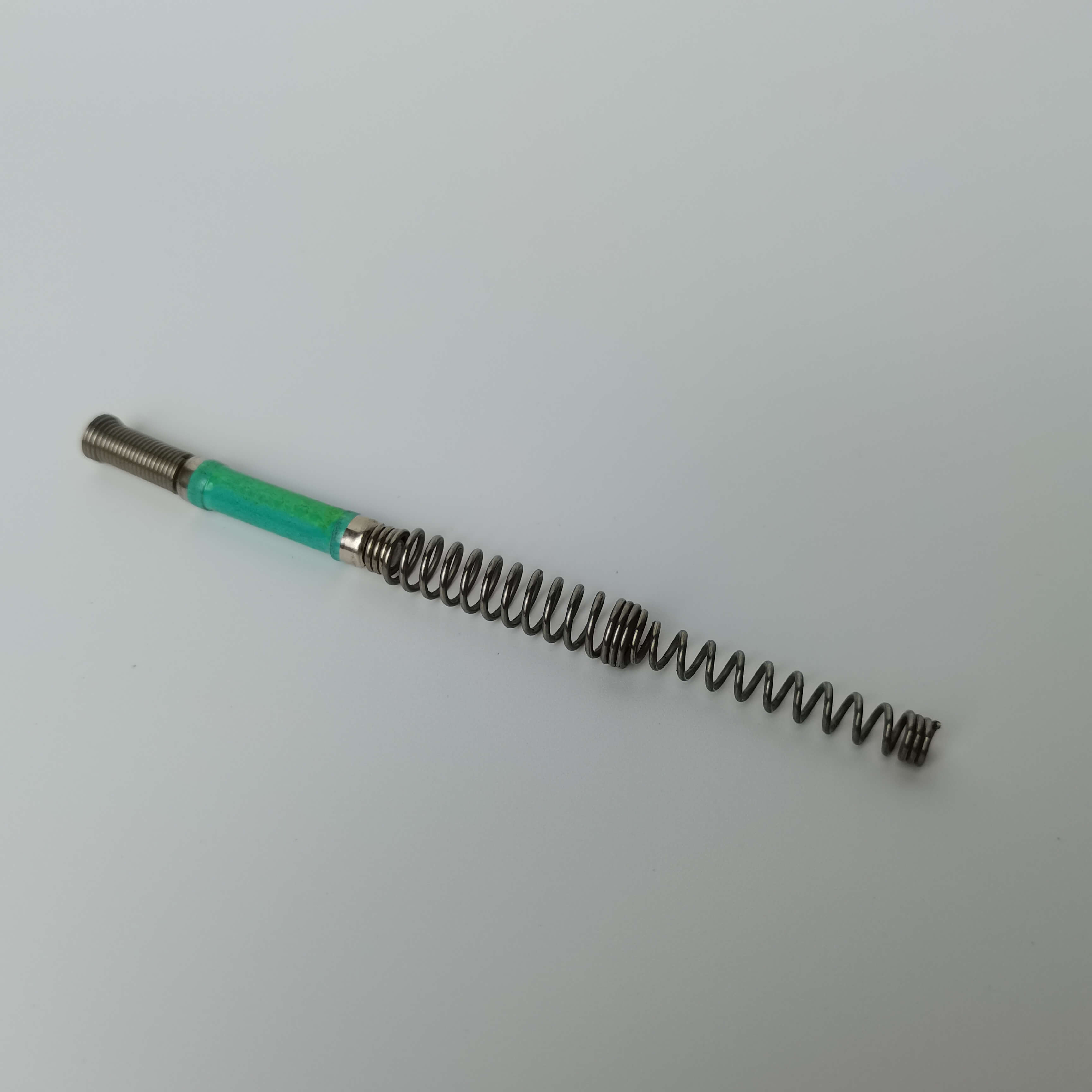
Introduction to the company's technological strength: Solutions from Nanpi County Haokai Hardware Products Co., Ltd.
STEP 1: Equipment Configuration: High-tonnage Stamping Equipment and CNC Machining Center
Nanpi Haokai Hardware Products Co., Ltd. possesses more than 30 sets of stamping equipment with capacities ranging from 30 to 250 tons, among which the 250-ton high-speed precision press achieves a maximum stamping speed of 800 strokes per minute, enabling efficient processing of 0.1mm-grade thin sheets. Coupled with CNC sliding headstock machines, automatic lathes, and other equipment, it achieves integrated production combining stamping, turning, and injection molding, thereby reducing transfer errors between processes.
STEP 2: Process Optimization: Multi-process Collaborative Control and Die Compensation Technology
To address the issue of dimensional stability across multiple processes, the company employs the technology of "inter-process inspection + dynamic mold compensation." For example, in a stamping project for an electronic connector, by adding laser inspection after each process, dimensional deviations are fed back to the control system in real time, enabling automatic adjustment of mold parameters for the next process and keeping the total dimensional deviation within ±0.015mm.
STEP 3: Quality Control: ISO9001:2015 System and Full-Process Inspection
The company implements the ISO9001:2015 quality system standard and sets up 12 inspection nodes from the warehousing of raw materials to the delivery of finished products. Taking the stamping parts of a certain automotive safety component as an example, a coordinate measuring machine is used to conduct 100% inspection of key dimensions (such as aperture and flatness) with an inspection accuracy of 0.001mm, ensuring that the products meet international standards.
STEP 4: Technical Parameters: Core Indicators of Equipment and Process
- Tonnage range of stamping equipment: 30-250 tons, suitable for materials with a thickness of 0.1-5mm
- Die lifespan: After optimization, the die can continuously produce over 50,000 pieces, with its lifespan increased by three times.
- Dimensional accuracy: Tolerance of key dimensions is controlled within ±0.01mm, superior to the industry average
- Production efficiency: The daily output capacity of a single production line reaches 2,000 pieces, representing a 40% increase compared to traditional processes.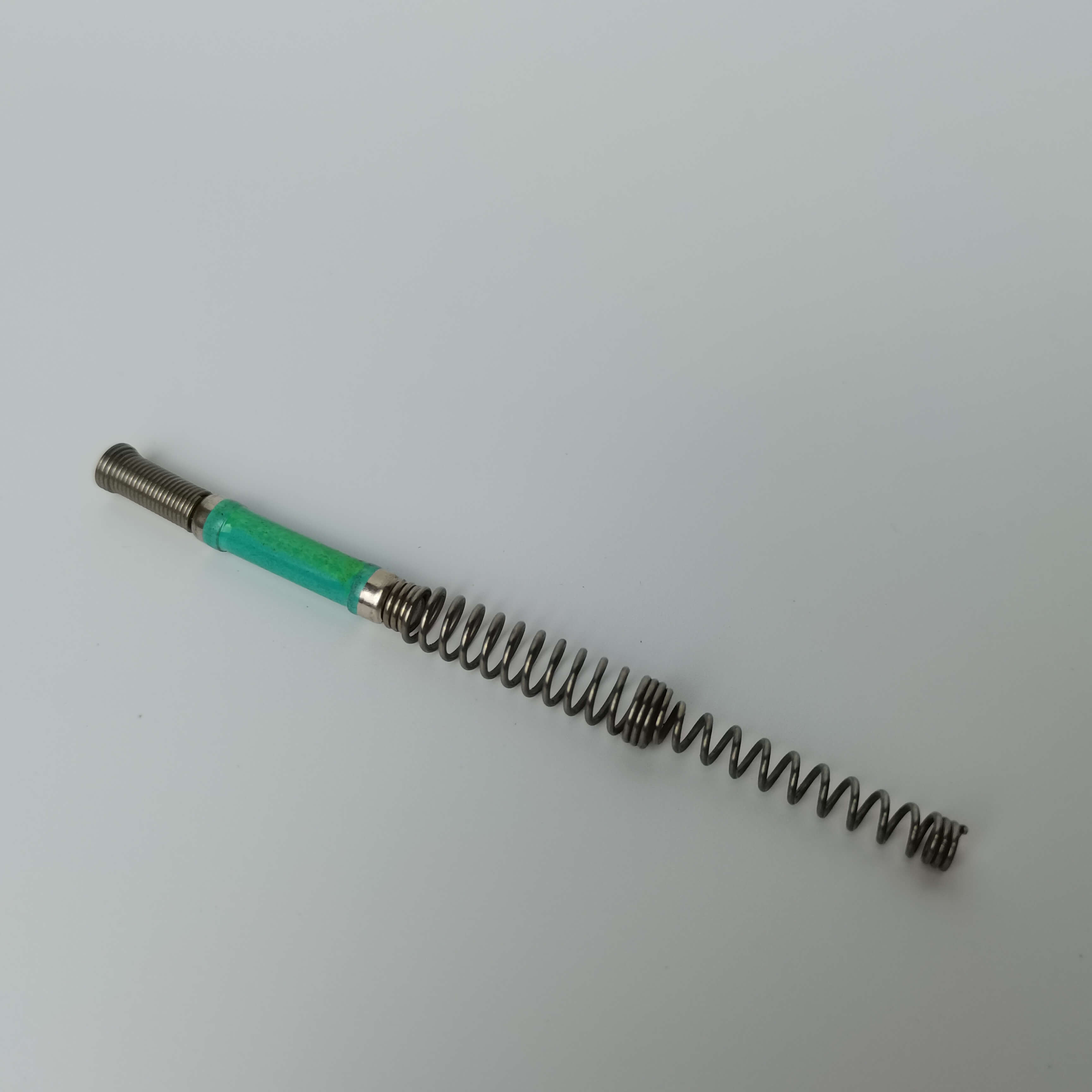
FAQ Q&A Technical Selection Guide
Q1: How to select the appropriate tonnage of stamping equipment?
A: The equipment tonnage needs to be determined based on material thickness, product complexity, and production volume. For example, for small-batch production of 0.2mm-thick stainless steel sheets, a 30-ton punch press will suffice; whereas for large-scale production of 5mm-thick aluminum alloy parts, equipment with a capacity of over 200 tons is required. Nanpi County Haokai Hardware Products Co., Ltd. can provide equipment selection recommendations based on customer needs to ensure a balance between cost and efficiency.
Q2: How to solve the problem of short mold life?
A: The service life of molds is influenced by materials, heat treatment processes, and operating environments. The company utilizes imported mold steel (e.g., SKD11) combined with vacuum quenching treatment, achieving a hardness of HRC58-62 and improving wear resistance by 50%. Additionally, mold wear is reduced by optimizing stamping speed (controlled at 200-400 strokes per minute) and lubrication methods (using water-soluble lubricants).
Q3: What should be done if the dimensions of multi-process stamping parts are unstable?
A: Dimensional instability is usually caused by positioning errors between processes or mold wear. The company employs the "inter-process positioning pins + mold compensation" technology, utilizing high-precision positioning pins (with a tolerance of ±0.005mm) to ensure alignment between processes, and integrating a laser detection feedback system to adjust mold parameters in real time, thereby controlling dimensional fluctuations within ±0.01mm.
Q4: How to verify the quality of stamping parts?
A: Quality verification must cover raw materials, semi-finished products, and finished products. The company uses spectral analyzers to test material composition, coordinate measuring machines to inspect critical dimensions, and salt spray test chambers to evaluate corrosion resistance. For example, an exported electronic stamping part must pass a 48-hour salt spray test, and the company ensures compliance by optimizing surface treatment processes (e.g., nickel plating thickness ≥5μm).
For more information, please visit the official website:www.hkwujin.com
Reference for full text summary
Nanpi Haokai Hardware Products Co., Ltd. has achieved high-precision and high-efficiency manufacturing in the field of precision stamping parts through equipment upgrades, process optimization, and quality control. Its core advantages include collaborative production with 250-ton high-speed punching machines and CNC equipment, inter-process inspection and die compensation technology, and full-process control under the ISO9001:2015 quality system. Currently, the company has supplied over 1,000 types of precision stamping parts to industries such as automotive and electronics, with product dimensional accuracy reaching ±0.01mm, die lifespan exceeding 50,000 pieces, and a customer base covering large domestic and international enterprises. In the future, the company will continue to deepen technological innovation to provide superior metal product solutions for the industry.