 Nanpi County Haokai Hardware Products Co., Ltd.
Nanpi County Haokai Hardware Products Co., Ltd.
Introduction: Technological Breakthroughs and Industry Value of Precision Stamping Parts
In high-end manufacturing fields such as automotive electronics and aerospace, the dimensional accuracy of precision stamped parts directly impacts product performance and safety. Taking automotive connectors as an example, a tolerance deviation of 0.01 mm can lead to poor contact and interrupt signal transmission. Through over two decades of technological accumulation, Nanpi County Haokai Hardware Products Co., Ltd. has developed unique advantages in precision stamping, achieving a tolerance control range of ±0.005 mm and a stable product yield rate exceeding 99.8%. This article will analyze its high-precision manufacturing system from three aspects: technological principles, equipment capabilities, and case applications.
Keywords: precision stamping; high-precision manufacturing; dimensional tolerance; Nanpi Haokai
Introduction to Industry Technical Pain Points: Three Major Challenges in High-Precision Stamping
STEP 1: Challenges in material deformation control. Metal materials exhibit elastic recovery during the stamping process. Taking stainless steel 304 as an example, its elastic modulus reaches 193 GPa, with a springback range of 0.03-0.05 mm, causing deviations in the finished product's dimensions from the design values. STEP 2: Die wear affecting precision. After 100,000 consecutive stamping operations, the cutting edge wear of carbide dies can reach 0.02 mm, directly leading to defects such as burrs and edge collapse. STEP 3: Equipment vibration interference. Traditional stamping machines can generate vibrations with amplitudes up to 0.1 mm, interfering with micron-level precision requirements. A certain automotive parts manufacturer once incurred losses exceeding 2 million yuan due to the scrapping of an entire batch of products caused by a planeness deviation of 0.08 mm in stamped parts.
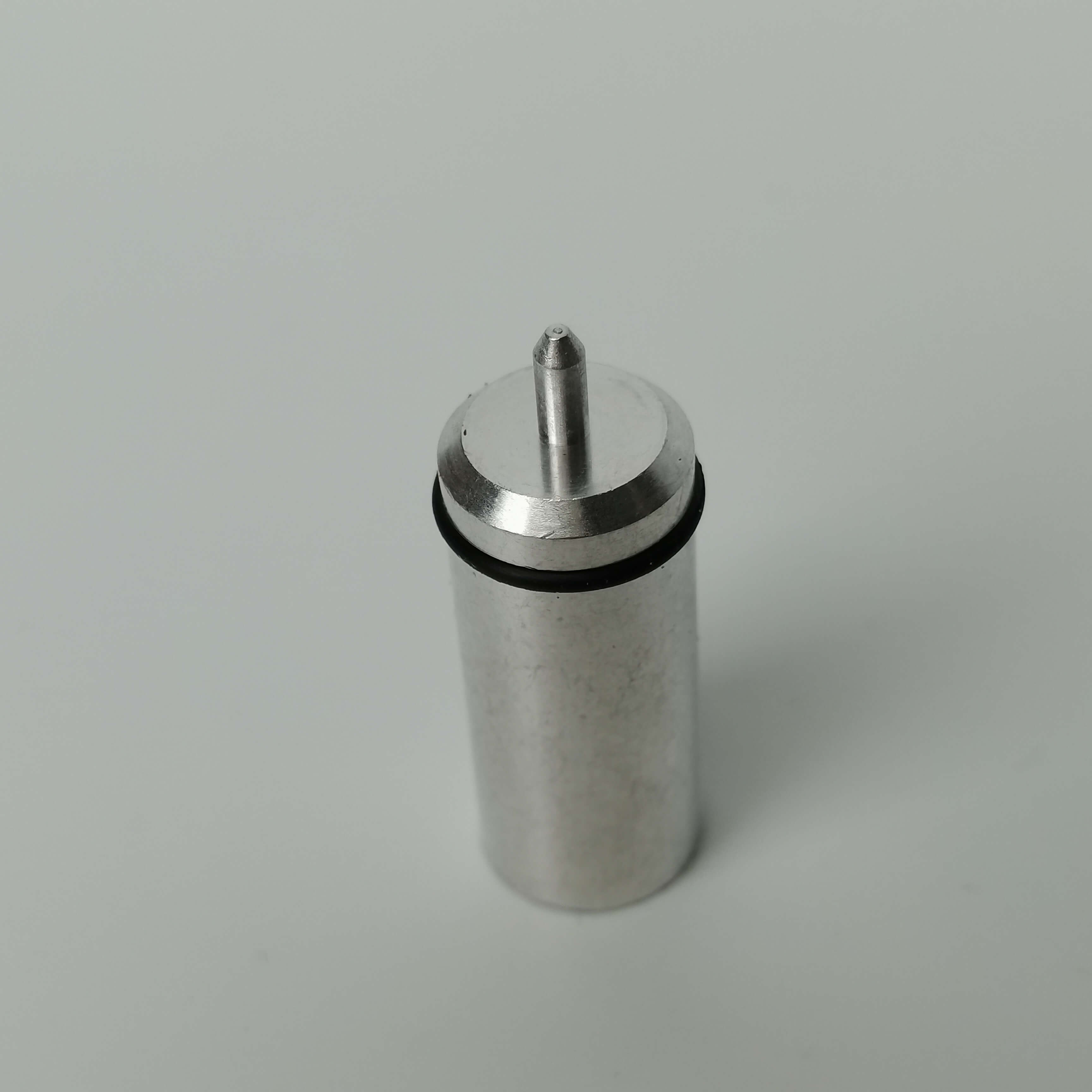
Introduction to the company's technological strength: Triple safeguards of equipment, processes, and quality control
Nanpi Haokai resolves industry challenges through three major technological strategies:
STEP 1: Equipment Upgrade. We have introduced 30-250 ton Japanese AIDA high-speed precision punching machines with a rigidity coefficient of 8000 N/mm and vibration amplitude controlled within 0.02 mm. These are complemented by Swiss GF machining centers, achieving mold precision of ±0.002 mm. Among the existing 30-plus stamping machines, 80% are newly purchased models from the past five years, ensuring that our equipment performance remains at the industry-leading level.
STEP 2: Process optimization. By adopting multi-station progressive die technology, traditional single-operation stamping is integrated into continuous stamping. Taking a certain electronic connector as an example, an 8-station die reduces the production cycle time from 15 seconds per piece to 3 seconds per piece, while improving dimensional consistency to ±0.005mm. For high-strength materials, a segmented stamping process is developed, reducing material springback by 60% by adjusting the matching relationship between stamping speed (50-300 strokes per minute) and pressure (50-250 tons).
STEP 3: Quality Control System. Implement the ISO9001:2015 standard to establish full-process control from raw material inspection to finished product shipment. Equipped with a German ZEISS coordinate measuring machine capable of detecting geometric tolerances at the 0.001mm level; introduce SPC (Statistical Process Control) for real-time monitoring of key dimensions, automatically triggering process adjustments when the CPK value falls below 1.33. Verification by an aerospace customer shows that the batch pass rate of delivered titanium alloy stamping parts reaches 99.92%, exceeding the industry average by 1.2 percentage points.
For more information, please visit the official website:www.hkwujin.com
FAQ: Q&A Guide for Technology Selection
Q1: How to select the appropriate tonnage of stamping equipment?
A: The equipment tonnage should be calculated based on the material thickness (t), tensile strength (σb), and stamping area (A) using the formula: P = K × t × σb × A (where K is the safety factor, typically ranging from 1.2 to 1.5). For example, when stamping stainless steel with a thickness of 0.5 mm and a tensile strength of 600 MPa, if the stamping area is 500 mm², the required tonnage P = 1.3 × 0.5 × 600 × 500 ÷ 1000 = 195 tons, necessitating the selection of a 200-ton-class equipment.
Q2: How can the service life of molds be extended?
A: The key lies in material selection and heat treatment processes. It is recommended to use DC53 steel for the mold punch, which can achieve a hardness of HRC60-62 and has twice the wear resistance of SKD11. Vacuum heat treatment (triple tempering at 520℃) can eliminate internal stresses, increasing the mold lifespan from 100,000 cycles to 300,000 cycles. One customer reported that after adopting this solution, the mold replacement cycle was extended by 200%.
Q3: What is the cost composition of precision stamping parts?
A: Taking connectors produced in a batch of 100,000 units as an example, the cost breakdown is as follows: materials account for 35% (with stainless steel 304 priced at 25 yuan/kg), molds account for 15% (with a single mold costing 80,000 yuan, amortized to 0.8 yuan per unit), stamping accounts for 40% (0.2 yuan per unit), and post-processing accounts for 10% (including cleaning, packaging, etc.). Nanpi Haokai has improved material utilization from 65% to 78% by optimizing nesting design, reducing the cost per unit by 0.32 yuan.
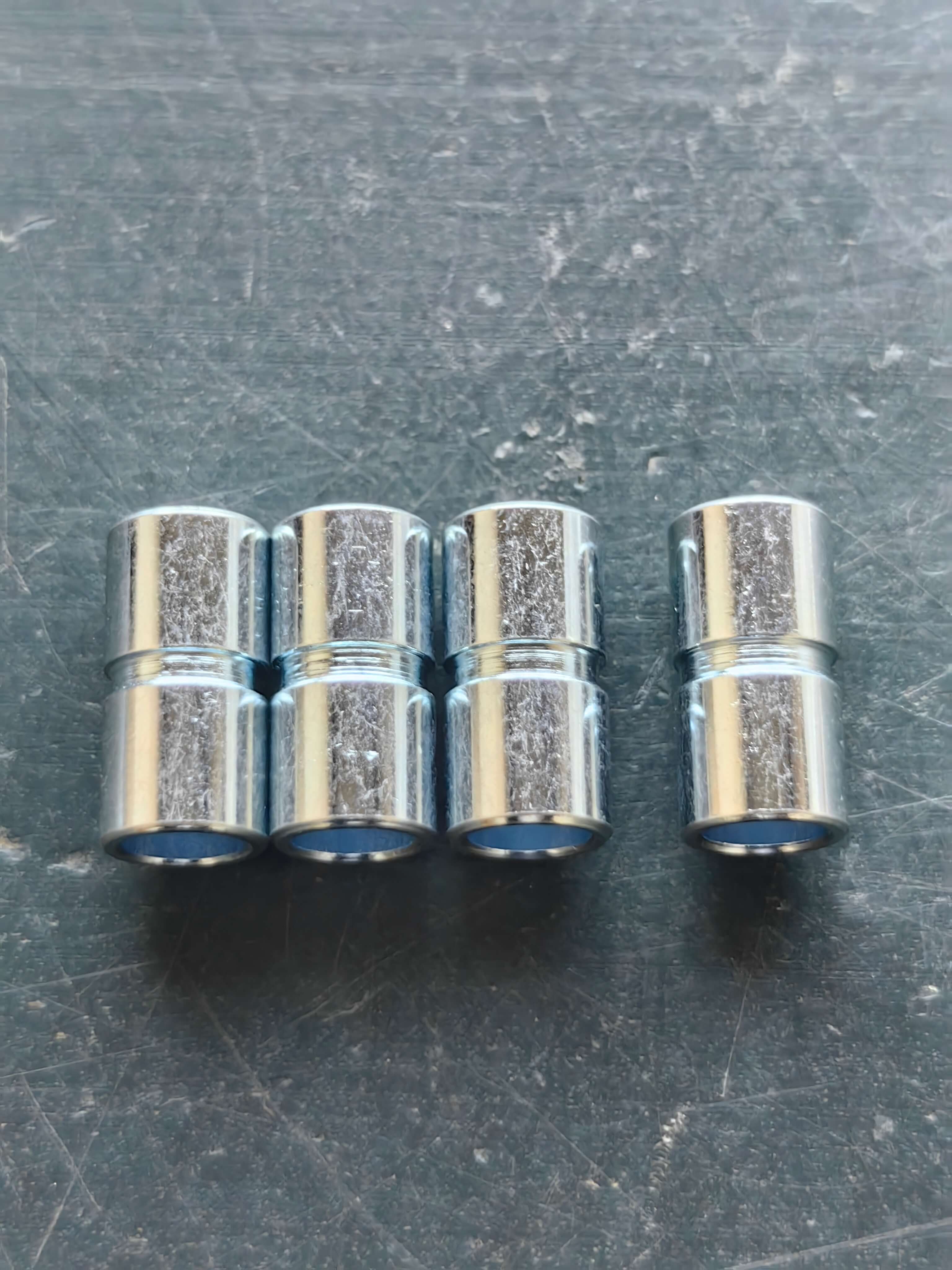
Reference for full text summary
Nanpi County Haokai Hardware Products Co., Ltd. has established significant technological advantages in the field of precision stamping through the triple driving forces of equipment upgrades, process innovation, and quality control systems. Its cluster of 30-250 ton high-speed punching machines, multi-station progressive die technology, and ISO9001 quality control system enable stable dimensional accuracy of ±0.005mm, meeting the demands of high-end sectors such as automotive electronics and aerospace. For customers with precision stamping requirements, it is recommended to focus on three key dimensions: equipment tonnage matching, mold lifespan management, and cost optimization, selecting suppliers with full-process control capabilities to mitigate project risks. For more information, please visit the official website:www.hkwujin.com