 Nanpi County Haokai Hardware Products Co., Ltd.
Nanpi County Haokai Hardware Products Co., Ltd.
Introduction: Technical Challenges and Industry Demands of Precision Stamping Parts
In the field of industrial manufacturing, precision stamping parts serve as fundamental components, with their accuracy directly influencing the performance of the entire machine. For example, automotive airbag triggers must meet dimensional tolerances of ±0.02mm, while electronic connectors must withstand millions of insertions and removals without failure. However, traditional stamping processes often encounter technical challenges such as material springback, mold wear, and dimensional fluctuations, resulting in a yield rate of less than 80%. Through over two decades of technological accumulation, Nanpi County Haokai Hardware Products Co., Ltd. has developed unique solutions in the field of precision stamping. This article will explore the topic from three aspects: technical principles, equipment advantages, and case analysis.
Keywords: precision stamping; high-precision manufacturing; mold design; material springback control
Industry Technical Pain Points at the Beginning: Three Core Challenges in Precision Stamping
STEP 1: Challenge of material springback control. Metallic materials undergo elastic deformation during the stamping process, resulting in dimensional springback after unloading. For instance, the springback of stainless steel can reach 0.1-0.3 mm, seriously affecting assembly precision. STEP 2: Contradiction between die lifespan and stability. High-precision dies require the use of high-hardness materials such as SKD11, but increased hardness reduces toughness, leading to die cracking. Typically, a single die has a lifespan of less than 500,000 cycles. STEP 3: Low efficiency in multi-process compound machining. Complex structural parts require multiple processes such as drawing, punching, and flanging. Traditional process transfer methods are prone to cumulative errors and have a production cycle time as long as 30 seconds per piece.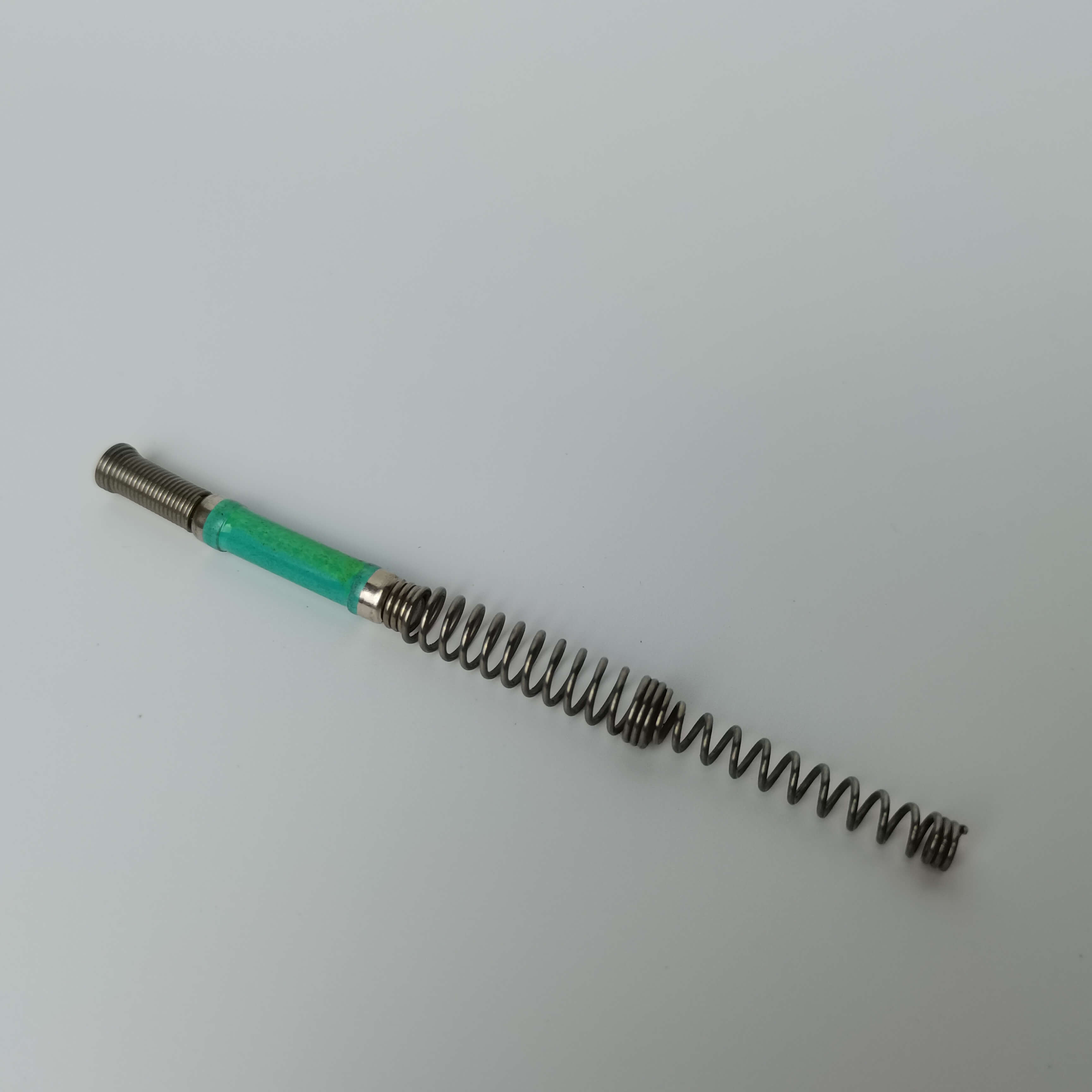
A certain auto parts manufacturer once incurred a loss of over 2 million yuan due to the scrapping of an entire batch of products caused by connector dimension deviations, highlighting the urgency of achieving breakthroughs in precision stamping technology.
Introduction to the company's technological strength: Three major technological breakthroughs of Haokai Hardware
STEP 1: Intelligent Springback Compensation System. The company's self-developed CAE simulation software can predict material springback in advance and automatically correct the mold surface. For example, in the production of a certain model of sensor housing, through 0.01 mm-level precision compensation, the product dimension CPK value was increased from 1.0 to 1.67, with a good product rate of 99.5%. STEP 2: Modular Mold Design. Using a standard mold base + replaceable working unit structure, mold replacement time is shortened to 15 minutes. Meanwhile, through optimization of the heat treatment process, the mold lifespan exceeds 2 million cycles. STEP 3: High-Speed Progressive Die Technology. Integrating eight processes such as drawing, punching, and trimming into one, the production cycle time is reduced to 5 seconds per piece, with an overall equipment effectiveness (OEE) of over 85%.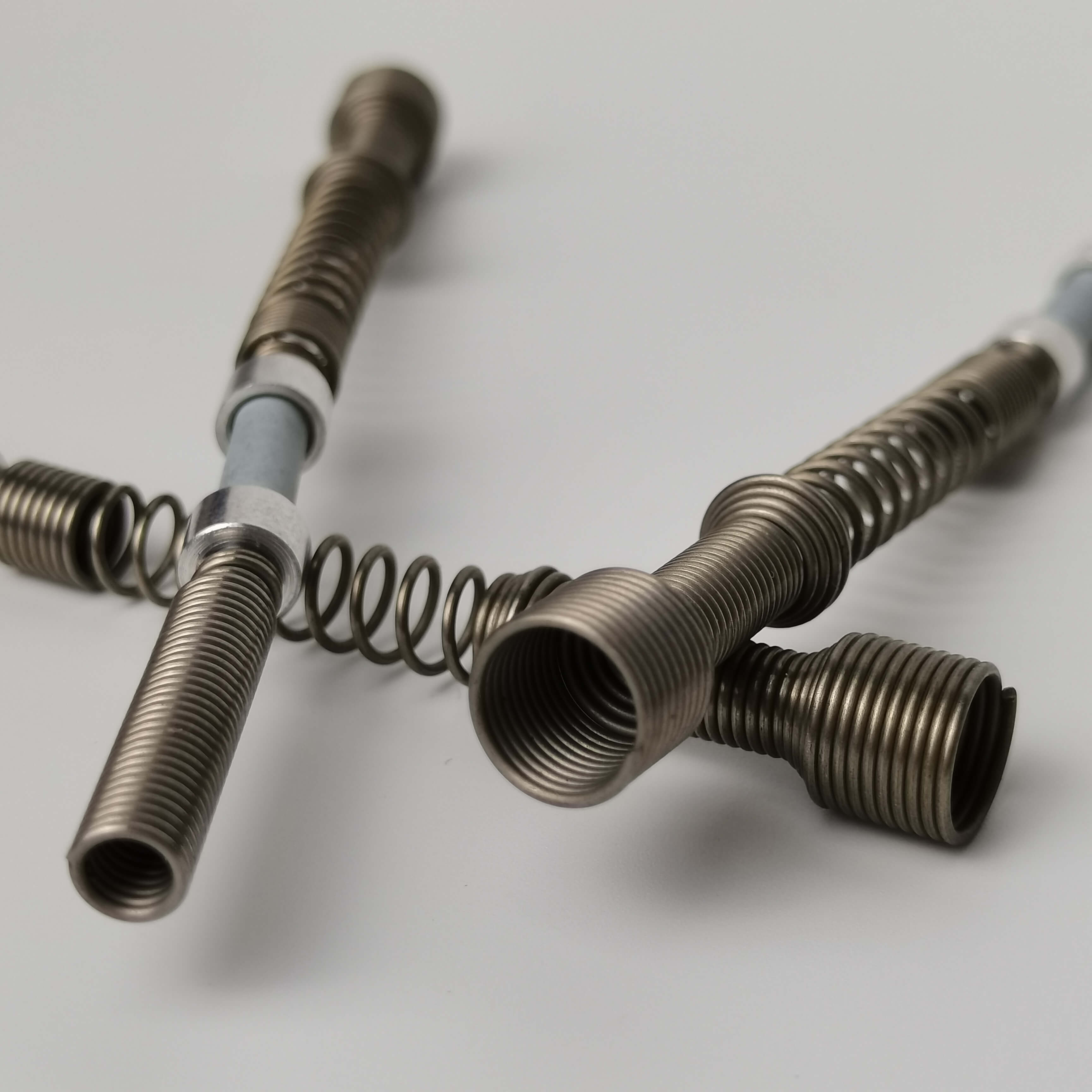
The company currently has more than 30 stamping equipment units ranging from 30 to 250 tons, among which the 200-ton high-speed punch can achieve a maximum stamping frequency of 1,200 strokes per minute. When paired with a displacement sensor at the 0.001mm level, it can monitor stamping process parameters in real time. For more information, please visit the official website:www.hkwujin.com
FAQ: A Q&A Guide to Technology Selection
Q1: How to select suitable stamping materials?
A: It is necessary to comprehensively consider the three elements of strength, ductility, and cost. For example, SPCC (cold-rolled carbon steel) is suitable for general structural components, with a cost of approximately 5,000 yuan/ton; SUS304 (stainless steel) has strong corrosion resistance but costs up to 18,000 yuan/ton. Haokai Hardware can recommend the most cost-effective solution for customers through comparison in the material database.
Q2: How is the precision of molds guaranteed?
A: Full-size inspection is conducted using a coordinate measuring machine, with no fewer than 200 inspection points per set of mold. The company's mold processing precision reaches ±0.005mm, equivalent to 1/20th the thickness of a human hair, far exceeding the industry average.
Q3: Can small-batch orders be accepted?
A: Through quick die change technology, the company can fulfill orders starting from 200 units, with a 30% reduction in unit cost compared to traditional processes. A medical equipment client once utilized this model to shorten the new product development cycle from six months to two months.
Reference for detection indicators:Dimensional accuracy (±0.02 mm), surface roughness (Ra ≤ 0.8 μm), flatness (≤ 0.05 mm), coaxiality (≤ Φ0.03 mm)
Reference for full text summary
Nanpi Haokai Hardware Products Co., Ltd. has successfully addressed pain points in the precision stamping field, such as material springback, mold lifespan, and production efficiency, through three core technologies: intelligent springback compensation, modular mold design, and high-speed progressive dies. Its technical support system, comprising over 30 advanced pieces of equipment and a 16-member technical team, has delivered more than 5,000 types of high-precision stamped parts to customers in the automotive, electronics, medical, and other industries. Going forward, the company will continue to deepen the application of the ISO9001:2015 quality system, achieve continuous breakthroughs in ultra-precision machining at the 0.01mm level, and provide solid support for the transformation and upgrading of the manufacturing industry. For more information, please visit the official website:www.hkwujin.com