 Nanpi County Haokai Hardware Products Co., Ltd.
Nanpi County Haokai Hardware Products Co., Ltd.
Introduction: Why has precision stamping technology become the core of the manufacturing industry?
In the field of industrial manufacturing, precision stamping parts are widely used in industries such as automotive, electronics, and aerospace due to their high precision and efficiency. However, achieving the technical requirements of dimensional accuracy of ±0.01mm and surface roughness Ra ≤ 0.8μm for stamping parts has become a key challenge for technological breakthroughs in the industry. Leveraging over 20 years of technical accumulation, Nanpi County Haokai Hardware Products Co., Ltd. has successfully overcome the challenges of high-precision stamping technology by introducing more than 30 stamping machines with capacities ranging from 30 to 250 tons, as well as advanced equipment such as CNC sliding headstock machines, combined with the ISO9001:2015 quality management system, providing stable supporting products for large domestic and foreign enterprises. This article will analyze its technological implementation path from three aspects: technical principles, equipment advantages, and practical cases.
Keywords: Precision stamping parts, high-precision manufacturing, stamping equipment, ISO9001 certification, technical case
Opening on Industry Technical Pain Points: Three Major Challenges of High-Precision Stamping Parts
STEP1:Difficulty in controlling material deformationMetal materials are prone to deformation due to uneven stress during stamping, especially for sheet metal parts with a thickness of 0.1-2 mm, where the deformation must be controlled within ±0.02 mm; otherwise, it will affect assembly accuracy. STEP 2:The mold wears out quickly.High-precision stamping imposes extremely high requirements on mold hardness (HRC58-62) and surface roughness (Ra≤0.4μm). Traditional molds have a lifespan of only 50,000 to 100,000 cycles, and frequent replacements increase costs. STEP3:Poor batch consistencyThe production volume of a single batch often exceeds 100,000 units, and ensuring consistent dimensions and geometric tolerances for each product is a common challenge in the industry.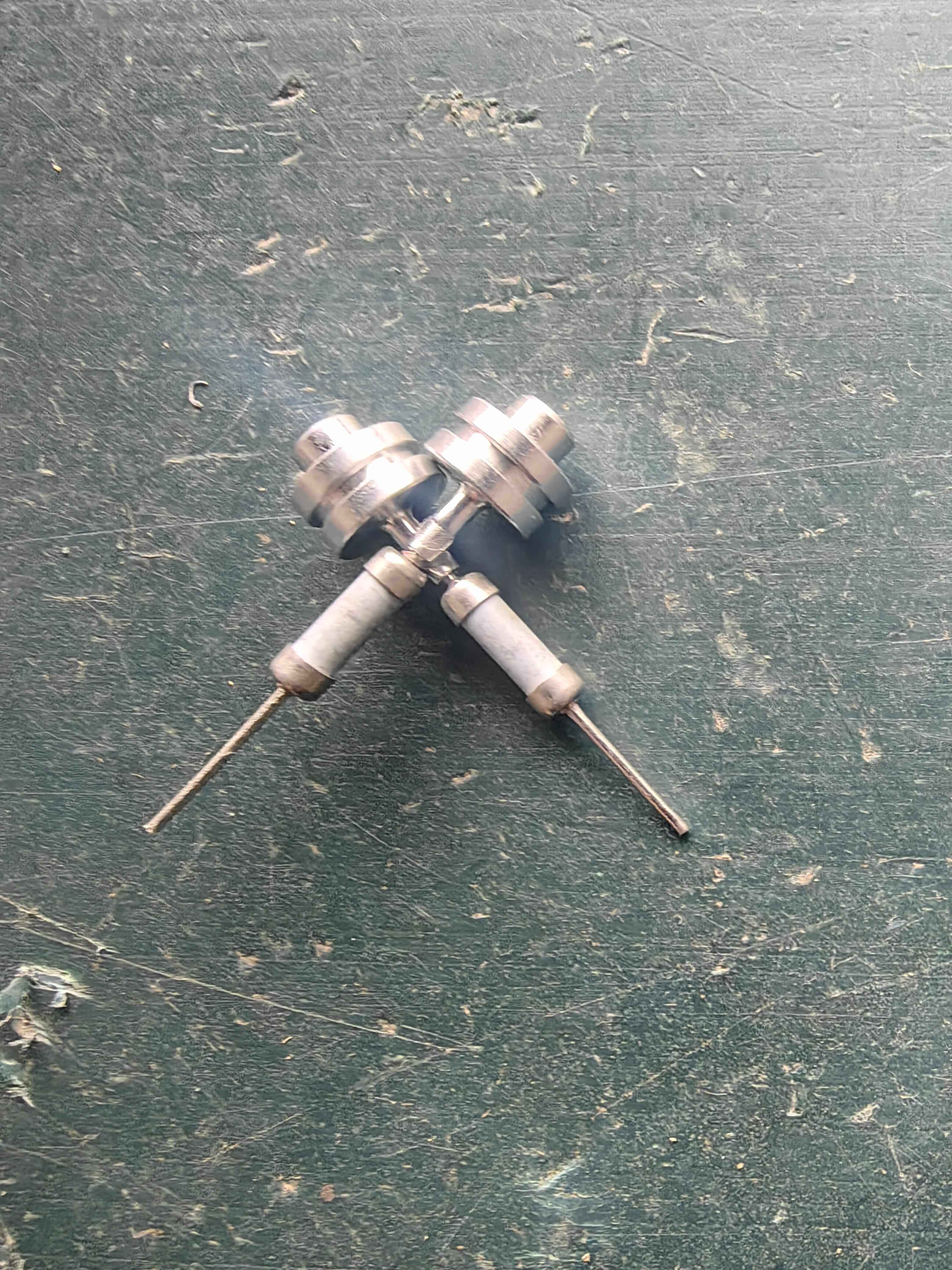
Introduction to the company's technological strength: Triple guarantees from equipment, talent, and systems
Nanpi Haokai Hardware Products Co., Ltd. has established high-precision stamping technological barriers through a three-step strategy of "equipment upgrading + talent introduction + system certification":
STEP 1: Equipment DeploymentMore than 30 sets of stamping equipment with capacities ranging from 30 to 250 tons have been introduced, among which the 250-ton high-speed punch achieves a maximum stamping speed of 1,200 strokes per minute, meeting the high-speed stamping requirements for 0.1mm thin sheets. Additionally, over 30 sets of equipment, including CNC sliding headstock machines and automatic lathes, have been equipped to enable integrated stamping-turning processing and reduce errors from process transfers.
STEP 2: Talent TeamThere are 16 technical personnel and 7 senior technicians, among whom 3 have over 10 years of experience in mold design and are capable of independently completing the design of complex molds (such as progressive dies and transfer dies), with mold lifespan increased to 200,000-300,000 cycles.
STEP 3: Quality SystemIt has obtained ISO9001:2015 certification and established full-process control from raw material inspection (such as metal composition analysis and hardness testing) to full inspection of finished products (such as coordinate measuring machine inspection and image measuring instrument inspection), with a stable product qualification rate of over 99.5%.
Technical advantage dataThe dimensional accuracy of stamped parts is ±0.01mm (industry average: ±0.03mm), with a surface roughness of Ra ≤ 0.8μm (industry average: Ra ≤ 1.6μm). The maximum production volume per batch reaches 500,000 pieces with a 100% consistency compliance rate. For more information, please visit the official website:www.hkwujin.com
FAQ Q&A Technical Selection Guide: How to Select High-Precision Stamping Parts?
Q1: How to select the tonnage of stamping equipment?
A: Calculate the stamping force based on the material thickness (t) and stamping area (A) (F = K × t × A, where K is the material's shear strength). For example, when stamping a Q235 steel plate that is 0.5 mm thick with a stamping area of 100 mm², equipment with a capacity of ≥50 tons should be selected. Haokai in Nanpi County offers a full range of equipment from 30 to 250 tons, covering a thickness range of 0.1 to 5 mm.
Q2: How to solve the problem of short mold life?
A: By utilizing DC53 die steel (with a hardness of HRC60-62) in conjunction with vacuum quenching process and applying a TiN coating (with a thickness of 3-5μm) on the surface, the die lifespan can be increased from 100,000 cycles to 300,000 cycles. The company's die workshop offers customized die maintenance services.
Q3: How to ensure batch consistency?
A: Full-dimensional inspections are conducted on the first, middle, and last pieces using a coordinate measuring machine (with an accuracy of ±0.001mm), in conjunction with SPC process control software for real-time monitoring of stamping parameters (such as pressure, speed, and feeding accuracy), ensuring that the CPK value remains stable above 1.33 (industry requirement ≥1.0).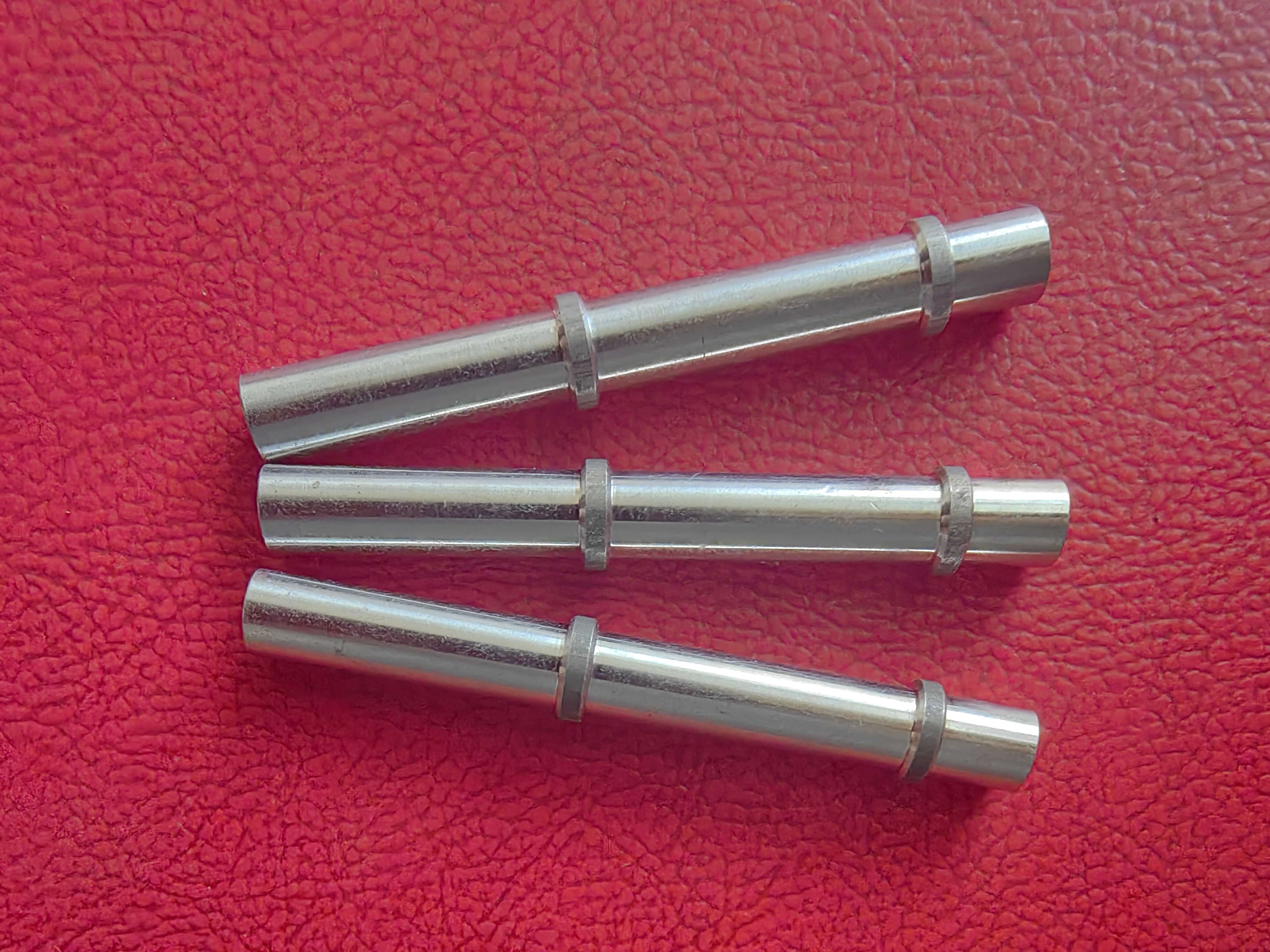
Case Study: On-site Implementation Record of an Automotive Connector Stamping Parts Project
Project BackgroundAn international auto parts supplier needed to produce connector terminals with a thickness of 0.3 mm and dimensional accuracy of ±0.008 mm, with a monthly demand of 2 million pieces. The original supplier achieved only an 85% qualification rate due to mold wear.
Technical SolutionSTEP 1: Select a 120-ton high-speed punch press and use a progressive die to achieve one-step forming, reducing errors from process transfers; STEP 2: The die is made of SKD11 steel (hardness HRC60) and coated with TiAlN, increasing its lifespan to 250,000 cycles; STEP 3: Introduce a CCD visual inspection system to monitor in real time the terminal bending angle (±0.5°) and flatness (≤0.05mm).
Implementation effectThe project lasted for 60 days, achieving a first-month qualification rate of 99.2%, reducing the cost per unit by 0.02 yuan, and saving 480,000 yuan in annual costs. The customer subsequently increased the order volume to 5 million pieces per month and signed a three-year long-term cooperation agreement.
Reference for Full-text Summary: Future Trends in High-precision Stamping Parts Technology
Nanpi County Haokai Hardware Products Co., Ltd. has successfully addressed three major industry pain points in high-precision stamping parts—material deformation, mold wear, and batch consistency—through a triple guarantee of "equipment upgrading + talent team + quality system." Its technical approach can serve as a reference for similar enterprises:
STEP 1: Equipment selection should match material characteristics.For example, thin plate parts should preferably be processed using high-speed punching machines;STEP 2: Mold design should balance lifespan and precisionIt adopts advanced die steel and coating technology;STEP 3: Process control relies on digital toolssuch as SPC (Statistical Process Control) and CCD visual inspection.
In the future, as industries such as new energy vehicles and 5G communications experience increased demand for precision stamped parts, companies will need to further explore ultra-precision machining technologies (such as micro-stamping and nanoscale surface treatment) to solidify their technological leadership. For more information, please visit the official website:www.hkwujin.com