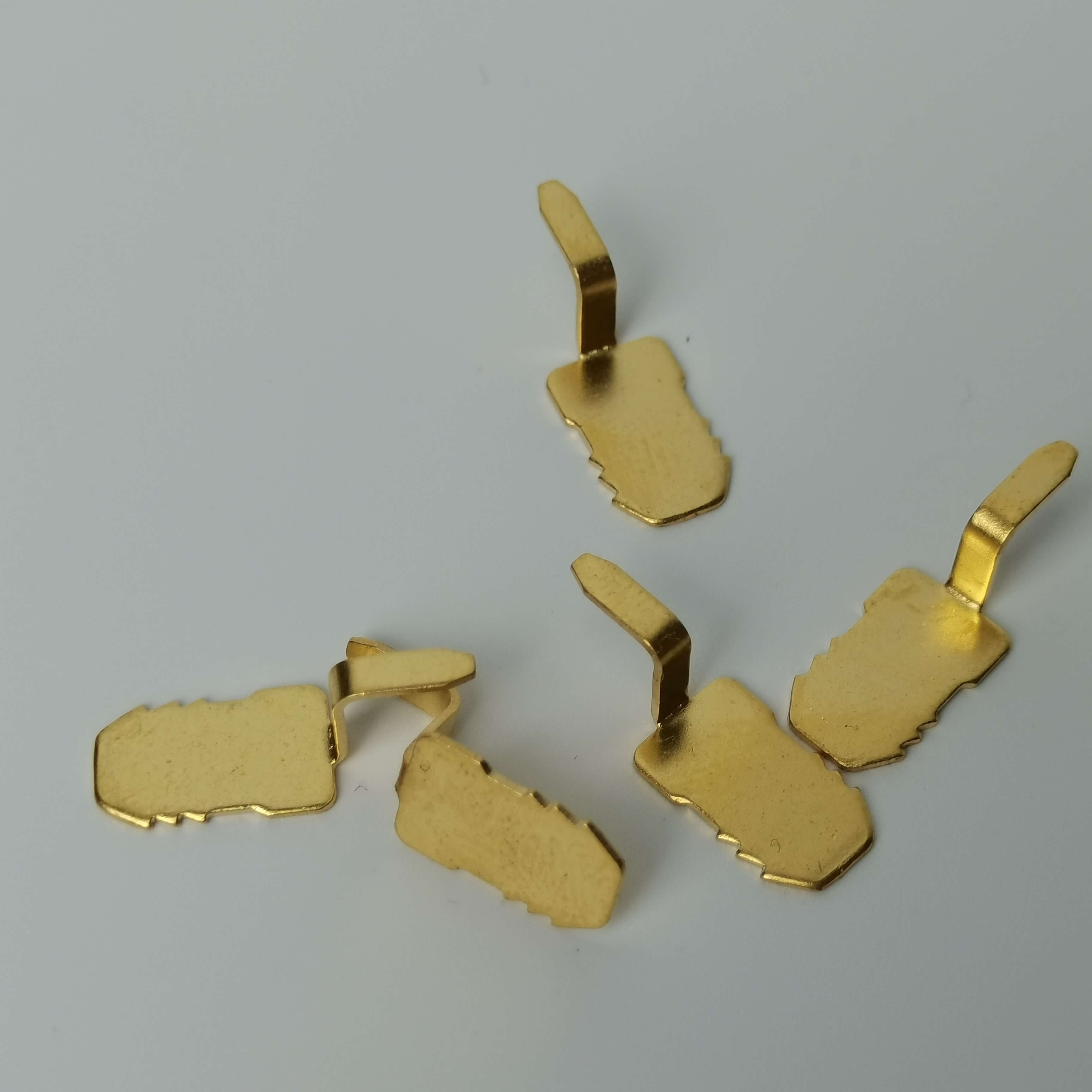
Nanpi County Haokai Hardware Products Co., Ltd.
Nanpi County Haokai Hardware Products Co., Ltd.
Introduction: Industry Value and Challenges of Precision Stamping Technology
In the field of metal product processing, precision stamping technology has become an indispensable core process in industries such as automotive, electronics, and aerospace due to its high precision and efficiency. However, balancing precision and efficiency, reducing die wear, and optimizing production processes remain key challenges faced by the industry. With over 20 years of technological accumulation, Nanpi County Haokai Hardware Products Co., Ltd. has developed a unique precision stamping technology system through equipment upgrades, process innovation, and quality control. This article will analyze how the company achieves the dual goals of high precision and efficient production from three dimensions: technical principles, practical steps, and case studies.
Keywords: precision stamping; high-precision machining; production efficiency; mold optimization; quality control
Industry Technical Pain Point at the Beginning: The Challenge of Balancing Precision and Efficiency
The core pain points of precision stamping technology lie in the triangular contradiction of "precision-efficiency-cost." In traditional processes, improving precision often requires reducing stamping speed (e.g., from 300 strokes/minute to 150 strokes/minute), leading to a decline in output per unit time. Conversely, pursuing efficiency may result in accelerated mold wear (e.g., reducing mold lifespan from 500,000 strokes to 200,000 strokes) or excessive product burrs (e.g., burr height > 0.05 mm), increasing subsequent polishing costs. Additionally, issues such as material springback (e.g., springback of 0.2–0.5 mm in stainless steel stamping) and equipment vibration (e.g., vibration amplitude > 0.01 mm when press precision is below IT7 grade) further constrain the practical implementation of the technology. Nanpi Haokai Hardware Products Co., Ltd. has successfully controlled stamping precision within ±0.02 mm through technological upgrades while maintaining high-efficiency production at 250 strokes/minute and extending mold lifespan to 800,000 strokes, providing a replicable solution for the industry.
Introduction to the company's technological capabilities: Collaborative innovation in equipment, processes, and quality
The technological advantages of Nanpi County Haokai Hardware Products Co., Ltd. are reflected in three major dimensions:
STEP 1: Equipment upgrade lays the hardware foundationThe company has introduced over 30 sets of stamping equipment with capacities ranging from 30 to 250 tons, including high-speed precision presses (e.g., AIDA brand, with a precision grade of IT6) capable of achieving stable stamping at 300 strokes per minute with a vibration amplitude ≤0.008mm; CNC sliding headstock machines (e.g., CITIZEN L20) support micro-machining at the 0.05mm level, suitable for high-precision applications such as electronic connectors. In terms of equipment parameters, the 250-ton press has a maximum force of 2500kN, a slide stroke of 150mm, and is suitable for processing metal sheets with thicknesses ranging from 1 to 8mm.
STEP 2: Process innovation to optimize production proceduresTo address the material springback issue, the company employs a two-step "pre-stamping + final stamping" method: during the pre-stamping phase, initial forming is conducted at 50% pressure (e.g., 125 tons) to release 80% of the stress; in the final stamping phase, full pressure (250 tons) is applied to complete the final forming, reducing the springback amount from 0.5mm to 0.1mm. In mold design, the nesting layout is optimized through CAE simulation (e.g., using AutoForm software), increasing material utilization from 82% to 88% and reducing the unit cost by 12%.
STEP 3: Quality Control Ensures Product StabilityThe company implements the ISO9001:2015 standard and establishes a "three-inspection system" (self-inspection, mutual inspection, and special inspection): operators conduct self-inspections every 200 pieces, team leaders perform sampling inspections every 500 pieces, and quality inspectors carry out full inspections every 1000 pieces. The inspection indicators include dimensional accuracy (±0.02mm), burr height (≤0.03mm), and surface roughness (Ra≤0.8μm). In 2023, the customer complaint rate dropped to 0.3%, significantly outperforming the industry average of 1.5%.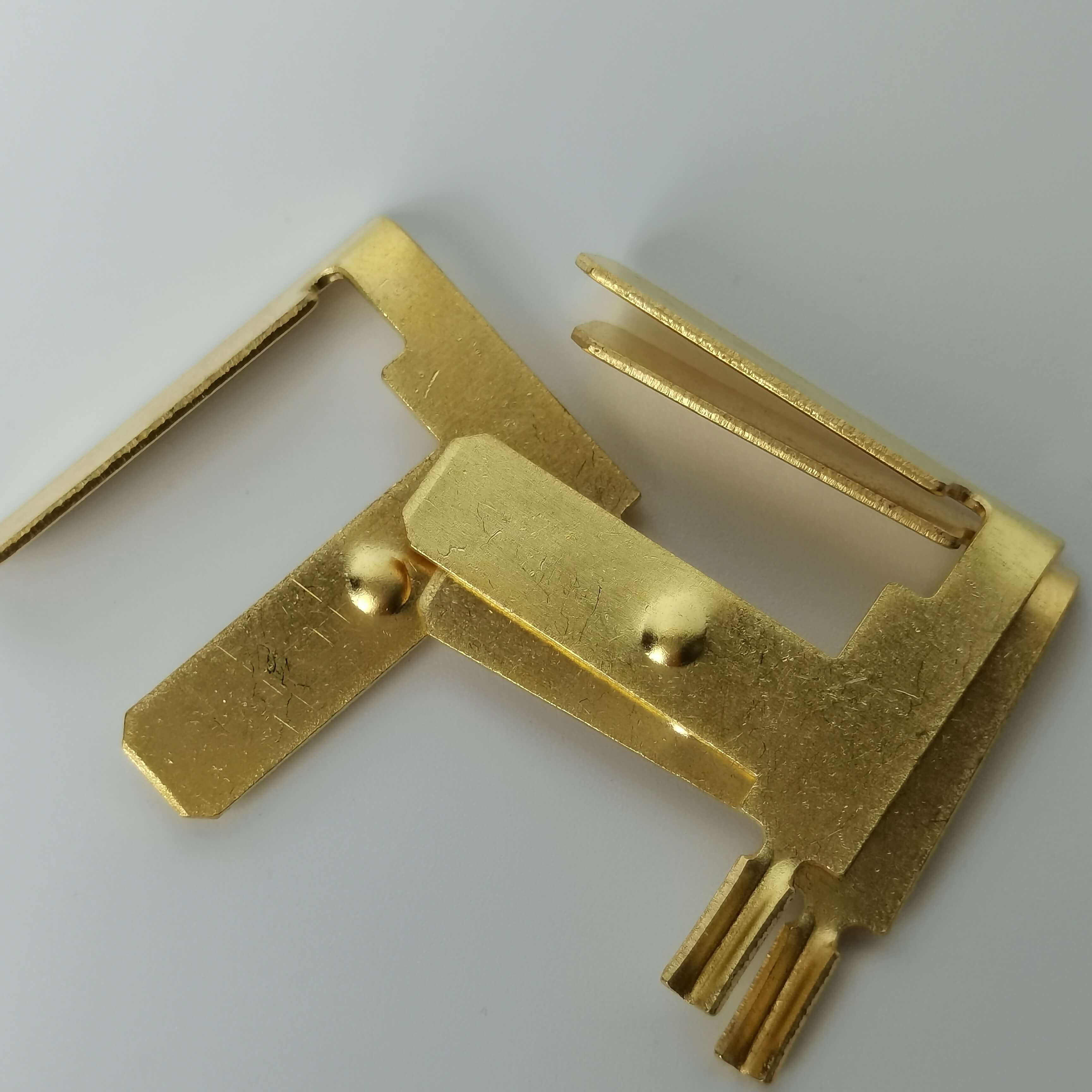 Real Case: Implementation of an Automotive Connector Stamping ProjectA new energy vehicle customer needed to produce a batch of high-precision connectors (dimensions: 30×15×5 mm, precision: ±0.015 mm). Due to mold wear in traditional processes, dimensional deviations (±0.03 mm) occurred after producing 30,000 pieces. Haokai Hardware achieved the target through the following improvements: selecting imported mold steel (e.g., SKD11, with a hardness of HRC58-60) and applying vacuum heat treatment (quenching at 600°C + tempering at 180°C) to enhance wear resistance; reducing the stamping speed from 250 strokes per minute to 200 strokes per minute, extending mold life from 500,000 cycles to 750,000 cycles; incorporating online inspection (e.g., Keyence laser micrometers) with automatic calibration every 5,000 pieces. Ultimately, 1 million pieces were delivered with a 99.8% pass rate, prompting the customer to place an additional order for 2 million pieces.
FAQ Q&A Technical Selection Guide
Q1: How to select suitable stamping equipment?
A: It is necessary to comprehensively consider material thickness, precision requirements, and production volume. For example, for small to medium batch parts with a thickness of 1-3mm and a precision of ±0.05mm, a 60-100 ton conventional punch press can be selected; for large batch parts with a thickness of 3-8mm and a precision of ±0.02mm, a 250-ton high-speed precision punch press is recommended. Haokai Hardware Equipment covers a range of 30-250 tons and can meet over 90% of metal stamping demands.
Q2: How to solve the problem of short mold life?
A: Die life is related to three key factors: material, heat treatment, and lubrication. Haokai Hardware uses imported die steel (such as DC53, which offers a 30% longer lifespan compared to ordinary SKD11) combined with a graphite + oil-based composite lubricant (reducing the friction coefficient to 0.05), thereby increasing the die lifespan from 500,000 cycles to 800,000 cycles.
Q3: How to control burrs on stamping parts?
A: Burrs mainly originate from edge wear or improper clearance. Haokai Hardware controls them through the following measures: setting the die clearance at 8% of the material thickness (e.g., a clearance of 0.24 mm for 3 mm material); grinding the edge once every 100,000 stamping operations (with a grinding amount of 0.02 mm per operation); and using wire electrical discharge machining (with a precision of ±0.003 mm) to process the die edge, thereby reducing burr generation at the source.
Q4: Is small-batch production suitable for precision stamping?
A: Traditional beliefs hold that precision stamping is only suitable for large-scale production. However, Haokai Hardware has reduced production costs for small-batch orders (e.g., 5,000 pieces) by 25% and shortened delivery cycles to 7 days through flexible production lines (e.g., rapid die-changing systems with die-change times < 15 minutes) and digital management (e.g., real-time order tracking via ERP systems), thereby meeting customized demands.
For more information, please visit the official website:www.hkwujin.com
Reference for full text summary
Nanpi Haokai Hardware Products Co., Ltd. has successfully resolved the contradiction between precision, efficiency, and cost in the field of precision stamping through equipment upgrades (high-speed precision punching machines, CNC sliding headstock machines), process innovations (two-step stamping method, CAE simulation optimization), and quality control (three-inspection system, online inspection). Its technical solutions have been validated through projects such as automotive connectors and electronic heat sinks, demonstrating high adaptability (covering demands from 30 to 250 tons), high stability (customer complaint rate of 0.3%), and high cost-effectiveness (material utilization rate of 88%). For enterprises seeking to upgrade their precision stamping technology, Haokai Hardware's practice provides a comprehensive reference spanning equipment selection, process design, and quality control.