 Nanpi County Haokai Hardware Products Co., Ltd.
Nanpi County Haokai Hardware Products Co., Ltd.
Introduction: Technical Threshold and Industry Value of Precision Stamping Parts
In the field of industrial manufacturing, precision stamping parts serve as a bridge connecting design and functionality, with their precision directly determining the performance stability of end products. According to statistics, the global market size for precision stamping parts has surpassed USD 100 billion, yet the yield rate of high-precision products remains below 65%, with technological bottlenecks becoming the core issue restricting industry development. Leveraging over 20 years of technical accumulation, Nanpi Haokai Hardware Products Co., Ltd. has elevated stamping part precision to the ±0.01mm level through equipment upgrades and process innovations, providing critical component support for sectors such as automotive electronics and medical devices. This article will analyze Haokai Hardware's core path to achieving high-precision manufacturing from three dimensions: technical principles, equipment configuration, and process control.
Keywords: Precision stamping parts, high-precision manufacturing, stamping process, quality inspection, Nanpi Haokai
Opening on Industry Technical Pain Points: The Challenge of Balancing Precision and Efficiency
STEP 1: Technical Challenges in Precision Control
The core pain point of precision stamping parts lies in material deformation control. Taking a 0.2mm-thick stainless steel sheet as an example, a difference in material flow speed exceeding 15% during the stamping process will lead to dimensional deviations, while traditional processes rely on empirical adjustments to die clearance, making it difficult to achieve dynamic compensation. Additionally, micron-level tolerance requirements impose stringent standards on equipment rigidity, with the vibration amplitude of ordinary punching machines potentially exceeding three times the tolerance range.
STEP 2: The contradiction between efficiency and cost
High-precision manufacturing often comes with the issue of low efficiency. A certain automotive parts enterprise once attempted to improve the yield rate by adding inspection processes, but the inspection time per unit increased from 3 seconds to 15 seconds, resulting in a 60% drop in overall production capacity. How to optimize production rhythm while ensuring precision has become a common challenge in the industry.
STEP 3: Blind spots in quality traceability
Traditional stamping part production relies on manual sampling inspection, with the risk of defective products entering the market reaching as high as 8%. A medical equipment manufacturer once experienced the scrapping of an entire machine due to a 0.03mm deviation in the aperture of a stamping part, resulting in direct losses exceeding 2 million yuan and revealing the absence of a quality traceability system.
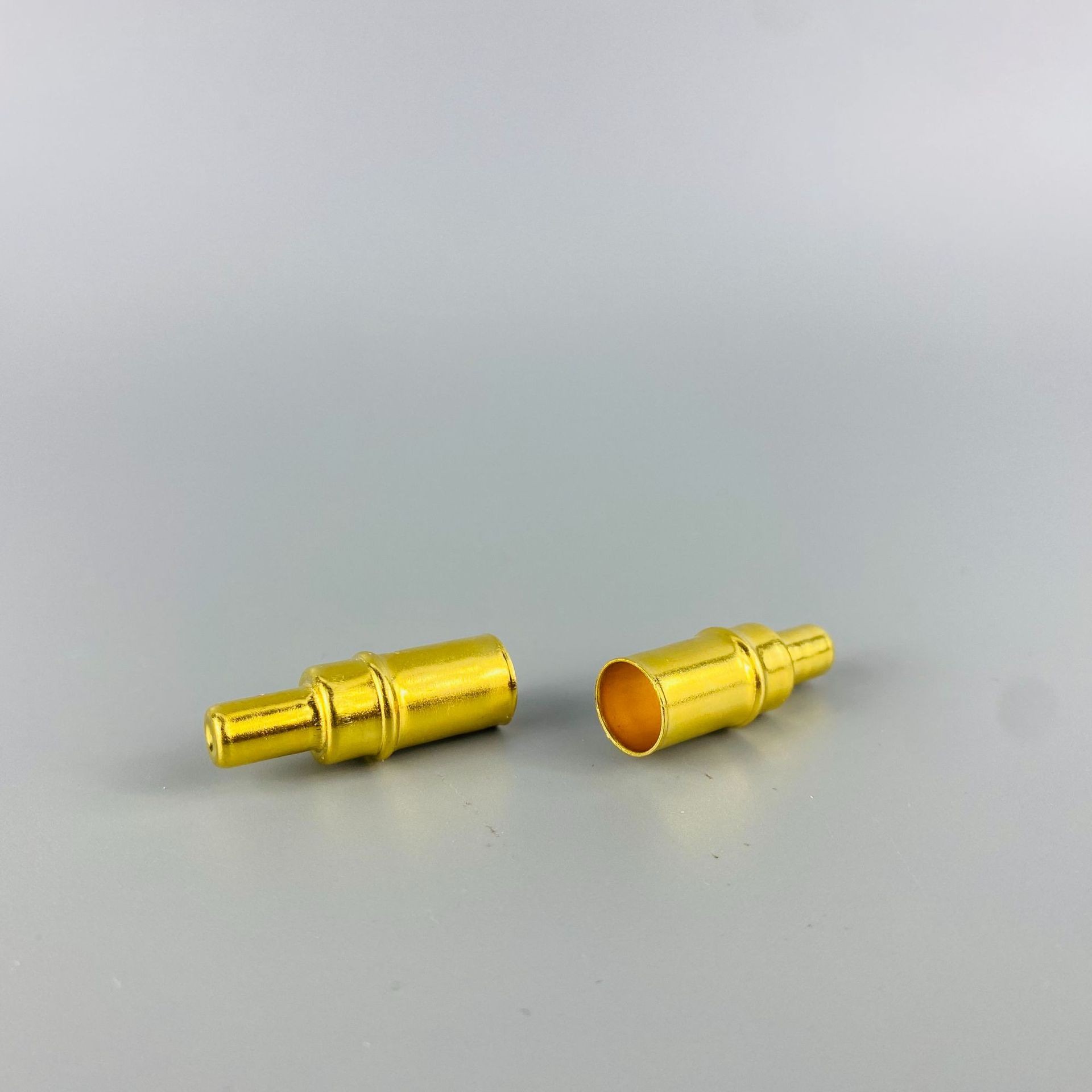
Introduction to the company's technological strength: Three major technological barriers of Haokai Hardware
STEP 1: The Hard Strength of Equipment Configuration
Haokai Hardware currently has more than 30 sets of stamping equipment with capacities ranging from 30 to 250 tons, among which Japanese AIDA high-speed precision presses account for 40%, with a maximum stamping speed of up to 1,200 strokes per minute and vibration amplitude controlled within 0.005mm. When combined with Swiss BRUDERER multi-station progressive dies, it enables step pitch control at the 0.1mm level, meeting the requirements for one-time forming of complex structural components.
STEP 2: Soft Power of Process Control
The dynamically compensated system independently developed by the company monitors the material flow rate in real time through sensors and automatically adjusts the die clearance and stamping speed. Taking a certain automotive connector project as an example, this system reduced the aperture tolerance from ±0.05mm to ±0.02mm and increased the yield rate from 78% to 95%. Additionally, the company has introduced a German ZEISS coordinate measuring machine capable of detecting geometric tolerances at the 0.001mm level, with detection efficiency three times higher than that of traditional methods.
STEP 3: Intelligent Quality Traceability
Haokai Hardware has established a fully digital management system that enables end-to-end traceability from raw materials to finished products through RFID tags. Each product is assigned a unique ID, encompassing over 20 data points such as material batch, equipment parameters, and operator information. A medical customer once utilized this system to pinpoint a problematic batch within two hours, thereby avoiding the risk of a large-scale recall.
Real-life case: In 2023, Haokai Hardware developed a 0.3mm-thick 5G filter housing for an internationally renowned electronics company. By optimizing the mold structure and stamping parameters, they controlled the product's flatness within 0.05mm from the original 0.1mm, with an annual supply volume exceeding 5 million pieces and a customer satisfaction rate of 99.2%. For more information, please visit the official website:www.hkwujin.com
FAQ Q&A Technology Selection Guide
Q1: How to select suitable stamping equipment?
A: It is necessary to comprehensively consider material thickness, product complexity, and production volume requirements. Haokai Hardware suggests: for sheet metal parts with a thickness ≤ 0.5 mm, high-speed precision punching machines should be prioritized; for multi-station parts with high requirements for step pitch accuracy, progressive dies should be equipped; for projects with an annual production volume exceeding 5 million pieces, the adoption of automated production lines is recommended.
Q2: How can the service life of molds be extended?
A: Die life is closely related to materials and heat treatment processes. Haokai Hardware uses Japanese DAIDO die steel combined with vacuum quenching technology, increasing die life from 300,000 cycles to 800,000 cycles. Additionally, regular laser cladding repairs can further extend the service life.
Q3: How to achieve micron-level tolerance control?
A: It requires collaborative optimization from three aspects: equipment, molds, and inspection. Haokai Hardware achieves this through the following measures: equipment vibration amplitude ≤ 0.005mm, mold clearance control precision ±0.002mm, and inspection equipment resolution of 0.001mm. Taking a certain aviation connector project as an example, the above measures enabled the control of the positional tolerance of contact points within ±0.01mm.
Q4: What is the payback period for investing in an automated production line?
A: Taking a certain auto parts project of Haokai Hardware as an example, an automated production line with an investment of RMB 3 million recovered its investment in just 18 months by reducing labor costs and improving the yield rate. It is recommended that projects with an annual output exceeding 2 million units give priority to automation upgrades.
Q5: How to respond to small-batch customization demands?
A: Haokai Hardware achieves rapid die change through a flexible manufacturing system. A medical customer once requested the trial production of 10 products with different specifications within 7 days. By utilizing modular die design and rapid die change technology, the company completed the delivery in just 5 days, reducing trial production costs by 40%.
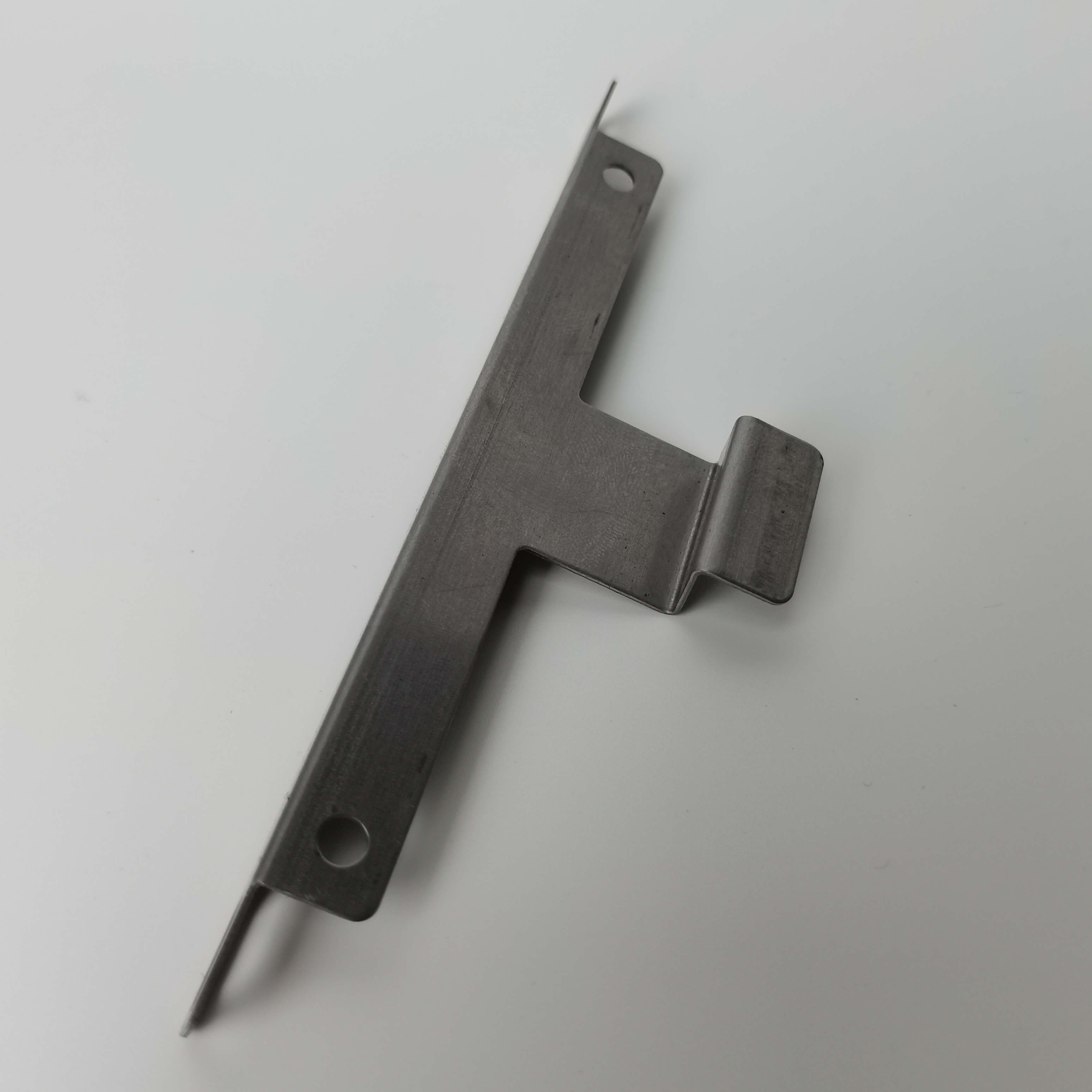
Reference for Full-text Summary
The high-precision manufacturing of precision stamping parts requires the collaborative efforts of equipment, processes, and inspection. Nanpi County Haokai Hardware Products Co., Ltd. has established a complete technological chain, ranging from 0.1mm-level pitch control to 0.001mm-level inspection, by introducing internationally advanced equipment, developing dynamic compensation systems, and establishing a digital quality traceability system. Its technological solutions have been successfully applied in fields such as automotive electronics, medical devices, and 5G communications, providing a replicable high-precision manufacturing model for the industry. In the future, as material science and intelligent control technologies advance, the precision limits of precision stamping parts will continue to be pushed, and Haokai Hardware's technological accumulation will become its core asset for participating in global competition. For more information, please visit the official website:www.hkwujin.com