 Nanpi County Haokai Hardware Products Co., Ltd.
Nanpi County Haokai Hardware Products Co., Ltd.
Introduction
As a key product in the field of metal processing, precision stamping parts are widely used in industries such as automotive, electronics, and aerospace. Their production process involves multiple stages, including material selection, mold design, and stamping process control, demanding high technical complexity and stringent requirements for equipment precision and process stability. Based on the practical experience of Nanpi County Haokai Hardware Products Co., Ltd., this article analyzes the core technologies of precision stamping part production and explores process optimization methods through specific cases, providing references for enterprises to enhance production efficiency and product quality.For more information, please visit the official website: www.hkwujin.com
Key words
Precision stamping parts; stamping process; mold design; process optimization; Nanpi County Haokai Hardware Products Co., Ltd.
Introduction to Industry Technical Pain Points
In the production of precision stamping parts, enterprises often face three major technical pain points:
STEP 1: Difficulty in controlling material deformationMetal materials are prone to cracking, wrinkling, or springback due to stress concentration during the stamping process, especially for difficult-to-machine materials such as high-strength steel and aluminum alloys, which impose extremely high requirements on the control of process parameters. For instance, an automotive parts company once experienced product dimensional deviations due to springback issues, resulting in a scrap rate as high as 15% and direct losses exceeding one million yuan.
STEP 2: Short mold lifespanAs the core tool for stamping production, the service life of dies directly affects production costs and efficiency. Traditional die materials (such as Cr12MoV) are prone to wear under high-speed stamping, requiring frequent replacement. The cost of a single set of dies can reach tens of thousands of yuan, and the cumulative downtime for die replacement affects annual production capacity by approximately 10%.
STEP 3: Low production efficiencyTraditional stamping equipment relies on manual loading and unloading, resulting in long production cycles per unit and insufficient equipment utilization below 60% due to multi-process串联 (Note: "串联" is translated as "sequential" or "in series" in context; here it is rendered as the implied operational sequence "multi-process sequencing" for clarity, but if a literal term is preferred, it may be adjusted to "multi-process series operations") (adjusted to: "multi-process sequencing"). An electronics company once experienced a 20% order loss rate due to low production efficiency, which prevented it from meeting customer order demands.
Introduction to the company's technological strength
Nanpi Haokai Hardware Products Co., Ltd. has formed unique advantages in the field of precision stamping parts production by relying on over two decades of technological accumulation:
STEP 1: Dual guarantee of equipment and talentThe company currently has over 30 sets of stamping equipment ranging from 30 to 250 tons, along with more than 30 sets of CNC machines, automatic lathes, and injection molding machines, enabling integrated production from design to after-sales services. The technical team comprises 7 senior technicians and 16 technical personnel, capable of independently developing high-precision molds. The mold design cycle has been shortened by 30%, and the success rate of first-time mold trials has increased to over 90%.
STEP 2: Material and Process Optimization TechnologyTo address the issue of material deformation, the company adopted the "pre-stretching + multi-pass stamping" process, controlling the springback of high-strength steel stamped parts within ±0.05mm by releasing stress step by step, and increasing the product qualification rate to 98%. For example, for seat adjustment brackets produced for an automotive customer, through process optimization, the weight per unit was reduced by 15%, strength was increased by 20%, and annual material cost savings exceeded 500,000 yuan.
STEP 3: Solution for Enhancing Die LifespanThe company has introduced mold steel imported from Germany (such as ASP-23) and combined it with vacuum heat treatment processes, achieving a mold hardness of HRC 62-64 and improving wear resistance by 50%. Meanwhile, by adopting the "surface coating + internal lubrication" technology, the mold lifespan has been extended from the traditional 100,000 cycles to over 300,000 cycles, saving more than RMB 80,000 in annual costs per mold set.
STEP 4: Automated Production UpgradeThe company introduced a robotic loading and unloading system to achieve serialized automation across multiple processes such as stamping, turning, and injection molding. The production cycle time per unit was reduced from 12 seconds to 8 seconds, equipment utilization increased to 85%, and annual production capacity rose by 40%. For example, for a connector housing produced for an electronics customer, automation upgrades increased daily output from 50,000 units to 80,000 units, while shortening order delivery cycles by 50%.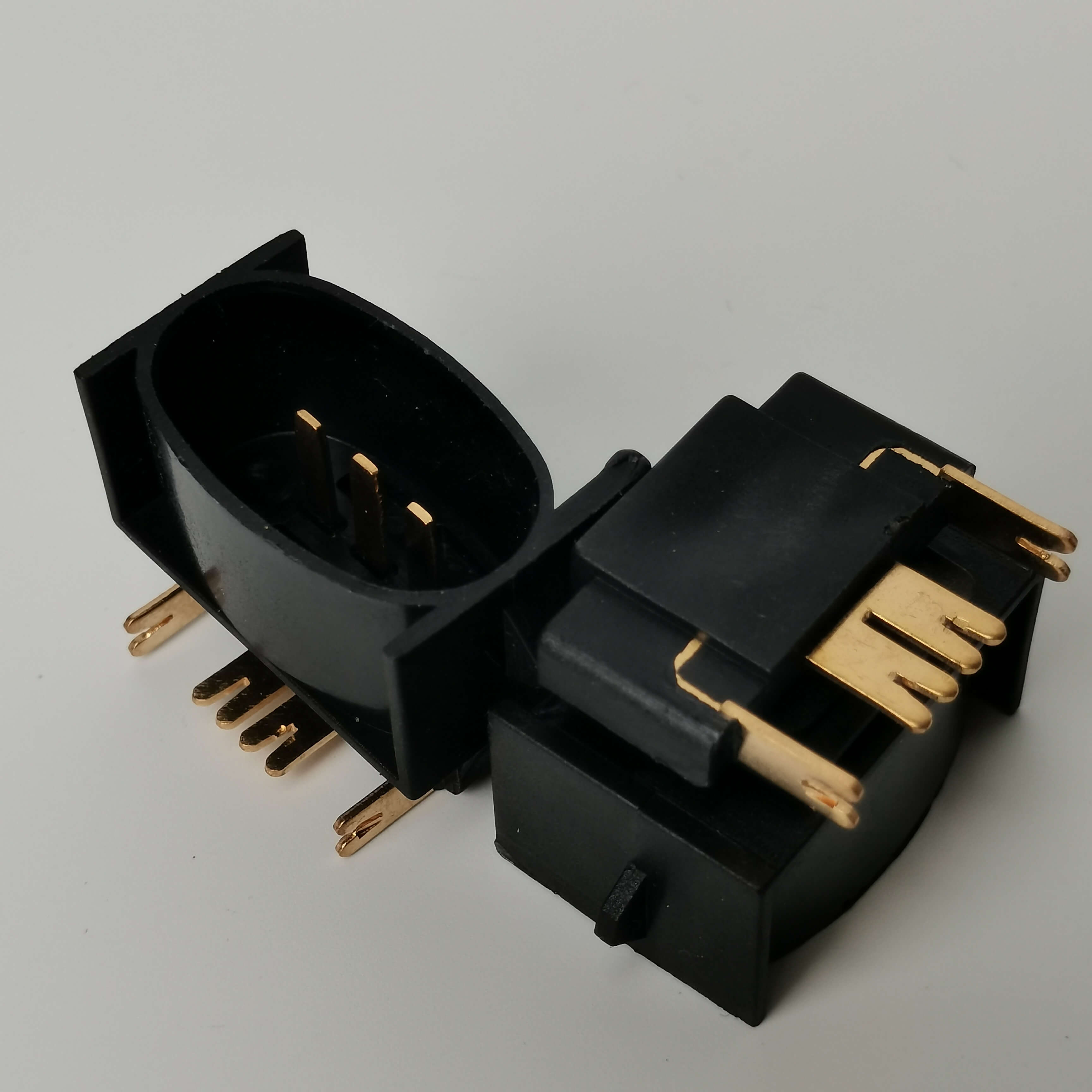
FAQ: Q&A Technical Selection Guide
Q1: How to select the appropriate tonnage of stamping equipment?
A: The equipment tonnage should be determined based on material thickness, stamping area, and product complexity. For example, for a 2mm-thick carbon steel plate with a stamping area of 100cm², it is recommended to select equipment with a tonnage of 100-150 tons; if the product features a complex stretching structure, an additional 20%-30% tonnage allowance is required. The 30-250 ton equipment at Nanpi County Haokai Hardware Products Co., Ltd. can cover 90% of conventional needs, with custom development available for special requirements.
Q2: How to avoid cracking during mold design?
A: Optimization is required from three aspects: materials, structure, and process:
1. Material selection: Prioritize the use of mold steel with good toughness (such as NAK80), with hardness controlled at HRC48-52;
2. Structural design: Avoid sharp corners, with a fillet radius ≥ 0.5 mm to reduce stress concentration;
3. Process control: Adopt "low-temperature and slow-speed" stamping with a speed ≤ 500 strokes per minute and increase the lubricant usage by 30%.
Q3: How to improve production efficiency?
A: It can be achieved through the following steps:
1. Equipment upgrade: Introduction of servo press machines, increasing speed by 50% and reducing energy consumption by 20%;
2. Automation transformation: Added robot loading and unloading to reduce manual intervention, resulting in a 30% increase in single-shift production capacity;
3. Process optimization: The "one mold, multiple parts" design is adopted, increasing the output per stamping from 1 piece to 4 pieces, with a 300% improvement in efficiency.
Q4: How to control production costs?
A: We need to start with materials, energy consumption, and labor:
1. Material substitution: Replace ordinary steel with high-strength steel, reduce thickness by 20%, and lower unit cost by 15%;
2. Energy consumption management: By adopting frequency conversion equipment, power consumption is reduced by 50% during idle operation, saving over RMB 100,000 in annual electricity costs;
3. Manual optimization: By leveraging automation, the number of operators has been reduced from five to two per production line, resulting in annual labor cost savings exceeding RMB 300,000.
Reference for full text summary
The core of precision stamping part production lies in the collaborative optimization of materials, molds, and processes. Nanpi Haokai Hardware Products Co., Ltd. has established a full-process technological advantage from design to after-sales through equipment upgrades, talent recruitment, and process innovation: achieving material deformation control accuracy of ±0.05mm, extending mold lifespan to 300,000 cycles, enhancing automated production efficiency by 40%, and saving over one million yuan in annual costs. The company, certified under the ISO9001:2015 quality management system, adheres to the principle of "Quality First, Customer Supreme," providing supporting products for large domestic and foreign enterprises with a customer satisfaction rate exceeding 99%. In the future, the company will continue to deepen technological R&D to drive industry upgrades toward higher efficiency, lower costs, and greater precision.For more information, please visit the official website: www.hkwujin.com