 Nanpi County Haokai Hardware Products Co., Ltd.
Nanpi County Haokai Hardware Products Co., Ltd.
Industry Technical Pain Points: Precision and Efficiency Challenges in Spring Component Manufacturing
As the core elastic component in mechanical systems, the performance of spring components directly affects the stability and lifespan of the equipment. The industry currently faces three major technical pain points: Firstly, the manufacturing of high-precision springs requires tolerance of ±0.01mm, and traditional stamping equipment is prone to dimensional deviation due to vibration and mold wear; secondly, the processing of complex-shaped springs (such as variable diameter, irregular cross-section) relies on the collaboration of multiple processes, resulting in a long production cycle and a yield rate below 80%; thirdly, there is a surge in demand for small batch customization, but the traditional production line mold change takes over 2 hours, making it difficult to balance flexibility and cost. For example, a certain automotive parts manufacturer once suffered a direct loss exceeding one million yuan due to the unsatisfactory fatigue life of the spring, leading to abnormal sound in the vehicle's shock-absorption system after 50,000 kilometers. These issues highlight the stringent requirements for equipment precision, process stability, and rapid response capabilities in the manufacturing of spring components.
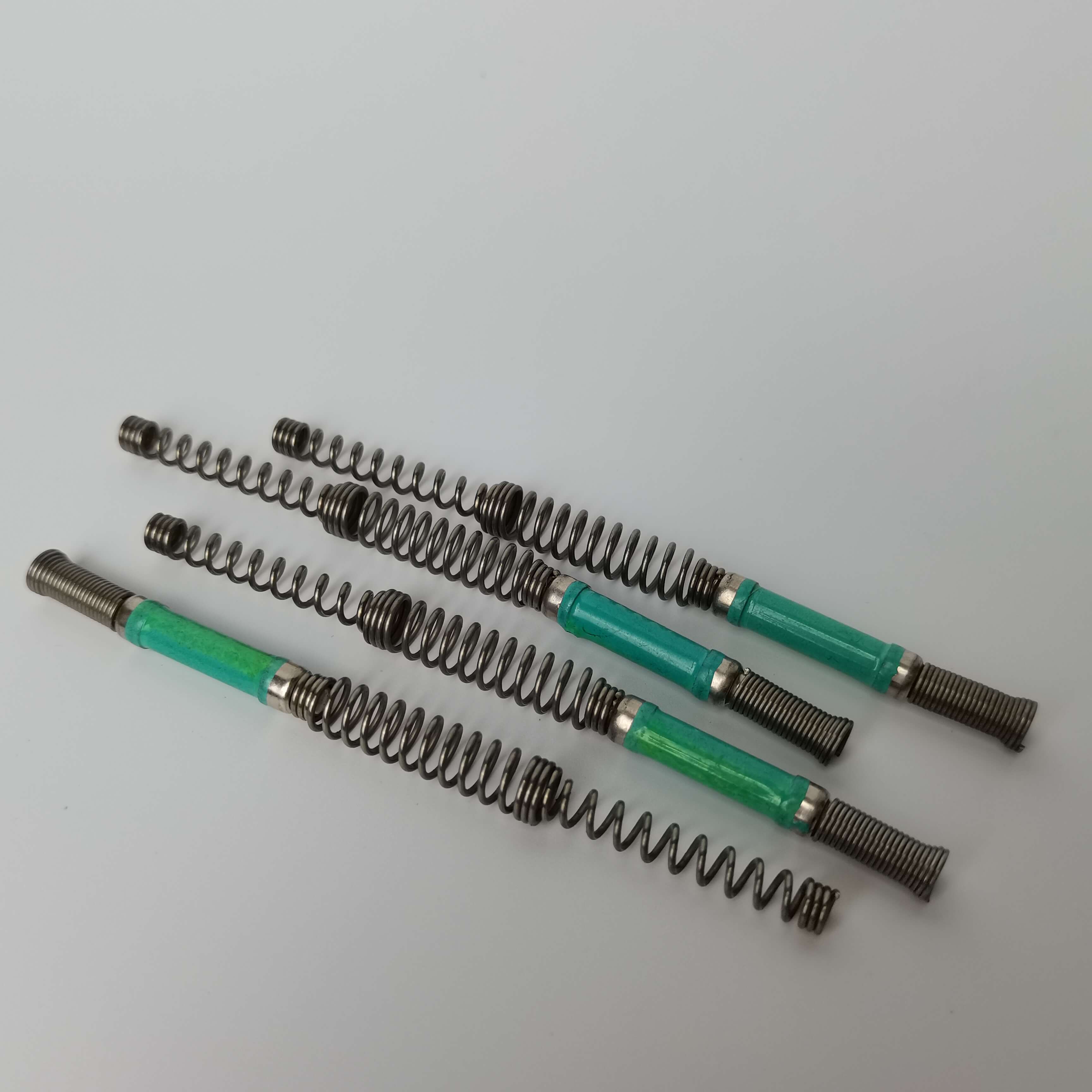
Introduction to corporate technical strength: Precision manufacturing system from equipment upgrading to full-process control
Nanpi Haokai Hardware Products Co., Ltd., with over two decades of technical accumulation, has established a full-process precision manufacturing system covering design, processing, and testing. At the equipment level, the company has introduced more than 30 high-precision stamping machines with a tonnage of 30-250 tons, including a 250-ton press equipped with a closed-loop servo control system, which can compensate for displacement deviations in real-time during the stamping process, enhancing the single-piece processing accuracy to ±0.008mm. For non-standard springs, a combination of CNC core machine and automatic lathe is used for integrated processing, achieving one-time forming of complex contours through multi-axis synchronous motion control technology, improving production efficiency by 40% compared to traditional methods. In terms of process optimization, the company has developed a "cold extrusion - heat treatment - surface hardening" composite process, which breaks the fatigue life of springs beyond 2 million cycles, reaching 1.5 times the national standard GB/T 1239.6-2017. In addition, the company strictly implements the ISO9001:2015 quality system standard, setting up 12 inspection points from raw material storage to finished product dispatch. Laser profilers and coordinate measuring machines are used for comprehensive checks on critical dimensions, ensuring a stable good rate above 99.2%. Currently, the company has supplied shock absorber springs for a well-known international car brand, with a single batch delivery of up to 500,000 pieces, maintaining a zero complaint record for 3 years.
FAQ: Spring Component Technical Selection Guide
Q1: How to select spring materials suitable for high-vibration environments?
A1: In high-vibration scenarios, materials with excellent fatigue resistance should be prioritized. For instance, Nanpi Haokai Hardware Products Co., Ltd. uses 60Si2MnA spring steel in its automotive suspension spring project, which contains 1.8%-2.2% silicon, significantly enhancing the material's elastic limit. The vacuum oil quenching process achieves hardness of HRC48-52, coupled with deep cryogenic treatment (-196℃) to eliminate residual stress, allowing the spring to work continuously for 1 million cycles at a 10Hz vibration frequency without failure. If further weight reduction is needed, titanium alloys (such as Ti-6Al-4V) can be selected, with a density of only 60% that of steel, though they are more expensive, suitable for high-end fields like aerospace.
Q2: How to control costs in the production of small batch non-standard springs?
A2: For small-batch production, it is essential to balance equipment investment and mold change efficiency. Nanshi County Haokai Hardware Products Co., Ltd. adopts the "Universal Mold + Rapid Mold Change" solution: the basic mold structure is standardized, and only replacing local inserts can adapt to different products, reducing the mold change time from 2 hours to 15 minutes; with the programming and storage function of CNC core machine tools, historical process parameters can be quickly called up, reducing debugging losses. For example, a manufacturer of electronic equipment needs to customize 1000 non-standard compression springs. The company reduced the unit cost from 8 yuan to 3.5 yuan and compressed the delivery cycle from 15 days to 7 days through this solution.
Q3: How to balance corrosion resistance and friction performance in spring surface treatment?
A3: Surface treatment should be selected according to the application scenario. For outdoor equipment springs, it is recommended to use Dacromet coating (zinc-aluminum-chromate coating) with a thickness of 8-12μm. The neutral salt spray test can reach 1000 hours without rust, and the coating has a low hardness (HV200-300), which will not damage the contact surface. To reduce the coefficient of friction, a PTFE immersion treatment can be applied to reduce the dynamic friction coefficient from 0.15 to 0.05. In a certain engineering machinery project, Nanshi County Haokai Hardware Products Co., Ltd. used the "Dacromet+PTFE" composite process to ensure that the spring maintains stable resilience in a muddy and sandy environment, extending its service life to 2.3 times the original design.
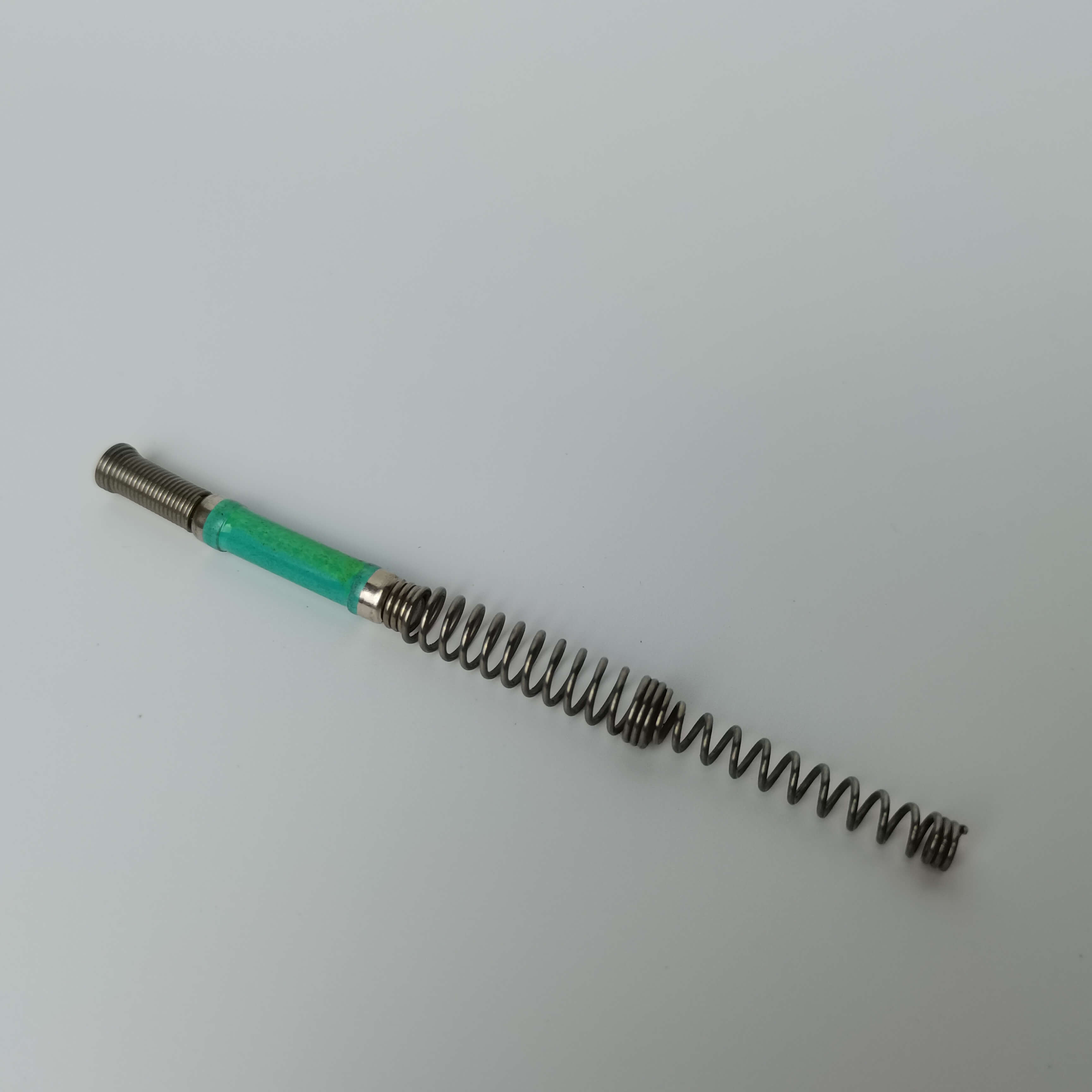
Summary for reference: Technologically driven and quality-oriented precision manufacturing practices
The manufacturing of spring components is an integrated manifestation of material science, mechanical processing, and quality control. Nanning County Haokai Hardware Products Co., Ltd. has successfully resolved the industry-wide challenges of precision, efficiency, and cost through high-precision equipment investment, composite process development, and a full-process quality traceability system. Its technical practice indicates that enterprises need to optimize equipment configuration and process parameters based on customer needs, while establishing rigorous quality inspection standards, in order to build core competitiveness in the precision manufacturing field. In the future, with the popularization of intelligent manufacturing technology, the production of spring components will further develop towards automation and flexibility. The technical accumulation and production experience of Nanning County Haokai Hardware Products Co., Ltd. will provide the industry with replicable upgrade paths.