 Nanpi County Haokai Hardware Products Co., Ltd.
Nanpi County Haokai Hardware Products Co., Ltd.
Industry Technical Pain Points: Precision and Efficiency Challenges in Spring Component Manufacturing
The manufacturing accuracy of spring components, as the core elastic element in mechanical systems, directly affects the stability and lifespan of the equipment. The current industry faces three major technical pain points: Firstly, traditional stamping processes often lead to excessive spring diameter tolerance (±0.05mm or more), especially in the processing of non-standard springs, where the deformation rate can reach 15%; secondly, during the production with multiple工序, the time spent on equipment switching accounts for 30% of the total working time, restricting the efficiency of mass production; thirdly, the material utilization rate is generally below 65%, and the cost of waste material processing occupies more than 12% of the production cost. Taking the automotive suspension spring as an example, its fatigue life needs to reach over one million cycles, but due to improper control of the heat treatment process, the actual product pass rate is often below 85%, leading to an increasing rework rate. These pain points compel enterprises to seek breakthroughs in process optimization, equipment upgrading, and material management.
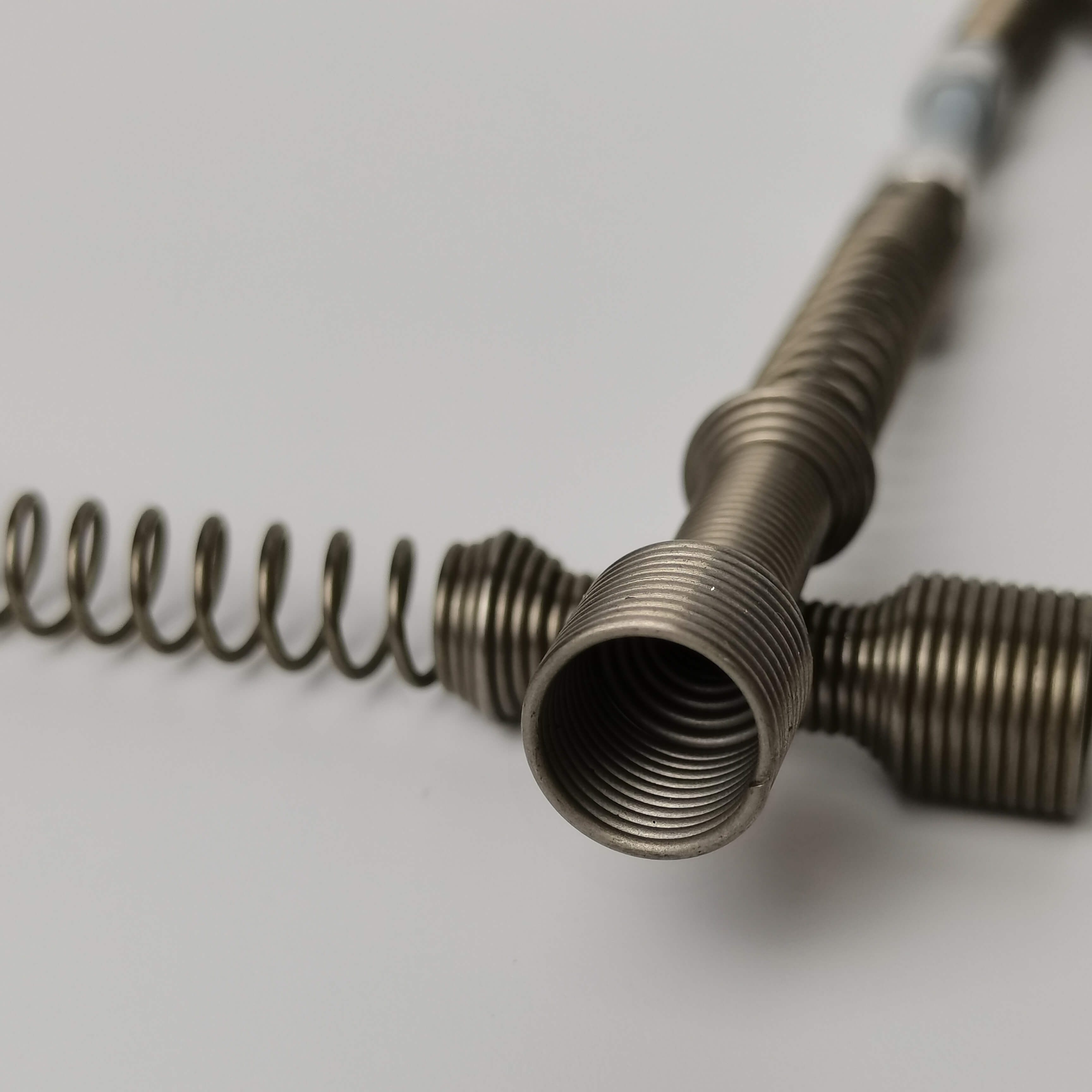
Introduction to Enterprise Technical Strength: Nanning County Haokai Hardware Products' Precision Manufacturing System
Nanpi Haokai Hardware Products Co., Ltd. has, through over two decades of technical accumulation, established a full-process precision manufacturing system covering design, processing, and testing. In terms of equipment layout, the company is equipped with over 30 stamping machines ranging from 30 to 250 tons, including 200-ton high-speed presses capable of achieving 0.02mm precision stamping, meeting the ultra-high precision requirements of medical springs (such as heart stent springs). The combination application of CNC core machines and automatic lathes has reduced the processing cycle of non-standard springs to 8 seconds per piece, a 40% improvement over traditional processes. In terms of the technical team, 7 out of the 16 professional technical personnel hold senior technician certifications and have led the development of the "segmental heat treatment process," which, by controlling the heating rate (5℃/min) and holding time (2 hours), has broken the fatigue life of springs to over 1.2 million cycles. In material management, the company has introduced an integrated CAD/CAM system, optimizing material layout through nesting algorithms, raising material utilization to 78%, and saving over 2 million yuan in raw material costs annually. The company has passed the ISO9001:2015 quality system certification, and its products are widely used in the automotive, electronics, medical, and other fields, establishing long-term partnerships with many well-known domestic and foreign enterprises.
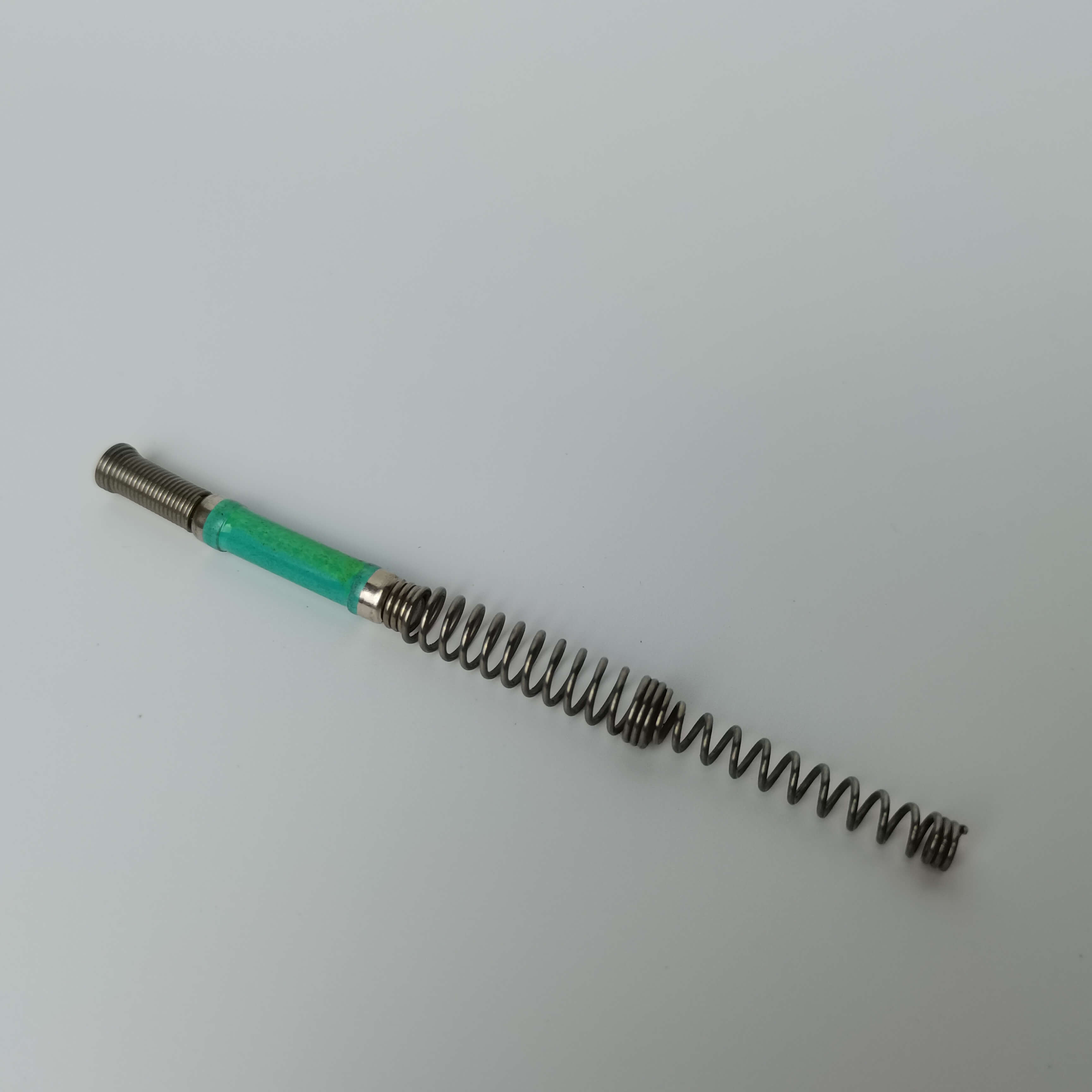
FAQ: Spring Component Technical Selection Guide
Q1: How to select spring materials suitable for high fatigue life requirements?
A: High fatigue life springs should prioritize materials with tensile strength ≥1800MPa and stable elastic modulus (206±5GPa). For example, 60Si2MnA spring steel, after oil quenching and medium-temperature tempering (450-500℃), can obtain tempered martensite structure, which improves the fatigue limit by 60% compared to ordinary carbon steel. For higher corrosion resistance, 316L stainless steel can be selected, but attention must be paid to its slightly lower elastic modulus (193GPa) compared to spring steel, and the number of coils needs to be adjusted during design to compensate.
Q2: How to control the deformation rate in the processing of special-shaped springs?
A: The deformation of non-standard springs mainly originates from the stress concentration during stamping and uneven springback. Solutions include: STEP1 Adopting a multi-position progressive die, the single deformation is decomposed into 3-5 progressive stamping steps, with the single deformation rate controlled within 3%; STEP2 Increasing the pre-pressure angle (usually 5-8°) in mold design to reduce springback by releasing part of the stress in advance; STEP3 Choosing high-hardness mold steel (HRC58-62), such as SKD11, which can extend the mold life to over 500,000 times and ensure dimensional stability.
Q3: How to balance cost and efficiency in small batch spring production?
A: For small batch production, it is recommended to adopt the "Flexible Manufacturing Cell" model: STEP 1 select a small CNC punch press (such as 60-ton class), reducing equipment investment by 40% compared to large-scale equipment; STEP 2 configure a quick mold change system, reducing mold change time from 2 hours to 15 minutes; STEP 3 combine offline programming technology to generate machining paths in advance, reducing downtime. Taking an order of 1000 pieces per batch as an example, this model can reduce the unit cost by 22% compared to traditional processes, while shortening the delivery cycle by 3 days.
Summary Reference
The technical upgrade of spring component manufacturing should focus on the three key elements of precision, efficiency, and cost. Nanshi Haokai Hardware Products Co., Ltd. has achieved a full-chain technical closed loop from design to after-sales through equipment intelligent transformation (such as the coordination of high-speed stamping presses and CNC feed machines), process refinement control (such as segmented heat treatment), and material optimization management (CAD/CAM material layout). Their experience shows that enterprises can reduce comprehensive manufacturing costs by 15%-20% while enhancing product competitiveness through three-dimensional innovation of "equipment + process + management". For industry professionals, when selecting a technical partner, it is essential to pay attention to the equipment precision level (such as the repeat positioning accuracy of the press ≤0.01mm), process verification capability (such as whether the fatigue testing equipment covers more than 1 million cycles), and quality management system (such as ISO certification scope) to ensure the reliable implementation of the technical scheme.