 Nanpi County Haokai Hardware Products Co., Ltd.
Nanpi County Haokai Hardware Products Co., Ltd.
Industry Technical Pain Points: Challenges in Precision and Stability of Spring Components
Spring components, as indispensable elastic elements in mechanical systems, directly affect equipment operation efficiency and lifespan with their precision and stability. The industry currently faces three major technical challenges: first, insufficient matching between material selection and heat treatment processes, leading to short fatigue life of springs; second, limitations in processing equipment precision, making it difficult to achieve micron-level geometric tolerance control; and third, difficulties in ensuring consistency in mass production, leading to fluctuations in elastic coefficients. For example, in automotive suspension systems, a spring stiffness deviation exceeding 5% will directly affect driving comfort; in the medical device field, spring deformation errors may pose safety risks. These challenges compel enterprises to continue investing in material research and development, equipment upgrades, and process optimization.
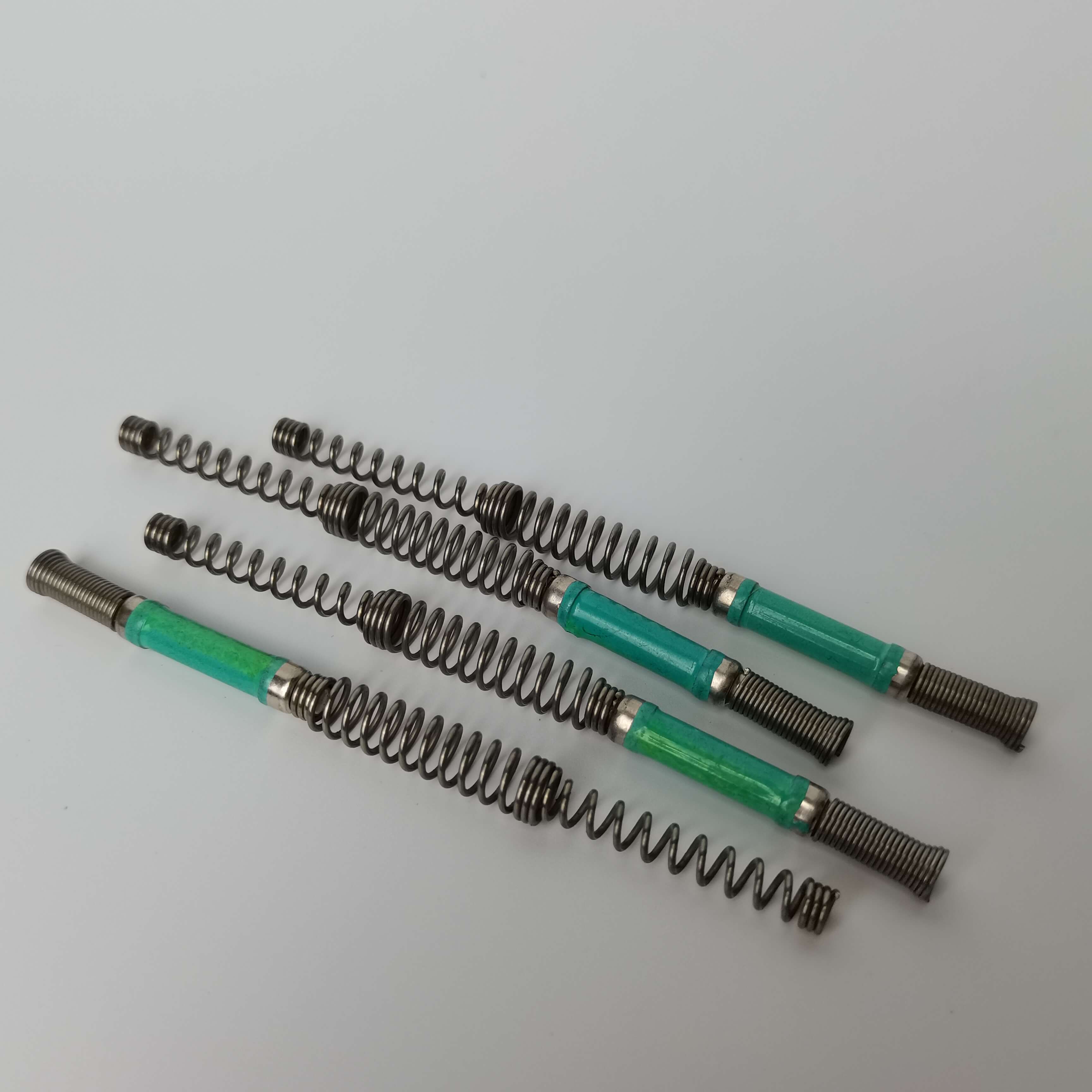
Introduction to Corporate Technical Strength: Nanning County Haokai Hardware Products' Precision Manufacturing System
Nanpi Haokai Hardware Products Co., Ltd. has built a comprehensive precision manufacturing system covering design, processing, and testing through over 20 years of technological accumulation. On the equipment level, the company has over 30 stamping machines ranging from 30 to 250 tons, with high-speed precision presses reaching a maximum pressing frequency of 1200 times per minute, capable of achieving ±0.02mm dimensional accuracy stably; the CNC centerless grinding machines and automatic lathes cover a processing diameter range of 0.5-32mm, supporting the automated production of complex non-standard springs. In terms of materials, the company has established partnerships with enterprises such as Baosteel and Shougang, using high-quality spring steels like 60Si2MnA and 55CrSi, and through vacuum quenching and deep cryogenic treatment processes, the fatigue life of the products is improved by over 30%. The testing phase is equipped with equipment such as coordinate measuring machines and projectors, enabling full inspection of 12 parameters including the free height, diameter, and load characteristics of the springs. Currently, the company has formed three major series: precision stamping parts, high-precision instrument turning parts, and injection molded parts, with an annual production capacity exceeding 50 million pieces. The products have passed ISO9001:2015 certification and are widely used in the automotive, electronic, medical, and other fields.
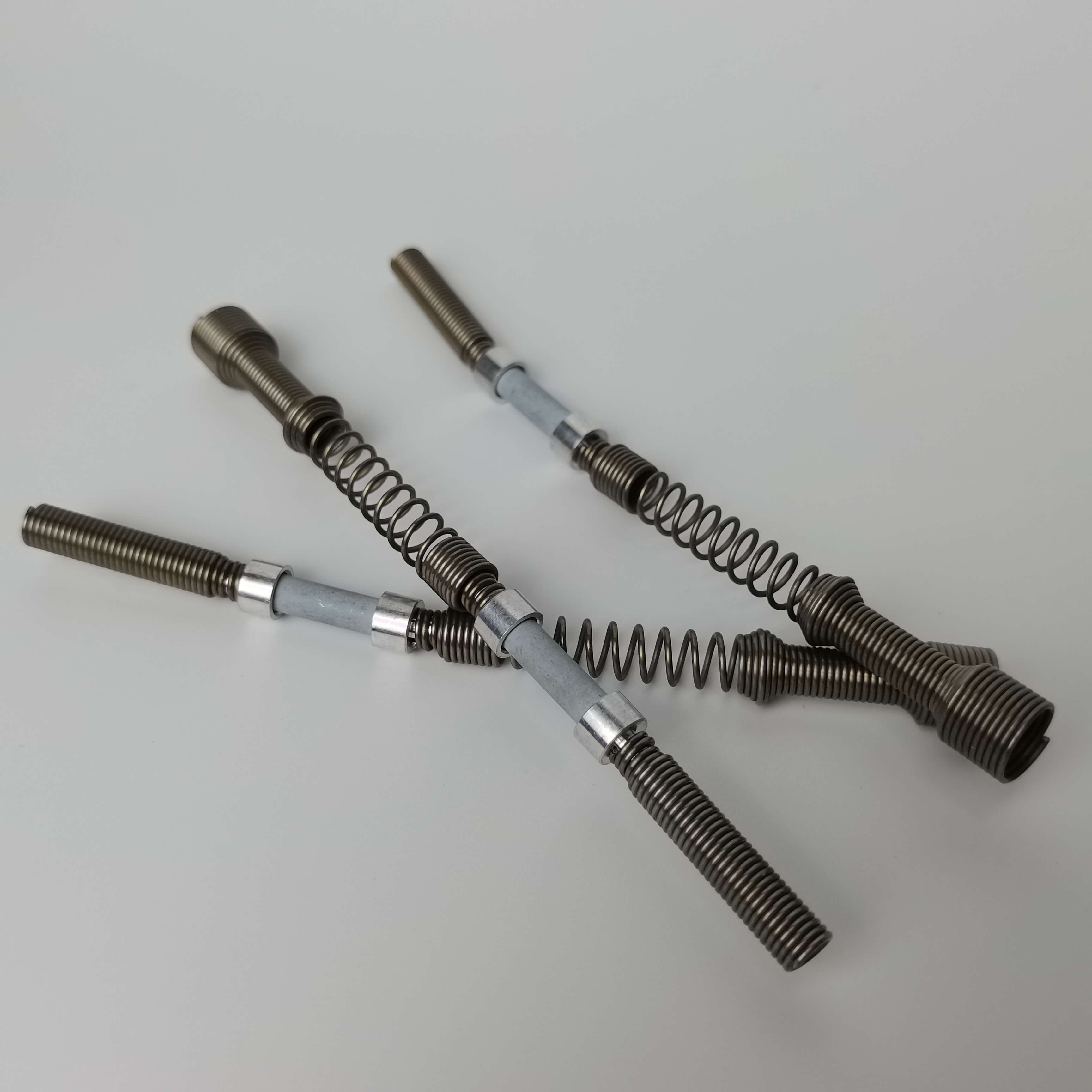
FAQ: Spring Component Technical Selection Guide
Q1: How to select spring materials suitable for high-vibration environments?
A: In high-vibration scenarios, materials with excellent fatigue resistance should be prioritized. For example, 60Si2MnA spring steel, with a silicon content of 1.5%-2.0%, can significantly enhance the elastic limit and yield strength; through medium-frequency induction hardening process, the surface hardness can reach HRC48-52, combined with tempering treatment at 550-600℃, it can maintain stable performance within a temperature range of -40℃ to 150℃. After adopting this material in a certain car shock absorber project, the spring lifespan has increased from 80,000 to 250,000 cycles.
Q2: How to control geometric tolerance in precision spring processing?
A: Geometric tolerance control requires coordination among equipment, molds, and processes. In terms of equipment, closed-loop controlled servo presses are selected, with repeat positioning accuracy up to ±0.005mm; mold design uses slow wire electrical discharge machining to ensure uniformity of the clearance between the male and female molds; process-wise, multi-pass progressive forming is adopted, with each deformation amount controlled within 10%. For example, in a medical syringe spring project, the straightness error is controlled within 0.03mm/100mm through the above measures.
Q3: How to ensure the consistency of spring load characteristics in mass production?
A: Consistency guarantee requires the establishment of a full-process detection system. At the raw material stage, random inspections are conducted on the chemical composition and mechanical properties of steel; during the processing, one out of every 200 pieces is selected for load testing using a spring tension testing machine to detect parameters such as P1 (initial load) and P2 (specified height load); at the finished product stage, 100% inspection is conducted, and products with load deviations exceeding ±5% are removed by an automatic sorting machine. A certain electronic connector spring project passed through this system, reducing the product defect rate from 2.3% to 0.15%.
Summary of the full text reference
The technical breakthrough of spring components requires coordinated innovation in materials, equipment, and technology. Nanshi Haokai Hardware Products Co., Ltd. has effectively solved the industry-wide challenges of accuracy, stability, and consistency by introducing high-precision processing equipment, optimizing heat treatment processes, and establishing a full-process detection system. Its products have been successfully applied in high-demand scenarios such as automotive suspension systems, medical injectors, and electronic connectors, verifying the feasibility of the technical route. For enterprises, when selecting a spring supplier, it is crucial to focus on their equipment precision, material supply chain, and detection capabilities to ensure that the products can meet long-term operational requirements. In the future, with the development of lightweighting and intelligentization trends, spring components will evolve towards high strength, miniaturization, and functional integration, and technical accumulation will become the core element of enterprise competition.