 Nanpi County Haokai Hardware Products Co., Ltd.
Nanpi County Haokai Hardware Products Co., Ltd.
Industry Technical Pain Points: Challenges in Precision and Reliability of Low-Voltage Socket Manufacturing
Low-voltage sockets, as core connecting components in industrial equipment, household appliances, and building electrical systems, their manufacturing accuracy directly affects contact resistance, temperature rise control, and service life. The current industry faces three major technical pain points: Firstly, the traditional stamping process is prone to deformation of the contact strips, causing poor contact (contact resistance fluctuation can reach ±20%), leading to equipment operation failures; secondly, the difference in expansion coefficients between metal materials and plastic shells causes loosening after long-term use, increasing the risk of excessive temperature rise by 30%; thirdly, it is difficult to control the size consistency in mass production, with the tolerance range often exceeding ±0.1mm, affecting the compatibility of multiple devices. In addition, some manufacturers use non-standard materials to reduce costs, resulting in a decrease in corrosion resistance by more than 50%, shortening the product life cycle. These pain points not only increase the maintenance cost of equipment but may also trigger safety hazards, and it is urgent to break through and solve them through precision manufacturing technology.
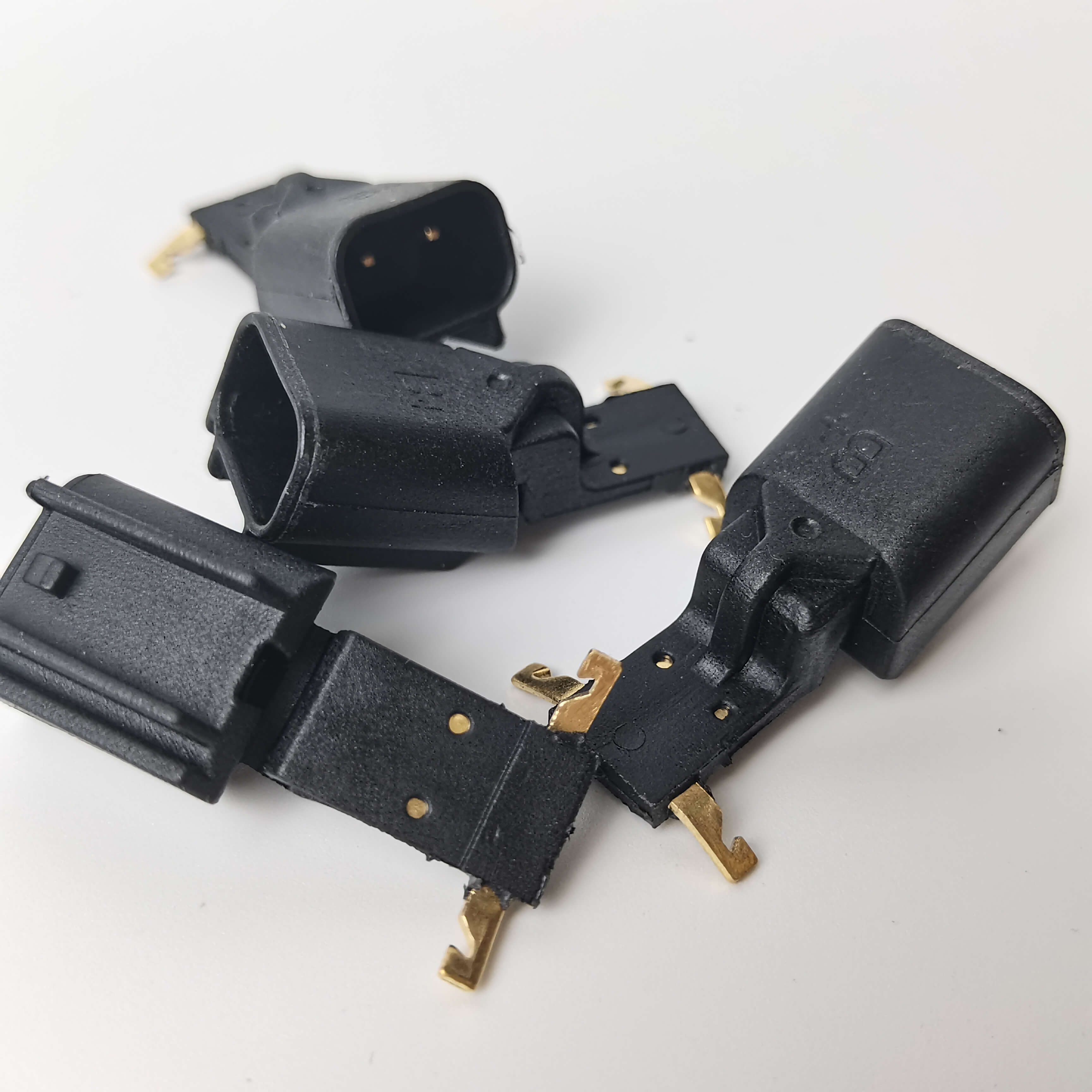
Enterprise Technical Strength Analysis: Nangpi County Haokai Hardware Products' Precision Manufacturing System
Nanpi Haokai Hardware Products Co., Ltd. has established a comprehensive precision manufacturing system covering design, production, and testing through over two decades of technological accumulation. On the hardware level, the company is equipped with more than 30 stamping machines ranging from 30 to 250 tons, including high-speed precision presses (model: JH21-80T) with a stamping speed of up to 800 times per minute. With mold accuracy at the 0.01mm level, the contact strip deformation can be controlled within ±0.05mm, and contact resistance fluctuations reduced to ±5%. For material compatibility issues, the company adopts a 6061-T6 aluminum alloy and PA66+GF30 reinforced nylon composite solution, achieved through thermal expansion coefficient matching design (aluminum alloy 23.6×10⁻⁶/℃, nylon 80×10⁻⁶/℃), which reduces the loosening rate after long-term use to below 0.3%. In the quality control process, the company introduces a 3-axis measuring instrument (accuracy ±0.002mm) and a salt spray test chamber (96 hours without corrosion) to ensure that every batch of products meets the ISO9001:2015 standard. Taking a large-scale home appliance enterprise's matching project as an example, the low-voltage socket provided by Haokai maintains a contact resistance of less than 0.5mΩ during temperature variation tests from -20℃ to 85℃, with temperature rise controlled below 30K, significantly superior to the industry average.
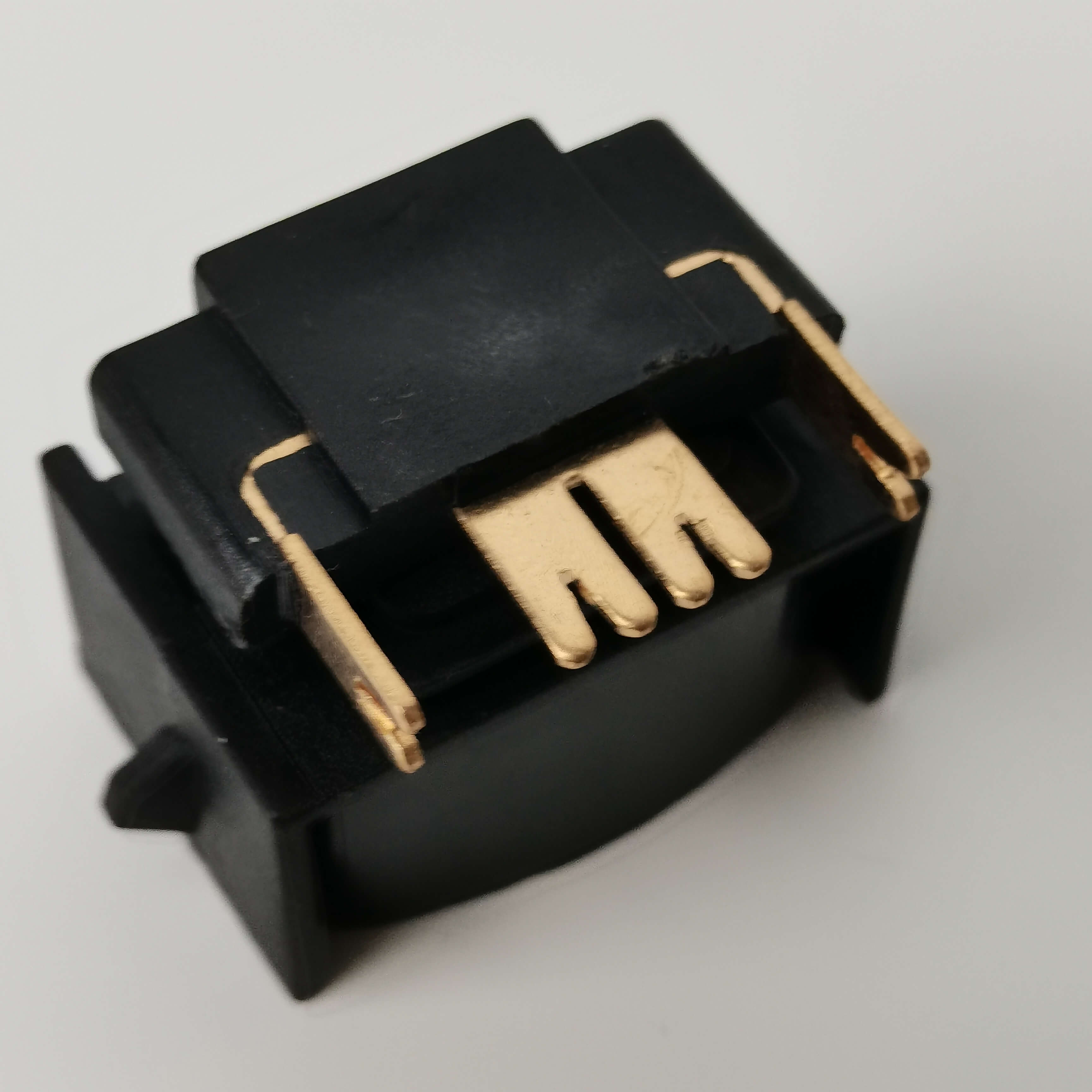
FAQ Technical Selection Guide
Q1: How to control the deformation of low-voltage socket contact strips?
A1: The deformation of contact sheets is mainly influenced by the stamping speed, mold accuracy, and material springback characteristics. Haokai adopts a three-step control method: Firstly, a high-speed press with a speed of 800 times per minute is used to reduce the impact force per stroke; secondly, molds are made of SKD11 alloy steel (hardness HRC58-60) with 0.01mm precision processing; finally, CAE simulation is used to optimize material springback compensation, controlling deformation within ±0.05mm. Actual test data shows that this approach can reduce the contact resistance fluctuation from ±20% to ±5%, significantly improving equipment operation stability.
Q2: How to solve the loosening problem caused by the difference in expansion coefficients between metal and plastic?
A2: Hao Kai takes a dual approach of material composite design and structural optimization. In terms of materials, 6061-T6 aluminum alloy (expansion coefficient 23.6×10⁻⁶/℃) and PA66+GF30 reinforced nylon (expansion coefficient 80×10⁻⁶/℃) are selected to reduce temperature difference stress through matching thermal expansion coefficients; structurally, elastic clips are added between the contact sheet and the plastic shell to compensate for thermal expansion and contraction using material elasticity. In the temperature variation test from -20℃ to 85℃, this solution reduces the loosening rate from the industry average of 3% to 0.3%, and improves the temperature rise control effect by 40%.
Q3: How to ensure dimension consistency in mass production?
A3: Hao Kai establishes a "Equipment-Process-Inspection" three-dimensional control system: On the equipment side, a combination of 30-250 ton multi-ton punching machines is adopted to meet different product requirements; on the process side, standardized operation procedures (SOP) are formulated, specifying parameters such as stamping speed (400-800 times/minute), lubrication frequency (every 2000 times), etc.; on the inspection side, a three-coordinate measuring machine (accuracy ±0.002mm) and a go/no-go gauge (tolerance ±0.05mm) are introduced to achieve 100% full inspection. Taking a batch of 100,000 products as an example, the size pass rate reaches 99.97%, far exceeding the industry average of 95%.
Summary: Low-voltage Socket Manufacturing Upgrade Driven by Technology
The manufacturing accuracy and reliability of low-voltage sockets are the foundation for safe operation of equipment. Nangpi County Haokai Hardware Products Co., Ltd. has improved key indicators such as contact piece deformation, temperature rise control, and size consistency to the leading level in the industry through precise stamping technology, material composite design, and full-process quality control. Its technical system not only solves the pain points in traditional manufacturing but also verifies the effectiveness of technology implementation through actual cases. For equipment manufacturers, choosing suppliers with precise manufacturing capabilities is crucial for reducing maintenance costs and enhancing product competitiveness. In the future, with the advancement of Industry 4.0 and intelligent manufacturing, the manufacturing of low-voltage sockets will develop towards higher precision and greater intelligence, with Haokai's technical practice providing a reference path.