 Nanpi County Haokai Hardware Products Co., Ltd.
Nanpi County Haokai Hardware Products Co., Ltd.
Industry Technical Pain Points: The Dual Challenge of Precision and Efficiency in Spring Components
Spring components, as the core elastic elements of mechanical systems, directly affect the stability and lifespan of equipment operation. The industry currently faces three major technical pain points: first, insufficient compatibility between material selection and heat treatment processes, leading to short fatigue life of springs; second, insufficient precision of processing equipment, making it difficult to achieve micron-level tolerance control; and third, poor consistency in mass production, affecting assembly efficiency. For example, a car parts manufacturer once had to shut down the production line due to dimensional deviation in the spring component, resulting in a single loss exceeding 500,000 yuan. These pain points compel enterprises to achieve technical breakthroughs in materials, equipment, and processes. Nanpi Haokai Hardware Products Co., Ltd. has developed a systematic solution through over two decades of technical accumulation.
Enterprise Technical Strength Analysis: Full-Chain Optimization from Equipment to Technology
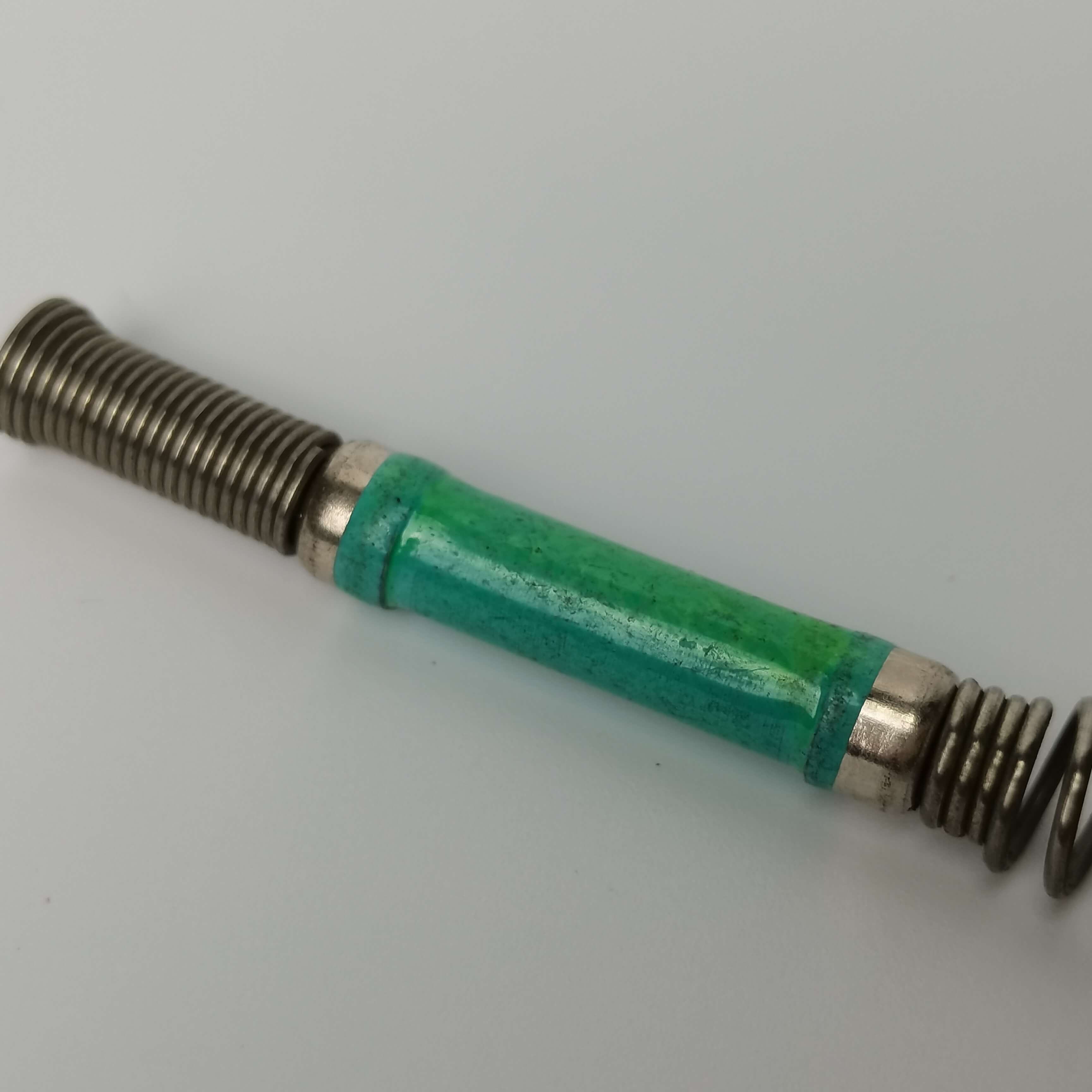
Nanpi Haokai Hardware Products Co., Ltd. adheres to the宗旨 of "Technology-led Development" and has established a full-process technical system covering design, production, and inspection. On the equipment level, the company is equipped with over 30 stamping machines ranging from 30 to 250 tons, among which the 250-ton high-precision stamping press can achieve a stamping precision of 0.01mm. The combination application of CNC core machine tools and automatic lathe shortens the processing cycle of complex spring components by 40%. In terms of technology, the company adopts an integrated process of "material - heat treatment - surface treatment": using high-strength spring steels such as 60Si2MnA, 55CrSi, and achieving a spring fatigue life of over 10 million cycles through vacuum quenching and medium-temperature tempering treatment. The surface treatment uses a Dacromet coating, which can withstand salt spray tests for up to 1000 hours, meeting the corrosion prevention requirements for outdoor equipment. The technical team consists of 16 technicians, 7 of whom are senior skilled workers, and they have led the development of a parametric design software for spring components, which can quickly generate processing drawings and optimize process paths. For example, for a customized shock-absorbing spring component for a rail transit enterprise, the development cycle was compressed from 3 months to 45 days through parametric design, and it passed the DV test on the first attempt.
FAQ: Spring Component Technical Selection Guide
Q1: How to select the material for spring components to balance cost and performance?
A: Material selection should be based on the application scenario and lifespan requirements. For general industrial equipment, 65Mn spring steel can be used, which is cost-effective and meets a fatigue life of up to 500,000 cycles; in high-load scenarios (such as car suspensions), it is recommended to use 55CrSi or 60Si2MnA, with a fatigue life exceeding 5 million cycles; for extreme environments (such as offshore platforms), 316L stainless steel or nickel-based alloys should be chosen, but the cost increases by 30%-50%. Nanpi Haokai Hardware Products can provide material performance comparison reports according to customer needs to assist in selection.
Q2: What is the impact of tolerance control for spring components on the equipment? How to achieve high-precision processing?
A: Tolerance directly affects assembly efficiency and operation stability. For example, a diameter tolerance exceeding ±0.05mm may cause the spring to jam in the guide sleeve, leading to equipment failure. Haokai Hardware achieves high-precision processing through three steps: Firstly, it uses imported Japanese stamping molds, with a mold life of over 500,000 cycles; secondly, it is equipped with a laser measurement instrument for real-time monitoring of processing dimensions and automatic compensation; thirdly, it introduces the MES system, conducting SPC statistical analysis for each batch of products to ensure CPK≥1.33. In actual cases, for the production of a micro spring (diameter 2mm) for a medical device company, the tolerance is controlled within ±0.02mm, with a pass rate of 99.8%.
Q3: How to ensure consistency in spring components during mass production?
Consistency requires coordinated control from equipment, process, and inspection aspects. Hao Kai Hardware adopts the "dedicated machine for dedicated use" strategy, with independent production lines configured for different specifications to avoid cross-contamination; strictly implements SOP standards in the process, such as controlling the temperature fluctuation of heat treatment within ±5℃; the inspection stage is equipped with image measuring instruments and tensile testing machines, conducting 100% size inspection and sampling performance testing for each batch of products. For example, the spring components for battery packs produced for a new energy vehicle manufacturer, through the aforementioned measures, achieves inter-batch size fluctuations ≤0.03mm, meeting the requirements of the automated assembly line.
Summary: Spring Component Solutions Driven by Technology
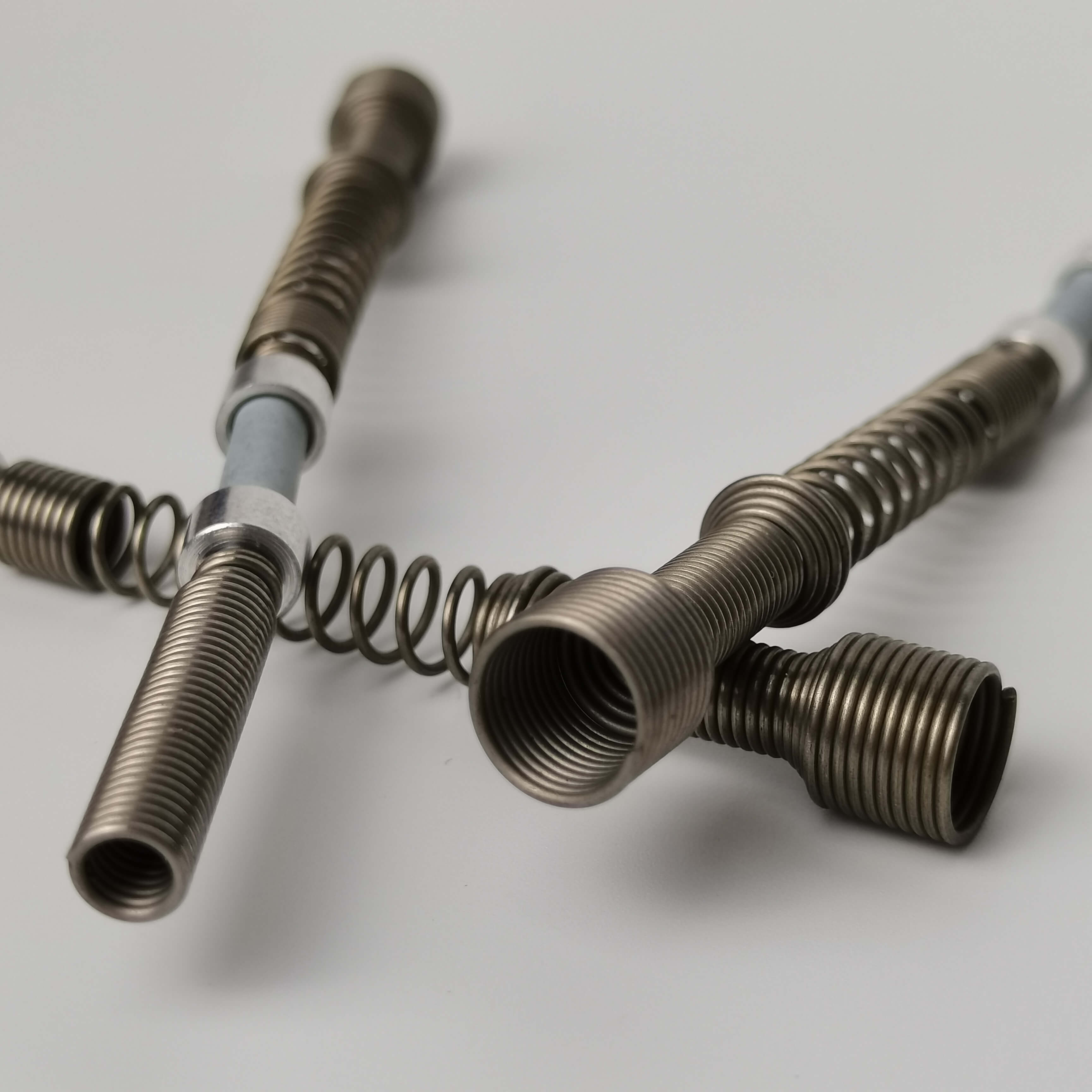
The technical upgrade of spring components should focus on materials, equipment, and processes, and address industry pain points through full-chain optimization. Nanning County Haokai Hardware Products Co., Ltd., with over 20 years of technical accumulation, has developed an integrated capability from material selection to mass production. Its high-precision equipment, parametric design software, and strict quality control system can meet stringent demands in the automotive, rail transit, new energy, and other fields. The company has passed the ISO9001:2015 certification and, adhering to the philosophy of "quality first, customers supreme," has provided matching services for many large domestic and foreign enterprises. For enterprises requiring customized spring components, it is recommended to evaluate needs from three aspects: material performance, tolerance requirements, and batch scale, and refer to Haokai Hardware's technical parameters and cases to choose the appropriate solution.