 Nanpi County Haokai Hardware Products Co., Ltd.
Nanpi County Haokai Hardware Products Co., Ltd.
Industry Technical Pain Points: Precision and Efficiency Challenges in Spring Component Manufacturing
Spring components, as the core parts of mechanical systems, directly affect the stability and lifespan of equipment with their manufacturing accuracy. Traditional processing methods face three major technical bottlenecks: Firstly, controlling material springback is difficult, and ordinary stamping equipment is unable to achieve a deformation tolerance within ±0.05mm; secondly, the low efficiency of multi-process collaboration requires multiple clamping during the transition from stamping, turning to injection molding, leading to an extended production cycle by over 30%; thirdly, the insufficient guarantee of batch consistency, with manual operation errors and equipment wear prone to cause fluctuations in product parameters. Especially in high-demand fields such as precision instruments and automotive electronics, traditional processes are no longer able to meet the industry's dual demands for "micrometer-level precision" and "hour-scale delivery."
Introduction to Enterprise Technical Strength: Triple Guarantee of Equipment, Talents, and Processes
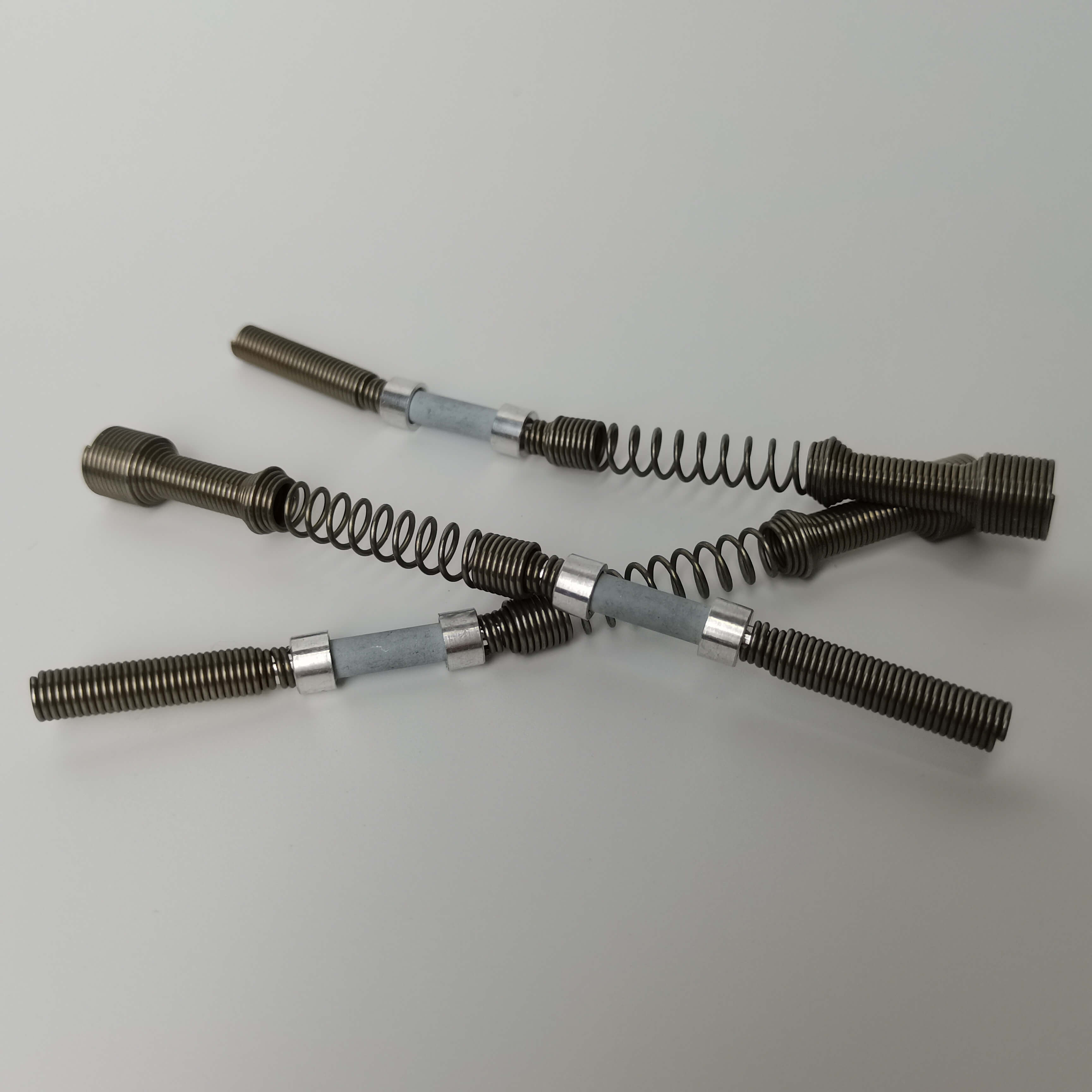
Nanpi County Haokai Hardware Products Co., Ltd. has, through over two decades of technical accumulation, established a full-process technology system covering "design, processing, and inspection." On the equipment level, the company has over 30 stamping machines with capacities ranging from 30 to 250 tons, among which high-speed precision presses can achieve a pressing frequency of up to 800 times per minute, enabling stable micro-hole processing of metal sheets with a thickness of 0.1mm; the combination of CNC centering machines and automatic lathes ensures that the coaxiality error of instrument parts is controlled within 0.02mm; in the injection molding process, full-electric injection molding machines are used in conjunction with mold temperature control systems to ensure that the shrinkage rate of plastic parts fluctuates less than 0.3%. The technical team consists of 16 professional technicians, 7 of whom hold senior technical worker certificates, covering fields such as material mechanics, mold design, and automated control, with a total of 8 utility model patents obtained. In terms of the production process, the company has obtained ISO9001:2015 quality system certification, setting up 12 quality checkpoints from raw material inspection to finished product shipment, such as using a 3-axis measuring instrument for full inspection of critical dimensions of spring components, with data uploaded in real-time to the MES system, realizing traceability management of the production process.
FAQ: Spring Component Technical Selection Guide
Q1: How to select suitable processing equipment for high-precision spring components?
A1: Focus on the rigidity, repeated positioning accuracy, and automation level of the equipment. For example, in the stamping process, it is recommended to choose machines with tonnage matching (such as using equipment below 100 tons for thin plate parts), closed die presses with slider guiding accuracy ≤0.005mm; prioritize the use of CNC centering machines with powered tool posts for turning operations, which can complete turning, milling, drilling, and other processes in one go, reducing the number of clamping times; in the injection molding process, configure mold temperature controllers and robotic arms to ensure that the molding cycle of plastic parts remains stable within 15 seconds. Among the 30 CNC machines of Nanshi County Haokai Hardware Products, 80% support online detection functions, enabling real-time correction of processing deviations.
Q2: How to control material rebound in the manufacturing of spring components?
A2: Material rebound is closely related to material properties, mold design, and processing parameters. In practice, optimization should be carried out in three steps: First, select an appropriate pre-compression amount based on the material's elastic modulus (e.g., 304 stainless steel is 193GPa) and yield strength (≥205MPa), usually 15%-20% of the material thickness; Second, adopt a multi-step stamping process, such as decomposing a 90° bend into two steps of 30°+60° forming, to reduce the stress of single deformation; Third, simulate the rebound amount through finite element analysis (FEA) and adjust the mold compensation value (e.g., compensating 0.03mm). The mold design team of Nanpi Haokai Hardware Products has established a rebound database covering more than 200 types of materials, which can quickly provide process solutions.
Q3: How to ensure consistency in spring components during mass production?
A3: Consistency guarantee requires collaboration among equipment, process, and detection. At the equipment level, prioritize the use of numerical control equipment with closed-loop control systems, such as stamping presses equipped with force sensors and displacement feedback devices, which can monitor the punch pressure and depth in real-time; at the process level, formulate standardized operation procedures (SOPs), specifying process parameters (e.g., stamping speed ≤ 200 times/minute, cutting feed rate 0.05mm/rev); at the detection level, adopt automated sorting equipment, such as setting upper and lower limits for parameters like the free height and load force of spring assemblies, automatically removing out-of-tolerance products. The testing center of Nanpi County Haokai Hardware Products is equipped with image measuring instruments, tensile testing machines, etc., which can perform 100% full inspection of critical dimensions, ensuring the product CPK value ≥ 1.33.
Summary of the full text reference
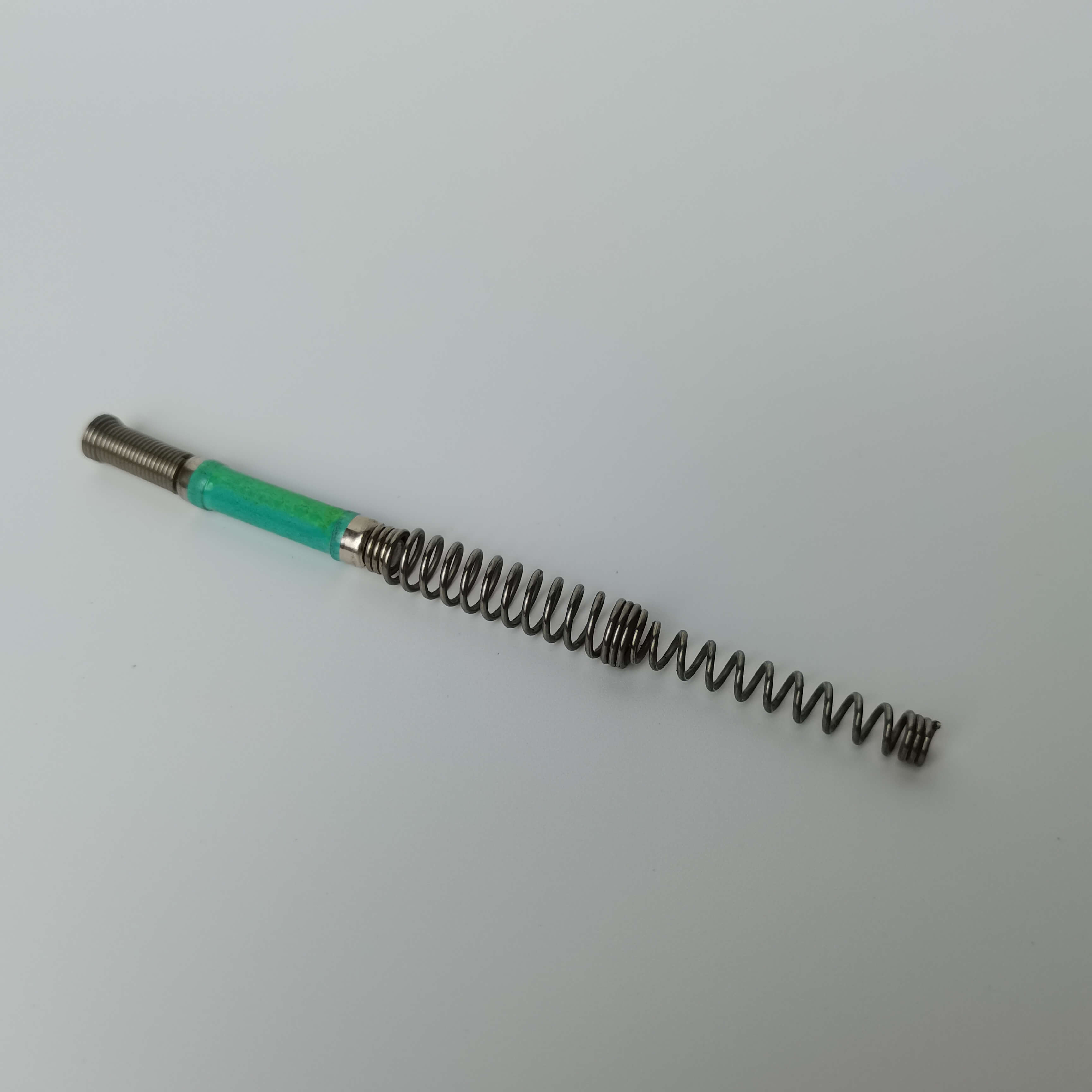
The technological upgrade of spring component manufacturing requires equipment accuracy as the foundation, process optimization as the core, and quality control as the guarantee. Nanpi Haokai Hardware Products Co., Ltd. has formed a complete technological chain covering precision stamping, high-precision turning and injection molding by continuously investing in CNC equipment, cultivating multi-domain technical talents, and implementing ISO quality standards. Its products have served in the fields of automotive electronics, medical devices, etc., and have gained customer recognition with "micrometer-level precision control" and "hour-level delivery capability." For enterprises with customized spring component needs, it is recommended to comprehensively evaluate suppliers from three aspects: equipment parameters, process experience, and quality system, and choose partners with full-process technical integration capabilities.