 Nanpi County Haokai Hardware Products Co., Ltd.
Nanpi County Haokai Hardware Products Co., Ltd.
Industry Technical Pain Points: Dual Challenges of CNC Machining Precision and Efficiency
CNC turned parts, as core components in precision manufacturing, directly affect the performance and stability of downstream products. The industry currently faces three major technical challenges: Firstly, traditional lathe processing is limited by mechanical structure, with axial跳动 errors often exceeding 0.02mm, resulting in an insufficient pass rate of less than 80% for complex surface processing. Secondly, the switching between multiple processes relies on manual intervention, with a single piece processing cycle of 15-20 minutes, making it difficult to meet the flexible production needs of small batches and multiple varieties. Thirdly, poor material adaptability, with high hardness alloy steel (such as HRC45 and above) experiencing a tool wear rate of up to 30%, increasing the overall cost. These issues are particularly prominent in high-precision fields such as automotive parts and medical devices, becoming key bottlenecks restricting industry development.
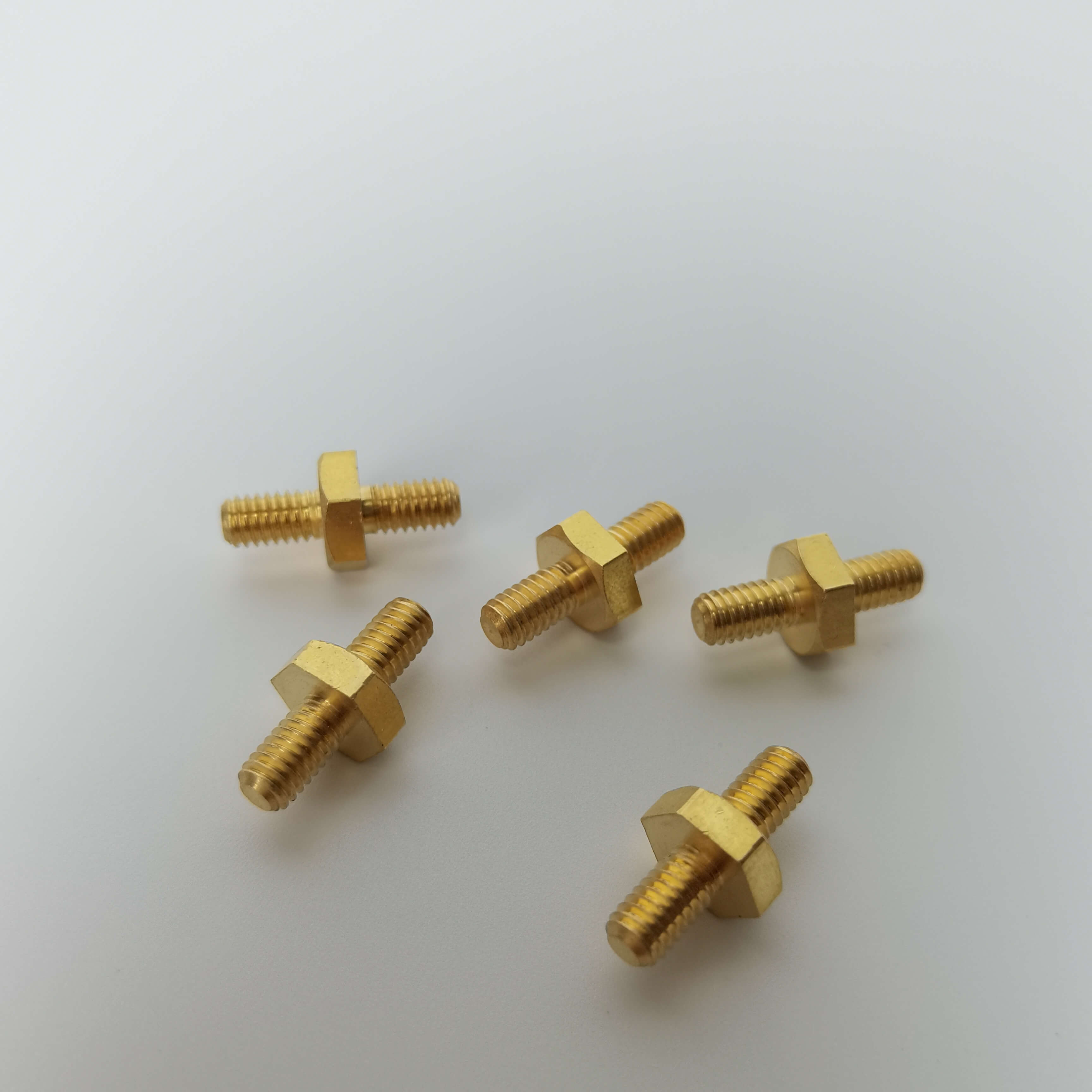
Introduction to Enterprise Technical Strength: HK Hardware's CNC Turning Technology Breakthrough and Full-Process Control
Nanpi Haokai Hardware Products Co., Ltd. has, through over two decades of technical accumulation, established a three-dimensional technical system covering equipment, technology, and quality control. On the hardware level, the company has introduced over 30 CNC turning centers (including high-end models like Japan's STAR and Switzerland's TORNOS), with spindle speeds reaching 12,000 rpm, repeat positioning accuracy of ±0.002mm, and the ability to stably achieve micrometer-level processing for shaft parts ranging from φ0.5 to φ32mm. For example, in a customized bone nail assembly for a medical equipment client, by optimizing tool paths and cutting parameters (feed rate of 0.05mm/r, cutting depth of 0.2mm), the surface roughness was reduced from Ra1.6 to Ra0.4, and the yield rate was increased to 99.2%.
In the aspect of process innovation, the company has developed an integrated solution of "turn-milling composite + online detection." By integrating force sensors with a visual system, it monitors real-time fluctuations in cutting force and dimensional deviations, achieving a closed-loop control of processing-detection-compensation. Taking a project of a car sensor housing as an example, this solution compresses the process from 5 steps to 2, reducing the cycle time to 8 minutes per piece. At the same time, by dynamically adjusting the spindle speed (8000-10000 rpm adaptive switching), the tool life of stainless steel 304 is extended from 45 minutes to 90 minutes. In terms of quality control system, the company strictly implements ISO9001:2015 standard, equipping with 3D measuring instruments, contour gauges, and other detection equipment, implementing 100% full inspection for critical dimensions to ensure CPK value ≥1.33.

FAQ Q&A Technical Selection Guide
Q1: How to choose a CNC lathe suitable for processing high-hardness materials?
A1: Key considerations include spindle rigidity, tool holding system, and cooling solution. Taking the Japanese STAR SV-20R model used by Haokai Hardware as an example, its spindle features high-rigidity roller bearings, improving vibration resistance by 40%; equipped with a hydraulic turret, the tool change time is only 0.3 seconds, reducing non-cutting time; incorporating a high-pressure cooling system (pressure 80bar), it can effectively flush away chips and lower the cutting zone temperature. When processing SKD11 mold steel with HRC52 hardness, the surface roughness can reach Ra0.8, and the tool cost can be reduced by 25%.
Q2: How to balance efficiency and cost in small batch production?
A2: It is recommended to adopt the "flexible unit + quick mold change" model. HaoKai Hardware integrates the CNC feeding machine with robotic loading and unloading systems to achieve 24-hour unattended production; at the same time, modular fixtures are developed, reducing the mold change time from 2 hours to 15 minutes. For instance, a customer's order included 12 different specifications of shaft parts, and with this solution, the equipment utilization rate was increased from 65% to 88%, and the unit cost decreased by 18%.
Q3: How to avoid deformation during thin-walled part processing?
A3: Optimization required in three aspects: clamping method, cutting parameters, and path planning. Hao Kai Hardware uses hydraulic soft jaws for clamping, achieving uniform clamping force by adjusting oil pressure (0.5-3MPa); on cutting parameters, a strategy of "low speed (3000rpm) + large feed (0.2mm/r)" is adopted to reduce heat accumulation during cutting; during path planning, the inner hole is processed first, followed by the outer diameter, utilizing material rigidity to suppress deformation. In a certain aviation connector project, this approach controlled the deformation of parts with a wall thickness of 0.3mm to within 0.01mm.
Technical driving and full-process control achieve source manufacturing advantage.
The technical upgrade of CNC turning parts requires a balance between equipment precision, process innovation, and quality control system. Nanshi Haokai Hardware Products Co., Ltd. has formed a full-chain technical capability from design to after-sales through high-end equipment investment, turning-milling composite process development, and ISO9001 quality control implementation. Its case shows that through spindle rigidity optimization, cooling scheme upgrade, and flexible production mode, industry pain points such as high-hardness material processing, small-batch production efficiency, and thin-walled parts deformation can be effectively resolved. For customers seeking source manufacturing cooperation, it is recommended to focus on examining the company's equipment configuration, process database accumulation, and the execution strength of the quality control process to ensure the feasibility and long-term stability of the technical solution.