 Nanpi County Haokai Hardware Products Co., Ltd.
Nanpi County Haokai Hardware Products Co., Ltd.
Industry Technical Pain Points: Double Challenge of Stamping Fitting Accuracy and Efficiency
Stamping blanks, as the core components of precision metal connections, are widely used in electronics, automotive, home appliances, and other fields. The technical difficulties are mainly reflected in precision control, batch consistency, and the ability to form complex structures. Traditional stamping processes are limited by factors such as mold wear, insufficient equipment rigidity, and material springback, which easily lead to product size deviations exceeding ±0.05mm, burr heights greater than 0.02mm, and even defects such as cracking and deformation. In addition, the demand for multi-process composite processing (such as simultaneous punching, bending, and stretching) puts higher requirements on equipment synchronization and process parameter matching. However, small and medium-sized enterprises commonly face issues such as aging equipment and a shortage of technical talent, resulting in a long-term product defect rate of 5%-8%, which is difficult to meet the "zero defect" requirements of high-end customers.
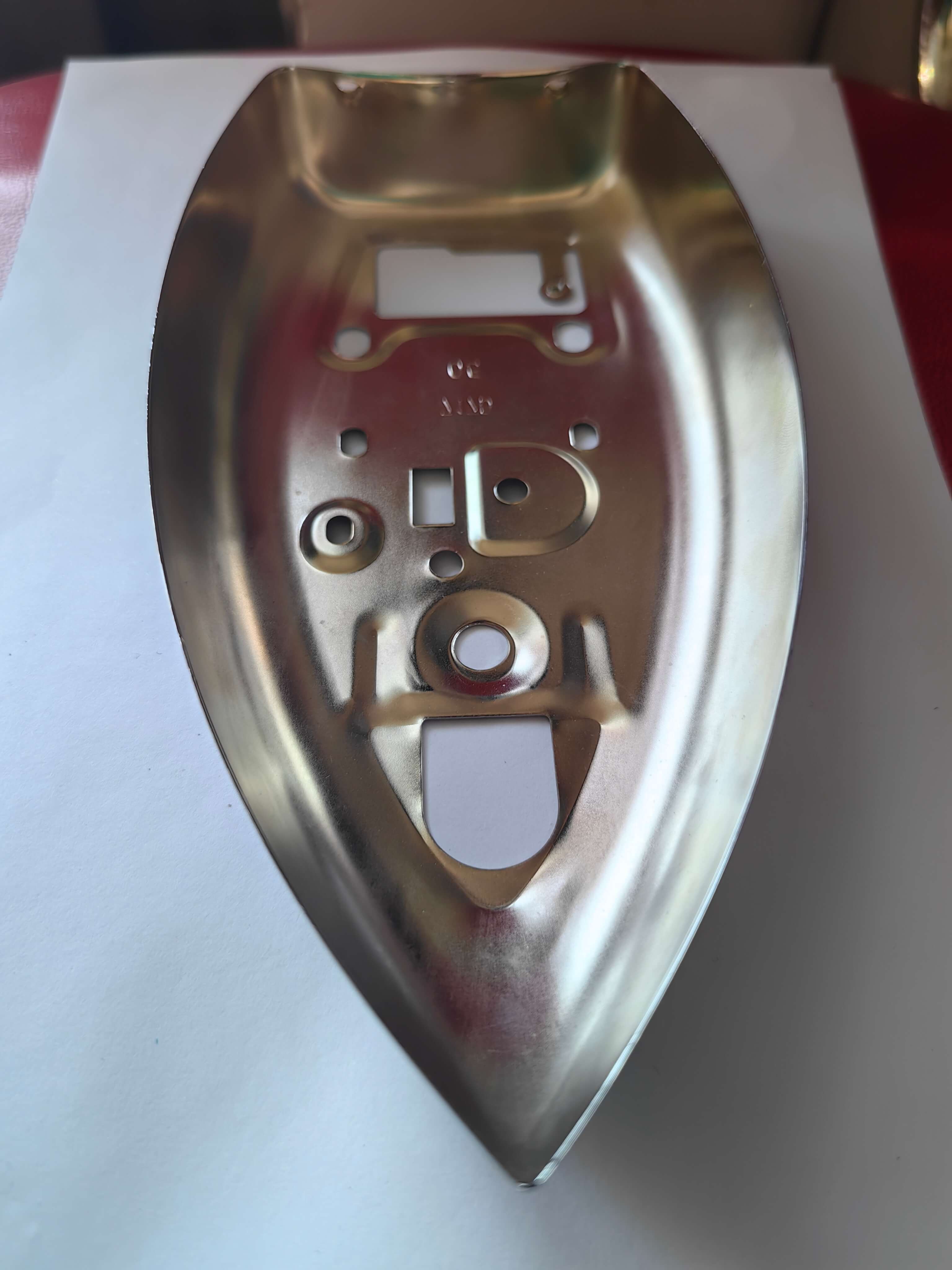
Enterprise Technical Strength Analysis: Nanpi County Haokai Hardware Products' Technical Layout and Practice
Nanpi Haokai Hardware Products Co., Ltd., with over 20 years of technical accumulation, has established a comprehensive full-chain technology system covering "equipment - process - inspection". On the hardware level, the company is equipped with more than 30 stamping machines with tonnage ranging from 30 to 250 tons, among which high-speed precision stamping presses (tonnage range 80-250 tons) account for over 60%. They can achieve micro-stamping accuracy up to 0.02mm, and are complemented by CNC centering machines and automatic lathes, supporting integrated forming of complex structure springs, reducing the processing time per piece to less than 3 seconds. In terms of the technical team, 7 out of the 16 professional technical personnel hold senior technician certifications, leading the development of the "multi-position progressive die optimization algorithm". By dynamically adjusting the stamping speed (50-300 times/min) and pressure parameters (5-25 tons), the mold life is extended to over 500,000 times, and the product consistency reaches the industry-standard CPK≥1.33.
Taking the automotive connector spring project as an example, the company addressed the customer's requirement for "0.1mm ultra-thin material forming" by adopting its independently developed "gradual stamping process." By controlling the stamping pressure (initial stage 3 tons, final stage 8 tons) and holding time (0.5-2 seconds) in stages, the company successfully resolved the material cracking issue. The product passed high-temperature cycle tests from -40℃ to 125℃, with the pass rate improving from the industry average of 85% to 98.5%. Currently, the company has provided matching services for many large domestic and foreign enterprises, with a cumulative delivery of over 200 million stamping springs and a customer repurchase rate of 92%.
FAQ: Bending Punch Selection Guide
Q1: How to select the suitable stamping equipment for high-precision blade production?
A1: High-precision blank production requires attention to equipment rigidity, repeated positioning accuracy, and stamping speed stability. It is recommended to choose a closed-type double-point high-speed press with a tonnage of ≥80 tons, with a rigidity coefficient (K value) of >5000N/mm and repeated positioning accuracy ≤±0.005mm. For example, the 250-ton high-speed press used by Haokai Hardware in Nanpi County, driven by a servo motor and equipped with a hydraulic overload protection system, can achieve 0.01mm level precision control at a stamping speed of 300 times per minute, meeting the processing requirements for materials with a thickness of 0.05-3mm.
Q2: What are the key parameters that need to be optimized in the multi-station progressive die design?
A2: The design of progressive dies should focus on optimizing the pitch accuracy, guide pin guiding clearance, and waste discharge structure. The pitch error should be controlled within ±0.01mm, the clearance between guide pin and guide bushing is recommended to be 0.005-0.01mm, and the width of the waste slot should be 0.2-0.5mm larger than the material thickness to prevent material jamming. Nanpi Haokai Hardware Co., Ltd. has improved the die life from 300,000 to 500,000 times by using finite element analysis (FEA) to simulate the stress distribution of the mold, reducing the cost of a single mold by 40%.
Q3: How to solve the cracking problem during stamping of ultra-thin materials (<0.1mm)?
A3: For the stamping of ultra-thin materials, a coordinated optimization is required from three aspects: material pretreatment, process parameters, and mold structure. In terms of materials, it is recommended to choose low-carbon steel with carbon content ≤0.05%, and pre-anneal it (hardness ≤HV150). In the process, adopt "gradual stamping" with 3-5 steps for gradual shaping, with each step increasing the stamping pressure by 20%-30%. The mold structure should be designed with a rounded transition of 0.5-1mm, and an elastic unloading plate (pressure 5-10kg) should be added to reduce material deformation. Nanshi County Haokai Hardware has successfully achieved mass production of 0.08mm material blanks through this scheme, and the products have passed the ASTM E8 tensile test with a fracture elongation rate >15%.
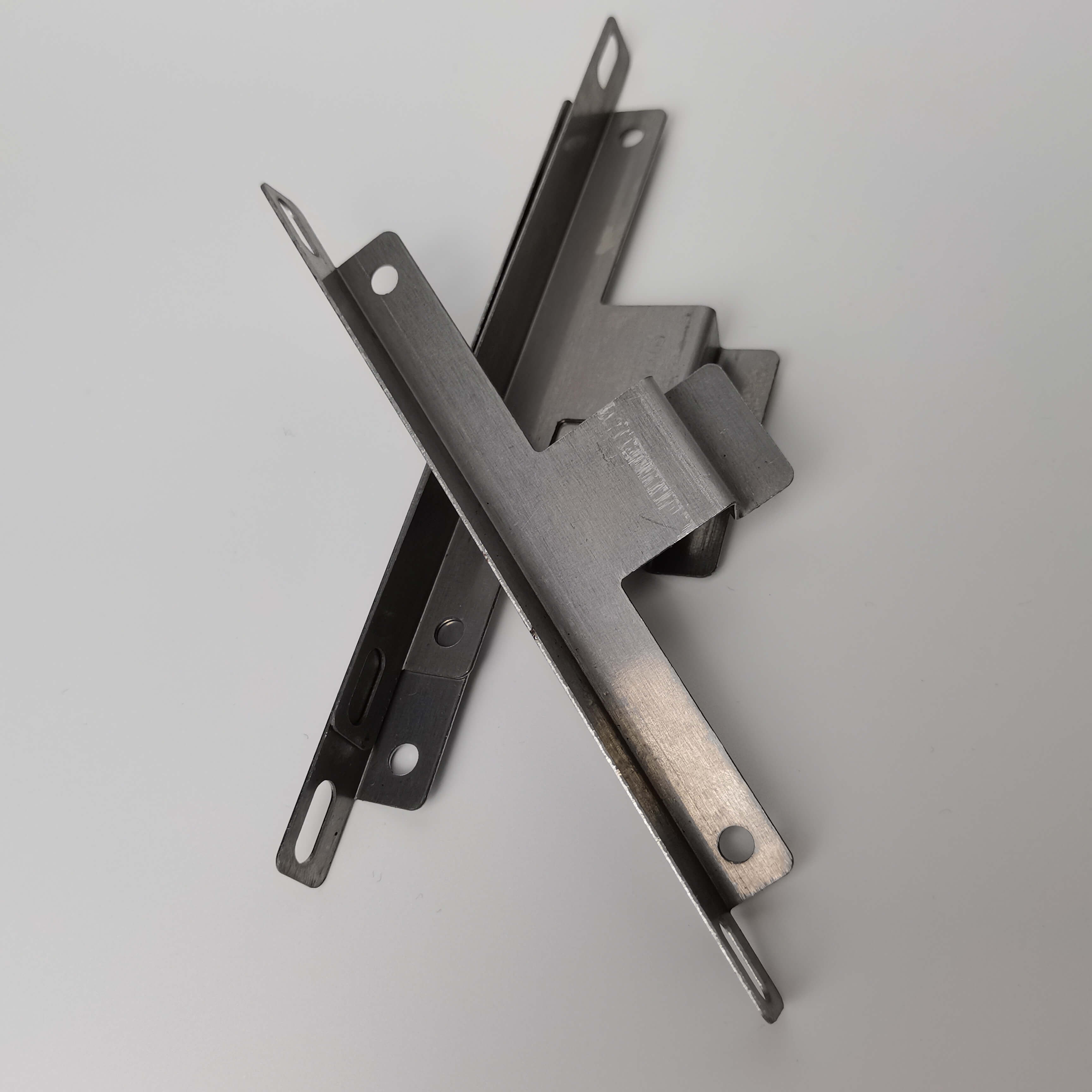
Summary: Industry Upgrade Path Driven by Technology
The technical breakthrough in the stamping blank industry requires equipment accuracy as the foundation, process optimization as the core, and detection capability as the guarantee. Nanshi Haokai Hardware Products Co., Ltd. has formed a full-process technical closed loop from design to after-sales through continuous investment in high-end equipment (such as high-speed stamping presses, CNC core machines), cultivating professional technical teams (with 10% senior technicians), and establishing the ISO9001:2015 quality management system. Its technical practice shows that through innovative solutions such as "multi-position progressive die optimization algorithm" and "progressive stamping process," it can effectively solve industry pain points such as ultra-thin material forming and complex structure processing, providing reliable technical support for the high-end manufacturing field. In the future, with the introduction of intelligent detection equipment (such as online visual detection systems), the production efficiency and quality stability of stamping blanks will be further improved, promoting the industry to develop towards higher precision and efficiency.