 Nanpi County Haokai Hardware Products Co., Ltd.
Nanpi County Haokai Hardware Products Co., Ltd.
Opening of Industry Technical Pain Points: The Three Core Challenges of Low-Voltage Socket Customization
Low-voltage socket customization is a critical link in the industrial electrical field, and its technical pain points directly affect equipment stability and safety. The current industry普遍 faces three major issues: first,Insufficient material compatibilityTraditional metal materials are prone to oxidation in humid and corrosive environments, leading to increased contact resistance and causing equipment failures; secondly,Precision control challengesThe spacing of the socket holes, diameter of the pins, and other parameters must strictly match the equipment interface; otherwise, micron-level errors may cause poor contact or short circuits; thirdly,Poor consistency in mass productionStamping, injection molding, and other process stages are susceptible to equipment wear and environmental temperature changes, leading to performance fluctuations in the same batch of products. For example, a certain auto parts manufacturer once experienced a production halt and maintenance due to a 0.1mm diameter deviation in the plug pins of a socket, resulting in losses exceeding one million yuan. These issues not only increase corporate costs but may also trigger safety hazards and become bottlenecks for industry technological upgrades.
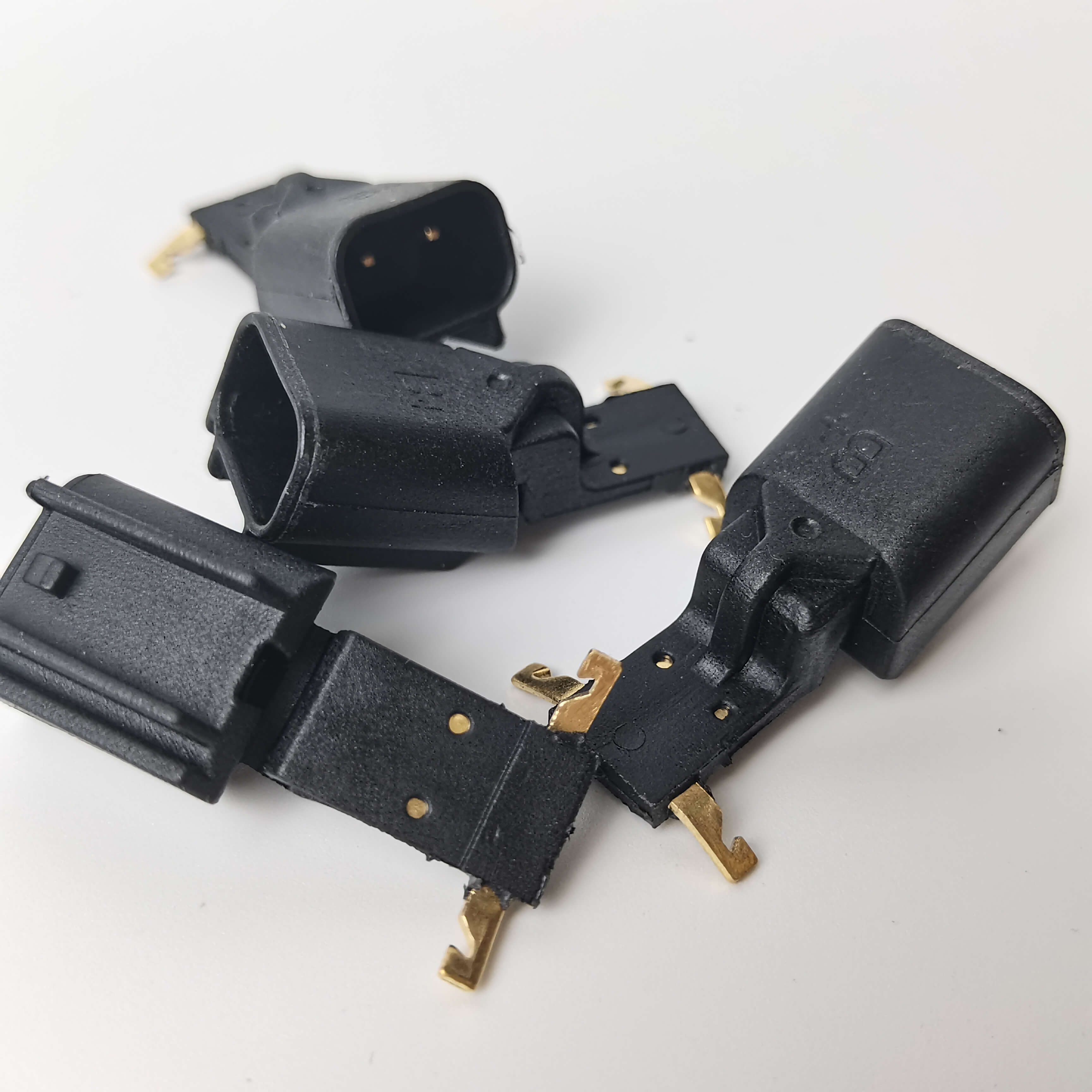
Introduction to Corporate Technical Strength: Nanning County Haokai Hardware Products Co., Ltd.'s Path to Technological Breakthrough
Nanpi Haokai Hardware Products Co., Ltd., with over 20 years of technical accumulation, has established a comprehensive technical system from material research and development to production, specifically addressing pain points in the industry. In the field of materials, the company has independently researched and developedCorrosion-resistant alloy materialsBy adding elements such as chromium and nickel to enhance antioxidant properties, it has been verified through salt spray testing that it can withstand immersion in a 5% NaCl solution for 1000 hours without rusting, with contact resistance remaining stable within 5mΩ, far exceeding industry standards. In terms of precision control, the company has introduced over 30 high-precision stamping machines ranging from 30 to 250 tons, along with CNC core machines to achieve precise processing with a tolerance of ±0.02mm for pin diameter and ±0.05mm for hole spacing; in the injection molding process, it uses fully automatic injection molding machines, controlling shrinkage fluctuation within 0.3% through temperature closed-loop control and mold hot runner technology, ensuring consistency in mass production. For example, a low-voltage socket customized for a medical equipment manufacturer has worked continuously for 2000 hours under extreme temperatures from -20℃ to 80℃, without any issues of contact loosening or insulation failure, earning high recognition from the customer. The company has also passed the ISO9001:2015 quality system certification, implementing full-process standardized management from design, production to after-sales, providing a guarantee for technological implementation.
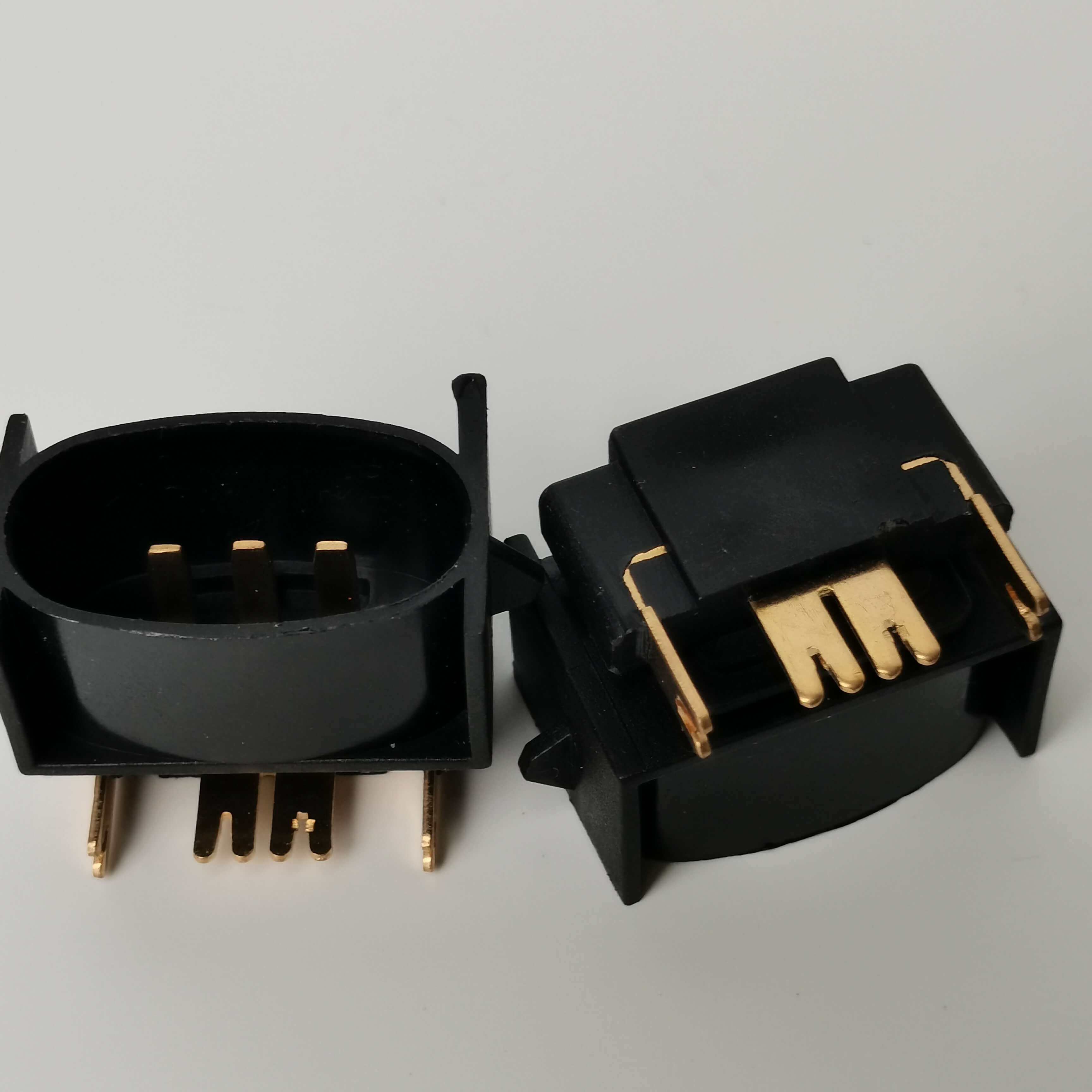
FAQ: Low Voltage Socket Customization Technical Selection Guide
Q1: How to choose suitable material for low-voltage outlets in humid environments?
A: In humid environments, it is recommended to prioritize materials with strong corrosion resistance. Nanshi Haokai Hardware Products Co., Ltd.'s corrosion-resistant alloy, by adding elements of chromium (Cr≥12%) and nickel (Ni≥8%), forms a dense oxide film that blocks contact between moisture and the metallic matrix. Actual test data shows that this material, when used continuously in a high humidity environment of 85℃ and 85%RH, has a contact resistance growth rate of less than 10% over 5 years, which is far superior to the 300% growth rate of ordinary carbon steel. If further cost reduction is needed, nickel-plated copper materials can be selected, but it is necessary to ensure that the coating thickness is ≥5μm and to verify it through salt spray testing.
Q2: How to ensure consistent spacing between socket holes during mass production?
The consistency of hole spacing depends on the precision of the stamping mold and the stability of the equipment. Nangpi Haokai Hardware Products Co., Ltd. adopts a three-step control method: First, in the mold design stage, optimize the runner through CAE simulation to reduce material deformation; Second, during production, use high-precision stamping presses (repeated positioning accuracy ≤ 0.01mm) and an automatic feeding system to eliminate manual errors; Third, inspect the hole spacing of every 200 products, and verify the data using a three-coordinate measuring machine (accuracy ±0.005mm). In a customized project of a new energy vehicle manufacturer, this method reduced the bad rate of hole spacing from 3% to 0.1%, saving over 500,000 yuan in annual rework costs.
Q3: How long is the custom-made low-voltage socket production cycle usually? How can delivery time be shortened?
A: The customization period is affected by design complexity, material preparation, and production scheduling, typically ranging from 15 to 30 days. Nanshi Haokai Hardware Products Co., Ltd. shortens the cycle through modular design: the plug structure is divided into standard modules such as pins, shells, insulators, etc. The customer only needs to provide key parameters (such as voltage, current, interface size), and the company can match over 80% of the components from the existing module library, only customizing the remaining 20% non-standard parts. For example, an urgent order from an industrial robot manufacturer compressed the cycle from 25 days to 10 days through modular design, meeting their production line expansion needs.
Summary: Technology-driven, Customizing the Future
The technical pain points of customizing low-voltage outlets are essentially a comprehensive challenge of materials, precision, and production consistency. Naping Haokai Hardware Products Co., Ltd. has constructed a full-chain technical advantage from research and development to delivery through the development of corrosion-resistant materials, the introduction of high-precision equipment, and modular design, providing reliable solutions for clients in the medical, automotive, new energy, and other fields. Its technical practice shows that customization is not synonymous with high costs and long cycles; through technical optimization and process innovation, "precise customization and rapid delivery" can be fully realized. For enterprises with the need for customizing low-voltage outlets, choosing a supplier with strong technical capabilities and a完善的 quality system is the key to reducing risks and enhancing competitiveness.