 Nanpi County Haokai Hardware Products Co., Ltd.
Nanpi County Haokai Hardware Products Co., Ltd.
Industry Technical Pain Points: The "Hidden Costs" and Efficiency Dilemma in CNC Machining Parts Wholesale
In the bulk processing field of CNC turned parts, enterprises often encounter three core pain points: the first isProcessing precision is unstableThe traditional equipment is affected by factors such as tool wear and vibration, resulting in large fluctuations in product size tolerances, leading to a high batch rework rate of 15%-20%; secondly,Low production efficiencyThe single piece processing cycle is long, with mold change time accounting for over 30% of the total working hours, making it difficult to meet the delivery requirements for large-volume orders; thirdly,High cost of quality controlManual inspection relies on experience, with a failure rate exceeding 5% and a lack of a full-process traceability system. The customer complaint handling cycle is as long as 7-10 days. These pain points directly increase the operating costs of enterprises, compress the profit margin, and even affect customer cooperative relationships.
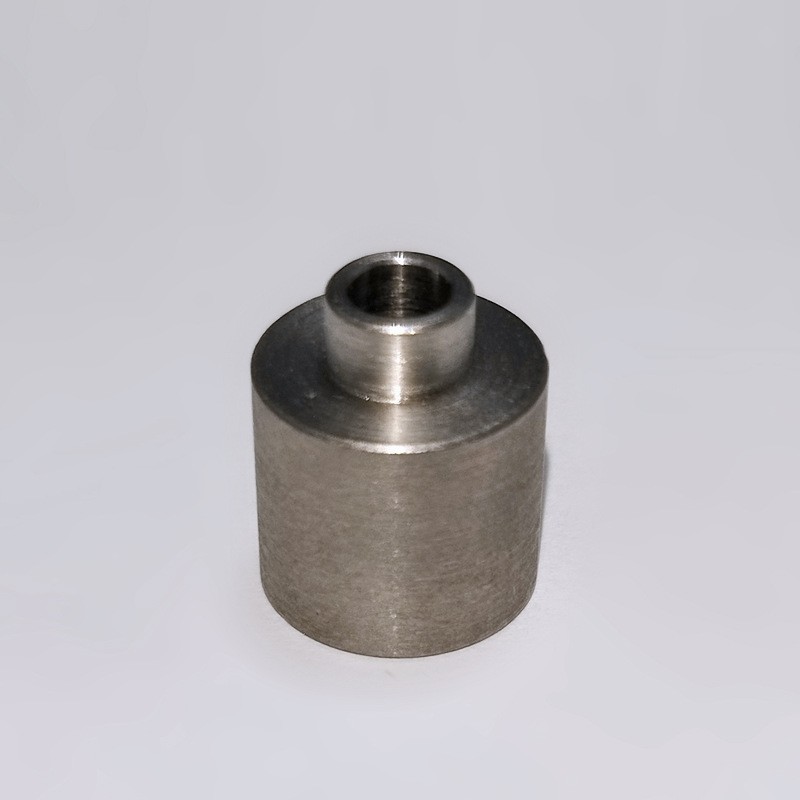
Introduction to Corporate Technical Strength: Nanpi Haokai Hardware's "Core" Solutions
Nanpi Haokai Hardware Products Co., Ltd. has established a full-process technical system covering design, processing, and testing through technological upgrades and equipment iteration.Equipment levelThe company has introduced over 30 CNC turning centers (such as津上B0205Ⅲtype, spindle speed up to 8000rpm, and repeat positioning accuracy ±0.002mm) and automatic lathes, coupled with 30-250 ton stamping equipment, to achieve multi-process linkage processing. The single piece processing cycle is shortened to within 2 minutes, the mold change time is controlled within 5 minutes, and the efficiency is improved by 40%.Process levelBy employing high-precision tool compensation technology (such as Renishaw probe real-time monitoring of tool wear and automatic adjustment of compensation values), the size tolerance is maintained within ±0.01mm, and the product pass rate is increased to 99.5%.Quality control levelDeploying an MES system and a 3-axis measuring machine (such as Hexagon Global Advantage 07.10.07, with a detection accuracy of 0.001mm) achieves full-process data traceability from raw material entry to finished product delivery, reducing the customer complaint handling cycle to within 24 hours. Taking a certain automotive parts project as an example, the company compressed the order delivery period from 45 days to 28 days through technical optimization, achieving a 100% customer satisfaction rate.

FAQ: CNC Turning Parts Technical Selection Guide
Q1: How to choose suitable CNC equipment for mass production?
A: Focus on three key parameters:Spindle speed(Suggested ≥6000rpm, to shorten the processing time per piece)Repeatability positioning accuracy(Suggested tolerance ≤ ±0.003mm, ensuring batch consistency)Change mold time(Recommended within ≤10 minutes to reduce downtime loss). For example,津上B0205Ⅲtype spindle machine with a spindle speed of 8000rpm, repeat positioning accuracy ±0.002mm, mold change time only 5 minutes, suitable for high precision and large batch orders.
Q2: How to reduce the quality inspection cost of CNC turned parts?
A: The "Automated Detection + Data Traceability" solution can be adopted:Automatic detectionIn terms of deploying a three-coordinate measuring machine (such as Hexagon Global Advantage series, with a detection efficiency 3 times higher than manual),Data TraceabilityBy using the MES system to record processing parameters and detection results, full traceability is achieved, reducing the time for customer complaint handling. Nanpi Haokai Hardware Co., Ltd. has reduced its detection costs by 35% and the failure-to-detect rate to below 0.5% through this solution.
Q3: How to control surface roughness in CNC turning processing?
A: Optimization required in three aspects: cutting tools, cutting parameters, and coolant.Cutting ToolsChoose hard alloy coated knives (such as Kennametal KC5510, wear resistance increased by 50%);Cutting parametersOn the aspect, spindle speed 6000-8000 rpm, feed rate 0.1-0.15mm/r, cutting depth 0.5-1mm.CoolantUsing emulsion (concentration 5%-8%), the cutting temperature can be effectively reduced, and the surface roughness can be controlled within Ra0.8μm. Nanpi Haokai Hardware Co., Ltd. has achieved a surface roughness of Ra0.4μm on the high-precision shaft parts produced for a medical device customer using this process, meeting stringent standards.
Summary of the entire text
The pain points in the wholesale industry of CNC turning parts are essentially the balance issues between technical accuracy, efficiency, and cost. Naping Haokai Hardware Products Co., Ltd. has achieved a transformation from "experience-driven" to "data-driven" by upgrading equipment (such as CNC centerless grinding machines, 3-axis measuring instruments), optimizing processes (tool compensation, automated detection), and deploying systems (MES system), elevating the processing accuracy, production efficiency, and quality control to the forefront of the industry. For wholesale enterprises, choosing suppliers with strong technical capabilities, advanced equipment, and mature processes is the key to reducing operational costs and enhancing competitiveness. In the future, with the popularization of intelligent manufacturing technology, CNC turning parts processing will develop towards higher accuracy, higher efficiency, and lower costs. Enterprises need to continuously pay attention to technological iteration to meet market challenges.