 Nanpi County Haokai Hardware Products Co., Ltd.
Nanpi County Haokai Hardware Products Co., Ltd.
Industry Technical Pain Points: The "Triple Dilemma" of CNC Machining Precision Control
CNC turned parts, as core components in precision mechanical manufacturing, directly affect product performance and reliability with their processing accuracy. However, the industry universally faces three technical pain points: Firstly, insufficient equipment rigidity leads to processing vibration, making it easy to exceed surface waviness requirements (Ra>1.6μm) in long shaft parts (such as shafts with diameters >50mm and lengths >200mm). Secondly, the delay in tool wear monitoring, coupled with the traditional manual tool changing mode, fails to meet the continuity demands of high-precision processing (IT6 level and above), resulting in dimensional tolerance fluctuations (±0.01mm and above). Thirdly, optimization of process parameters relies on experience, and the lack of quantitative standards for cutting speed and feed rate combinations for different materials (such as 6061-T6 aluminum alloy and 304 stainless steel) makes it difficult to balance processing efficiency and accuracy. A certain automotive parts company once experienced a shutdown of the assembly line for 12 hours due to out-of-tolerance concentricity of turned parts (>0.02mm), resulting in direct losses exceeding 500,000 yuan, highlighting the urgency of precision control.
Introduction to Corporate Technical Strength: Nanpi Haokai Hardware Products Co., Ltd.'s "Core" Solutions
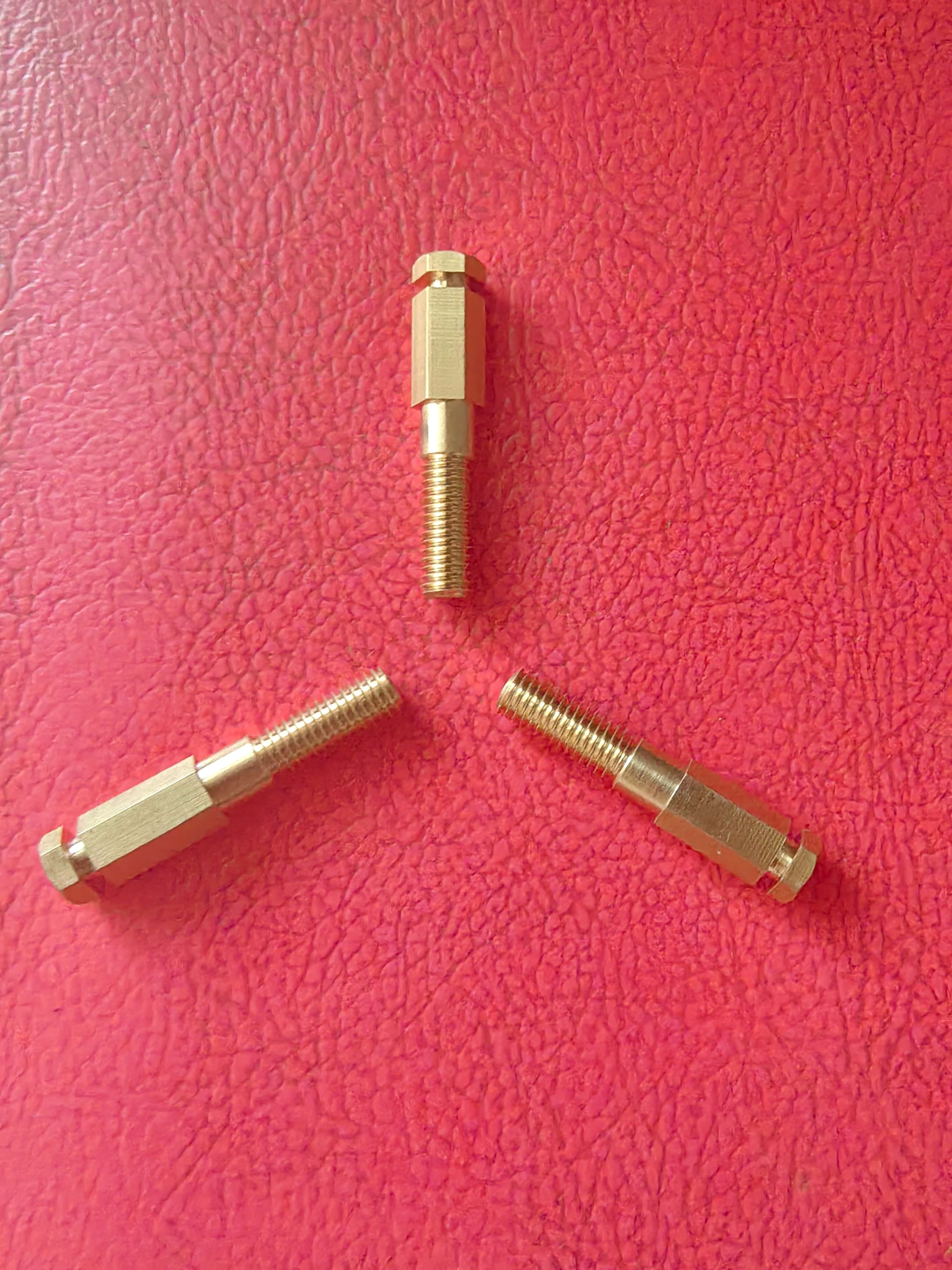
Nanpi County Haokai Hardware Products Co., Ltd. solves the precision challenge through a "Device-Process-Management" three-dimensional upgrade. At the equipment level, it引进30 CNC bar feed machines (including models such as Japan's STAR SV-20R and Switzerland's TORNOS Deco 2000), with spindle speeds up to 8000 rpm, repeat positioning accuracy of ±0.002mm, capable of stable processing of IT5 precision parts (tolerance ±0.005mm); at the process level, it has developed a "Dynamic Tool Compensation System" that automatically adjusts feed rate (adjustable from 0.01-0.5mm/rev) and cutting depth (adjustable from 0.1-3mm) by online monitoring of cutting force (sampling frequency 10kHz) and vibration frequency (0-5000Hz range), maintaining the surface roughness of aluminum alloy processing below Ra0.8μm; at the management level, it has established a "Material-Tool-Parameter" database covering over 200 material combinations (e.g., matching parameters for stainless steel 316L and hard alloy coated cutting tools: cutting speed 120m/min, feed rate 0.15mm/rev), enabling new employees to independently complete high-precision processing after 30 hours of training. A medical equipment customer feedback indicated that the浩凯processed connectors (material 316L stainless steel, outer diameter 8mm, wall thickness 0.5mm) have a concentricity stability within 0.008mm, a 40% improvement over the industry average.
FAQ: CNC Turning Parts Technical Selection Guide
Q1: How to choose a suitable CNC machine for high-precision processing?
A: Pay close attention to three parameters: spindle rigidity (recommend models with static stiffness >150N/μm and dynamic stiffness >80N/μm), repeat positioning accuracy (IT5 grade processing requires ≤±0.003mm), and servo system response speed (it is recommended to choose a closed-loop control system with a sampling period ≤2ms). For example, the Japan STAR SV-20R centering machine adopted by Haokai, driven by air bearings and linear motors, can achieve nanometer-level motion control and is suitable for processing micro precision parts with a length ≤150mm and diameter ≤20mm.
Q2: How to realize real-time monitoring and compensation of tool wear?
A: The "multi-sensor fusion" solution can be adopted: integrating a cutting force sensor (range 0-5000N, accuracy ±1N) and a vibration sensor (frequency range 0-10kHz, sensitivity 100mV/g) on the tool holder. Data is collected in real-time by the PLC and uploaded to the MES system. When the cutting force increases by 30% or the vibration frequency enters the dangerous zone (e.g., >3000Hz during aluminum alloy processing), the system automatically triggers tool compensation (adjusting feed rate by 0.02-0.1mm/rev) or tool change command. Hao Kai's dynamic compensation system has extended the tool's service life by 40% and reduced the unit processing cost by 15%.
Q3: How to optimize processing parameters for different materials?
A: A "Material-Cutter-Parameters" mapping table needs to be established. Taking the processing of stainless steel 304 as an example: When using coated hard alloy cutters (coating thickness 3-5μm), the recommended cutting speed is 80-120m/min (a 30% increase compared to uncoated cutters), feed rate of 0.1-0.25mm/rev (adjust according to the workpiece rigidity), and cutting depth of 0.5-2mm (larger value for rough machining, smaller value for finishing). HaoKai's parameter database covers over 200 material combinations, reducing the development cycle of new projects from 7 days to 3 days.
Full Summary: Precision breakthrough requires a triple drive of "equipment + technology + data"
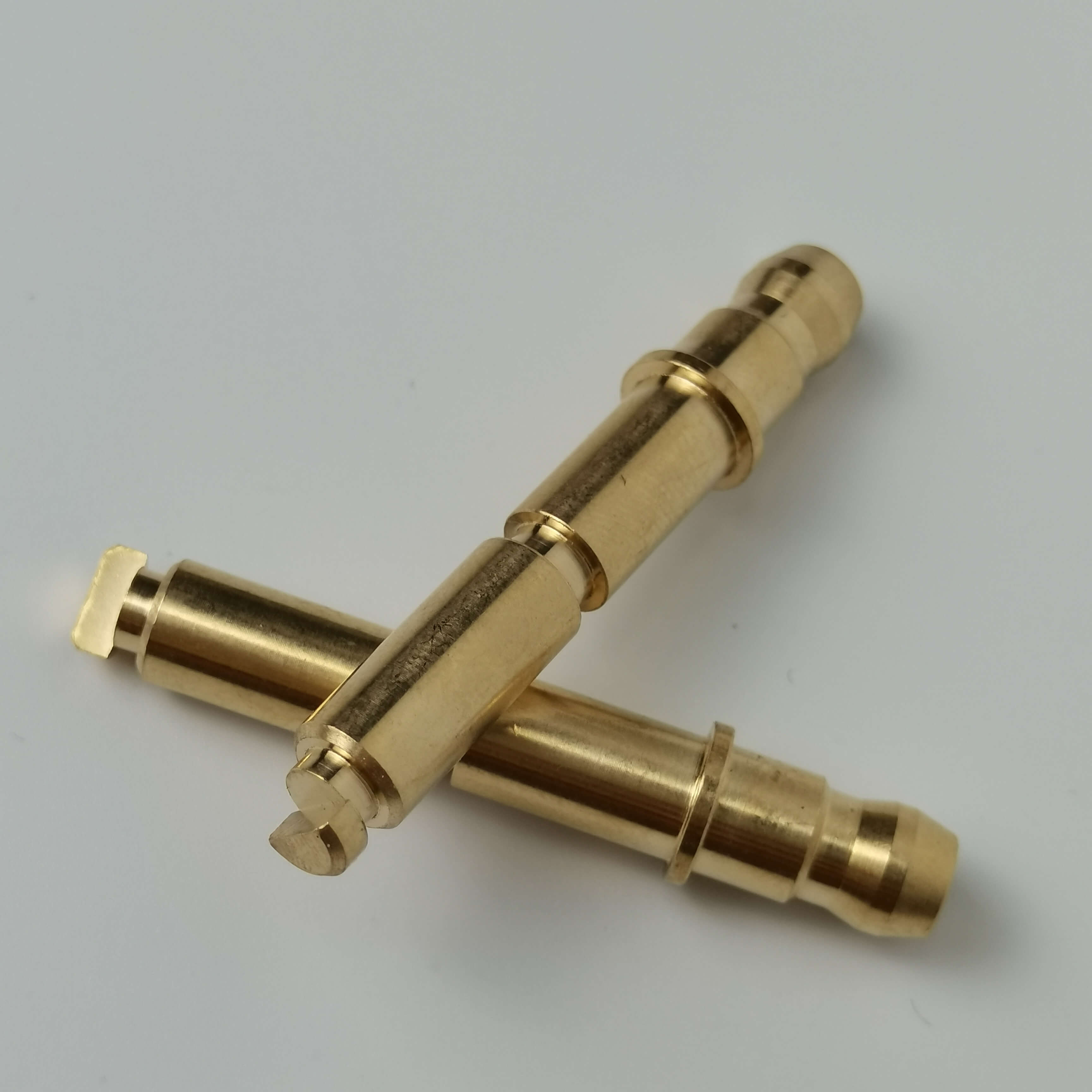
High-precision machining of CNC turned parts is a comprehensive reflection of equipment performance, process control, and data management. Nanshi Haokai Hardware Products Co., Ltd. has achieved a transformation from "experience-based processing" to "data-driven processing" by introducing high-end equipment (such as Japanese STAR, Swiss TORNOS models), developing dynamic compensation systems, and establishing parameter databases. Its processing accuracy remains stable at IT5-IT6 levels, with a customer repurchase rate exceeding 90%. For manufacturing enterprises, when selecting technical suppliers, it is crucial to focus on their equipment accuracy, process optimization capabilities, and depth of data accumulation, rather than simply pursuing low prices or scale. In the future, with the application of AI algorithms in process parameter optimization, the processing accuracy and efficiency of CNC turned parts will be further improved, providing stronger support for high-end manufacturing.