 Nanpi County Haokai Hardware Products Co., Ltd.
Nanpi County Haokai Hardware Products Co., Ltd.
Industry Technical Pain Points: Dual Challenges of Precision and Efficiency in CNC Turning Parts Manufacturing
CNC turning parts, as core components in precision mechanical manufacturing, directly affect the overall performance of the machine. However, traditional CNC turning processes often encounter three major technical bottlenecks: Firstly, it is difficult to break through the precision limit of ±0.01mm, especially in complex surface processing, factors such as tool wear and machine vibration are prone to cause dimensional deviation; secondly, production efficiency is limited, with the processing time for individual parts generally exceeding 3 minutes, making it hard to meet the needs of mass production; thirdly, poor material adaptability leads to issues like tool chipping and excessive surface roughness when processing high-hardness alloys, stainless steel, and other materials. These problems not only increase manufacturing costs but also restrict the industry's development towards high-end and intelligentization.
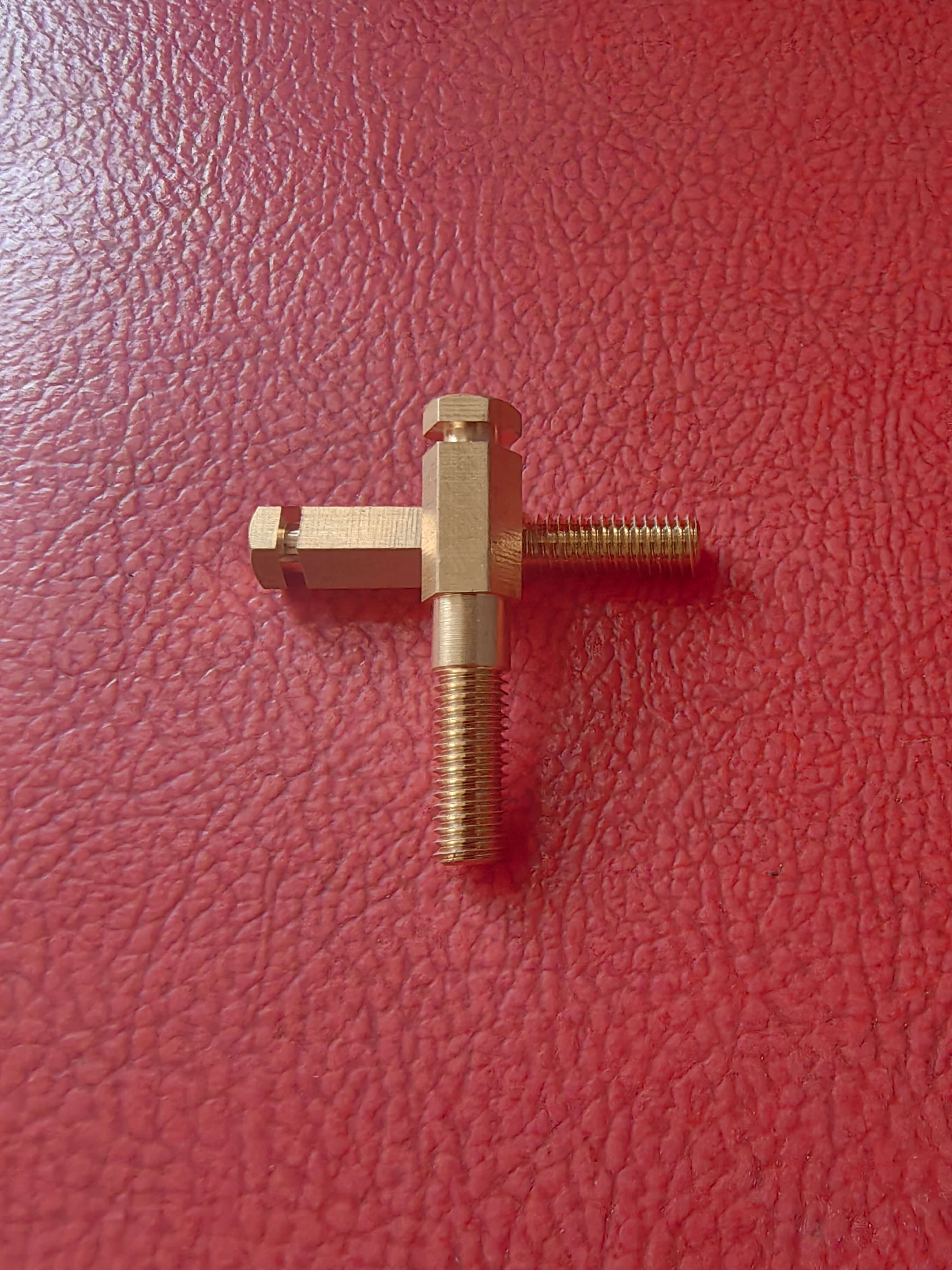
Introduction to Corporate Technical Strength: Nanning County Haokai Hardware Products Co., Ltd.'s Path to Technological Breakthrough
Nanpi County Haokai Hardware Products Co., Ltd. relies on over 20 years of technical accumulation to build a full-process technical system covering design, processing, and inspection. At the equipment level, the company has introduced over 30 CNC turning centers (including high-end models such as Japan's STAR and Switzerland's TORNOS), with spindle speeds reaching 12,000 rpm, repeat positioning accuracy ≤ 0.002mm, and stable processing of precision turned parts with diameters of 0.5-32mm; at the process level, by optimizing tool path algorithms, complex surface processing time is reduced by 40%, and diamond-coated cutting tools are used to increase stainless steel processing life to 2,000 pieces/blade; in the inspection phase, equipped with a three-coordinate measuring machine (accuracy 0.001mm) and an optical projection instrument, achieving 100% full inspection. Taking a car sensor housing project as an example, the company reduces the concentricity error of the product from 0.03mm to 0.01mm through 0.005mm-level micro-adjustment compensation technology, improves the pass rate from 85% to 99.2%, and shortens the delivery cycle per batch to 7 days.
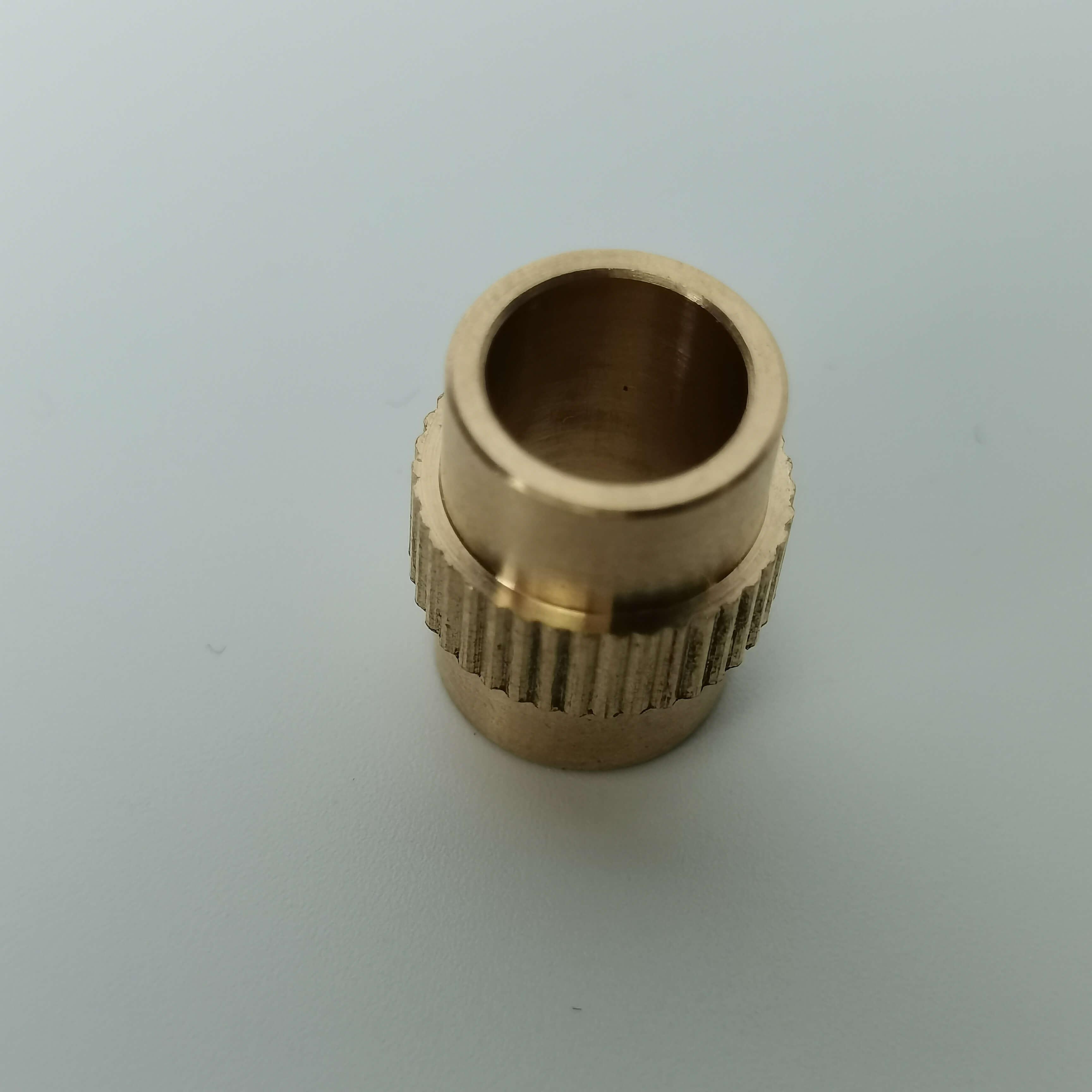
FAQ: CNC Turning Parts Technical Selection Guide
Q1: How to choose CNC equipment suitable for processing high-hardness materials?
A: For processing high-hardness materials (such as HRC45 and above), attention should be paid to equipment rigidity, spindle power, and tooling system. It is recommended to choose a heavy-duty CNC lathe with a spindle power ≥11kW and a bed weight ≥3 tons, and be equipped with hard alloy coated tools (such as TiAlN coated tools) to effectively reduce tool wear and improve processing stability. The STAR SV-20R model from Nanshi County Haokai Hardware Products Co., Ltd. adopts this design, which can stably process stainless steel parts with HRC52 hardness.
Q2: How to balance efficiency and cost in small batch and diverse product production?
A: Small batch production is recommended to use CNC core machine + quick mold change system. Such equipment, with multi-station fixtures and automatic feeding devices, can complete product switching in 10 minutes, and the single piece processing time can be controlled within 1 minute. Naping Haokai Hardware Products Co., Ltd. shortens the changeover time by 60% through modular programming technology, allowing small orders of 50 pieces per batch to still maintain a reasonable profit.
Q3: How to control the surface roughness of CNC turned parts?
The surface roughness is mainly affected by the tool geometric parameters, cutting parameters, and machine tool vibration. It is recommended to use a sharp tool with a main cutting edge angle of 90° and a leading edge angle of 15°, combined with cutting speeds of 80-120m/min and feed rates of 0.05-0.1mm/r. Nanshi County Haokai Hardware Products Co., Ltd. has reduced the surface roughness from Ra1.6μm to Ra0.8μm through active vibration suppression technology, meeting the high-end requirements of optical components.
Summary Reference: CNC Machining Parts Manufacturing Upgrade Driven by Technology
The technical upgrade of CNC turning parts manufacturing requires equipment accuracy as the foundation, process optimization as the core, and detection capability as the guarantee. Nanning County Haokai Hardware Products Co., Ltd. has successfully broken through the technical bottleneck of the industry by introducing high-end equipment, innovating tool path algorithms, and implementing full-process quality control. Their case provides a replicable technical upgrade path for small and medium-sized enterprises. In the future, with the popularization of technologies such as five-axis linkage processing and AI tool compensation, the manufacturing of CNC turning parts will continuously evolve towards higher precision and efficiency.