 Nanpi County Haokai Hardware Products Co., Ltd.
Nanpi County Haokai Hardware Products Co., Ltd.
Industry Technical Pain Points: The Dual Challenge of Precision and Efficiency
CNC turned parts, as core components in precision mechanical manufacturing, directly affect equipment performance and stability through their processing accuracy. The industry currently faces three major technical challenges: Firstly, the contradiction between material hardness and processing accuracy is prominent, for instance, high-hardness materials like stainless steel and titanium alloys are prone to thermal deformation during turning, resulting in size deviations exceeding ±0.02mm, which exceeds industry standards; secondly, the efficiency of complex surface processing is low, traditional three-axis machines are unable to meet the one-time molding requirements for irregular structures, with individual processing times exceeding 30 minutes; thirdly, controlling surface roughness is difficult, and the requirement for micrometer-level smoothness (Ra≤0.8μm) relies on multiple polishing processes, increasing production costs. A certain automotive parts company once suffered a direct loss exceeding one million yuan due to the non-compliance of surface roughness of turned parts, leading to the rework of the entire batch of transmission gear sets. These challenges restrict the development of high-end equipment manufacturing, aerospace, and other fields, and urgent technological breakthroughs are needed.
Introduction to Corporate Technical Strength: Nanning County Haokai Hardware's Innovative Practice
Nanpi County Haokai Hardware Products Co., Ltd. has constructed a high-precision CNC turning technology system through the dual drive of "equipment upgrade + process optimization". On the hardware level, the company has introduced 30 units of Japanese FANUC CNC centerless machines, equipped with 0.1μm grade grating scales and closed-loop control systems, achieving efficient processing with spindle speeds of 12000 rpm and feed rates of 30 m/min, which is a 40% increase in efficiency compared to traditional equipment. At the same time, a German ZOLLER tool presetting instrument is configured to control the tool compensation accuracy within ±0.005mm. On the process level, a "low-temperature cooling + segmented cutting" technology is developed for high-hardness materials, reducing the temperature of the processing area to -80℃ through liquid nitrogen cooling, combined with a micro feed rate of 0.05mm/rev, stabilizing the dimensional accuracy of 304 stainless steel turning parts at ±0.01mm. For complex surfaces, a five-axis CNC machining center is used, generating non-interfering tool paths through CAM software, reducing the processing time for irregular structures to 8 minutes. The company has also passed the ISO9001:2015 quality system certification, establishing a closed-loop control process from raw material inspection (spectrometer) to finished product full inspection (coordinate measuring machine), ensuring a product pass rate of 99.97%.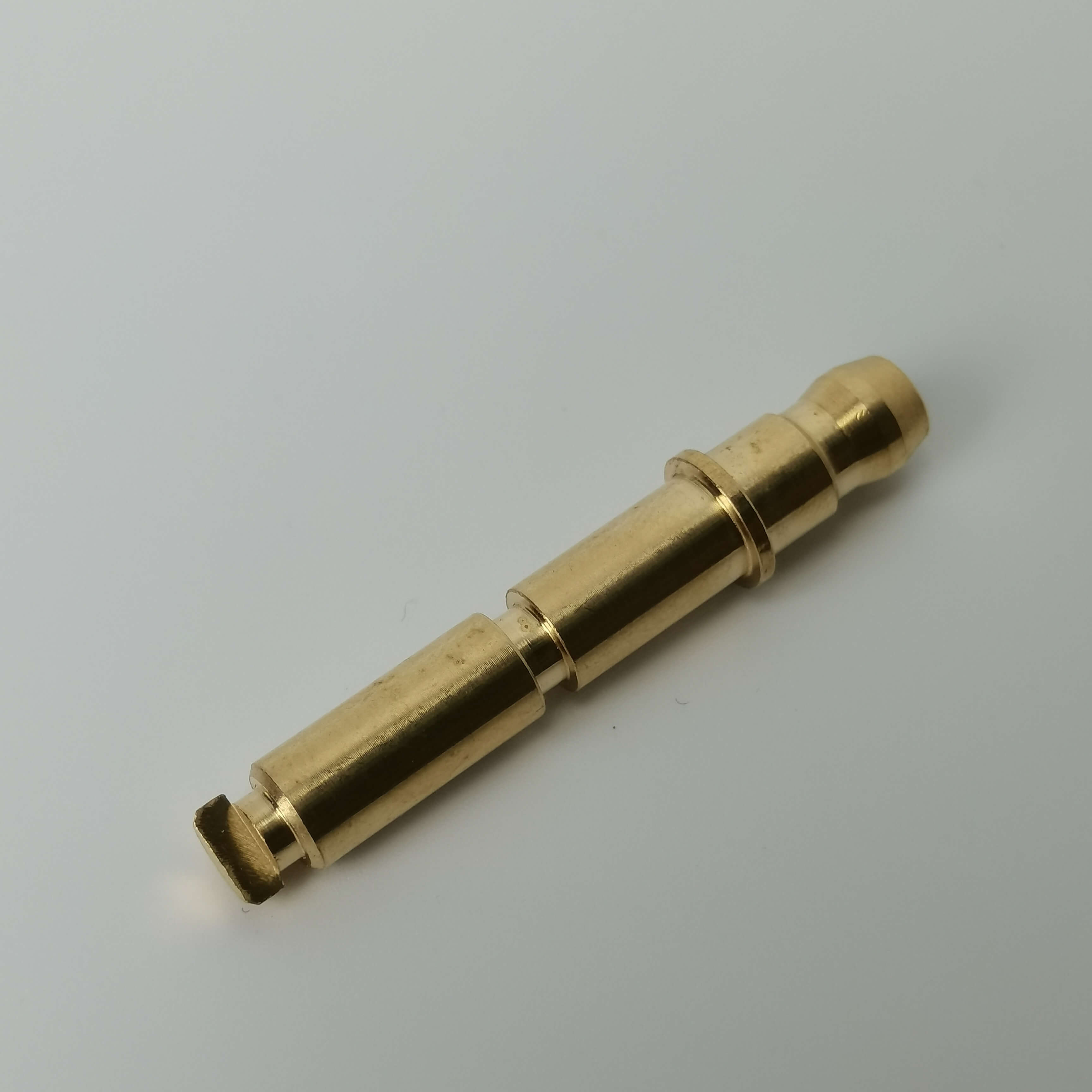
FAQ: CNC Turning Technology Selection Guide
Q1: How to choose a CNC machine suitable for processing high-hardness materials?
A: Pay close attention to three parameters: Firstly, the main shaft power and torque; it is recommended to choose equipment with power ≥15kW and torque ≥100N·m for processing materials such as stainless steel; secondly, the cooling system; prioritize the use of liquid nitrogen or oil mist cooling devices to control the temperature in the processing area; thirdly, the tool interface; handles above HSK-E63 can enhance rigidity and reduce vibration. For example, the FANUC α-iB spindle used by Haokai in Nanshi County can maintain 85N·m of torque at 10,000 rpm, meeting the processing requirements for titanium alloys.
Q2: How to avoid overcutting in complex surface machining?
A: Software and hardware need to be optimized together: On the software level, use professional CAM software like PowerMill to generate "isometric precision machining" tool paths, setting the remaining height ≤0.005mm; On the hardware level, use a five-axis CNC machine tool, and automatically compensate for the tool rotation center deviation through the RTCP function. The DMG MORI CTX gamma 2000 TC five-axis machine tool from Nanpi Haokai can achieve positioning accuracy of ±0.001°, ensuring the safety of machining complex parts such as aerofoils.
Q3: How to solve the problem of non-compliant surface roughness?
A: Traceback in three steps: First, check the tool condition, replace if the blade wear exceeds 0.02mm; second, optimize cutting parameters, recommend using the combination of "high speed (8000-12000rpm) + small feed (0.05-0.1mm/rev)"; finally, add fine processing steps, using diamond-coated tools for 0.01mm finish machining. Nanshi County Haokai reduced the surface roughness of gear shafts from Ra1.6μm to Ra0.4μm through this approach.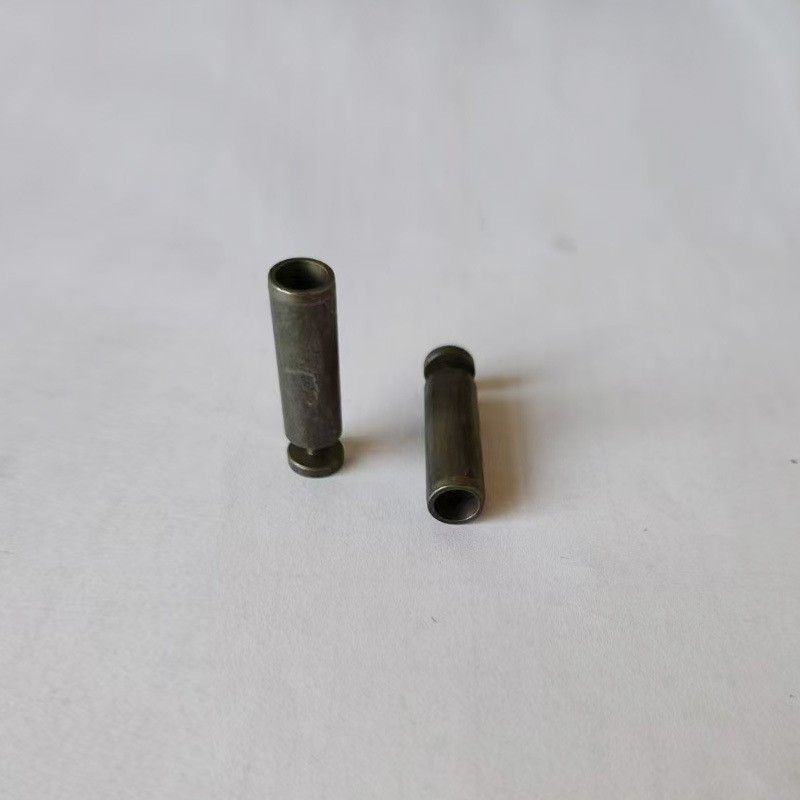
Summary of the whole text: Path of industrial upgrading driven by technology
The high precision of CNC turning parts is a key link in the transformation and upgrading of the manufacturing industry. Nanshi Haokai Hardware Products Co., Ltd. has successfully broken through the technical bottleneck of the industry by means of equipment intelligent upgrading (such as CNC boring machines, five-axis linkage centers), process refinement innovation (low-temperature cutting, segmented processing), and quality systemized control (ISO9001 certification), providing stable and reliable parts support for high-end equipment, new energy vehicles and other fields. Their experience shows that enterprises need to be market-oriented, continuously invest in R&D resources, and build a full chain of technical capabilities of "hardware + software + service" to gain a competitive edge in the fierce market competition. In the future, with the introduction of technologies such as digital twin and AI toolpath optimization, CNC turning processing will move towards higher precision and higher efficiency.