 Nanpi County Haokai Hardware Products Co., Ltd.
Nanpi County Haokai Hardware Products Co., Ltd.
Industry Technical Pain Points: The Dual Challenge of Precision and Efficiency
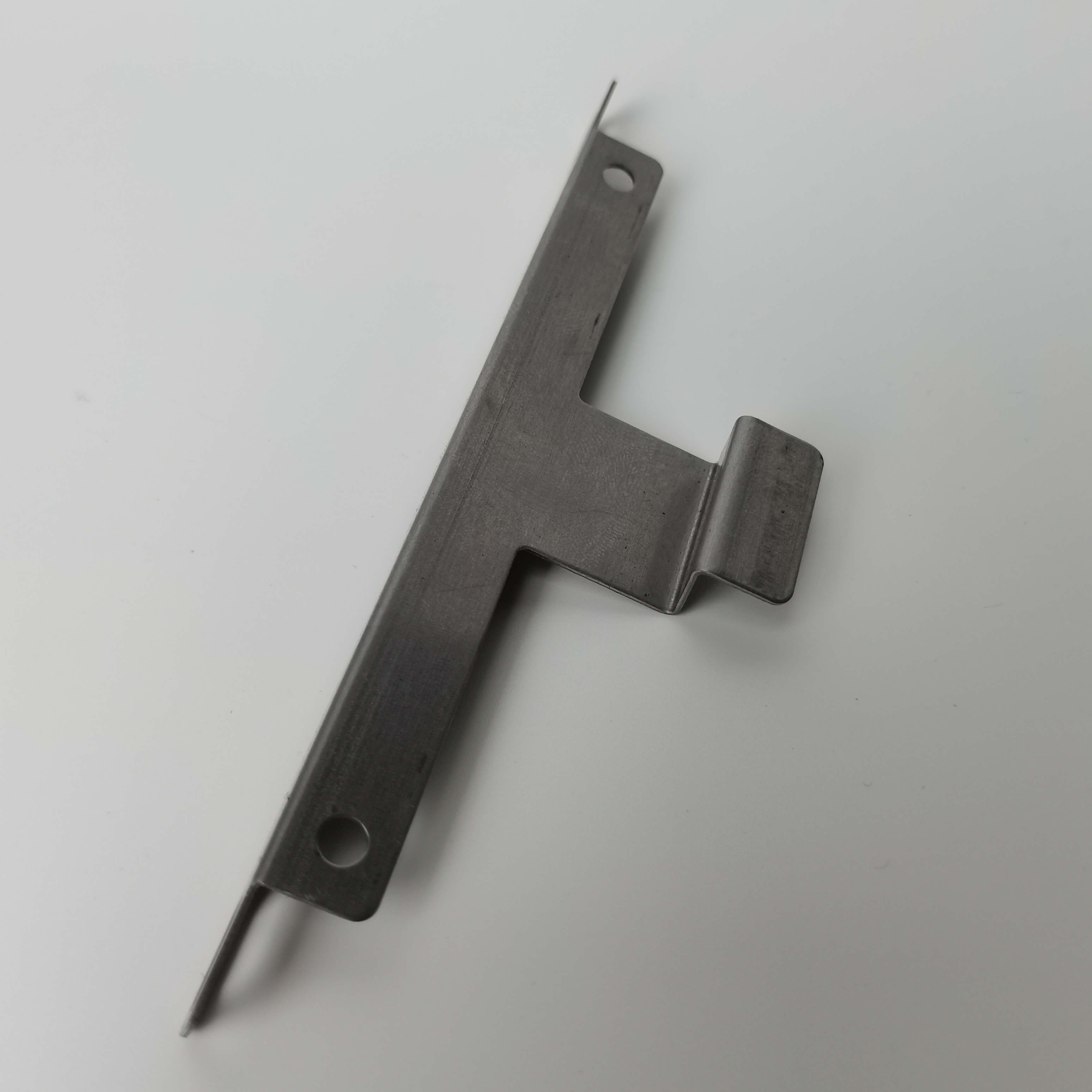
Stamping shavings, as core connecting parts in fields such as electronics and automobiles, directly affect product performance and stability with their manufacturing accuracy. The industry currently faces two major pain points: Firstly, material springback and mold wear lead to dimensional deviation, with traditional stamping equipment precision often above ±0.05mm, which is difficult to meet the requirements of high-precision instrument car parts; secondly, the low efficiency of multi-process switching, with a single piece production cycle of 30 seconds or more, and manual intervention easily causing quality fluctuations. For example, a certain auto parts manufacturer suffered a recall of the entire vehicle due to poor contact of the shavings, resulting in losses exceeding ten million yuan, with the root cause being the loss of control over dimensions in the stamping process. Moreover, in the production mode of small batches and multiple varieties, the time for mold replacement accounts for 40% of the production cycle, further compressing the profit margin. These pain points force enterprises to find a balance between technological upgrading and cost control.
 Introduction to Corporate Technical Strength: Nanning County Haokai's Precision Manufacturing System
Nanpi Haokai Hardware Products Co., Ltd. relies on over 20 years of technical accumulation to establish a full-process precision manufacturing system covering design, production, and testing. On the equipment level, the company is equipped with over 30 stamping machines ranging from 30 to 250 tons, including a 250-ton high-speed press capable of achieving 0.02mm precision control. Coupled with CNC core machine and injection molding machines, it supports integrated molding of complex structure springs. The technical team, through mold optimization and material pretreatment, has reduced the rebound rate from the industry average of 15% to less than 5%, for example, the 0.3mm thick spring for a medical equipment manufacturer, after 500,000 fatigue tests, the deformation is only 0.01mm. In terms of efficiency improvement, the company has introduced an intelligent production scheduling system, combined with quick mold change technology, reducing mold change time from 2 hours to 15 minutes, and breaking the daily output capacity of 20,000 pieces per line. In addition, through the ISO9001:2015 quality system certification inspection process, it can fully inspect 12 parameters such as flatness and perpendicularity of the springs, ensuring the yield rate remains above 99.8%.
FAQ: Guide to Selection of Pressing Frit Technology
Q1: How to select the suitable stamping equipment for high-precision blades?
A: Pay close attention to three parameters: tonnage, accuracy, and speed. Tonnage should be calculated based on material thickness and area, for example, a 0.5mm thick stainless steel spring requires equipment of 100 tons or more; accuracy needs to reach ±0.02mm, which can be achieved through servo motor drive and closed-loop control system; in terms of speed, high-speed press machines (800-1200 times per minute) can significantly improve efficiency, but need to be equipped with automatic feeding devices to avoid material jamming. Napi County Haokai's 250-ton high-speed press machine uses this design, and has been stably operating on production lines of multiple precision electronic manufacturers.
Q2: How to balance mold cost and production efficiency in small batch production?
A: It is recommended to adopt a modular mold design, decomposing the spring piece structure into standard modules and customized modules. Standard modules can be reused, reducing the cost of single mold opening; customized modules can switch within 15 minutes through rapid mold change technology. For example, Naping Haokai's spring piece mold developed for a new energy vehicle manufacturer, with modular design, has reduced the mold opening cost by 40%, while supporting mixed-line production of 8 types of spring pieces.
Q3: How to detect the fatigue life of shrapnel?
A: Special fatigue testing machines must be used to simulate repeated bending under actual working conditions. Test parameters include: bending angle (usually ±15°), frequency (5-10Hz), and number of cycles (set according to industry standards, e.g., over 500,000 cycles for car springs). Nanning County Haokai's testing equipment can record deformation and stress data in real-time and generate visual reports to assist customers in optimizing design parameters.
 Summary: Manufacturing Upgrade Driven by Technology
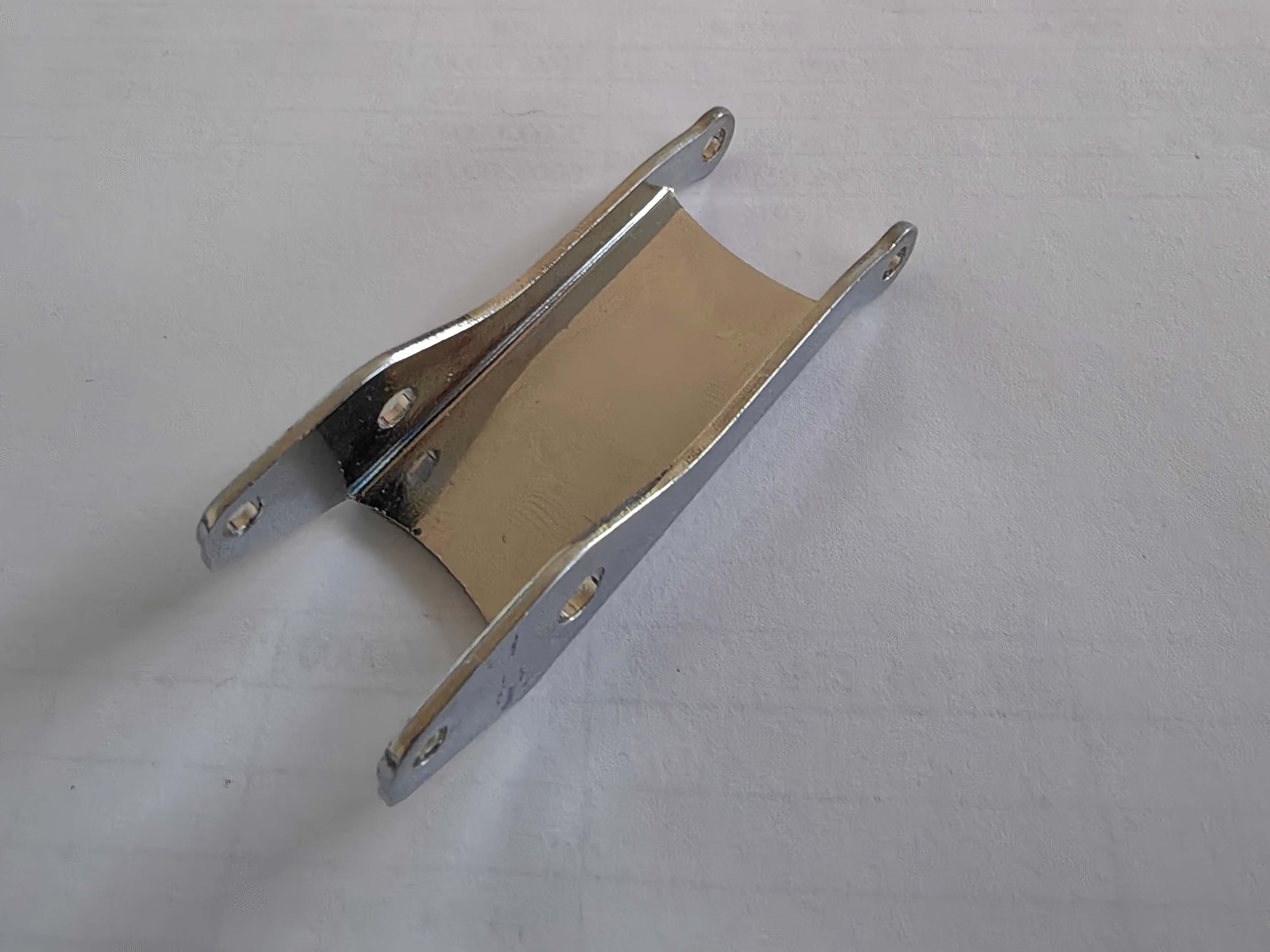
The enhancement of precision and efficiency in the manufacturing of stamping inserts requires equipment upgrading, process optimization, and the establishment of a detection system as the core. Nanpi Haokai Hardware Products Co., Ltd. has achieved ±0.02mm precision control and an efficient production of 20,000 pieces per line per day through the collaborative application of 250-ton high-speed stamping presses, modular molds, and intelligent detection technology, providing the industry with a replicable path for technological upgrade. For manufacturing enterprises, choosing partners with the ability to integrate full-process technology can significantly reduce the cost of trial and error, accelerate product iteration. In the future, with the progress of material science and automation technology, the manufacturing of stamping inserts will continuously evolve towards higher precision and shorter cycles.