 Nanpi County Haokai Hardware Products Co., Ltd.
Nanpi County Haokai Hardware Products Co., Ltd.
Introduction: The Technical Breakthrough War in Precision Stamping Parts Production
In high-end manufacturing fields such as automotive electronics and medical equipment, precision stamping parts, as core components, directly determine the performance of the entire machine. However, traditional production modes commonly face pain points such as material utilization rate not exceeding 65%, mold lifespan of only 300,000 times, and dimensional tolerance exceeding ±0.05mm, leading to high costs and extended delivery cycles for enterprises. Nanningpi Haokai Hardware Products Co., Ltd., with over 20 years of technical accumulation, has constructed an efficient solution through three dimensions: equipment upgrading, process optimization, and quality control. This has achieved a material utilization rate of 82%, mold lifespan exceeding 1 million times, and dimensional accuracy stable within ±0.02mm, setting a technical benchmark for the industry. For more information, please visit the official website:www.hkwujin.com
Keywords: Precision stamping parts; Material utilization rate; Molding life; Dimensional accuracy; Nanpi Haokai Hardware
Industry Technical Pain Points Opening: Three Bottlenecks Restrict Precision Stamping Production
STEP 1: Low material utilization leads to rising costs. Traditional stamping processes use single-station progressive dies, with up to 35% of material at the edges being waste. Taking a car connector with an annual production of 10 million pieces and a weight of 50g each as an example, the annual steel waste reaches 17.5 tons, directly increasing costs by over 100,000 yuan.
STEP 2: Short mold life affects production continuity. Standard mold steel (such as Cr12MoV) is prone to thermal fatigue cracks within 50,000 cycles under high-speed stamping (800 cycles per minute), leading to frequent mold replacements. The cost of replacing a single mold is about 20,000 yuan, with annual maintenance costs exceeding 200,000 yuan.
STEP 3: Unstable dimensional accuracy poses quality risks. Factors such as material rebound and mold wear during stamping processes cause fluctuations in dimensional tolerances. In the medical device field, deviations of ±0.05mm may lead to assembly failure or even product scrapping. A medical company once had to recall an entire batch of 100,000 pieces due to oversized stamping parts, resulting in direct losses exceeding 5 million yuan.
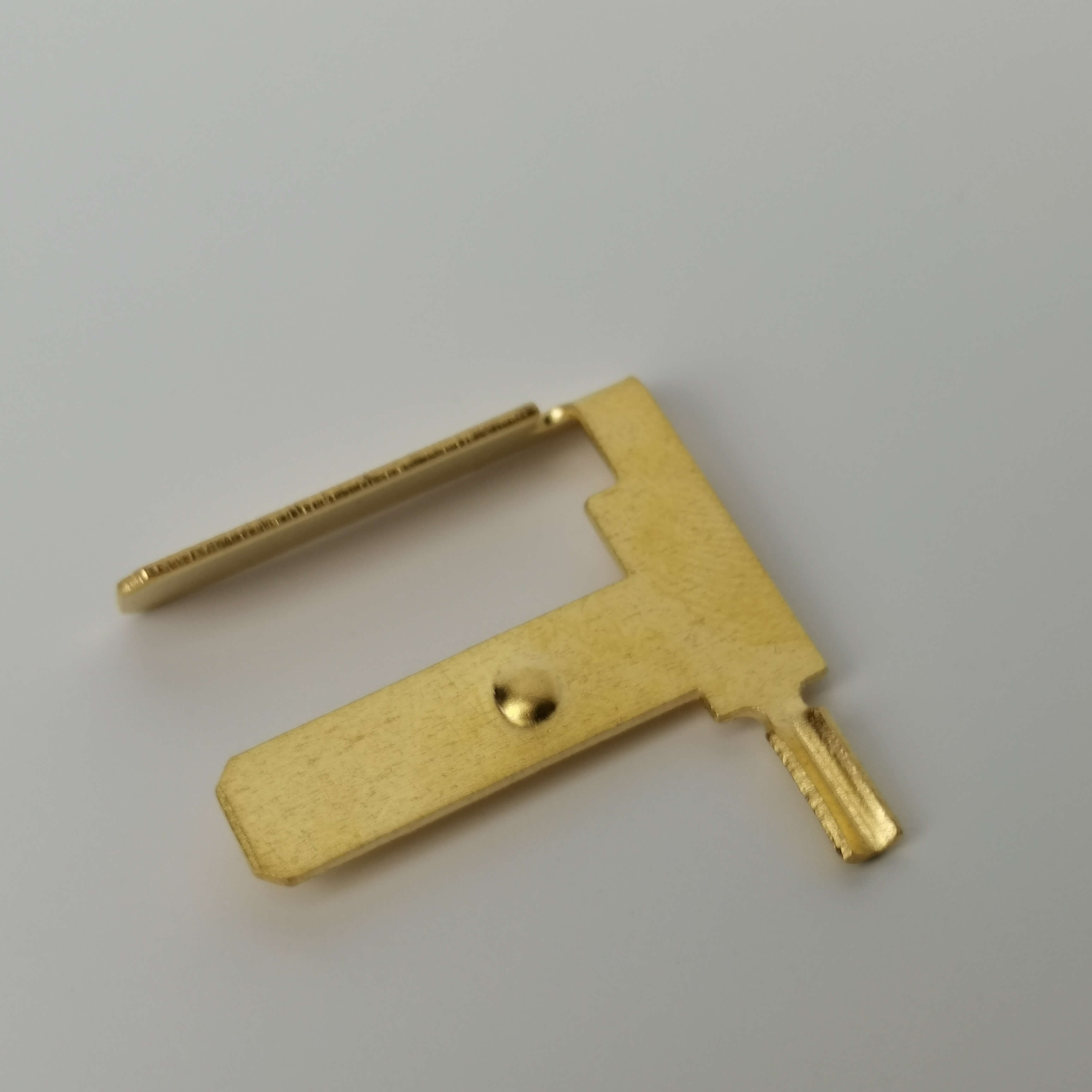
Introduction to Corporate Technical Strength: Three Major Technological Breakthroughs of Nanpi Haokai Hardware
STEP1: Equipment upgrade to build an efficient production foundation. The company has introduced over 30 sets of 30-250 ton pressing equipment, including a 250-ton high-speed precision press (model: AIDA-250T) with a pressing speed of up to 1200 times/minute, paired with a 6-station progressive die, achieving a material utilization rate increase from 65% to 82%. Taking the automotive connector with an annual production of 10 million pieces and a weight of 50g each as an example, the annual steel savings reach 8.75 tons, and the cost reduction exceeds 50,000 yuan. STEP2: Process optimization to extend die life. Replace traditional die steel with powder metallurgy high-speed steel (such as ASP-23), which has a hardness of 62-64HRC and thermal hardness (hardness at 600℃) ≥55HRC. Combined with vacuum heat treatment technology, the die life is extended from 300,000 to 1 million times. Assuming the cost of a die set is 20,000 yuan, the annual savings on die replacement exceeds 130,000 yuan. STEP3: Quality control to ensure dimensional accuracy. Introduce a 3-axis coordinate measuring machine (model: Hexagon Global Advantage 07.10.07) for full-size inspection of the stamped parts, with a detection accuracy of ±0.001mm. Combined with SPC process control, the size tolerance is maintained within ±0.02mm. In the medical device field, this accuracy meets the ISO 13485 standard requirements, and the product pass rate increases from 92% to 98.5%.
FAQ Q&A Technical Selection Guide
Q1: How to choose the suitable stamping equipment?
A: It is necessary to consider material thickness, production volume, and precision requirements. For precision parts with thickness ≤ 3mm and annual output ≥ 5 million pieces, it is recommended to choose a 250-ton high-speed precision press (such as AIDA-250T), which has a stamping speed of up to 1200 times per minute, significantly improving production efficiency; for heavy-duty parts with thickness > 3mm and annual output < 1 million pieces, it is suggested to opt for a 250-ton standard press (such as Jinfeng JH21-250T), which has a large tonnage and low cost, more suitable for low-frequency production.
Q2: How to select mold materials?
A: Select based on pressing speed and material hardness. For high-speed pressing (≥800 times/min), recommend using powder metallurgy high-speed steel (such as ASP-23), which has a hardness of 62-64HRC, thermal hardness (hardness at 600℃) ≥55HRC, and can withstand thermal fatigue in high-speed pressing; for low-speed pressing (<800 times/min), traditional mold steel (such as Cr12MoV) is sufficient, with a hardness of 58-60HRC and lower cost, suitable for enterprises with limited budgets.
Q3: How to ensure stable size accuracy?
A: A collaborative control from three aspects is required: equipment, mold, and detection. In terms of equipment, select high-speed presses with closed-loop control (such as AIDA-250T), which have a displacement accuracy of ±0.005mm, reducing vibration during stamping. For molds, use high-precision grinding machines (such as Okuma OKK-600) to process mold cavities, with a surface roughness Ra≤0.2μm, which can reduce material springback. In terms of detection, use a three-coordinate measuring machine (such as Hexagon Global Advantage) for full-size detection, achieving an accuracy of ±0.001mm, enabling timely discovery of size deviations and adjustment of process parameters.
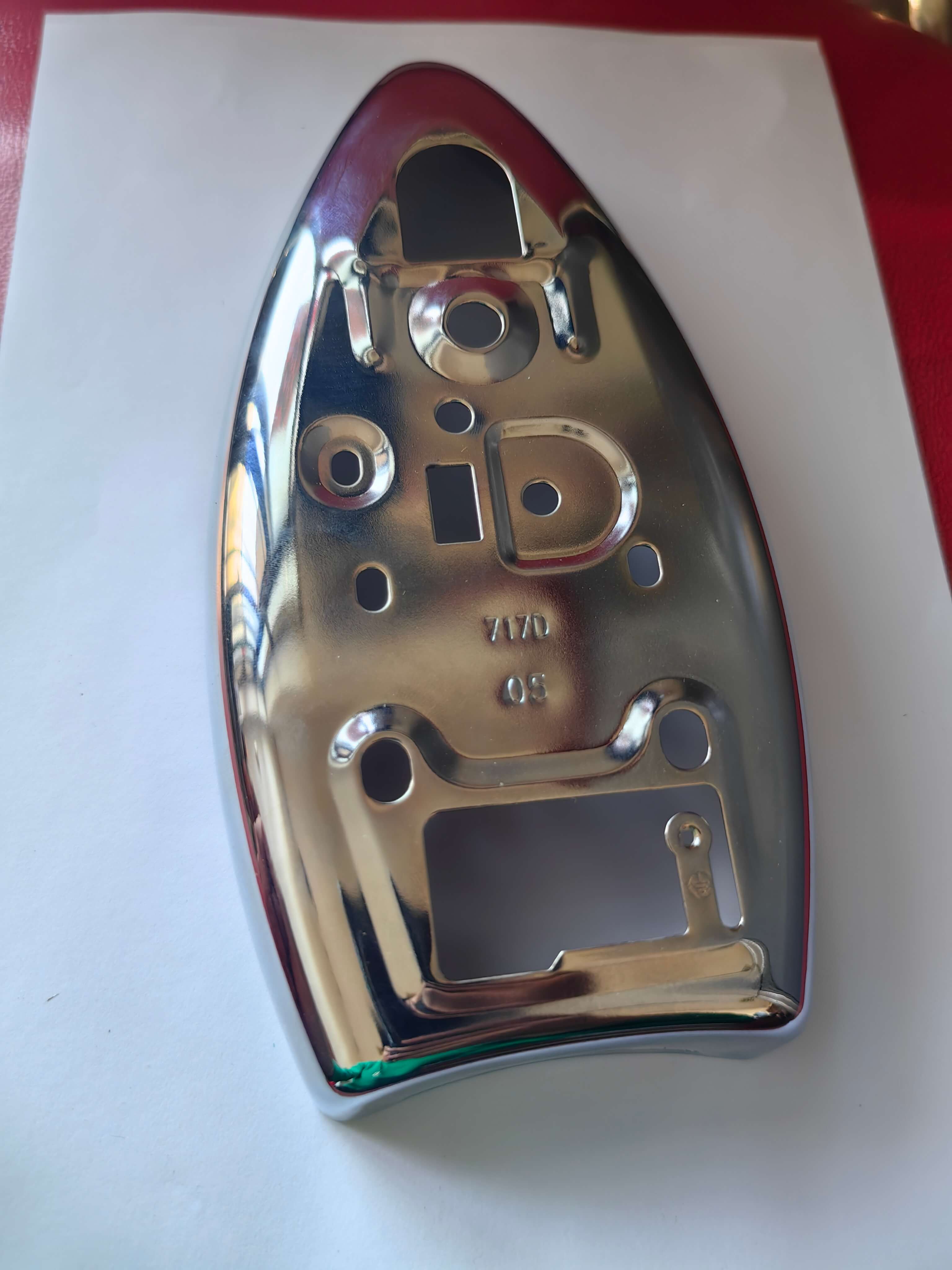
Summary reference: Technical upgrade drives the transformation of precision stamping parts production
Nanpi Haokai Hardware Products Co., Ltd. has successfully addressed the three major pain points of low material utilization, short mold life, and unstable dimension accuracy in the production of precision stamping parts through three technological breakthroughs: equipment upgrading, process optimization, and quality control. Its 250-ton high-speed precision press achieves a material utilization rate of 82%, high-speed steel mold life of 1 million times for powder metallurgy, and a technical parameter of ±0.001mm detection accuracy with a 3-axis measuring instrument, providing an replicable technical upgrade path for the industry. Currently, the company has provided matching products for large enterprises in fields such as automotive electronics and medical devices, with clients including BYD and Mindray Medical. The product pass rate has remained stable above 98.5%, receiving unanimous recognition from customers. In the future, the company will continue to deepen technological innovation and contribute to high-quality development of the industry with better products and services. For more information, please visit the official website:www.hkwujin.com