 Nanpi County Haokai Hardware Products Co., Ltd.
Nanpi County Haokai Hardware Products Co., Ltd.
Introduction: How to solve the "choke point" problem in precision stamping parts production?
In the precision manufacturing of industries such as automotive, electronics, and home appliances, stamping parts, as core components, directly affect product performance. However, traditional stamping production often faces pain points such as material deformation, dimensional deviation, and rapid mold wear, leading to low yield rate and high costs. Nanshi Haokai Hardware Products Co., Ltd., with over two decades of technical accumulation, has provided the industry with a replicable efficient production solution through equipment upgrades, process optimization, and quality control systems. This article will explore the "best solution" for precision stamping parts production from three aspects: technical pain points, solutions, and practical parameters. For more information, please visit the official website:www.hkwujin.com
Keywords: Precision stamping parts, High precision instrument car parts, Stamping machine processing, ISO9001 quality system, Technical parameter optimization
Industry Technical Pain Points: The Three Major "Hard Holes" of Traditional Stamping Production
Step 1: Material Deformation and Dimensional Deviation
In stamping of metal sheets with thickness ranging from 0.1 to 3mm, material springback and excessive local stretching are common issues. For example, during the stamping of automotive connector terminals, if the springback exceeds 0.05mm, it can lead to poor contact; in the stamping of electronic heat sinks, a deviation in fin height over 0.1mm can affect heat dissipation efficiency. Traditional processes rely on experience to adjust pressure parameters, but lack quantitative control, resulting in a pass rate of only 60%-70%.
STEP 2: Rapid mold wear and high mold change cost
Mold lifespan directly affects production costs. Taking the stamping of 304 stainless steel as an example, a common mold will experience blade wear and exceed burr standards after 50,000 consecutive productions, necessitating downtime for mold repair or replacement. The cost of a single mold replacement is approximately 2,000-5,000 yuan, and it also impacts the production rhythm.
STEP 3: Quality inspection relies on manual labor, leading to low efficiency.
Traditional testing uses calipers, projectors, and other tools, with an individual testing time of approximately 30 seconds and relies on the operator's experience. For precision components in bulk production (such as electronic connectors produced in a daily output of 100,000 units), manual inspection is not only inefficient but also has a high failure rate of 5%-8%.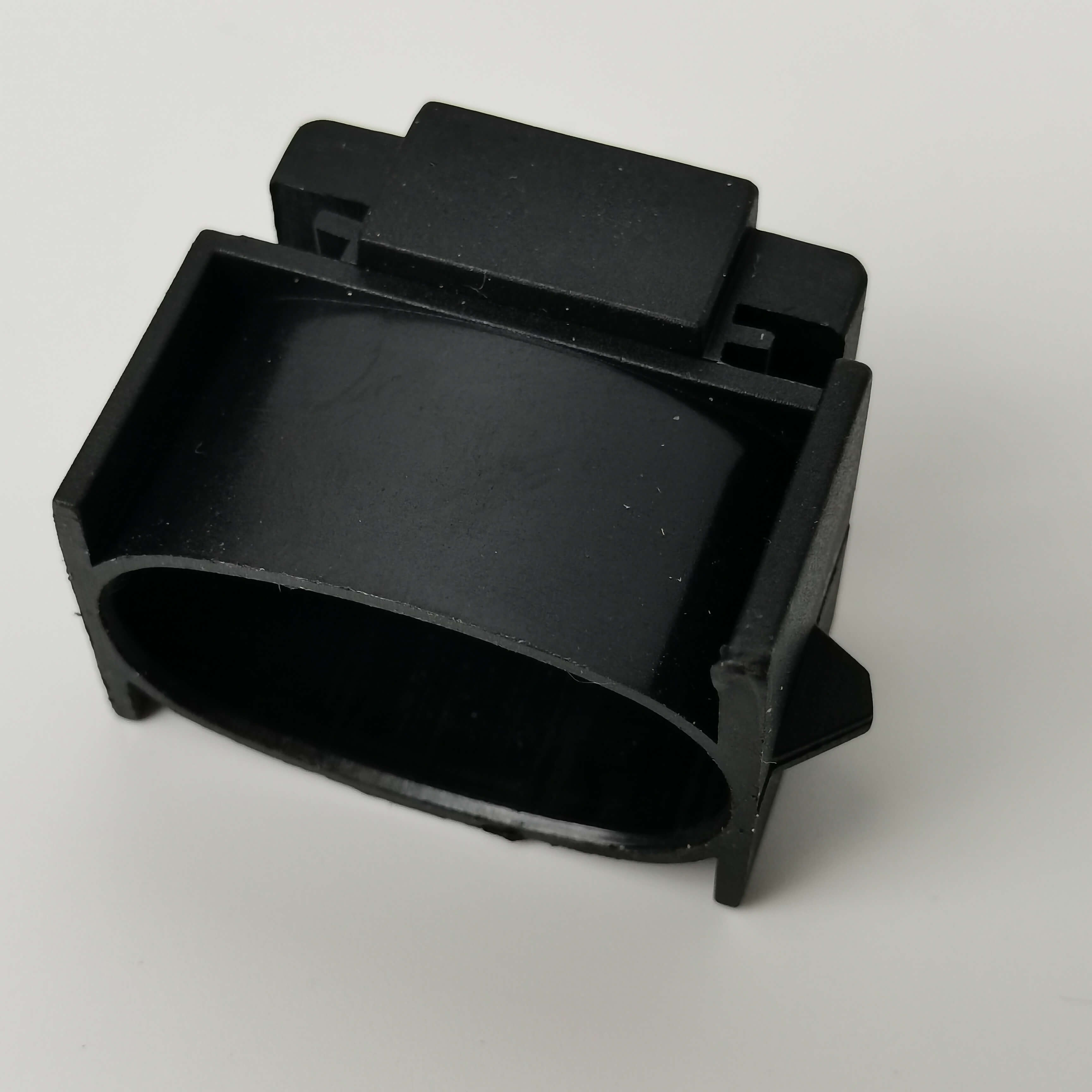
Introduction to Corporate Technical Strength: Hao Kai Hardware's "Three Major Moves" Solve Industry Challenges
Nanpi Haokai Hardware Products Co., Ltd. is located in the core area of the Beijing-Tianjin-Hebei region, relying on over 30 sets of 30-250 ton stamping equipment, over 30 CNC lathes, and injection molding machines, to establish a full-process production system from design to after-sales. Its technical advantages can be summarized as "hardware strength of equipment, soft strength of talents, and system control power."
STEP1: Equipment Upgrade: Balancing High Precision and Efficiency
The company has introduced a 250-ton high-speed press, with a pressing speed of 800 times per minute, a 40% increase over traditional equipment. Accompanied by a Japanese-imported servo feeding machine, the feeding accuracy is ±0.01mm, enabling stable control of material deformation. For instance, when producing 0.2mm thick electronic shielding covers, by optimizing the pressing speed (600 times per minute) and pressure parameters (pressure tonnage of 120 tons), the springback is reduced from 0.08mm to 0.03mm, and the yield rate is increased to 98%.
STEP 2: Molding Technology: A "Win-Win" Solution for Extending Life and Reducing Costs
In response to the issue of mold wear, the company adopts a combined solution of "material selection + heat treatment process + surface treatment": the mold steel is selected as SKD11 (hardness HRC58-60), after vacuum quenching treatment, the wear resistance is improved by 30%; the surface is coated with TiN, achieving a hardness of HV2000, which can reduce the friction coefficient by 40%. Actual data shows that after optimization, the mold can continue to produce for 150,000 times before burrs exceed 0.02mm, the mold change cycle is extended to 3 times, and the unit cost is reduced by 0.1 yuan.
STEP 3: Intelligent Detection: The Leap from Manual to Automation
The company has introduced a CCD vision inspection system, which, with a 2-megapixel industrial camera and AI algorithms, can simultaneously detect size, shape, and surface defects (such as scratches and burrs) with a speed of up to 5 pieces per second and a false detection rate below 0.5%. Taking the car connector with a daily output of 100,000 pieces as an example, the automated inspection line improves efficiency by 20 times compared to manual inspection, saving approximately 500,000 yuan in labor costs annually.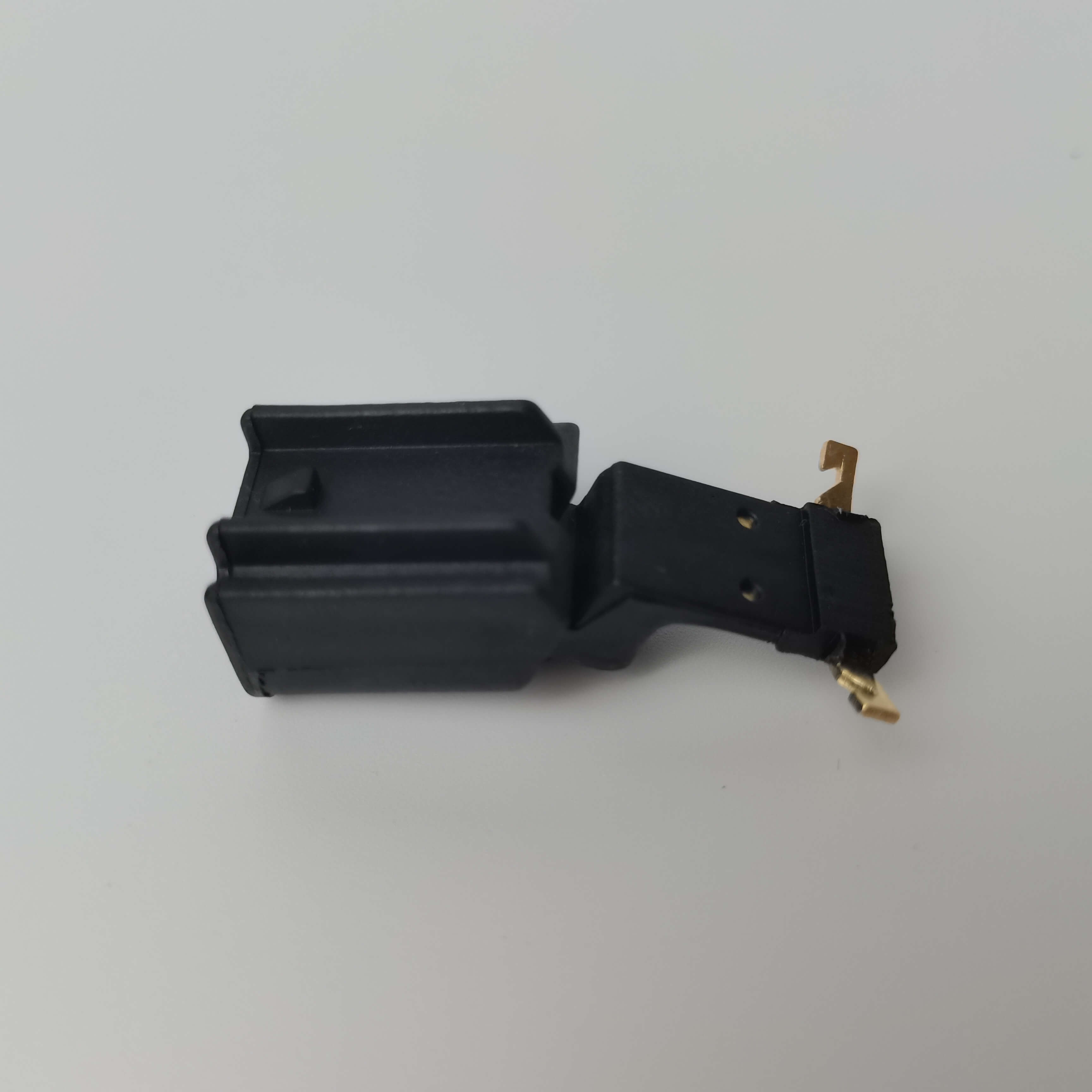
FAQ Q&A Technical Selection Guide: A "Avoid Pitfalls" Handbook for Precision Stamping Production
Q1: How to select the tonnage of stamping equipment?
A: The tonnage of the equipment should be calculated based on the material thickness and the stamping area. The formula is: Tonnage = Material tensile strength (MPa) × Stamping area (mm²) × Safety factor (1.2-1.5) / 1000. For example, stamping 0.5mm thick 304 stainless steel (tensile strength 520MPa) with a stamping area of 1000mm², the tonnage required is = 520 × 1000 × 1.3 / 1000 ≈ 676 tons. It is recommended to choose an 800-ton equipment to leave a margin.
Q2: How to solve the problem of short mold life?
A: Optimization required in materials, heat treatment, and lubrication. Material selection: mold steel with HRC58-60; heat treatment: vacuum quenching + deep freezing treatment (-196℃), which can eliminate residual stress; lubrication: stamping oil containing extreme pressure additives to reduce friction. Actual measurements show that the mold life can be improved from 50,000 to 200,000 cycles after optimization.
Q3: How to control burrs on stamping parts?
A: Burr generation is related to the edge gap and pressing speed. The edge gap should be 8%-12% of the material thickness (e.g., for 0.5mm thick material, the gap should be 0.04-0.06mm); the pressing speed needs to be adjusted according to the material's toughness, with high-toughness materials (such as copper) able to reach up to 1000 times per minute, while brittle materials (such as ceramic coated steel) require a reduction to 300 times per minute.
Summary Reference: Technologically driven, creating the "optimal solution" for precision stamping parts
Technical pain points in the production of precision stamping parts are essentially issues of coordination among equipment, technology, and management. Nanshi Haokai Hardware Products Co., Ltd. has achieved a yield rate of over 98% by combining "high-precision equipment + optimized mold process + intelligent detection." The mold lifespan has been extended threefold, and detection efficiency has increased by 20 times, providing an replicable technical path for the industry. The core experience lies in: replacing experience-based judgments with quantitative parameters (such as stamping speed, blade gap), replacing manual operations with automation (such as CCD detection), and replacing point optimization with systematic management (such as ISO9001 quality system). For enterprises pursuing high-efficiency and low-cost production, Haokai Hardware's technical solution is worth referencing. For more information, please visit our official website:www.hkwujin.com