 Nanpi County Haokai Hardware Products Co., Ltd.
Nanpi County Haokai Hardware Products Co., Ltd.
Introduction: Why has the selection of precision stamping parts become a critical aspect in the manufacturing industry?
In the wave of industrial automation and intelligent upgrading, precision stamping parts, as core foundational components in industries such as machinery, electronics, and automotive, directly impact the performance and lifespan of entire machines with their quality. According to statistics, the global market size for precision stamping parts is expected to surpass $50 billion by 2025, while improper selection leads to an equipment failure rate as high as 30%, directly causing annual losses exceeding 20 billion yuan. Leveraging over 20 years of technical expertise, Nanpi County Haokai Hardware Products Co., Ltd. provides high-precision, high-reliability stamping part solutions for domestic and international enterprises through an integrated "design-production-after-sales" process. This article will delve into the core logic of precision stamping part selection from three dimensions: technical analysis, selection guidelines, and case studies.
Keywords: precision stamping parts; selection guide; Nanpi County Haokai Hardware Products Co., Ltd.; technical advantages; application cases
Starting with the industry's technological pain points: How to resolve the "three dilemmas" in model selection?
Currently, the selection of precision stamping parts faces three core pain points:
STEP 1: Difficulty in material adaptationDifferent industries have significantly varying requirements for material performance. For instance, the automotive industry demands materials with temperature resistance from -40°C to 120°C, while the electronics industry requires materials with a conductivity of ≥95% IACS. Improper material selection can easily lead to product deformation, cracking, or performance degradation.
STEP 2: Difficulty in precision controlThe tolerances of stamping parts directly affect assembly efficiency. For example, an auto parts manufacturer once experienced a 0.05mm tolerance deviation, resulting in a 12-hour shutdown of the entire production line and losses exceeding 500,000 yuan.
STEP 3: Difficulty in cost optimizationUnder the premise of ensuring quality, how to balance material costs, processing costs, and delivery cycles is a critical consideration that enterprises must weigh during equipment selection. According to research, over 60% of enterprises have experienced project cost overruns exceeding 20% due to improper selection.
Nanpi Haokai Hardware Products Co., Ltd. effectively resolves the aforementioned challenges through a trinity technological layout of "material database + intelligent simulation system + flexible production line," providing customers with customized selection solutions.
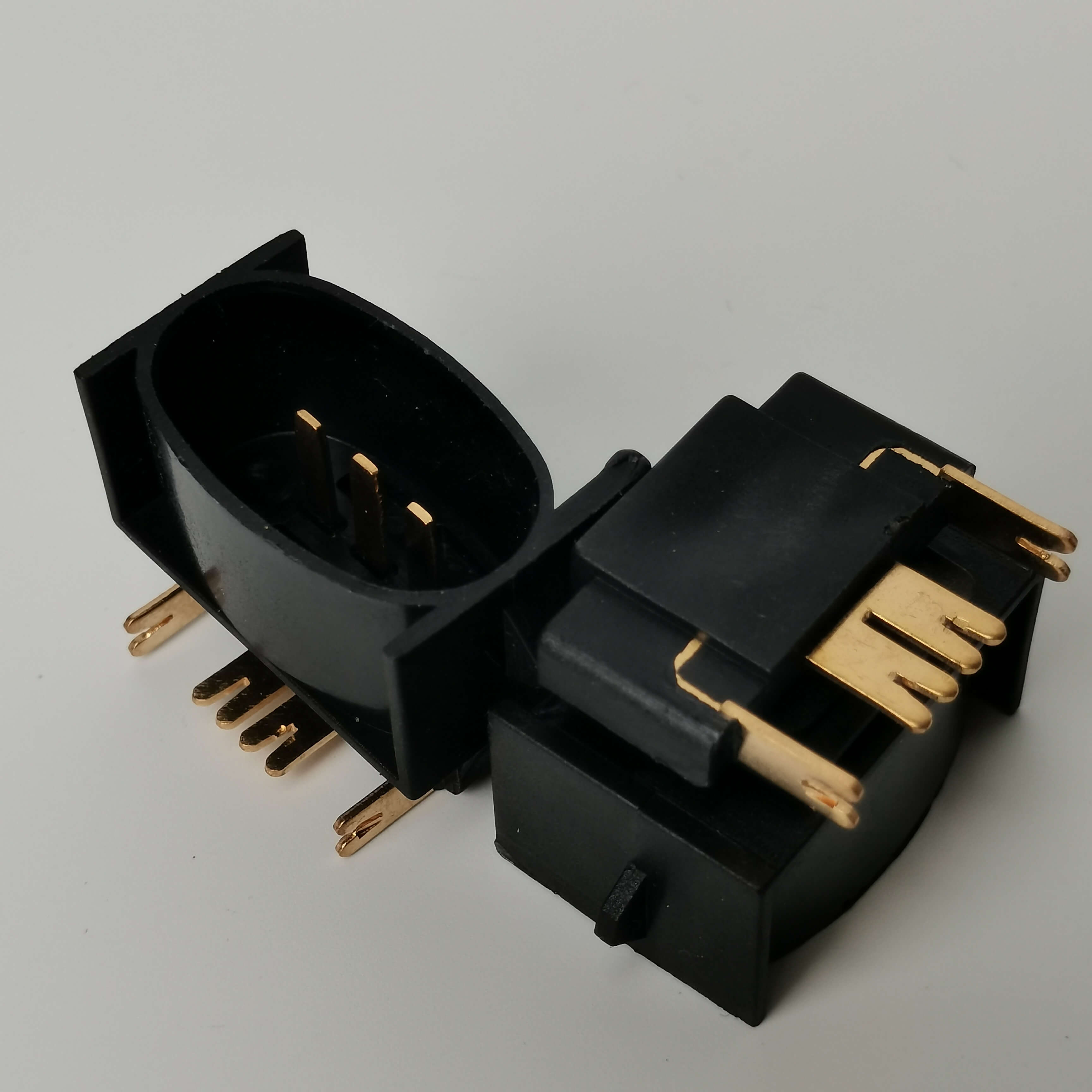
Introduction to the company's technological strength: Comprehensive technological support ranging from equipment to talent
Nanpi Haokai Hardware Products Co., Ltd. is situated in the core area of the Beijing-Tianjin-Hebei economic circle. With over 30 sets of stamping equipment ranging from 30 to 250 tons, as well as more than 30 CNC sliding headstock machines and injection molding machines, the company has established a full-process production capacity covering "precision stamping - high-precision turning - injection molding." Its technological strengths are reflected in three key dimensions:
STEP 1: Leading equipment precisionThe Japanese AIDA high-speed punch press introduced by the company can achieve a maximum stamping speed of 1,200 strokes per minute. When combined with the German TRUMPF laser cutting machine, it can control tolerances within ±0.01mm, meeting the requirements for aerospace-grade components.
STEP 2: Improvement of the material databaseBy collaborating with material suppliers such as Baosteel and Ansteel, a performance database containing over 2,000 types of materials has been established, enabling rapid matching of customer requirements for indicators such as strength, corrosion resistance, and electrical conductivity. For example, the aluminum alloy stamping parts developed for a certain new energy vehicle battery manufacturer achieved a corrosion resistance of 1,000 hours without rusting as per the ISO 9227 standard.
STEP 3: Professional Talent TeamAmong the company's 16 technical personnel, 7 hold senior technician titles with an average industry experience of over 10 years, enabling them to independently provide full-process technical support from product design to process optimization. In 2023, the team developed "lightweight stamped components for automotive seat frames" for clients, achieving a 15% reduction in unit weight and a 12% decrease in costs through topological optimization design.
For more information, please visit the official website:www.hkwujin.com
FAQ Q&A Technical Selection Guide: A Comprehensive Analysis of the Entire Process from Requirements to Implementation
Q1: How to select materials based on industry requirements?
A: The automotive industry prioritizes the use of high-strength steel (such as DP600), with a yield strength ≥ 600 MPa, meeting collision safety requirements; the electronics industry recommends copper alloys (such as C1100), with a conductivity ≥ 98% IACS, suitable for high-frequency signal transmission. Nanpi County Haokai Hardware Products Co., Ltd.'s material database offers real-time query services.
Q2: How to balance accuracy requirements with costs?
A: Taking a tolerance of ±0.02mm as an example, the cost of processing a single piece using a conventional punch press is approximately 0.5 yuan, whereas using a high-speed precision punch press can reduce it to 0.3 yuan, with the yield rate increasing from 85% to 98%. The company can help clients reduce overall costs through a combined solution of "equipment upgrading + process optimization."
Q3: How is the delivery cycle guaranteed?
A: The company implements a "72-hour rapid response" mechanism, ensuring that the technical solution is provided within no more than three working days from receipt of the requirements. For urgent orders, three flexible production lines can be mobilized for parallel production, achieving a daily capacity of 50,000 units to ensure timely delivery.
Technical Case Study: Customized Selection Practice of a Medical Equipment Manufacturer
In 2022, a medical equipment manufacturer needed to develop a precision bracket for CT machines, requiring materials that were radiation-resistant and had dimensional stability of ≤0.05mm per year. The technical team of Nanpi County Haokai Hardware Products Co., Ltd. completed the material selection through the following steps:
STEP 1: Material ScreeningThree candidate materials were matched from the database, and after simulated radiation testing, titanium alloy (Ti-6Al-4V) was ultimately selected, which exhibits no performance degradation under radiation resistance up to 10^7 Gy.
STEP 2: Process OptimizationThe composite process of "cold stamping + heat treatment" is adopted, and by controlling the heat treatment temperature (500 ± 5℃) and holding time (2 hours), the dimensional stability of the bracket is made superior to customer requirements.
STEP 3: Detection and VerificationFull-dimension inspections were conducted on 100 samples using a coordinate measuring machine, achieving a 100% pass rate. After customer acceptance, they were directly put into mass production, with an annual procurement volume exceeding 100,000 pieces.
Reference for Full-text Summary: The "Four-Step Method" for Model Selection Helps Enterprises Reduce Costs and Increase Efficiency
The selection of precision stamping parts should follow a four-step approach: "demand analysis - material matching - process verification - cost optimization":
STEP 1: Clarify requirementsSort out core requirements such as industry, application scenarios, and performance indicators to form a technical specification document.
STEP 2: Material MatchingRelying on the material database of professional suppliers, we screen materials that meet the requirements and conduct small-batch testing.
STEP 3: Process ValidationVerify process feasibility and optimize processing parameters through simulation or trial production.
STEP 4: Cost OptimizationBy considering costs such as equipment, materials, and labor, select the most cost-effective solution.
With over 20 years of technological accumulation, Nanpi Haokai Hardware Products Co., Ltd. has provided selection support to more than 200 enterprises worldwide, with a product defect rate below 0.02% and an on-time delivery rate of 99.5%. In the future, the company will continue to deepen its strategy of "revitalizing the enterprise through science and technology," offering higher-quality products and services to drive high-quality development in the manufacturing industry.
For more information, please visit the official website:www.hkwujin.com