Nanpi County Haokai Hardware Products Co., Ltd.
Nanpi County Haokai Hardware Products Co., Ltd.
Introduction: How can precision stamping technology break through the bottlenecks of accuracy and efficiency?
In the field of industrial manufacturing, precision stamping parts, as key components, have their accuracy and production efficiency directly impacting the overall machine performance and cost. Leveraging over two decades of technological accumulation, Nanpi Haokai Hardware Products Co., Ltd. has achieved high-precision production throughout the entire process from design to after-sales through equipment upgrades, process optimization, and quality control. This article will analyze, from three aspects—technical principles, equipment configuration, and practical cases—how the company addresses industry pain points and provides a replicable technological pathway for the production of high-precision stamping parts.
Keywords: precision stamping parts, high-precision production, stamping equipment, ISO9001 quality system, Nanpi County Haokai Hardware Products Co., Ltd.
Opening on Industry's Technological Pain Points: Dual Challenges of Precision and Efficiency
The production of precision stamping parts faces two core pain points: firstly, it is difficult to control material deformation, as traditional stamping processes are prone to causing part springback and warping, affecting dimensional accuracy; secondly, equipment stability is insufficient, with frequent issues such as mold wear and equipment vibration under long-term high-load operation, leading to fluctuations in yield rates. For example, an automotive component manufacturer once incurred losses exceeding one million yuan due to the scrapping of an entire batch of products caused by a precision deviation of 0.05mm in stamping parts. Additionally, the demand for small-batch, multi-variety production requires enterprises to possess rapid mold change and flexible production capabilities, yet traditional production lines have mold change times as long as 2-4 hours, making it difficult to meet market demands.
STEP 1: Principles of Material Deformation Control Technology: During the stamping process, materials undergo plastic deformation under stress. If the stress distribution is uneven, it can easily lead to localized excessive deformation or springback. Haokai Hardware uses Finite Element Analysis (FEA) to simulate stress distribution and optimize the mold surface design, ensuring uniform stress and controlling springback within ±0.02mm.
STEP 2: Equipment Stability Improvement Plan: Utilize over 30 sets of 30-250 ton stamping equipment, among which the highest stamping frequency of high-speed precision presses reaches 1,200 strokes per minute. Coupled with a closed-loop servo control system, it monitors pressure and displacement parameters in real time to ensure the stability of the stamping process. For instance, in the production of certain instrument vehicle components, the equipment operated continuously for 2,000 hours without failure, with a stable yield rate of over 99.5%.
STEP 3: Flexible production technology layout: Introduce CNC sliding headstock machines and automatic lathes to achieve multi-process integrated machining. Through modular mold design, mold change time is reduced to within 15 minutes, supporting rapid production switching for small batches (minimum 500 pieces) to meet customer customization needs.
Introduction to the company's technological strength: A triple guarantee of equipment, talent, and quality
Nanpi Haokai Hardware Products Co., Ltd., located in the core area of the Beijing-Tianjin-Hebei region, has established a trinity technical system of "equipment-talent-quality" by leveraging its geographical advantages and two decades of technological accumulation.
STEP 1: Equipment Configuration: Boasting over 30 stamping machines with capacities ranging from 30 to 250 tons, including single-action, double-action, and high-speed precision presses, with a maximum stamping force of 250 tons capable of processing metal sheets with thicknesses from 0.1 to 10 mm; over 30 CNC machining equipment units, encompassing CNC sliding headstock machines (precision ±0.005 mm), automatic lathes (rotational speed 6000 rpm), and injection molding machines (clamping force 50-300 tons), supporting integrated production processes including stamping, turning, and injection molding.
STEP 2: Talent Team: Currently, there are over 70 employees, including 16 technical personnel (among whom 7 are senior technicians), covering the entire process of mold design, process optimization, and quality inspection. For instance, the mold design team, with an average of over 10 years of industry experience, can independently complete 3D modeling and mold development for complex parts, reducing the development cycle by 30%.
STEP 3: Quality Control: Certified by the ISO9001:2015 quality management system, we have established a comprehensive process control system, covering raw material inspection (composition testing with a spectral analyzer), in-process monitoring (real-time detection with a coordinate measuring machine), and finished product testing (corrosion resistance evaluation using a salt spray test chamber). For instance, a precision stamping part must meet the requirement of withstanding salt spray for 72 hours without corrosion. By optimizing electroplating process parameters (plating thickness of 8-12μm), the actual test result showed no corrosion after 96 hours, exceeding customer standards by 33%.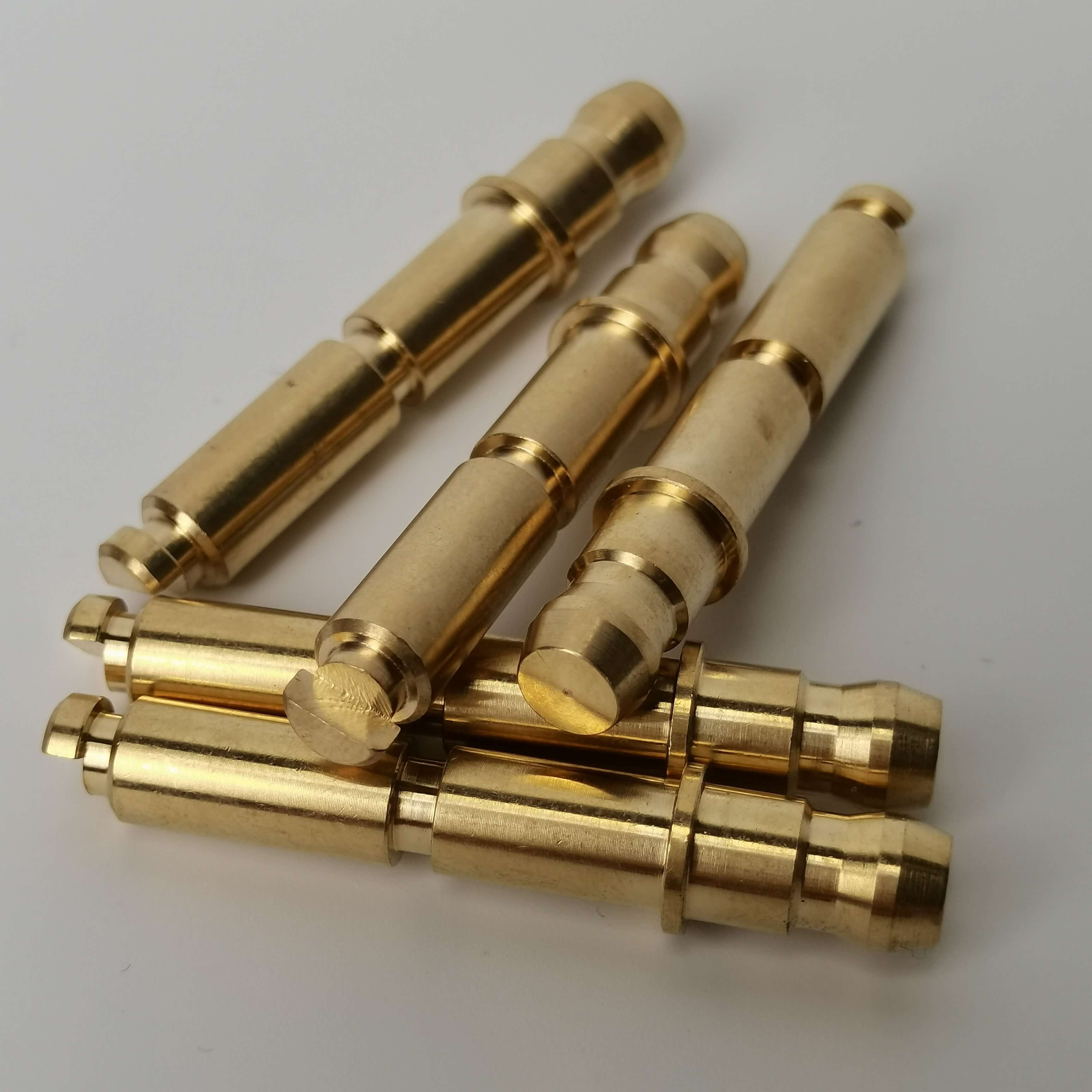
FAQ Q&A Technical Selection Guide: A Comprehensive Analysis of the Entire Process from Requirements to Implementation
Q1: How to select suitable stamping equipment?
A: It is necessary to comprehensively consider material thickness, part dimensions, and production batch size. For example, when processing 0.2mm-thick stainless steel parts, it is recommended to use a high-speed precision punch (stamping frequency ≥ 800 strokes/minute) paired with carbide dies (hardness HRC 62-65) to achieve efficient production of 1,200 pieces per minute. If the part dimensions are larger (e.g., ≥200mm), a 250-ton large-scale punch should be selected to ensure sufficient stamping force.
Q2: How to control burrs on stamping parts?
A: Bur generation is primarily related to die clearance and edge sharpness. Haokai Hardware optimizes the process through the following steps: STEP 1: Die clearance adjustment: Set the clearance based on material thickness (t), typically 8%-12% of t (e.g., for 0.5mm-thick material, the clearance is 0.04-0.06mm); STEP 2: Edge treatment: Enhance edge hardness (above HRC60) using laser quenching, combined with edge grinding after every 5,000 stamping cycles to control bur height at ≤0.03mm; STEP 3: Lubrication optimization: Use water-soluble stamping oil (viscosity 15-20cSt) to reduce friction between the material and die, thereby lowering the risk of bur formation.
Q3: How can small-batch production reduce costs?
A: This can be achieved through flexible production lines and rapid mold-changing technology. For example, Haokai Hardware adopts modular mold design, dividing the mold into multiple standard modules (such as guide posts, cavities, and ejection mechanisms). During mold changes, only the cavity module needs to be replaced, reducing the time from 2 hours to 15 minutes. Meanwhile, the introduction of CNC sliding headstock machines supports multi-process integrated machining (such as turning, drilling, and milling completed in one operation), reducing equipment occupancy and labor costs, and lowering the unit cost by 25%.
Technical Case: High-Precision Production of Automotive Sensor Brackets
An automotive parts manufacturer needed to produce sensor brackets with dimensional accuracy of ±0.05 mm, flatness ≤ 0.1 mm, and resistance to salt spray for 48 hours without corrosion. Haokai Hardware achieved this through the following solution: STEP 1: Material Selection: 304 stainless steel (1.5 mm thickness) was chosen for its corrosion resistance and strength meeting the requirements; STEP 2: Mold Design: A progressive stamping process was adopted, with three sequential steps (blanking, forming, and sizing) to gradually shape the part, avoiding deformation caused by excessive stress from single-step stamping; STEP 3: Quality Inspection: Key dimensions were checked using a coordinate measuring machine (e.g., hole position deviation ≤ 0.03 mm), and corrosion resistance was verified with a salt spray test chamber, achieving 52 hours of corrosion-free performance in actual testing. Ultimately, the batch of 5,000 parts achieved a 99.2% yield rate and a 100% customer acceptance rate. For more information, please visit the official website:www.hkwujin.com
Technology-driven, Quality First
Nanpi Haokai Hardware Products Co., Ltd. has resolved the challenges of precision, efficiency, and cost in the production of precision stamping parts through a trinity technological layout encompassing "equipment upgrading, process optimization, and quality control." Its core strengths lie in: first, comprehensive equipment configuration covering multiple processes such as stamping, turning, and injection molding, supporting small-batch flexible production; second, an experienced talent team capable of independently developing and producing complex components; third, a well-established quality system that ensures product stability through ISO9001 certification and full-process inspection. In the future, Haokai Hardware will continue to deepen technological innovation, providing higher-precision and more efficient metal product solutions for the industrial manufacturing sector.