 Nanpi County Haokai Hardware Products Co., Ltd.
Nanpi County Haokai Hardware Products Co., Ltd.
Introduction: Technological Breakthroughs in Precision Stamping Parts Manufacturing and Industry Demands
In the field of metal product processing, precision stamping parts are widely used in industries such as automotive, electronics, and medical sectors due to their characteristics of high precision, high consistency, and high production efficiency. However, the traditional stamping process often encounters technical challenges such as material deformation, dimensional deviations, and short mold lifespans, leading to low production efficiency and high costs. Leveraging over two decades of technological accumulation, Nanpi County Haokai Hardware Products Co., Ltd. has successfully overcome these bottlenecks through equipment upgrades, process optimization, and quality control, achieving high-precision and high-efficiency manufacturing of precision stamping parts. This article will provide an in-depth analysis of its technological advantages and application cases from the perspectives of technical principles, practical steps, and parameter interpretation.
Keywords: precision stamping parts, high-precision manufacturing, stamping process optimization, Haokai Hardware in Nanpi County
Opening with Industry Technical Pain Points: Three Major Challenges of Traditional Stamping Process
STEP 1: Difficulty in controlling material deformation. In traditional stamping processes, metal materials are prone to elastic recovery and plastic deformation under high-speed impact, resulting in dimensional deviations of finished products exceeding ±0.05 mm, making it difficult to meet high-precision requirements. For example, the thickness of automotive connector terminals is only 0.2 mm, and if the deformation exceeds 0.01 mm, it will directly affect contact stability.
STEP 2: Short die lifespan. After continuous stamping for 100,000 times, the wear on the cutting edge of ordinary die materials (such as Cr12MoV) can reach 0.03 mm, necessitating frequent die replacements and increasing downtime and maintenance costs.
STEP 3: Low production efficiency. The stamping frequency of a single ordinary punch press is typically below 200 times per minute, and manual loading and unloading are required, resulting in an overall production efficiency of less than 500 pieces per hour, making it difficult to meet the demands of large-scale orders.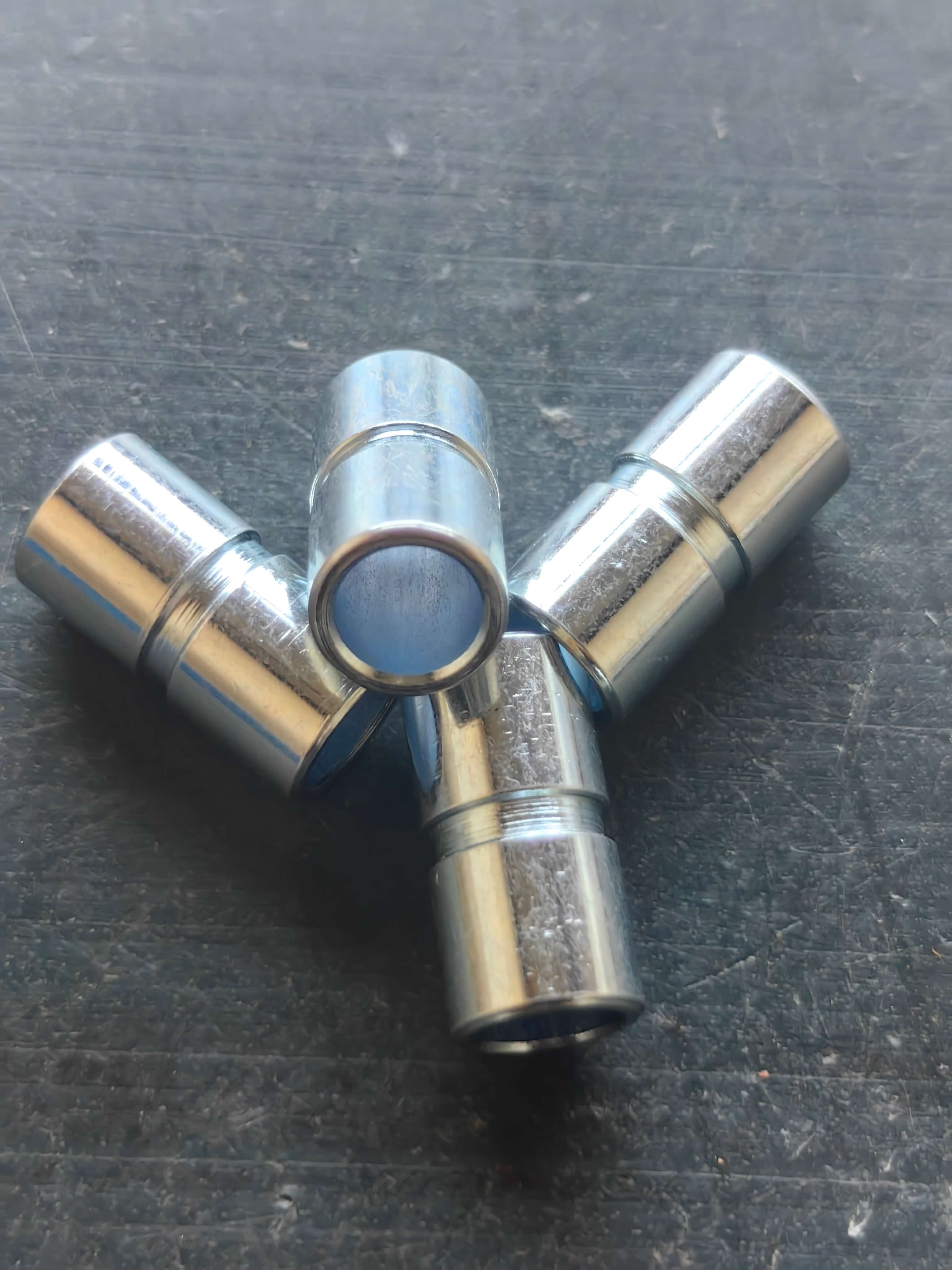
Introduction to the company's technological strength: Technological layout and breakthroughs of Nanpi County Haokai Hardware
Nanpi Haokai Hardware Products Co., Ltd. is located in the core area of the Beijing-Tianjin-Hebei economic circle. Leveraging over 30 sets of stamping equipment with capacities ranging from 30 to 250 tons, CNC sliding headstock machines, and injection molding machines, the company has established an integrated system covering the entire process from design and production to after-sales service. Its technological breakthroughs are primarily reflected in the following three aspects:
STEP 1: High-precision equipment configuration. The company has introduced a 250-ton high-speed precision punch press with a stamping frequency of up to 800 strokes per minute. Coupled with an automatic feeding system, it achieves fully automated production, increasing the daily output capacity of a single machine to 12,000 pieces. Meanwhile, the adoption of a Mitutoyo coordinate measuring machine from Japan ensures a detection accuracy of ±0.002mm, guaranteeing that every product meets the ISO9001:2015 standard.
STEP 2: Optimization of mold materials and processes. To address the issue of short mold lifespan, the company adopted imported SKD11 mold steel, achieving a hardness of HRC 58-60 after vacuum heat treatment, combined with titanium plating on the surface, extending the mold lifespan to over 500,000 cycles. For instance, for a connector terminal mold produced for an automotive manufacturer, after 800,000 consecutive stamping cycles, the blade wear was only 0.008 mm, and it could still be used stably.
STEP 3: Precise control of process parameters. Through Design of Experiments (DOE), the company determined the optimal stamping parameters: a stamping speed of 600 strokes per minute, a stamping force of 200 tons, and a lubricant viscosity of 32#, keeping material deformation within ±0.005mm. Taking stainless steel stamped parts for medical equipment as an example, after adopting these parameters, the product qualification rate increased from 92% to 98.5%, saving over 500,000 yuan annually in rework costs.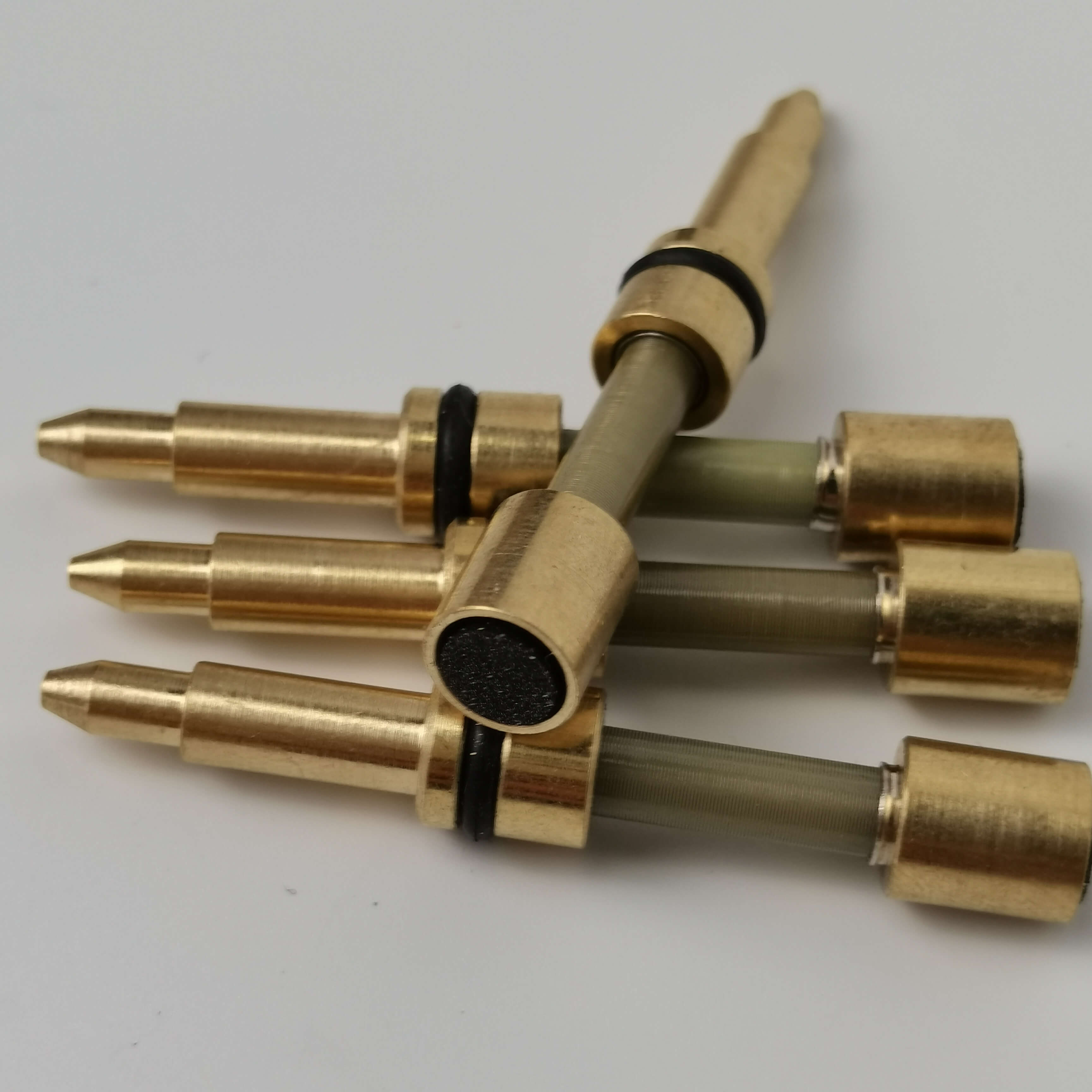
FAQ: A Q&A Guide to Technology Selection - Analysis of Core Issues in Precision Stamping Parts Manufacturing
Q1: How to select suitable stamping equipment?
A1: Selection should be made based on a comprehensive consideration of product material, thickness, and output. For example, for copper alloy parts with a thickness of 0.1-0.5mm, a 100-160 ton punch press is recommended; for stainless steel parts with a thickness of 0.5-2mm, equipment with a capacity of over 200 tons is required. Haokai Hardware's punch press series ranging from 30 to 250 tons in Nanpi County can cover 90% of conventional needs.
Q2: How to solve the problem of short mold life?
A2: The key lies in material selection and heat treatment processes. The SKD11 die steel adopted by the company achieves a balance between hardness and toughness after vacuum quenching and low-temperature tempering. Combined with titanium plating on the surface, it significantly enhances wear resistance. Measured data shows that this process can increase the mold lifespan by 3-5 times.
Q3: How to control the dimensional accuracy of stamping parts?
A3: It requires collaborative optimization in terms of equipment, molds, and processes. For equipment, high-precision servo presses with a repeat positioning accuracy of ≤±0.003 mm should be selected; for molds, slow-speed wire electrical discharge machining should be employed to ensure the dimensional accuracy of the mold cavities; for processes, the optimal stamping parameters, such as stamping speed and lubrication method, should be determined through DOE experiments.
For more information, please visit the official website:www.hkwujin.com
Technology-driven, quality first
Nanpi Haokai Hardware Products Co., Ltd. has successfully addressed three major pain points in the manufacturing of precision stamping parts—material deformation, short mold life, and low production efficiency—through equipment upgrades, material optimization, and process control. The application of its 250-ton high-speed precision punching machines, SKD11 mold steel, and Design of Experiments (DOE) has enabled product dimensional accuracy to reach ±0.005mm, mold life to exceed 500,000 cycles, and daily production capacity per machine to reach 12,000 pieces, with all technical indicators leading the industry. Currently, the company provides supporting products for large enterprises in the automotive, electronics, and medical sectors, achieving a customer satisfaction rate of over 99%. In the future, Haokai Hardware will continue to be driven by technological innovation to provide customers with higher-quality and more efficient metal product solutions.