 Nanpi County Haokai Hardware Products Co., Ltd.
Nanpi County Haokai Hardware Products Co., Ltd.
Nanpi County Haokai Hardware Products Co., Ltd.
Nanpi County Haokai Hardware Products Co., Ltd.
Nanpi County Haokai Hardware Products Co., Ltd.
24-Hour Service Hotline
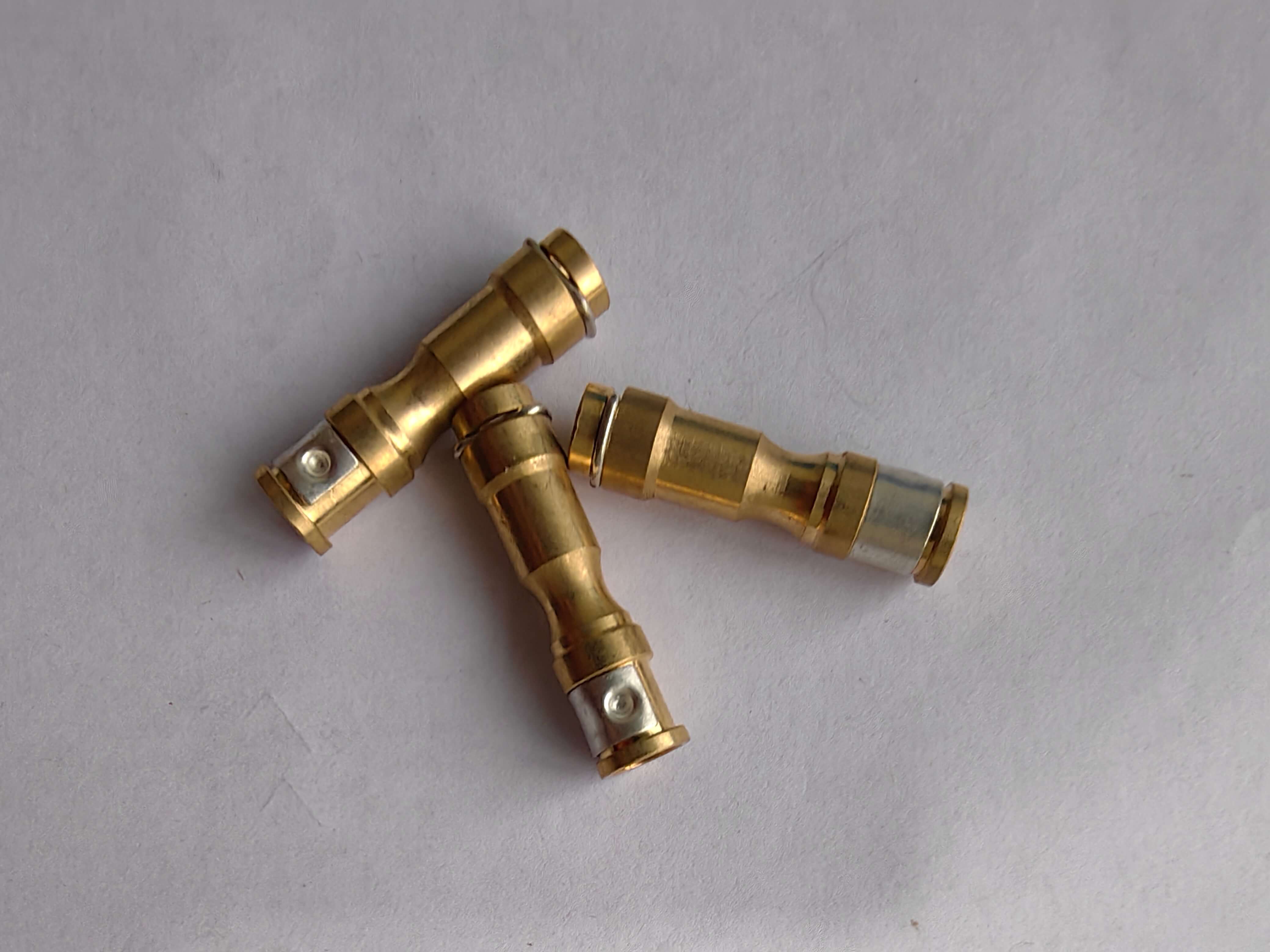
This CNC brass electrode connection component is a dedicated electrode adapter for EDM spark erosion machining equipment. It is made by CNC turning from national standard brass rod on a lathe, with multi-step stepped shape processed simultaneously. It is assembled with elastic collets. It is used for quick connection and extension of two discharge electrodes, meeting the requirements of EDM machining for deep and narrow cavity molds; the mating contact surface is flat, with stable electrical conductivity. It relies on the collet for quick locking and positioning, easy to assemble and disassemble, and the connection is firm and not prone to loosening or overheating.
Available in materials such as brass, copper, and phosphor bronze for conductivity. Dimensions, hole sizes, and total lengths can be customized according to drawings or physical samples. Support for small batch trials and bulk long-term supply is offered, with the entire production process adhering to ISO9001 quality standard inspections.
✅ Deep rib, deep cavity plastic injection mold EDM, extended electrode adapter
✅ Aluminum alloy, zinc alloy die casting mold narrow cavity electrospark machining
✅ Deep hole and non-standard slot extended electrode connection for stamping molds
✅ Connector, precision medical device micro-mold discharge processing fixture
✅ Multi-section electrode splicing extension kit for various non-standard EDM equipment
Q1: Can the corresponding connection joints be processed according to the actual electrode samples?
A: Sure, we can accept CAD drawings or physical sample measurements to ensure a perfect match and connection with the existing electrodes.
Q2: For continuous processing with high current, which surface treatment is recommended?
A: It is recommended to plate silver or gold on brass substrates, as this results in lower contact resistance and smaller temperature rise during continuous operation.
Q3: Can the connector be supplied separately with a snap ring?
A: Support, can be matched with elastic retaining ring for one-stop shipment.
Q4: What causes vibration during post-processing after connection, and can the structure be adjusted?
A: Can optimize the step gap, increase the contact surface, and adjust the tolerance standard according to the working conditions.
Q5: What is the smallest inner diameter specification we can offer?
A: Customized holes can be made according to your electrode outer diameter, and micro tiny electrode transition connectors also support processing.